Key Takeaways
- Fashion industry news in 2026 reveals AI is reshaping design faster than brands can adapt
- Sustainability promises are crumbling under profit pressure and consumer demand
- Gen Z’s shopping habits are forcing luxury brands to completely reimagine their strategies
- Social media influence has shifted from celebrities to micro-creators with devastating effect
- The resale market is cannibalizing traditional retail at unprecedented rates
The fashion industry news cycle never sleeps, and 2026 has served up a feast of chaos that makes previous years look tame. Behind every glossy press release and runway show lies a brutal truth: this industry is tearing itself apart and rebuilding in real time.
We’re not here to sugarcoat the headlines or feed you the sanitized version that other outlets serve. This is fashion industry news with the Pretty N Poison treatment , beautiful on the surface, venomous underneath.
AI Revolution Destroys Traditional Design Houses

Artificial intelligence has officially murdered the traditional fashion design process, and the fashion industry news coming out of major houses confirms what insiders have whispered for months. Design teams are shrinking while AI-generated concepts flood mood boards and tech sheets.
According to fashion editors at WWD, over 60% of major fashion houses now use AI for initial design concepts. But here’s the poison pill nobody talks about: these tools are creating a homogenization crisis that’s making every brand look identical.
The Creative Apocalypse
Traditional sketching is dead. Fabric draping sessions are becoming extinct. The romantic vision of designers hunched over drawing boards has been replaced by prompts typed into algorithms. Fashion schools are scrambling to update curriculums while their graduates enter a job market that no longer needs their core skills.
Emerging designers can’t compete with established brands that have AI budgets exceeding entire startup operating costs. The barrier to entry hasn’t lowered , it’s shifted to whoever can afford the most sophisticated creative algorithms.
The Authenticity Paradox
Consumers crave authenticity while simultaneously embracing AI-generated designs through fast fashion platforms. This contradiction is tearing the industry apart. Luxury brands position themselves as bastions of human creativity while secretly relying on the same AI tools as their fast fashion competitors.
The fashion industry news cycle amplifies this paradox by celebrating “new” AI collaborations while mourning the loss of traditional craftsmanship. We’re witnessing cognitive dissonance on an industry-wide scale.
Designer Displacement Reality
Mid-level designers are vanishing from payrolls. Companies need fewer human creatives when AI can generate hundreds of variations in minutes. The survivors aren’t traditional designers , they’re AI prompt engineers with fashion knowledge.
Fashion weeks are showcasing collections where human input represents less than 30% of the creative process. The emperor’s new clothes are coded, not sewn.
Sustainability Theater Reaches Breaking Point

The sustainability movement in fashion has devolved into pure performance art, and fashion industry news outlets are finally calling out the hypocrisy. Brands that built entire marketing campaigns around eco-consciousness are quietly abandoning these initiatives when profits decline.
Trend forecasting from WGSN suggests that “sustainable fashion” as a marketing category will be dead by 2027. Consumer behavior data shows people prioritize price and style over environmental impact, despite what they tell pollsters.
The Green Washing Collapse
Major brands are pulling back from sustainability commitments made during the pandemic. Carbon neutral promises are being quietly revised. Recycled material percentages are shrinking in new collections. The fashion industry news cycle has moved on, and brands assume consumers have too.
Supply chain transparency initiatives are being defunded. Third-party sustainability audits are becoming “optional.” The infrastructure built around ethical fashion is crumbling because it never generated meaningful revenue.
Consumer Complicity Exposed
Fashion industry news loves to blame brands for sustainability failures, but consumer behavior tells a different story. Sustainable fashion brands consistently underperform in sales while fast fashion giants post record profits.
Social media drives trend cycles faster than any sustainable production method can match. Consumers demand newness at a pace that makes ethical manufacturing impossible. The cognitive dissonance is staggering , people want to feel good about their choices without changing their behavior.
The Economics of Ethical Fashion
Sustainable fashion requires premium pricing that most consumers reject. The middle market for ethical fashion has collapsed, leaving only luxury sustainable brands and greenwashed fast fashion. There’s no profitable space between these extremes.
Investment in sustainable fashion startups has dropped 40% since 2024, according to fashion industry news reports. Venture capital has moved on to AI and resale platforms , technologies that promise scalability without the complexity of ethical manufacturing.
Gen Z Shopping Habits Demolish Retail Assumptions
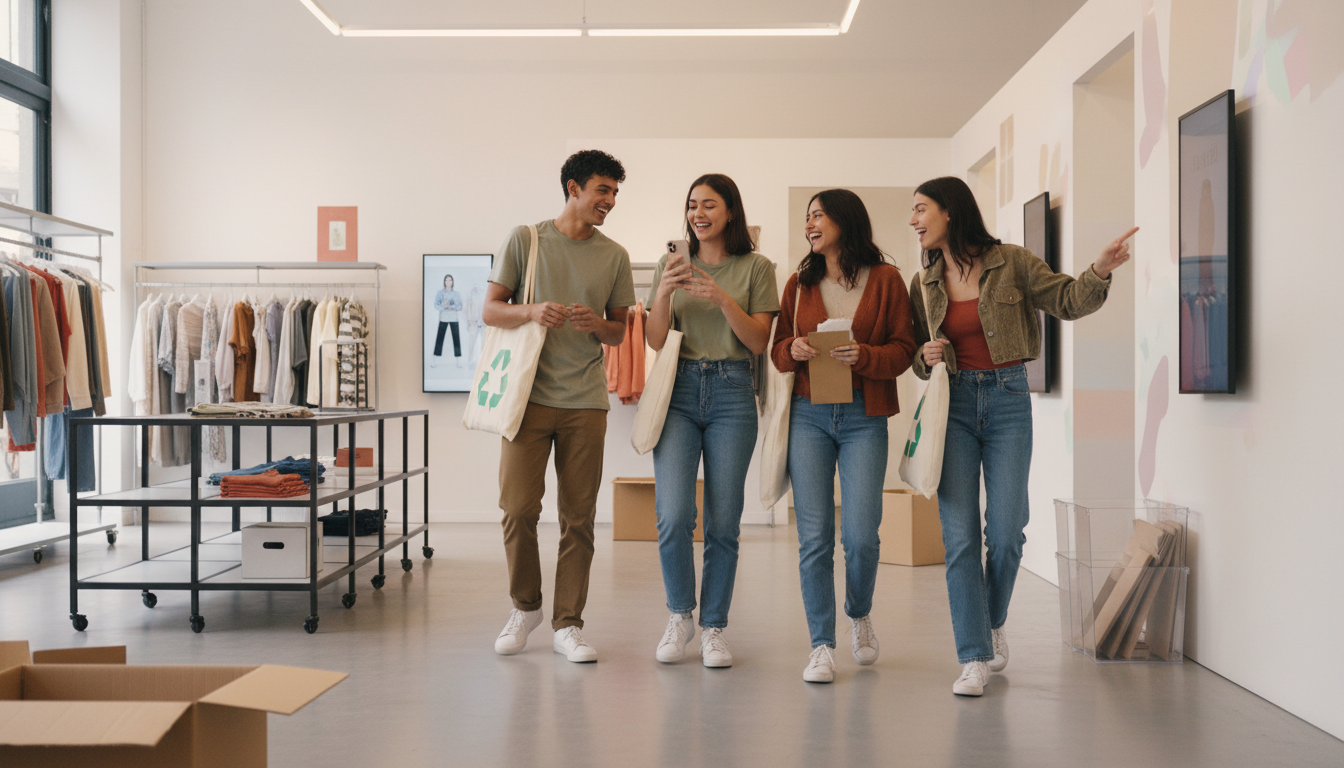
Generation Z has officially broken the fashion retail model, and fashion industry news coverage barely scratches the surface of this disruption. Their shopping patterns defy every assumption brands built their strategies around.
Data from retail analytics firms shows Gen Z consumers make 73% of fashion purchases through social media platforms, bypassing traditional retail entirely. They’re not just changing where they shop , they’re redefining what shopping means.
The Death of Brand Loyalty
Gen Z treats brands like dating apps , they swipe through options with zero emotional attachment. Fashion industry news celebrates “brand collaborations” while ignoring that these partnerships mean nothing to consumers who’ll abandon any brand for a better TikTok recommendation.
Traditional brand building strategies are useless when your target audience discovers new brands daily through algorithm-driven feeds. Marketing budgets are shifting from brand awareness to performance marketing because awareness doesn’t translate to loyalty.
Micro-Moment Commerce
Gen Z makes purchase decisions in seconds, not days. They see something on social media and buy immediately or move on forever. This behavior pattern is destroying traditional sales funnels and seasonal planning cycles.
Fashion brands are redesigning entire business models around impulse purchasing. Inventory planning has become reactive rather than predictive. The fashion industry news cycle moves too slowly to capture how rapidly these changes are happening.
Value Redefinition Crisis
Gen Z defines value differently than previous generations, and fashion industry news outlets struggle to understand this shift. They’ll pay premium prices for items that align with their identity while refusing to pay standard prices for traditional luxury goods.
A $300 vintage band tee feels more valuable than a $300 contemporary designer piece. Exclusivity matters less than authenticity. Heritage means nothing if it doesn’t translate to social media appeal.
“We’re not just selling clothes anymore. We’re selling moments, feelings, and social currency. The brands that understand this survive. The ones clinging to traditional retail models are already dead , they just don’t know it yet.” , Fashion retail consultant speaking to Vogue Business
Social Media Influence Power Shift Destroys Celebrity Culture
The celebrity-fashion complex has collapsed, and fashion industry news is still catching up to this seismic shift. Micro-influencers with 10,000 followers now drive more sales than A-list celebrities with millions of followers.
According to fashion marketing reports, celebrity endorsements generate 60% less engagement than they did in 2022. Meanwhile, unknown creators are launching fashion brands that outperform established labels backed by major celebrities.
The Authenticity Arms Race
Consumers can smell manufactured influence from miles away. Celebrity fashion partnerships feel forced and inauthentic compared to organic creator content. The fashion industry news cycle amplifies celebrity collaborations while ignoring the creators actually driving sales.
Brands are quietly shifting budgets from celebrity partnerships to creator programs. The economics are better , creators cost less and deliver higher conversion rates. Celebrity culture is becoming irrelevant to fashion commerce.
Democratized Taste-Making
Fashion authority has been democratized beyond recognition. Anyone with a phone and decent lighting can become a style influencer. Traditional fashion media gatekeepers are losing relevance as consumers trust peer recommendations over editorial content.
Fashion weeks are becoming irrelevant to actual consumer behavior. Street style photography matters more than runway shows. The fashion industry news cycle celebrates designers while consumers follow creators who remix and reinterpret those designs.
The Creator Economy Takeover
Fashion creators aren’t just influencing purchases , they’re launching competing brands. The barrier to entry for fashion entrepreneurship has never been lower. Established brands are competing with their own influencer partners who’ve gone direct-to-consumer.
Fashion industry news treats this as a collaboration trend, but it’s actually a hostile takeover. Creators are using brand partnerships to learn the business, then launching competitors with built-in audiences.
Resale Market Cannibalizes Traditional Retail
The resale fashion market has evolved from alternative shopping to primary retail, and fashion industry news coverage underestimates this transformation’s impact on traditional brands. Consumers now consider resale before retail for most fashion purchases.
Market data shows the global fashion resale market will reach $350 billion by 2027, representing nearly about one in five of total fashion spending. This isn’t supplemental income for the industry , it’s a fundamental redistribution of fashion dollars.
The New Retail Hierarchy
Resale platforms have become the primary discovery mechanism for fashion brands. Consumers research items on resale sites before buying retail. The secondary market is driving primary market demand, completely inverting traditional retail logic.
Fashion brands are losing control of their pricing and positioning. Resale values determine perceived brand worth more than retail prices. A brand’s resale performance has become a more accurate indicator of desirability than sales figures.
Inventory Obsolescence Crisis
Traditional retail inventory is competing with decades of existing fashion stock circulating through resale channels. Every new item must justify its existence against similar pieces already available secondhand at lower prices.
Fashion industry news celebrates sustainability angles of resale while ignoring the economic devastation it’s causing traditional retailers. Department stores and specialty boutiques can’t compete with the variety and pricing of established resale platforms.
Brand Value Disruption
Resale markets have created transparent pricing for fashion items, destroying brands’ ability to maintain artificial scarcity and premium positioning. Consumers can see exactly what items are worth in real-time secondary markets.
Limited edition releases and exclusive drops lose their power when resale platforms immediately reveal actual demand and pricing. The fashion industry news cycle hypes launches while resale data provides brutal reality checks on brand desirability.
Fast Fashion’s Final Evolution Into Pure Addiction
Fast fashion has transcended retail to become a behavioral addiction platform, and fashion industry news outlets refuse to acknowledge this transformation’s psychological implications. Brands like Shein and Temu have gamified shopping to trigger dopamine responses.
Consumer psychology research shows fast fashion apps use the same engagement mechanisms as gambling platforms. Variable reward schedules, limited-time offers, and social proof notifications create compulsive shopping behaviors that traditional retail never achieved.
The Dopamine Economy
Fast fashion platforms have perfected the art of micro-rewards. Every scroll, heart, and purchase triggers small dopamine hits that keep users engaged for hours. Fashion industry news treats this as new user experience while ignoring the addictive design patterns.
Shopping has become entertainment, not necessity. Consumers browse fast fashion apps like social media, making impulse purchases for the temporary high rather than actual need. The average user spends 47 minutes daily on fashion shopping apps.
Psychological Manipulation Mastery
Fast fashion brands employ teams of behavioral psychologists to optimize addiction potential. Scarcity timers, social proof notifications, and personalized recommendations create artificial urgency that bypasses rational decision-making.
Fashion industry news celebrates “personalization” and “user experience” while ignoring that these features are designed to exploit psychological vulnerabilities. The line between retail innovation and predatory design has completely disappeared.
The Overconsumption Crisis
Average consumers now purchase 68 fashion items annually, compared to 12 items in 2000. This isn’t natural demand evolution , it’s manufactured addiction. Fast fashion has successfully rewired consumer behavior to prioritize quantity over quality.
Closets are overflowing while satisfaction decreases. The hedonic treadmill of fast fashion requires increasingly frequent purchases to maintain the same emotional high. Fashion industry news treats overconsumption as market growth rather than societal problem.
Luxury Fashion’s Identity Crisis Reaches Critical Mass
Luxury fashion brands are experiencing an existential crisis as traditional markers of exclusivity become meaningless, and fashion industry news coverage barely captures the depth of this identity collapse. Heritage, craftsmanship, and scarcity , the pillars of luxury positioning , have lost their power in the digital age.
According to luxury market analysis from Bain & Company, traditional luxury consumers are aging out while younger demographics reject conventional luxury values. Brands built on centuries of tradition are scrambling to remain relevant to consumers who value different status symbols.
The Democratization Dilemma
Social media has made luxury fashion visible to everyone while making actual ownership less exclusive. Consumers can experience luxury brands through content without purchasing, reducing the psychological need for ownership. Fashion industry news celebrates increased brand awareness while ignoring decreased purchase intent.
Luxury brands face an impossible choice: maintain exclusivity and lose relevance, or embrace accessibility and lose prestige. Every attempt to broaden appeal dilutes the scarcity that justifies premium pricing.
Authenticity Versus Accessibility
Younger consumers demand authentic brand stories while simultaneously expecting accessible price points. Luxury brands can’t maintain artisanal production methods while meeting mass market pricing expectations. The economics of true luxury are incompatible with democratic access.
Fashion industry news promotes “accessible luxury” as innovation while ignoring that accessibility and luxury are fundamentally contradictory concepts. Brands are caught between authentic positioning and commercial viability.
The Status Symbol Shift
Traditional luxury goods no longer signal status to younger consumers who prioritize experiences over possessions. A $3,000 handbag carries less social currency than a $300 concert ticket or travel experience. Luxury fashion is competing with entirely different categories for consumer attention and spending.
Fashion industry news focuses on luxury brand financial performance while missing the cultural irrelevance driving long-term decline. Luxury fashion is becoming a niche interest rather than aspirational category.
Fashion Week Relevance Collapses Into Performance Art
Fashion weeks have devolved into expensive theater productions with minimal commercial impact, and fashion industry news perpetuates the illusion that these events still matter to actual fashion business. The disconnect between runway presentations and consumer behavior has never been wider.
Industry data shows less than 5% of runway looks translate to commercial success, while fashion weeks consume roughly a third of major brands’ annual marketing budgets. The return on investment has become impossible to justify, yet brands continue participating out of tradition rather than strategy.
The Commercial Disconnect
Runway shows showcase unwearable art pieces while consumers buy basic items influenced by social media creators. Fashion weeks generate press coverage that doesn’t translate to sales. The fashion industry news cycle amplifies runway moments while ignoring their commercial irrelevance.
Buyers attend fashion weeks out of obligation, not inspiration. Most purchasing decisions are made through digital showrooms and data analysis, not runway presentations. Fashion weeks have become networking events disguised as business necessities.
The Influence Inversion
Street style photography outside fashion week venues generates more consumer engagement than the actual shows. Fashion industry news covers runway collections while consumers screenshot outfit inspiration from attendees’ Instagram posts.
The real fashion influence happens in the streets, restaurants, and parties surrounding official events. Fashion weeks have become elaborate backdrops for content creation rather than trend-setting platforms.
Economic Sustainability Crisis
Fashion weeks cost millions to produce while generating questionable returns. Smaller brands can’t afford participation while established brands question the investment. The economic model is collapsing as digital alternatives provide better reach at lower costs.
Fashion industry news treats fashion week attendance as industry health indicators while ignoring the financial strain these events place on participating brands. The system is maintained by collective delusion rather than business logic.
Frequently Asked Questions
What is the 3 3 3 rule in fashion?
The 3 3 3 rule suggests building outfits around three colors, three textures, and three proportions to create visual balance. However, this traditional rule is becoming irrelevant as Gen Z consumers embrace maximalist styling and reject conventional fashion formulas in favor of personal expression.
What are the current issues in the fashion industry?
The fashion industry faces multiple crises in 2026: AI replacing human designers, sustainability initiatives failing commercially, Gen Z shopping habits disrupting traditional retail models, and luxury brands losing relevance among younger consumers. These issues are interconnected and accelerating industry transformation.
Who is Shein’s biggest competitor?
Temu has emerged as Shein’s primary competitor, using similar ultra-fast fashion models and addictive app design. However, both platforms compete more with traditional retailers than each other, as they’ve created an entirely new category of impulse-driven fashion consumption.
Is the clothing industry falling?
The traditional clothing industry is collapsing while new models emerge. Physical retail is declining, traditional design processes are being automated, and consumer behavior has shifted to digital-first, impulse-driven purchasing. The industry isn’t falling , it’s transforming into something unrecognizable.
How is social media changing fashion industry news?
Social media has democratized fashion influence, making traditional fashion media less relevant. Consumers trust peer recommendations over editorial content, and micro-influencers drive more sales than celebrity endorsements. Fashion industry news now competes with real-time social media content for attention and credibility.