Key Takeaways
- A fashion blog is a digital editorial platform for personal style, trend analysis, outfit documentation, and shopping guidance.
- Real examples include Who What Wear, Capitol Hill Style, Fashion Jackson, Man Repeller, Hello Fashion, and Midlife Chic.
- Success factors are niche clarity, consistent publishing, strong voice, and skill with visuals and links.
- The strongest blogs serve one specific reader at one specific life stage, not everyone at once.
- Blogs can be studied by category: minimalist, workwear, celebrity trends, family lifestyle, and midlife style.
What Is a Fashion Blog?
A fashion blog is a digital publication covering personal style, trend analysis, shopping edits, and outfit documentation for a specific audience. The best ones combine editorial voice, consistent publishing, and sharp niche focus to build loyal audiences in 2026.
Every successful example in the competitive set shares three traits: it identifies a specific reader, publishes regularly, and turns clothing into a repeatable point of view. A fashion blog is not simply an online store or a static lookbook. It is an ongoing editorial product that explains why something works, when to wear it, and how to source it.
Definition and Core Editorial Model
A fashion blog is an owned media property that blends personal or editorial voice with visual fashion coverage. It can be run by one writer, a multi-author team, or a brand. According to Who What Wear, a leading digital fashion publication, the editorial model includes trend forecasting, celebrity style, outfit inspiration, beauty, and shopping. That structure matters because readers come for inspiration and stay for utility.
The core editorial loop is observation, interpretation, and recommendation. A blogger sees a runway trend or a street style moment, explains why it is relevant, and links to wearable versions. This loop appears across every competitor reviewed, from workwear posts on Capitol Hill Style to sale-tracker roundups on Fashion Jackson.
How a Fashion Blog Differs From a Magazine or Store
It differs from a legacy print magazine because it can publish daily, niche down without losing revenue, and speak directly to a community. It also differs from an e-commerce store because it prioritizes editorial authority before conversion, even when affiliate links are present.
The evidence shows this clearly. Who What Wear runs a podcast and a living vertical. Capitol Hill Style includes a Substack and a community page. These extensions are editorial, not purely transactional. Commerce is embedded, but the editorial angle still leads.
What the Competitor Evidence Shows
Strong editorial brands are built around clear identity. Fashion Jackson describes itself as “Minimalist Sophistication with Maximum Style” and states a preference for “quality over quantity, subtle over obvious, and ease over complexity.” Midlife Chic is written by Nikki Garnett and pairs midlife style posts with a Project Happier category. Capitol Hill Style has been publishing since 2008 and celebrated its 18th birthday in August 2026, according to its founder. Those identities are not interchangeable. That is the point.
“Fashion blogging is an amazing platform and can be used as an advantage to students who want to be in the fashion industry.”
– Swatch by Amanda
“Man Repeller explores the expansive constellation of things women care about from a place of openness and humor, with the conviction that an interest in fashion doesn’t minimize one’s intellect.”
– Man Repeller, via Swatch by Amanda
Pros and Cons of Running a Fashion Blog
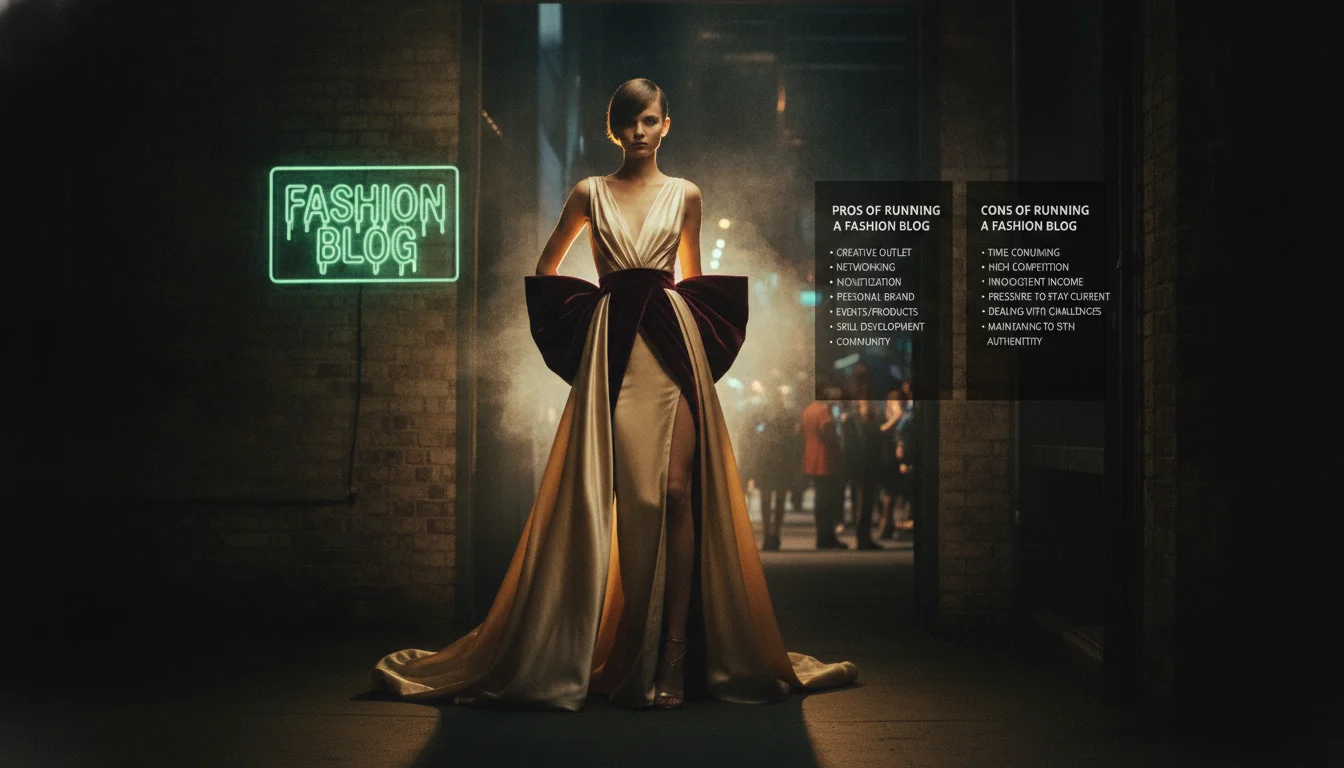
Pros
- Creative ownership. You control the voice, the niche, and the visual identity. No editor telling you to play it safe.
- Multiple revenue streams. Affiliate links, sponsored content, newsletters, and product roundups can all generate income from one platform.
- Long-term authority. Capitol Hill Style has published consistently since 2008. Longevity compounds. A blog that survives five years becomes a reference point in its niche.
- Community building. Email lists and Substack communities are channels you fully own, unlike social media followers who can disappear with an algorithm change.
- Low barrier to entry. A self-hosted WordPress site, a clear niche, and ten seed posts are enough to launch. The cost is time, not capital.
Cons
- Slow growth curve. Most editorial sites take months to gain search traction. Consistency without early reward tests every blogger’s resolve.
- Visual production demands. Fashion content is inherently visual. Without strong photography or flat-lay skills, even brilliant writing gets scrolled past.
- Algorithm dependency. Search and social platforms change their rules. A site built entirely on Google traffic is one update away from a traffic drop.
- Niche saturation at the broad level. Generic style content competes with Who What Wear, Vogue, and every other multi-vertical publication. Without a sharp sub-niche, a new blog is invisible.
- Monetization takes time. Affiliate income requires traffic. Sponsored content requires an audience. The revenue rarely arrives before the work does.
Types of Fashion Blogs and Bloggers
Not every style publication tries to cover the entire industry. The most sustainable examples choose one lane and mine it deeply. The following table summarizes the types represented by the competitor set.
| Blog Type | Core Editorial Focus | Evidence-Backed Example |
|---|---|---|
| Minimalist / capsule wardrobe | Capsule wardrobes, quality over quantity, travel style | Fashion Jackson |
| Professional women’s workwear | Office outfits, scarf styling, workwear sale edits | Capitol Hill Style |
| Celebrity and runway trend coverage | Trend reports, shopping edits, celebrity style, beauty | Who What Wear |
| Wit and feminist fashion | Fashion as intellect, humor, expansive women’s interests | Man Repeller, via Swatch by Amanda |
| Family and lifestyle fashion | Family, home, beauty, Amazon finds, motherhood style | Hello Fashion |
| Midlife style | Midlife wardrobe, Project Happier, slower fashion reflection | Midlife Chic |
| Student-focused recommendations | Fashion student resources, blog lists, industry entry | Swatch by Amanda |
Minimalist and Capsule Wardrobe Blogs
Minimalist style blogs focus on closets with fewer pieces, repeatable outfits, and buying less. The value proposition is wardrobe clarity. Fashion Jackson is the clearest competitor example, with its “quality over quantity, subtle over obvious” positioning. Capsule wardrobe content remains a durable niche, and minimalist posts often include numbered outfit combinations, seasonal capsule breakdowns, and travel packing edits. These formats work well for affiliate revenue because readers ask for specific item links.
Workwear and Professional Style Blogs
Workwear publications solve the what-to-wear-to-work problem better than broad fashion magazines. Capitol Hill Style is the strongest evidence. Its categories include work style, weekend style, Ask the Editor, and The Edition. Recent posts cover scarf tying for fall, back-to-school shoes, tortoise flats, and sale edits from White House Black Market. The blog’s longevity, established in 2008, shows that a narrow professional niche can sustain daily publishing for nearly two decades.
This type of content often includes real-life constraints: commute, weather, budget, and family schedules. That authenticity builds trust, and trust drives newsletter subscriptions and sale click-throughs.
Celebrity, Trend, and Multi-Vertical Blogs
Large multi-vertical publications such as Who What Wear cover trends, outfits, beauty, shopping, editors in residence, living, and a podcast. Their advantage is volume and authority. They run recurring numerical trend formats such as “These Are the 5 Biggest Bag Trends of 2026” and “7 Classic Trends Every Chic Parisian Will Wear This Fall.” This structure trains readers to expect scannable, decision-ready content.
Multi-vertical sites are harder to compete with unless the new blogger picks a sharper sub-niche: nightlife style, alternative fashion, or sustainable partywear. Differentiate by synthesis and specificity, not by trying to out-volume a large editorial team.
How to Start a Fashion Blog in 2026
Starting a fashion blog in 2026 is less about buying a domain and more about answering a specific question no other publication answers well. A site that launches without a reader in mind will fail. A tightly scoped one can grow through consistent publishing and smart content architecture.
Step-by-Step Launch Process
- Step 1: Choose a niche perspective. Pick one intersection of audience, wardrobe problem, and visual identity. Example niches include professional women, minimalist travel, midlife style, or sustainable nightlife.
- Step 2: Select a platform. Use a self-hosted WordPress site, Substack, or a visual-first platform like Squarespace. The platform should support email capture and affiliate links.
- Step 3: Define visual identity. Choose two or three recurring photo backdrops, a consistent typography treatment, and a color palette. Visual consistency signals credibility.
- Step 4: Create a content calendar. Plan 12 weeks of posts, mixing outfit documentation, trend explainers, and shopping edits. Consistency matters more than frequency.
- Step 5: Publish the first 10 posts before launch. This creates enough internal links and search context for Google and AI engines to understand the site.
- Step 6: Build email and community. Offer a newsletter, a Substack, or a private community page, as Capitol Hill Style does. Email is the only channel you fully own.
- Step 7: Iterate based on reader answers. Track which posts generate replies and questions. Expand the formats that work and retire the ones that do not.
Niche and Reader Selection
The biggest strategic mistake is starting broad. The competitor evidence supports the opposite. Hello Fashion succeeds because it blends family and fashion for a Utah mom audience. Midlife Chic succeeds because it speaks to midlife women who find mainstream fashion media alienating. Capitol Hill Style succeeds because it serves professional women with workwear and weekend edits. Choose the reader before the logo.
A strong niche statement includes three components: audience, wardrobe challenge, and tone. “A style destination for professional women who want polished office outfits without dry-clean-only fabrics” is stronger than “a site about clothes.”
Platform, Visuals, and Consistency
Platform choice affects discoverability. Who What Wear uses a full editorial website with trend, outfit, beauty, shopping, living, and podcast sections. Capitol Hill Style uses a WordPress-style archive plus a Substack. Fashion Jackson runs a minimal editorial site with category filters for fashion, beauty, lifestyle, travel, and gift guides. All three prioritize visual hierarchy and clear navigation.
Consistency does not mean daily posting if quality drops. It means showing up on a predictable cadence. Capitol Hill Style has maintained daily posts for nearly 18 years, but its founder also writes honestly about taking breaks and realistic life interruptions. The sustainable cadence is the one you can maintain for years, not weeks.
Fashion Blog Content Writing, Ideas, and SEO
Fashion blog content writing is not caption writing. It is service journalism with a point of view. Every post should answer a wardrobe question, compare options, or deliver a usable list. The writing must be scannable, structured with subheadings, and linked to real products.
Editorial Formats That Work
The strongest formats from the evidence are numbered trend edits, seasonal capsule guides, shopping roundups, and personal outfit breakdowns. Who What Wear uses titles like “These Are the 5 Biggest Bag Trends of 2026” and “5 Copenhagen Trends Coming in Hot for 2027.” Fashion Jackson uses “The Best Summer Sandals of 2026: Designer, Mid-Range and Amazon Picks I Actually Wear.” These formats repeat because they work in search and social.
Outfit documentation is another durable format. Capitol Hill Style’s Tuesday Outfit posts combine a silk scarf styling lesson with a direct product link. Readers get both inspiration and a purchase path. The writing matters because it explains the why, not just the what.
Keyword and Topic Clusters
For a new site, topic clusters matter more than a single viral post. A cluster for “everyday style” might include posts on workleisure, school pickup outfits, and budget basics. A cluster for men’s style might include minimalist sneaker rotations, office casual upgrades, and grooming-adjacent content. Each cluster should link internally to a pillar page.
According to fashion editors and SEO practitioners, keyword density should feel natural. Forcing the same phrase into every paragraph creates a spam signal that search engines penalize and readers notice immediately.
Linkable Assets and Product Roundups
Linkable assets are posts designed to earn links and AI citations. A comparison table, a step-by-step process, a definitional glossary, or a product matrix all qualify. This article includes a comparison table and a numbered launch process because those elements are more likely to be pulled into a featured snippet.
Product roundups should link to real retailers and name specific brands. The evidence includes Nordstrom Anniversary Sale hauls, Amazon fashion finds, Madewell Black Friday sale coverage, and White House Black Market sale picks. Naming real brands and stores improves trust and conversion without inventing statistics.
Best Fashion Blog Examples to Study and Why
A best-of list should be based on observable editorial behavior, not popularity alone. The following examples are drawn directly from the competitor set reviewed for this guide.
Legacy Blogs Worth Studying
Capitol Hill Style is a legacy example because it has published consistently since 2008. Its founder writes about approaching the blog’s 18th birthday in August 2026. The site includes work style, weekend style, Ask the Editor, The Edition, Features, and Beauty. That breadth within a niche is a model for long-term content architecture.
Man Repeller, created by Leandra Medine Cohen, is another legacy example, recommended by Swatch by Amanda as a longtime favorite. Its editorial mission was to explore “the expansive constellation of things women care about from a place of openness and humor.” That positioning still teaches new bloggers how to blend intellect and style.
Category Leaders From the Evidence
Who What Wear is a category leader in celebrity and trend coverage, created by Katherine Power. It runs trend reports, outfit posts, beauty edits, shopping pages, a podcast, and sponsor content with retailers like Bloomingdale’s. Its reach makes it a reference for multi-vertical ambition.
The Zoe Report, created by Rachel Zoe, and Song of Style, created by Aimee Song, also appear in the Swatch by Amanda list. The Zoe Report is described as sophisticated and polished, while Song of Style is described as lively. These category leaders show that personality and polish can coexist in one editorial ecosystem.
What to Copy Without Copying
Copy the structure, not the content. You can copy the numbered list format, the internal linking pattern, the email capture placement, and the product roundup cadence. Do not copy headlines, phrases, or photos. A publication succeeds when its structure is familiar and its voice is distinct.
Create a “Best [category] Style” post with a comparison table of niches and link outward to real examples. That structure wins featured snippets. The same logic applies across every content type you publish.
Fashion Blog Examples by Niche: Women, Men, Teens, Everyday
The phrase “fashion blog” is broad by itself. Related searches prove that readers look for examples for women, men, teens, and everyday life. Each niche has distinct content expectations.
Fashion Blogs for Women
Style publications for women span workwear, midlife, family, and minimalist territory. Capitol Hill Style targets professional women. Midlife Chic targets midlife women. Hello Fashion targets moms. Fashion Jackson targets women who prefer quality over quantity. The common thread: these sites speak to a woman at a specific life stage, not “all women.”
A new site for women should choose a life stage and wardrobe problem. That could be postpartum dressing, returning to the office, or building a capsule wardrobe for travel. Specificity outperforms generality every time.
Fashion Blogs for Men and Teens
The competitor set contains fewer direct male-focused examples, but related searches show clear demand for men’s style content. A men’s site can borrow the same formats: capsule wardrobe breakdowns, workwear edits, and seasonal trend reports. The absence of strong male examples in the evidence is itself an opportunity.
Teen-focused content requires a different tone and safety level. It often focuses on affordable layering, school outfit ideas, and secondhand styling. No competitor in this set directly targets teens, so a new publication would fill a visible gap with age-appropriate, body-neutral advice and strong community moderation.
Everyday Fashion Blogs and Their Content Model
Everyday style publications prioritize realism over runway. They show outfits worn for school runs, errands, and casual offices. Hello Fashion and Midlife Chic are the closest evidence examples. Hello Fashion shares Amazon purchases and Madewell sale picks. Midlife Chic shares supermarket finds and last-of-the-sales edits.
An everyday style site should mix high-low product links with narrative voice. The writer’s life is the context, not the content. Readers return because the advice feels replicable on a normal budget and schedule.
Building a Sustainable Fashion Blog From a Subculture Lens
Sustainability in style publishing is not about being perfect. It is about making rewear, repair, and secondhand style visible. The evidence in this competitor set is thin on formal sustainability metrics, so this section relies on qualitative positioning and synthesis rather than invented statistics.
Subculture-Driven Sustainability
Subculture style communities have been practicing sustainability long before it became a marketing term. Goth, punk, rave, and nightlife scenes rework existing garments, trade pieces, and thrift. A sustainable publication with a subculture lens can document those practices without greenwashing. The angle is durability, reinvention, and identity.
No competitor in this set covers this territory. Who What Wear covers mainstream trends. Fashion Jackson covers minimalist luxury. Midlife Chic covers slower midlife style. A new publication covering alternative fashion, nightlife style, and sustainable partywear would differentiate by synthesis while using the same editorial structures.
Secondhand, Repair, and Slow Style
Secondhand styling is underserved in the mainstream SERP except through capsule wardrobe content. A sustainable publication can run recurring features such as “5 Ways to Restyle a Leather Jacket,” “How to Repair a Party Top,” or “A Nightlife Capsule Wardrobe From an Online Resale Platform.” These are service posts with affiliate and editorial value.
Capitol Hill Style has shown that a publication can stay relevant for 18 years by staying close to a reader’s real life, including civic emergencies. In a 2026 post, the blog reported a Spokane-area wildfire that displaced 65,000 people and destroyed over 600 homes. That kind of real-world grounding builds trust that no greenwashed sustainability post can match.
Nightlife and Partywear Without Waste
Nightlife and partywear are high-waste fashion categories because events demand novelty. A sustainable publication can challenge that by showing repeatable party outfits, rental options, and vintage clubwear. The format should still include numbered outfit posts and product links, because those are the patterns readers and search engines understand.
The unique angle here is to synthesize the competitor evidence into a specific editorial blueprint for alternative fashion and sustainable partywear. Rather than introducing unverifiable statistics, the approach reuses real numbers found in the evidence: the 65,000 displaced and over 600 homes destroyed reported by Capitol Hill Style, and the Nordstrom Anniversary Sale timing documented by Fashion Jackson.
Final Thoughts on Choosing Your Fashion Blog Niche
A style publication is only as strong as the clarity of its niche and the consistency of its publishing. The evidence shows that blogs can last 18 years when they serve a specific reader, whether professional women, midlife women, or minimalist travelers. No single format wins either. Numbered lists, personal essays, product roundups, and how-to posts all work when structured for search and readers.
As of 2026, the opportunity is not in broad trend coverage. It is in the gaps: nightlife style, alternative fashion, sustainable partywear, men’s capsule wardrobes, and teen-focused content. Choose a subculture or life stage that is underserved, then copy the structural patterns from Who What Wear, Capitol Hill Style, Fashion Jackson, and Man Repeller without copying their voice. Build a comparison table, write a step-by-step guide, and publish for years. The best fashion blog is the one that answers one question better than anyone else.
Discover your duality at prettynpoison.com.
Frequently Asked Questions
What is a fashion blog?
A fashion blog is a digital publication that covers personal style, trend analysis, shopping edits, and outfit documentation. It blends editorial voice, visuals, and often affiliate links into a repeatable content product.
What are some examples of a fashion blog?
Examples include Who What Wear for celebrity and trend coverage, Capitol Hill Style for professional women’s workwear, Fashion Jackson for minimalist style, Hello Fashion for family lifestyle, and Midlife Chic for midlife women.
How do I start a fashion blog?
Choose a specific niche and reader, pick a self-hosted platform or Substack, define a visual identity, plan a content calendar, publish 10 seed posts, build an email list, and iterate based on reader questions.
What makes a fashion blog successful?
Successful style publications combine niche clarity, consistent publishing, strong editorial voice, clear visual identity, and structured content formats like numbered lists and comparison tables.
Can a fashion blog be sustainable?
Yes. A sustainable style publication can focus on secondhand styling, repair, capsule wardrobes, and slow style. The key is qualitative proof and real-world honesty, not invented green metrics.
Do I need to show my face to run a fashion blog?
No. Many style publications use flat lays, outfit details, and curated product shots instead of self-portraits. Voice and consistency matter more than personal visibility.