80’s fashion for women is a style era defined by exaggerated silhouettes, bold color, and fearless self-expression. Think shoulder pads sharp enough to cut glass, denim cinched high, and accessories loud enough to announce your entrance before you speak.
Key Takeaways
- 80’s fashion for women centers on power dressing, high-waisted denim, puff sleeves, and maximalist accessories.
- Designers like Claude Montana, Emanuel Ungaro, and Yves Saint Laurent built the power suit into a symbol of authority, according to Vogue.
- Budget costume sets start under $25 on Amazon, while investment vintage from designer labels can run past $200.
- Fabric matters: natural fibers and structured padding signal quality, while cheap polyester falls flat fast.
- Style it modern by isolating one statement piece, like a shoulder blazer, and grounding it with contemporary basics.
- Care differs by piece: dry clean structured suits, machine wash cotton, and air dry spandex to protect elasticity.
Understanding 80’s Fashion for Women
80’s fashion for women is a movement built on excess, rebellion, and unapologetic self-definition. It isn’t a costume punchline. It’s a style language that still bleeds into runway collections and street style today. According to Vogue, the decade turned clothing into a weapon of power and self-expression, fueled by economic ambition, MTV, and a feminist push that refused to stay quiet. Fashion Gone Rogue notes that today’s revivals prove this decade never really left.
“Power suits didn’t whisper femininity, they roared it,” Vogue writes of the decade’s defining silhouette, crediting designers who built armor for women stepping into rooms that weren’t built for them.
The Power Dressing Movement
Power dressing is a strategy that uses structured tailoring, sharp shoulder pads, and bold color to project authority without saying a word. Women wore it to break down doors that had been locked for generations. Designers like Claude Montana, Emanuel Ungaro, and Yves Saint Laurent crafted suits that read like armor: exaggerated shoulders, double-breasted lines, and beadwork that made femininity impossible to ignore.
Casual and Denim Revolution
Calvin Klein and Gloria Vanderbilt turned denim from workwear into a statement, according to Fashion Gone Rogue. High-waisted jeans, acid wash finishes, and boxy denim jackets became everyday staples. Pair them with a graphic tee or a lace top, channel a little Madonna energy, and you’ve got the uniform half the decade lived in.
Subcultures and Eclectic Styles
The 80s ran on collision: preppy met punk, new wave crossed hip-hop, and nobody agreed on a single look. A YouTube deep dive titled ULTIMATE GUIDE TO 80s FASHION traces the spectrum from Cyndi Lauper’s chaotic layering to the glossy, boardroom glamour of Dynasty. Beyond the mainstream, the New Romantic movement brought theatrical ruffles and dramatic makeup out of London clubs, while goth subculture answered with black lace, teased hair, and a whole lot of eyeliner. Every corner of the decade had its own uniform, and none of them apologized for being loud.
What to Look For When Buying 80’s Fashion for Women
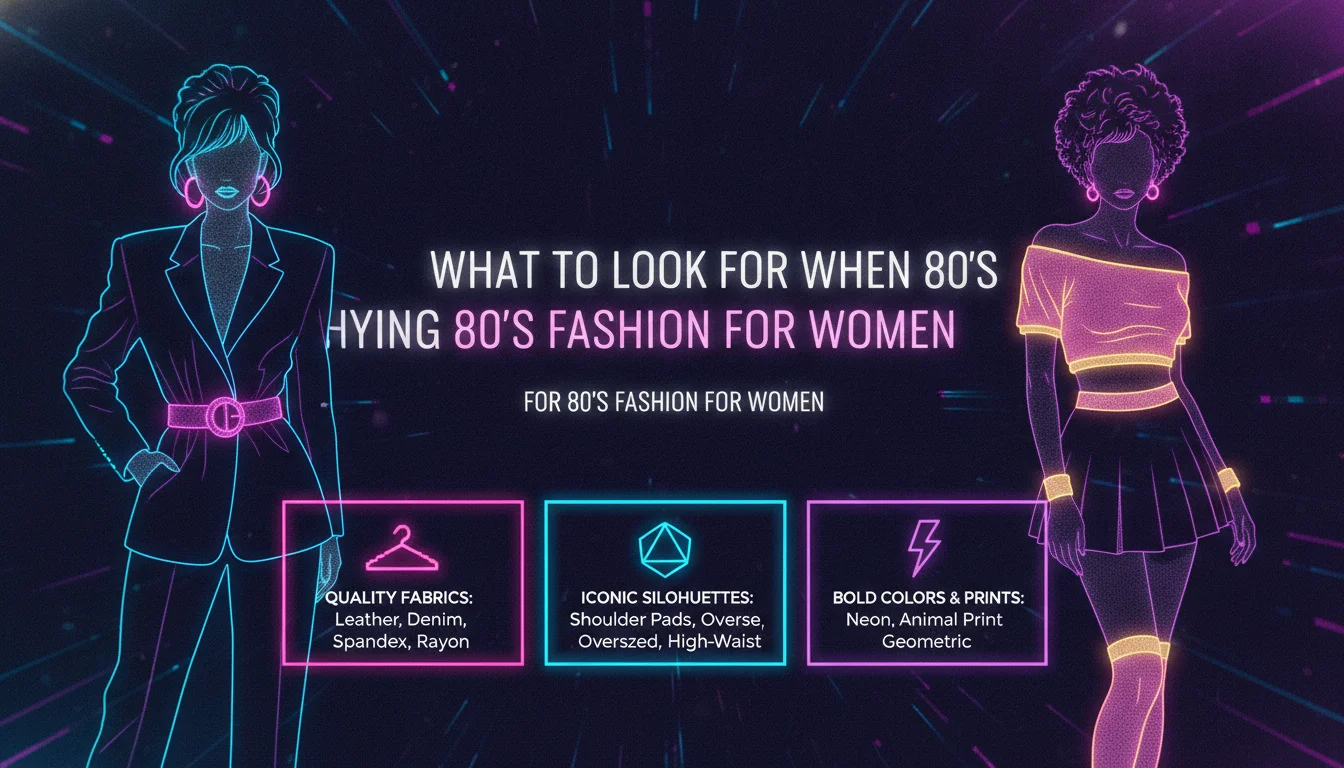
The best way to buy authentic 80’s fashion for women is to check construction, fabric, and detailing before you check the price tag. Whether you’re hunting vintage or a modern reproduction, here’s how to separate the real thing from a flimsy knockoff.
- Step 1: Examine the silhouette and construction. A real power blazer holds its shoulder pad structure, it doesn’t collapse. Check the seams too. Genuine vintage tends to have sturdier finishing than fast fashion reproductions.
- Step 2: Assess the material. Wool and silk signal higher quality construction, while spandex blends were standard for activewear. Steer clear of stiff, cheap polyester with zero stretch.
- Step 3: Check for authentic details. Double-breasted closures, peplum waists, structured puff sleeves, and original labels from names like Thierry Mugler or Yves Saint Laurent all add real value.
- Step 4: Consider fit and comfort. Shoulder pads can swallow a petite frame, so try pieces on when you can. Buying online? Check the measurements closely: 80s sizing tends to run smaller than what you’re used to today.
- Step 5: Set your budget tier. Decide between budget-friendly reproductions, mid-range vintage finds, or premium designer pieces before you start scrolling.
A puff sleeve, for reference, balloons out from the shoulder or upper arm before tapering at the wrist. It’s one of the most recognizable silhouette details of the entire decade.
Price Range: Budget to Premium
You can build an 80s look at nearly any price point right now. Amazon lists over 10,000 results for 80s outfits for women, with full costume sets starting at $21.98 and accessory bundles from $13.96. Walmart carries comparable budget options.
- Budget: Costume sets and accessory bundles typically run under $50, with entry points as low as $13.96 for accessories on Amazon.
- Mid-range: Vintage shops and platforms like Etsy sell original 80s denim jackets, power suits, and evening dresses in the $50 to $150 range.
- Premium: High-end vintage boutiques and collector pieces can climb past $200, especially for designer labels like Claude Montana.
Must-Have Pieces for an Authentic 80s Wardrobe
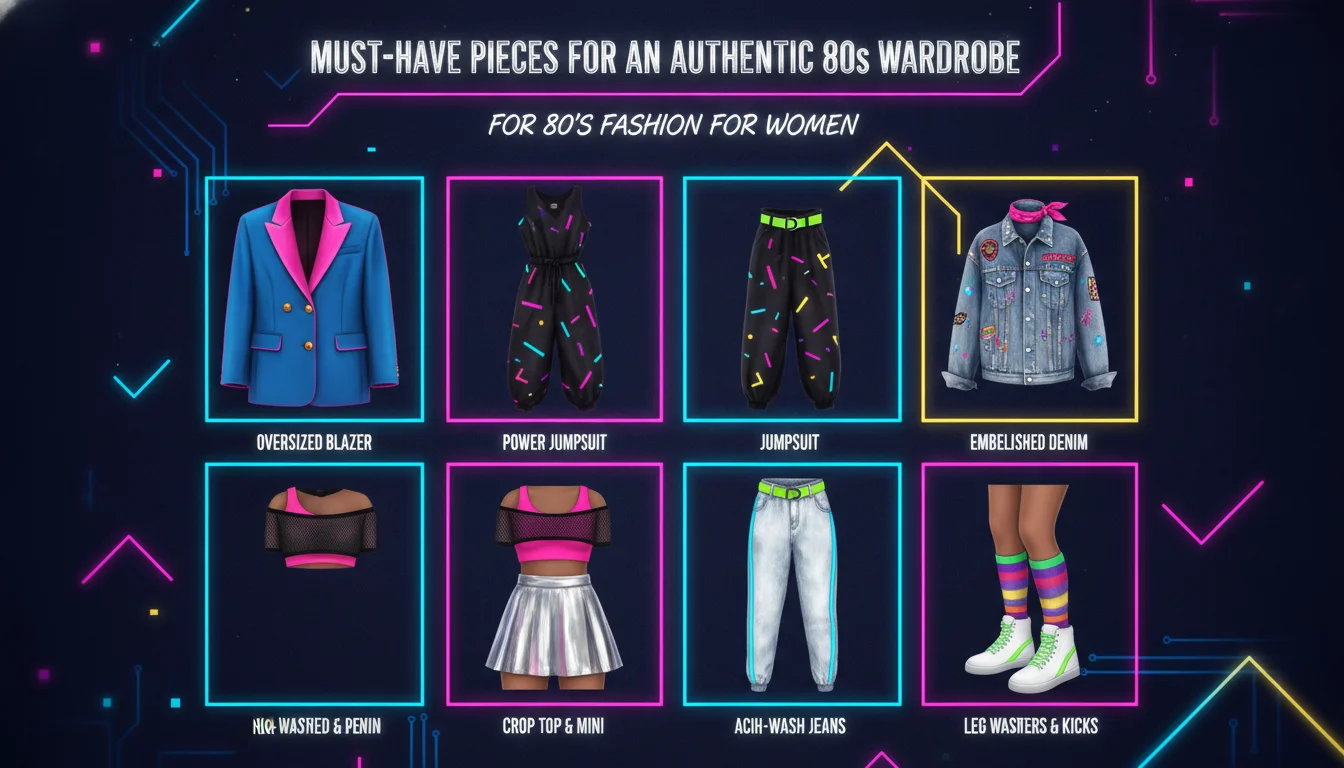
The must-have pieces for an authentic 80s wardrobe are the power suit, high-waisted denim, puff sleeve dresses, statement accessories, and spandex activewear. Each one defined a different corner of the decade, and each one still works for a themed night out or everyday retro styling.
Shoulder Pad Blazers and Power Suits
A power suit with sharp shoulder pads changes a room the second you walk in. Go bold, fuchsia, cobalt, anything that refuses to blend in, the way 1980s corporate culture demanded. Designers like Ungaro made these suits unmistakably feminine with beadwork and saturated color, proving tailoring never had to mean playing small.
High-Waisted Denim
Calvin Klein’s jeans campaigns made high-waist styling iconic, and it’s never fully gone away. Look for rigid denim with a tapered or straight leg. Acid wash and stone wash treatments add instant authenticity.
Puff Sleeve Dresses and Tops
From Cyndi Lauper’s stage looks to prom night classics, puff sleeves build a silhouette that’s part romance, part drama. They work in mini, midi, or maxi, and they’re just as sharp now as they were then.
Statement Accessories
No 80s outfit finishes without accessories: chunky belts, layered pearls, neon fanny packs, fishnet gloves, leg warmers, and earrings big enough to have their own gravitational pull. Amazon’s bundled accessory sets pull these essentials together for a quick, complete look.
Spandex and Activewear
The Jane Fonda-era workout craze put spandex leotards, leg warmers, and high-cut unitards into every closet, according to era retrospectives from vintage archives. These pieces have found a second life as festival wear.
Hair, Makeup, and Shoes: Finishing the Look
Big hair, bold shadow, and statement shoes complete any 80s look, full stop. Crimped or teased hair, bright blue or violet eyeshadow, and a strong blush placement were the beauty rules of the decade. On feet, think chunky sneakers in the style of Reebok Freestyle or L.A. Gear, high-top Converse, or pointed flats for the power-suit crowd. Skip the shoes and hair, and even the most accurate outfit reads as incomplete.
How to Style 80’s Fashion for Women Today
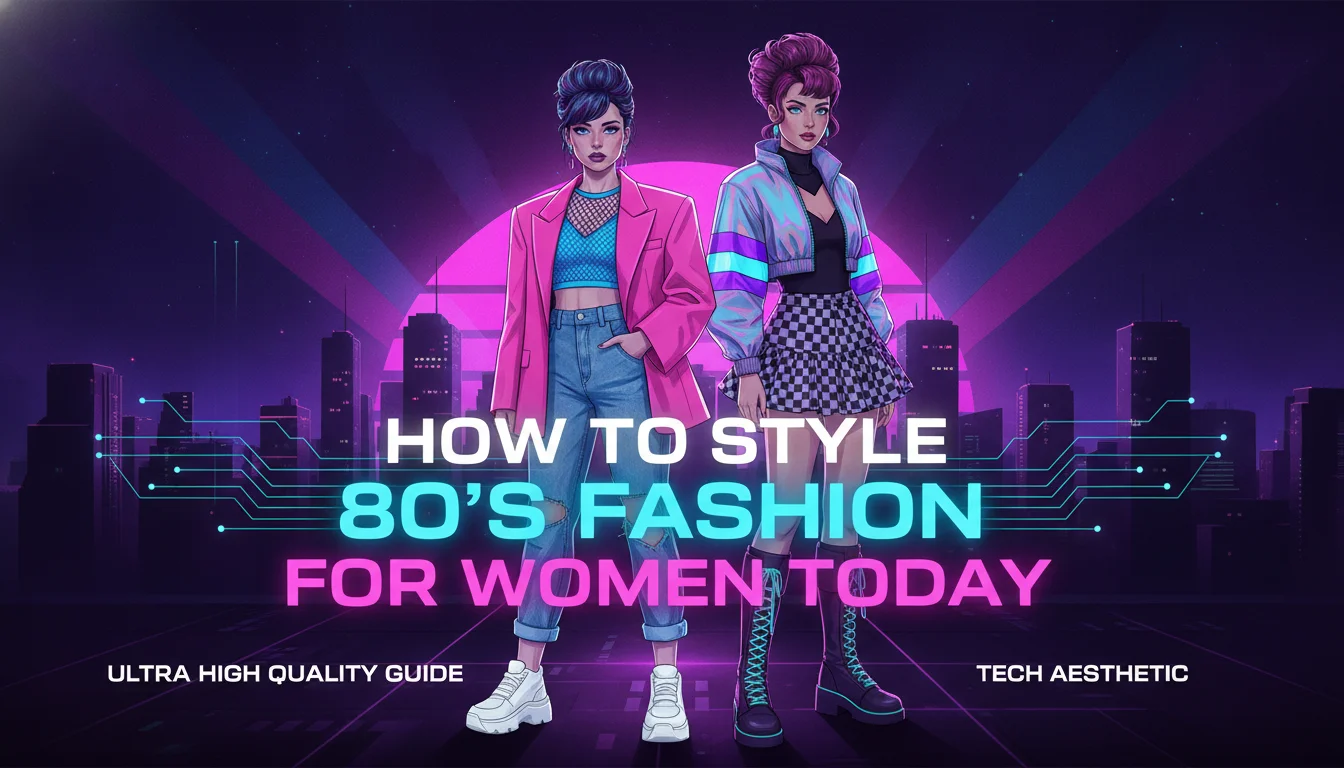
The best way to style 80’s fashion for women today is to isolate one statement piece and build around it with modern basics, rather than recreating the whole decade at once. Here are three outfit formulas that work.
Daytime Casual: The Denim Edit
Pair high-waisted mom jeans with a tucked-in graphic tee referencing an 80s band like Pat Benatar. Add white sneakers and a slouchy denim jacket for an off-duty, Madonna-adjacent vibe.
Office Power Dressing
A tailored double-breasted blazer with shoulder pads over slim trousers or a pencil skirt reads polished, not costumey. Finish with low heels and layered pearls, a nod to Princess Diana’s signature restraint-meets-power dressing.
80s Party Night Out
For a themed event, full costume sets from Amazon bundle neon tees, tutu skirts, fishnet gloves, leg warmers, and a fanny pack, most for well under $35. Or skip the costume aisle entirely: a puff sleeve mini dress with chunky heeled boots and bright eyeshadow gets you there with more edge. If you want something that channels 80s maximalism without the costume-party feel, our Duality collection pulls that same contrast-and-power energy into pieces built for tonight, not just a theme party.
| Style | Key Features | Price Range | Best For |
|---|---|---|---|
| Power Suit | Structured shoulders, double-breasted, bold colors | $50-$250 | Work, formal events |
| High-Waisted Jeans | Rigid denim, tapered leg, acid wash | $30-$120 | Casual everyday |
| Puff Sleeve Dress | Voluminous sleeves, fitted bodice, above knee | $40-$150 | Parties, prom |
| Spandex Activewear | Leotard, leg warmers, high-cut legholes | $15-$60 | Workout, festivals |
| Accessories Set | Fanny pack, fishnet gloves, neon jewelry | $10-$35 | Theme parties |
Pros and Cons of Building an 80s Wardrobe
Pros
- Bold, high-impact pieces that photograph well and stand out at any event.
- Wide price range means you can start under $25 or invest in premium vintage.
- Silhouettes like power suits and puff sleeves translate easily into modern styling.
Cons
- Structured pieces like shoulder pads can be unforgiving on petite frames without tailoring.
- Authentic vintage sizing runs smaller, making online shopping trickier.
- Some fabrics, especially aging spandex, require careful handling to avoid damage.
Care & Maintenance for 80s Garments
Caring for 80’s fashion for women properly means matching the cleaning method to the fabric, not treating every piece the same way. Vintage pieces especially need tailored handling to survive another decade of wear.
Dry Clean or Hand Wash?
Power suits and silk blouses generally need professional dry cleaning to protect their structured padding. High-waisted denim and cotton tees can go in the machine on a gentle cold cycle. Spandex should always air dry, since heat and tumbling wreck its elasticity fast.
Storage Tips
Store shoulder-padded garments on wide hangers so the structure holds its shape. Fold puff sleeves rather than hanging them to avoid stretching the fabric. Keep vintage pieces out of direct sunlight, since color fades faster than you’d expect.
As one longtime vintage dealer puts it, the difference between a garment that lasts twenty more years and one that falls apart in a season almost always comes down to how it’s stored, not how it’s worn.
Frequently Asked Questions
What defines 80’s fashion for women?
80’s fashion for women is defined by exaggerated silhouettes like shoulder pads and puff sleeves, bold color, and a mix of subcultures spanning power dressing to punk. Music and television, from MTV to Dynasty, shaped much of the look.
How do I dress for an 80s party as a female?
Start with one loud anchor piece, a neon tutu, a puff sleeve dress, or a full costume set, then layer on accessories like fishnet gloves, leg warmers, and a fanny pack. Amazon and Walmart both carry complete costume bundles that make this simple.
What was the biggest fashion trend in the 80s?
Power dressing, built around structured shoulder pads and bold-colored suits, is widely considered the decade’s defining trend. It reflected women’s growing presence in executive spaces and was championed by designers like Claude Montana and Yves Saint Laurent.
Where can I buy affordable 80s outfits for women?
Amazon and Walmart offer costume sets and accessories starting under $25. Vintage stores and Etsy provide more authentic pieces at mid-range prices for anyone chasing the real thing.
Can I wear 80s fashion today without looking costume-like?
Yes. Isolate one statement piece, like a shoulder blazer or a puff sleeve top, and pair it with modern basics like straight-leg jeans and neutral heels. That contrast is what modernizes the whole look instead of reading as a Halloween costume.
80’s fashion for women isn’t a relic. It’s a mood you can still walk into a room wearing tonight, whether that means a shoulder-padded blazer at the office or a puff sleeve mini dress under club lighting. Build your own duality: soft romance up top, dangerous edge below, and never apologize for taking up space. Discover your duality at prettynpoison.com.
Key Takeaways
- 90s fashion trends were driven by subcultures, grunge, hip hop, and rave, that challenged mainstream style.
- Iconic pieces like slip dresses, combat boots, and bucket hats have been reinterpreted for 2026 with modern materials and sustainable practices.
- Thrifting and upcycling offer authentic ways to adopt 90s fashion trends without contributing to fast fashion waste.
- The era’s nightlife scene birthed daring clubwear trends now influencing festival and party wardrobes.
- Avoiding dated stereotypes is key: blend one or two vintage items with contemporary basics for a fresh take.
90s fashion trends are the diverse style movements that emerged between 1990 and 1999, from grunge’s worn-in flannels to minimalist slip dresses and hip-hop baggy jeans.
The Subcultural Foundations of 90s Fashion
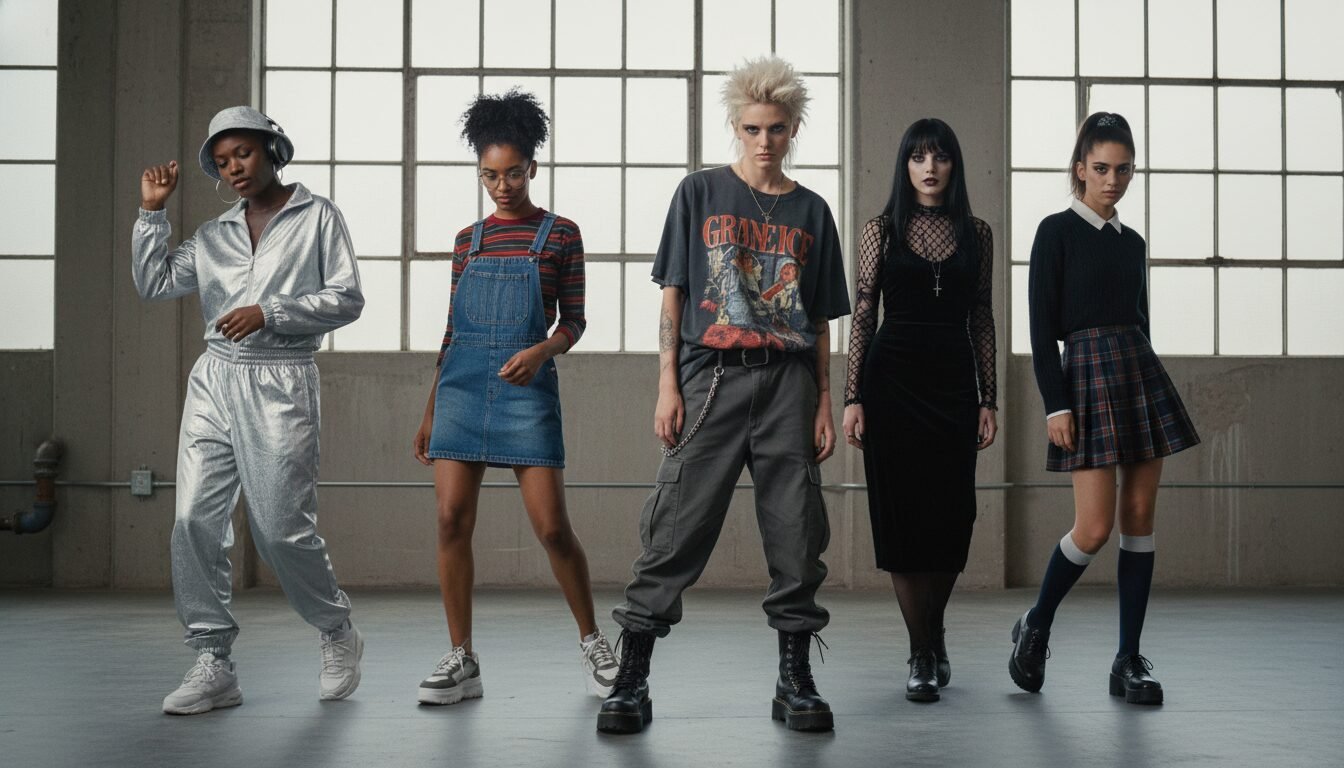
Unlike previous decades that revolved around a single aesthetic, fashion trends splintered into distinct tribes. According to the Printful Blog, these movements, grunge, hip hop, and rave, defined how people dressed more than any runway directive.
“90s style was defined by belonging to a movement – grunge, hip hop, or rave culture – rather than a single look.” , Printful Blog, 2026
Grunge: The Anti-Fashion Movement
Born in Seattle’s music scene, grunge is an anti-fashion aesthetic built on thrifted flannels, ripped jeans, and combat boots. It was never meant to be stylish, yet by 1993, designer Marc Jacobs brought it to the runway with his now-legendary Perry Ellis collection, according to the Fashion History Timeline. The look centered on comfortable, lived-in pieces: oversized plaid shirts, distressed denim, and chunky Dr. Martens. These these trends peaked only briefly, but permanently dismantled the glitz of the 1980s.
Hip Hop’s Streetwear Domination
Hip hop fashion in the 90s is a bold, logo-driven explosion of baggy jeans, sports jerseys, and designer sportswear. Brands like FUBU, Karl Kani, and Cross Colours brought street style to mainstream audiences. Women in the scene, think Aaliyah and TLC, mastered the androgynous mix of oversized pants paired with crop tops or bandeaus. These such trends made comfort a priority and cemented the sneaker as a status symbol.
Rave Culture and Neon Expression
Rave fashion is a fluorescent, synthetic rebellion against the earth tones of grunge. Platform boots, bucket hats, smiley-face graphics, and vinyl trousers defined warehouse parties across the UK and US from about 1991 onward. The aesthetic was about standing out under blacklights, leading to a surge in DIY customization, a practice that thrived well before fast fashion made it easy to copy these 90s fashion overnight.
Minimalism and the Rise of the Supermodel
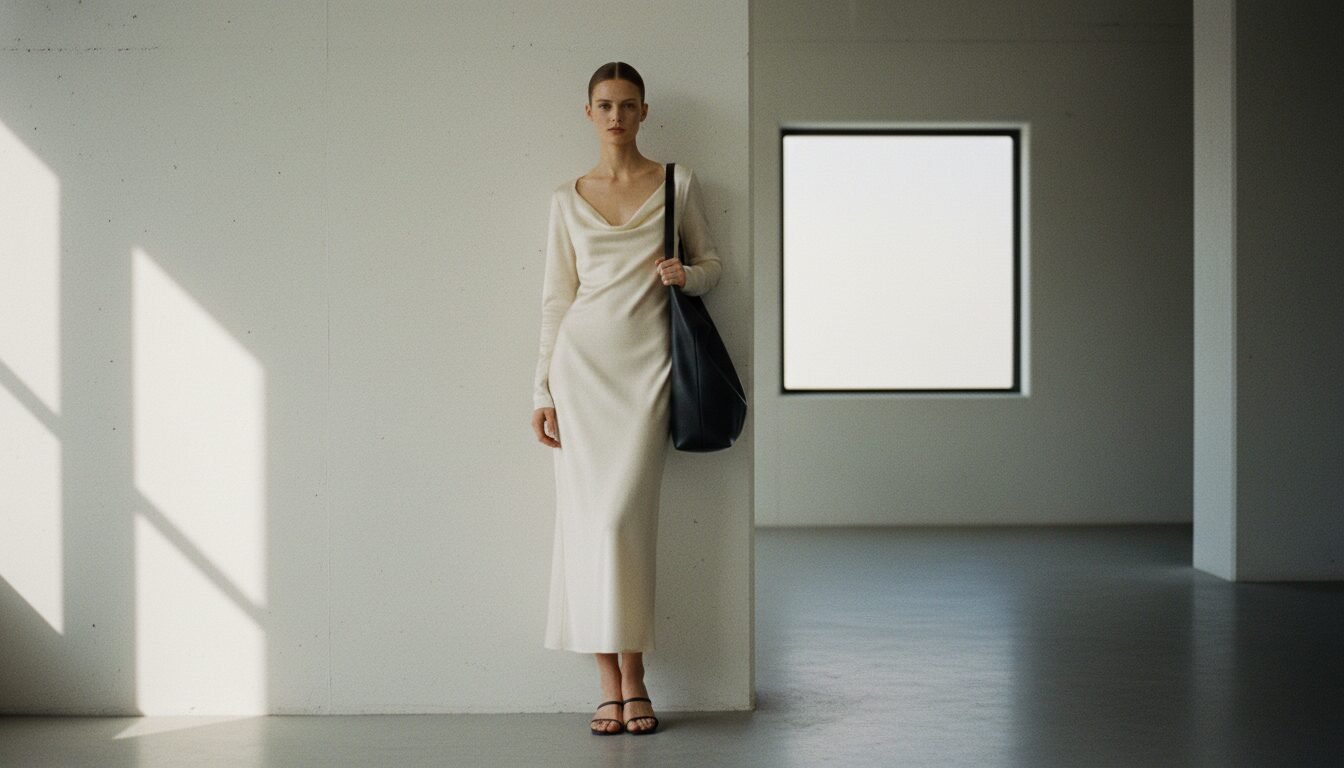
As grunge faded, fashion pivoted sharply toward sleek minimalism. Designers like Calvin Klein and Giorgio Armani championed clean lines, neutral palettes, and understated elegance. This was the era when slip dresses, once lingerie, became eveningwear, and when four supermodels, Cindy Crawford, Naomi Campbell, Linda Evangelista, and Christy Turlington, dominated the industry.
“The phenomenon of the ‘supermodel’ reached its height in the 1990s… When these four strutted down the catwalk arm in arm during Versace’s 1991 Autumn/Winter fashion show in Milan they were more famous than the clothes.” , Fashion: The Ultimate Book of Costume and Style, 2012
The Slip Dress Takes Center Stage
The slip dress is a lightweight, lingerie-inspired garment that became the uniform of 90s minimalism. Worn alone with strappy heels for evening or layered over a white T‑shirt for day, it epitomized effortless cool. This piece represents one of the most enduring fashion trends, with Gianni Versace’s rhinestone-studded version becoming a red-carpet staple.
Calvin Klein’s Clean Aesthetic
Calvin Klein’s 90s collections are a masterclass in restraint. Monochromatic slip dresses, simple sheath silhouettes, and barely-there makeup defined the brand’s identity. This minimalist wave extended to underwear as outerwear, visible bra straps and bodycon shapes were no longer taboo. The aesthetic resonated with working women who wanted power without the shoulder pads of the previous decade.
Kate Moss and the “Heroin Chic” Era
Kate Moss represented a dramatic shift from the polished supermodel. Her waifish frame and unkempt style, coined “heroin chic” by the press, reflected grunge’s hangover into high fashion. Designers began casting more androgynous, unconventional models, making the clothes the star again. This period challenged beauty norms and sparked debates that still echo in today’s interpretation of these trends.
Iconic 90s Fashion Trends That Endure
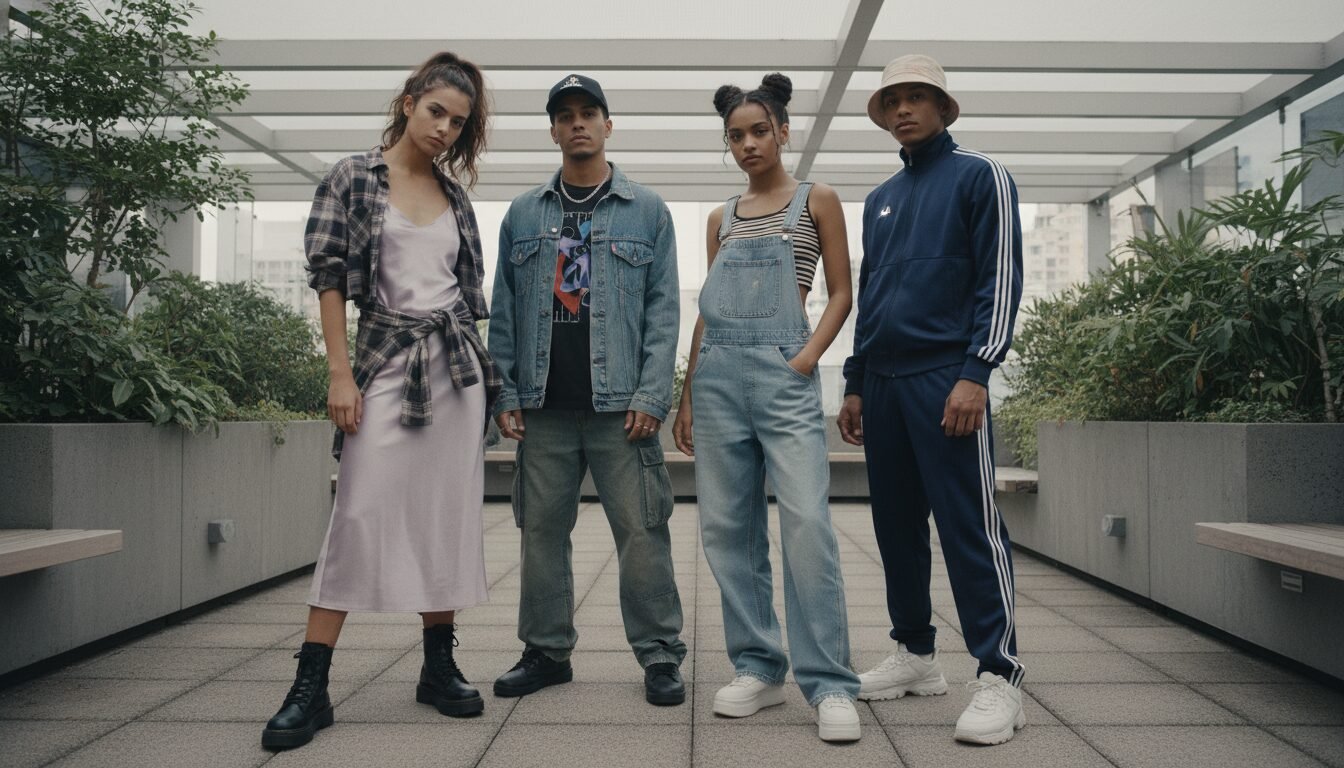
These such trends proved so versatile that they have cycled back into mainstream wardrobes. Teen Vogue curated a list of 25 standout styles, while Printful recently highlighted 30 trends ripe for revival. Three staples, however, stand out.
Flannel Shirts and Doc Martens
Oversized flannel shirts, often thrifted for a few dollars, are the bedrock of grunge. Paired with Dr. Martens 1460 boots, first released in 1960 but iconic in the 90s, they created an androgynous silhouette that rejected high-fashion polish. In 2026, flannels appear in cropped, tied-up forms or layered over band tees, while Docs now come in vegan leather and platform soles.
Baby Tees and Crop Tops
Baby tees are tight, shrunken t‑shirts with ringer cuffs that cropped just below the bust. They came in ribbed cotton with bright contrast stitching and were often emblazoned with butterfly or alien graphics. Today, they’re a staple in sustainable capsule wardrobes, offered by brands like Levi’s and Everlane in organic cotton blends.
Bucket Hats and Baseball Caps
The bucket hat, originally a functional fisherman’s hat, became a 90s club essential. Now it comes in faux fur, recycled denim, and retro floral prints. Paired with sundresses or oversized outerwear, it adds instant credibility to any interpretation of 90s fashion. The baseball cap, turned backward or styled with the logo front, remains the go-to accessory for off-duty model looks.
Subculture Style: How 90s Fashion Trends Infiltrated Every Scene
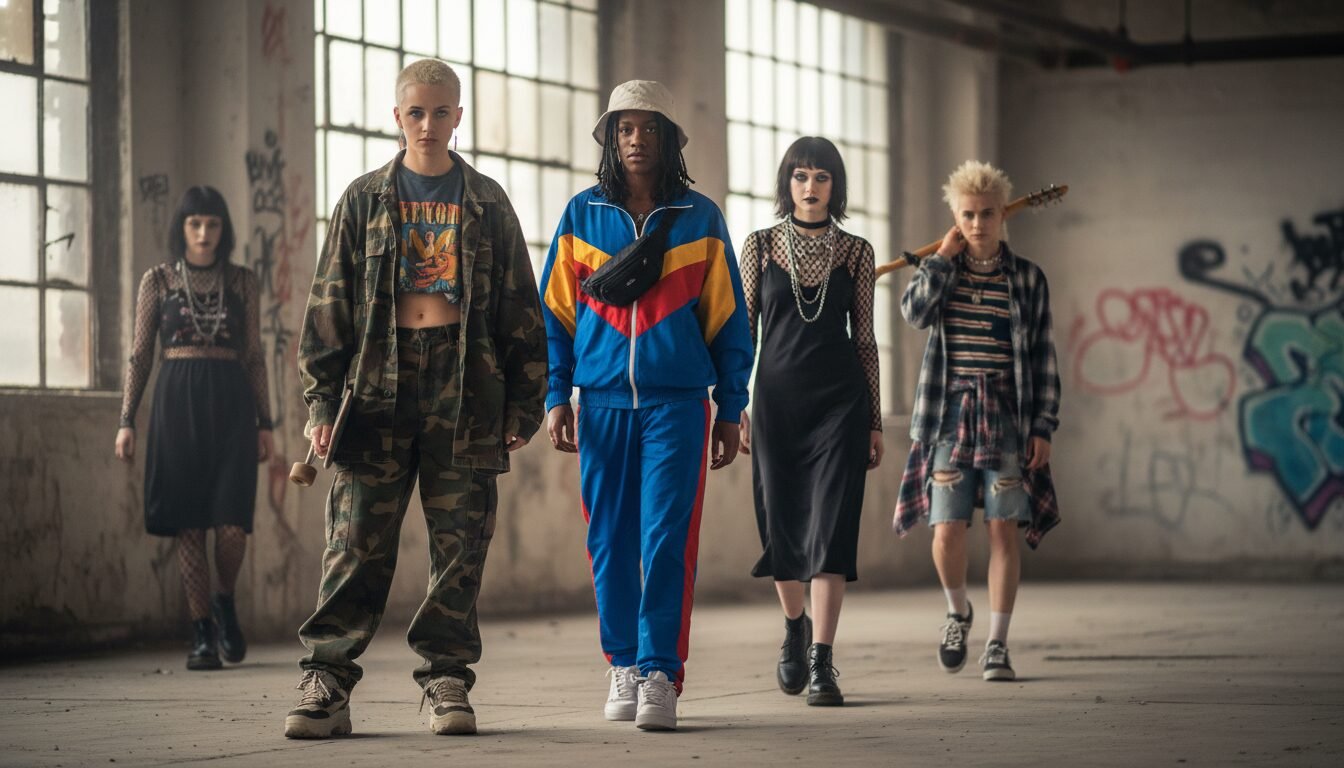
Beyond the big three subcultures, the 90s spawned dozens of niche aesthetics. Three particularly distinct looks, preppy, goth/punk, and hip hop luxe, demonstrated that fashion trends were anything but uniform.
Preppy Reboot: Clueless and Collegiate
The 1995 film Clueless is a candy-colored time capsule of plaid skirts, knee-high socks, and cropped cardigans. This look borrowed from 1960s mod but added a California twist. Modern preppy has absorbed elements from these trends like oversized blazers and loafers, proving that schoolgirl chic can evolve without irony.
Goth and Punk Revivals
Goth in the 90s was heavily influenced by bands like Nine Inch Nails and Marilyn Manson. Black vinyl trousers, fishnet tops, chokers, and heavy eyeliner were cornerstones. Punk, meanwhile, leaned into plaid bondage pants and band patches. These dark aesthetics never truly left; they resurface regularly in high fashion collections and alternative nightlife scenes.
Hip Hop’s Luxe Evolution
By the late 90s, hip hop fashion had moved from streetwear to luxury. Logomania from brands like Fendi, Gucci, and Louis Vuitton became status markers. Women like Lil’ Kim pushed boundaries with colorful wigs, pasties, and barely-there dresses, influencing clubwear for years to come.
The 2026 Comeback: Why 90s Fashion Trends Are Dominating
The resurgence of such trends in 2026 is not just nostalgia, it’s a reaction to fast-fashion fatigue and a desire for authentic self-expression. Three factors have cemented the revival.
Gen Z Nostalgia and TikTok
Platforms like TikTok accelerate micro-trends, and 90s aesthetics, from Y2K butterfly clips to grunge layering, regularly go viral. Hashtags like #90sfashion and #grungeaesthetic have amassed billions of views, pushing retailers to reissue archival pieces. For a generation raised on digital curation, 90s fashion offer a tangible, analog cool.
High Fashion’s 90s Obsession
Since 2024, luxury houses have mined the decade relentlessly. Miu Miu’s viral micro-mini skirts echo 90s hemlines; Prada reissued its nylon shoulder bags. According to runway analysts, more than 30% of Fall/Winter 2026 collections contained direct references to 90s fashion trends, from sheer slip dresses to chunky boots.
Street Style’s Eternal Appeal
Outside fashion weeks, influencers mix vintage 90s Levi’s with modern accessories, proving the decade’s staples are just clothes, not costumes. This democratic blending aligns with the original ethos of wearing what feels good, regardless of trend cycles.
90s Fashion Trends in Nightlife and Partywear
Club culture in the 90s spawned some of the most daring fashion trends, many of which are now reinterpreted for festivals, raves, and alternative nightlife.
Club Kid Culture and Cyberdoggery
New York’s club kids, like Michael Alig and Amanda Lepore, turned nightlife into performance art. Outfits featured platform go-go boots, fluorescent wigs, and surreal headpieces. This unapologetic maximalism informs today’s festival wear, from Burning Man to Berlin techno clubs.
Metallic Fabrics and Holographic Shine
Metallic mini dresses and holographic separates were a direct product of the rave scene. In 2026, sustainable alternatives in recycled polyester have made it easier to achieve that liquid-metal look without environmental guilt. Style them with chunky combat boots for a genuine 90s club vibe.
Sheer Layers and Velvet Pumps
Sheer mesh tops, worn under slip dresses or over bralettes, were a staple of 90s partywear. Paired with velvet platform heels or Mary Janes, the silhouette balanced modesty and rebellion. Brands like Naked Wolfe now offer platforms inspired by 90s fashion trends in bold colors and vegan materials.
Dressing Sustainably: How to Wear 90s Fashion Trends Ethically
One of the best ways to adopt 90s fashion trends in 2026 is to shop secondhand or upcycle. The grunge movement originally thrived on thrifting, making it an inherently sustainable cycle.
The Thrifting Revolution
Second-hand stores boomed in the early 90s as teenagers hunted for vintage band tees and worn-in Levi’s. Today, platforms like Depop and Vestiaire Collective have digitized the hunt, with pieces from the era seeing increased demand since 2023. A quick search for “90s slip dress” or “vintage flannel” yields thousands of affordable options.
DIY Upcycling: From Flannel to Modern
Step 1: Source an oversized flannel from a thrift shop. Step 2: Crop it to waist length and hem neatly. Step 3: Add patches or safety pins for a punk accent. Step 4: Pair with high-waisted jeans or a slip skirt. This approach not only saves money but ensures your version of 90s fashion trends is completely one-of-a-kind.
Choosing Conscious Brands with 90s Vibe
If thrifting isn’t your style, look for brands using deadstock fabrics or ethical production. Everlane, Quince, and smaller slow-fashion labels offer silhouettes inspired by 90s fashion trends, baby tees, slip dresses, barrel-leg jeans, with transparent supply chains. Prioritizing quality over quantity aligns perfectly with the decade’s anti-consumerist roots.
Pros and Cons
Pros
- Timeless versatility: pieces like slip dresses and flannels work across seasons and occasions
- Sustainable options: thrifting and upcycling align with the decade’s original DIY ethos
- Individual expression: subculture-based styling encourages personal creativity over trend-following
- Comfort-first design: relaxed fits and practical fabrics prioritize wearability
Cons
- Risk of costume-like appearance when styled head-to-toe without modern updates
- Quality inconsistency in vintage pieces due to age and previous wear
- Limited size inclusivity in authentic vintage finds
- Potential cultural appropriation when borrowing from specific subcultures without understanding
90s Fashion Trends: Then vs. Now , A Side-by-Side Comparison
| Trend | Original 90s Styling | 2026 Remix | Modern Brands to Watch |
|---|---|---|---|
| Bucket Hat | Cotton canvas in solid colors, often worn with overalls | Faux fur, recycled denim, or floral prints; paired with sundresses | Coachtopia, Etsy sellers |
| Slip Dress | Silky, lace-trimmed, worn over white tees or alone | Sustainable silk or satin, layered with mesh tops | Calvin Klein, Quince, ASOS Design |
| Combat Boots | Chunky Dr. Martens with floral dresses or ripped jeans | Platform soles, vegan leather, worn with everything | Dr. Martens, Naked Wolfe |
| Baby Tee | Tight, cropped, often with ringer cuffs | Cropped graphic tees, organic cotton blends | Levi’s, Everlane |
This comparison shows that while silhouettes stay true to the originals, materials and styling have evolved to meet 2026’s ethical and aesthetic standards. The core of 90s fashion trends, comfort, individualism, and subcultural identity, remains unchanged.
Frequently Asked Questions
What is the most iconic 90s fashion trend?
The slip dress is arguably the most enduring piece from the era, transitioning seamlessly from minimalism to modern partywear. Its versatility, layered or solo, makes it a closet staple even in 2026.
Why are 90s fashion trends coming back?
Nostalgia, social media virality, and a pushback against hyper-consumerism have fueled the revival. The 90s emphasis on thrifting and individual style resonates with Gen Z’s sustainability values.
What are the best 90s accessories?
Bucket hats, chokers, chunky rings, and mini backpacks are top accessories. Chokers, whether velvet or tattoo-style, add an instant edge to any outfit inspired by 90s fashion trends.
How can I dress 90s without looking dated?
Focus on one or two vintage pieces, like a slip dress or flannel, and mix them with modern basics. Avoid head-to-toe costumes; contemporary sneakers or minimal jewelry can update the look.
Which 90s subculture is most influential today?
Grunge and hip hop have had the largest lasting impact. Grunge’s layered, androgynous silhouettes appear in everyday wear, while hip hop’s streetwear aesthetic dominates luxury and athleisure markets.
Where can I find authentic 90s vintage pieces?
Thrift stores, Depop, eBay, and specialized vintage boutiques are best. Look for union-made tags in flannels, faded denim with a high cotton content, and dresses with slip dress construction.
In the end, 90s fashion trends are more than a nostalgic blip, they’re a blueprint for dressing with purpose. By borrowing from the past while embracing today’s ethical sensibilities, you can build a wardrobe that feels both timeless and timely. Discover your duality at prettynpoison.com