60’s fashion trends hippies are a late-1960s countercultural style built on bell-bottoms, maxi dresses, peasant blouses, tie-dye, fringe, and natural fabrics. This guide breaks down how to shop, style, and care for authentic pieces across every budget.
Key Takeaways
- 60’s fashion trends hippies are defined by bell-bottoms, maxi dresses, peasant blouses, tie-dye, suede vests, and fringe.
- Natural fabrics, cotton, linen, hemp, and wool, form the foundation of an authentic hippie wardrobe.
- Shopping by silhouette, fabric, and construction beats buying a disposable costume kit.
- Budget accessories start under $10; quality tie-dye sets run around $33; premium vintage or artisanal pieces cost more.
- Care for tie-dye and natural fibers separately to extend the life of your pieces.
- The look still shows up on 2026 runways and street style, proof that this rebellion never went out of fashion.
What Defines 60’s Fashion Trends Hippies?
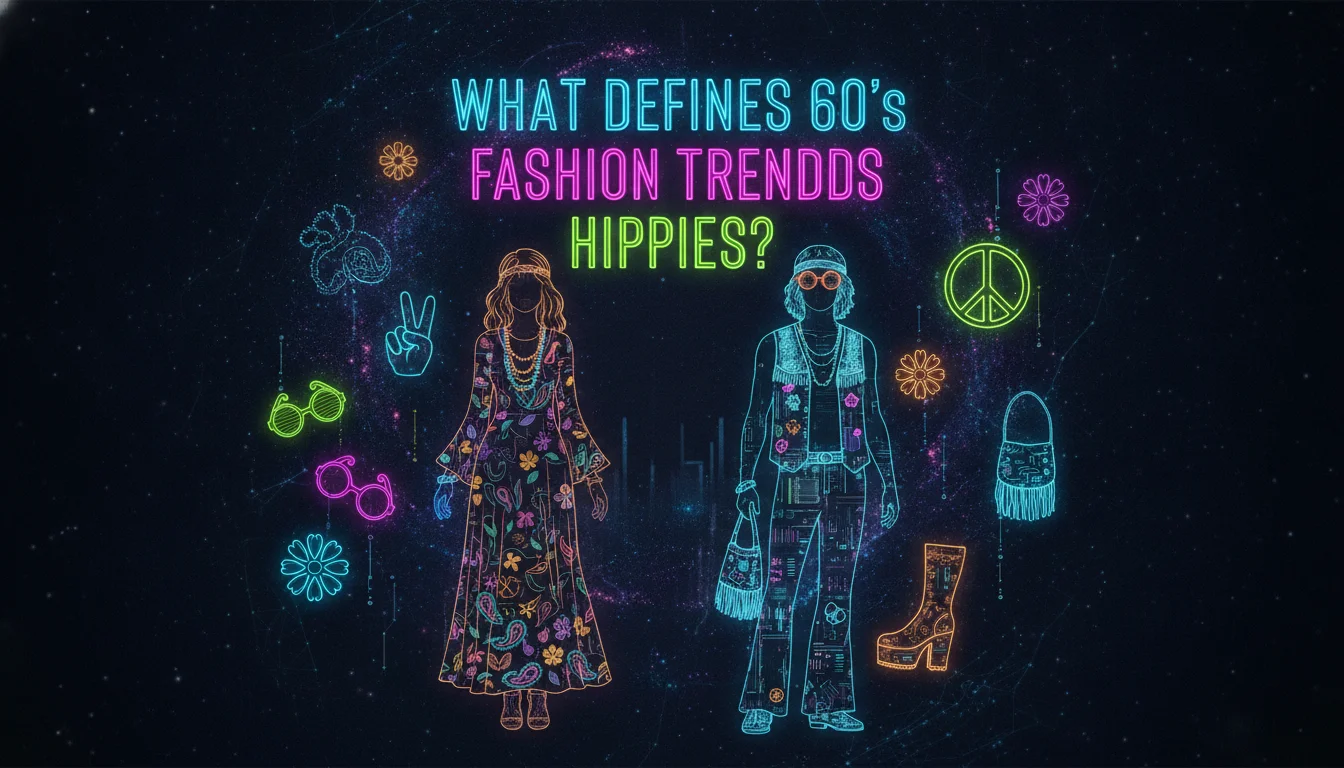
60’s fashion trends hippies are defined by natural fabrics, loose silhouettes, and handcrafted decoration like tie-dye, fringe, crochet, embroidery, and patchwork. According to Runway 7’s 1960s fashion timeline, the decade didn’t follow one aesthetic. It moved from polished early-1960s elegance through the sharp geometry of mod style and the Space Age, then landed on the freer, more eclectic spirit of hippie fashion by decade’s end. That sequence matters when you shop, because a true late-1960s hippie piece isn’t just any retro item. It’s a garment shaped by a countercultural turn away from formality and toward personal freedom.
“The fashion trends in the 1960s did not follow a single aesthetic. Instead, the decade moved through several distinct identities, beginning with polished elegance, shifting toward the sharp geometry of mod style, and ending with the freer, more eclectic spirit of hippie fashion.” – Runway 7 Editorial Team
The Late-1960s Countercultural Shift
Hippie style emerged as a deliberate rejection of mid-1960s consumerism and trend-following. Vintage Dancer notes that what hippies wore was an act of protest against their own society, which is exactly why old and ill-fitting clothing became a statement rather than a mistake. The Fashion History Timeline at FIT describes the late-1960s “hippie” style as one of three main womenswear trends, following ladylike elegance (think Jacqueline Kennedy’s boxy skirt suits) and the youth-driven looks popularized by Swinging London designers like Mary Quant. The hippie aesthetic drew on Eastern influences and handcrafted details instead of manufactured uniformity, a direct rebuke of the polish that came before it.
Core Garments That Define the Look
Several garments appear consistently across historical sources. Bell-bottoms are trousers fitted through the waist and thigh that flare from the knee downward. A maxi dress is an ankle or floor-length dress that became a central women’s hippie garment in the late 1960s. Peasant blouses are loose-fitting tops with gathered or open necklines and often embroidered details. Tie-dye is a resist-dyeing technique where fabric gets folded, bound, or twisted before dye application to create irregular psychedelic patterns. Add suede vests, fringe, crochet, paisley, and floral prints, and you’ve got the full visual vocabulary of the late 1960s. Rare Historical Photos notes that the movement grew out of places like New York City’s Greenwich Village, San Francisco’s Haight-Ashbury, Los Angeles’ Laurel Canyon, and Chicago’s Old Town neighborhood, which is why the style often reads urban-bohemian instead of purely rural.
What to Look For When Buying 60’s Hippie Fashion
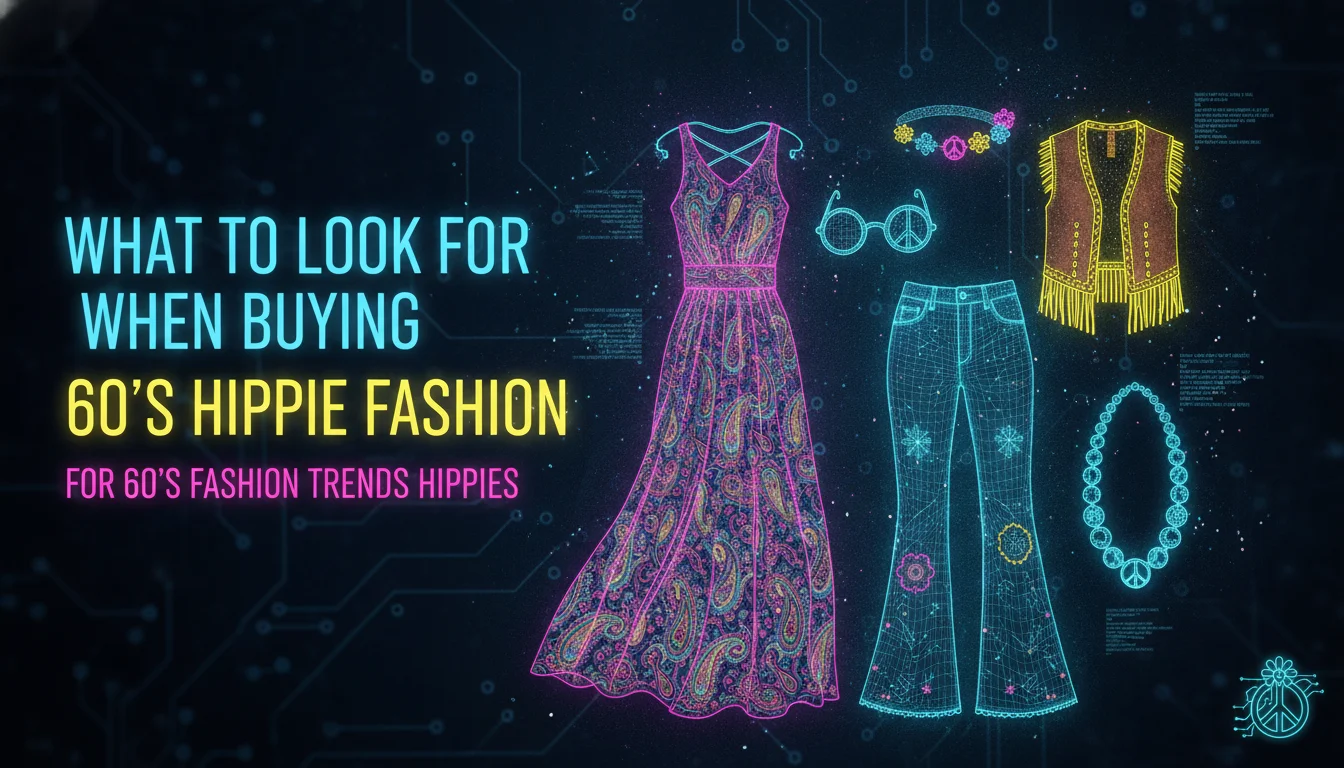
Shopping by shape, material, and construction gets you further than grabbing a themed costume set off a shelf. Every decision, from fabric to fit, should serve the finished silhouette, not just check a box.
Material and Fabric Quality
Natural fabrics are the base of the look, full stop. Hippie Shop names cotton, linen, hemp, and wool as the go-to materials because they’re comfortable, breathable, and eco-friendly. For garments that touch your skin, choose 100% cotton or a linen blend. For vests and outerwear, look for real suede if your budget allows, or a high-quality faux suede with even pile and no plastic shine. Skip the shiny polyester versions if you want the fabric to drape like an authentic late-1960s piece instead of a Halloween aisle throwaway.
Fit and Silhouette
The dominant hippie silhouette is loose and flowing, never restrictive. That means maxi dresses, A-line skirts, wide-leg beach pants, and bell-bottom jeans should move with your body, not against it. Vintage Dancer notes that women’s hippie fashion brought back smocked maxi length dresses, A-line skirts, and wide-leg beach pants, so if a garment feels stiff or body-con, it’s more mod than hippie. For bell-bottoms, check that the flare starts at or just below the knee and that the thigh fits comfortably without pulling. For peasant blouses, the neckline should gather or sit open, and the sleeves need room to billow.
Comfort and Movement
Comfort was political in the late 1960s, not an afterthought. The counterculture rejected constricting formality, and that rebellion shows up in relaxed waistlines, soft fabrics, and optional footwear. Rare Historical Photos reports that sandals and moccasins were common, and plenty of hippies simply went barefoot. When you’re buying today, test movement before you commit: raise your arms, sit down, walk around the room. If a maxi dress pulls at the shoulders or bell-bottoms pinch at the knee, that pattern isn’t built for a true hippie fit.
Price Range Expectations
You can build a wardrobe inspired by 60’s fashion trends hippies at almost any budget. At the low end, Amazon lists round hippie sunglasses at $6.99, making accessories a low-risk entry point. A men’s tie-dye shirt set appears at $32.99 on Amazon, giving you a full costume-level look for under $35. For better daily-wear pieces, expect to pay more for 100% natural fibers, real embroidery, and genuine suede. Amazon currently returns 437 results for “1960’s Hippie Clothes,” so the market is wide open. Vintage and small-batch artisanal pieces typically sit at the premium tier without one universal price point, so shop by quality signals, not sticker shock.
How to Shop 60’s Fashion Trends Hippies in 2026
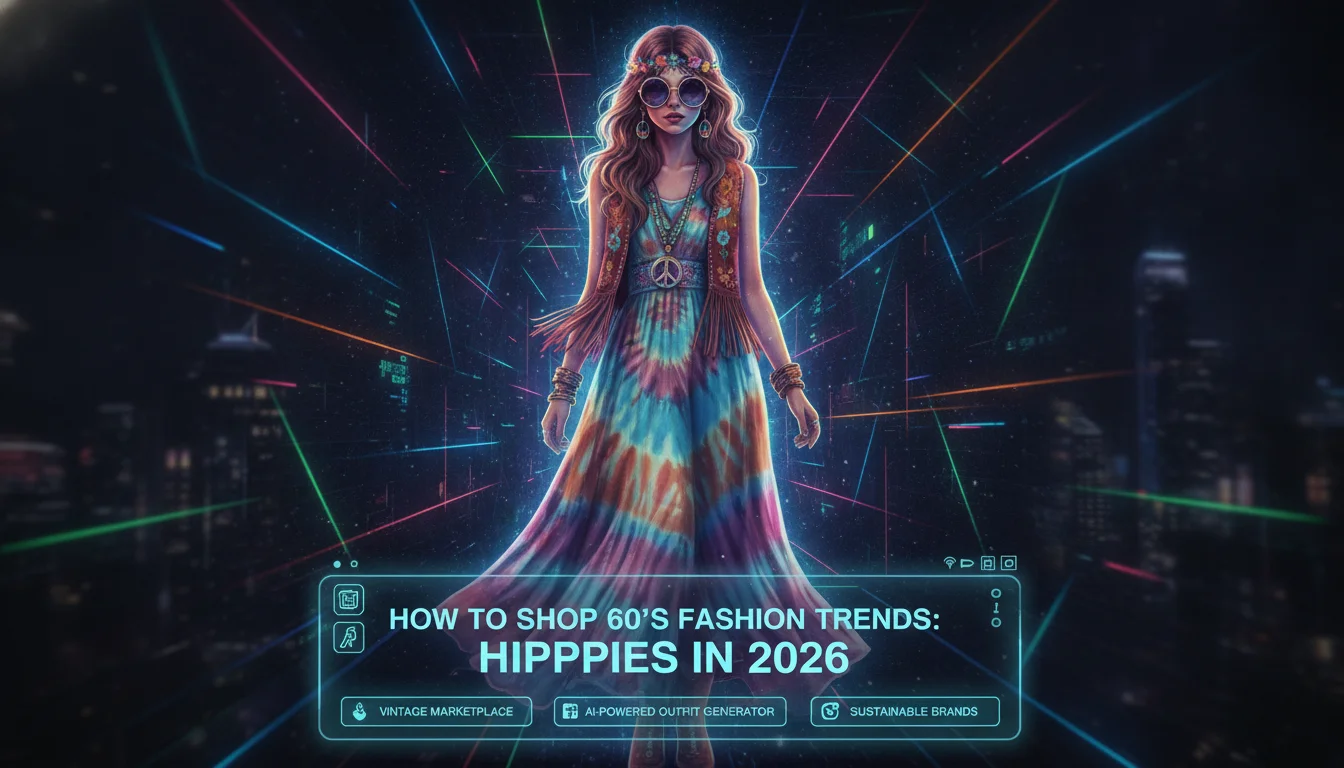
Shop 60’s fashion trends hippies by starting with an anchor piece and building outward, not by grabbing random separates. This process moves from foundation to accessories so you never end up with a pile of mismatched costume items.
Step 1: Choose Your Anchor Silhouette
Decide whether bell-bottom jeans, a maxi dress, or wide-leg pants will anchor your outfits. Build everything else around that base piece.
Step 2: Verify Material Composition
Check the label for cotton, linen, hemp, wool, or a natural blend. Skip 100% polyester for anything that should drape and breathe.
Step 3: Compare Construction Details
Look for finished seams, secure embroidery, and even tie-dye saturation. Loose threads and thin fabric are dead giveaways of costume-grade quality.
Step 4: Confirm Fit With Your Measurements
Vintage sizing runs smaller than modern sizing. Measure chest, waist, hips, and inseam, then check the seller’s size chart instead of assuming your usual size will translate.
Step 5: Add One or Two Statement Accessories
Round metal sunglasses, a fringed suede vest, or a long pendant necklace can shift an outfit from daily wear to full late-1960s energy without replacing your base pieces.
Keep this process nearby whenever you’re shopping 60’s fashion trends hippies pieces. It keeps you from buying costume-only separates that never actually work together once you get them home.
Where to Find Authentic and Reproduction Pieces
Start with dedicated retailers like Hippie Shop for modern pieces made with natural fabrics, and use Amazon for budget accessories and costume-level sets. For true vintage, search resale platforms and local vintage stores, and check for signs of age like metal zippers, older care labels, and hand-stitched details. The more specific you get about the late-1960s hippie category rather than generic “60s,” the sharper your results will be.
Top 60’s Hippie Styles and Pieces to Buy
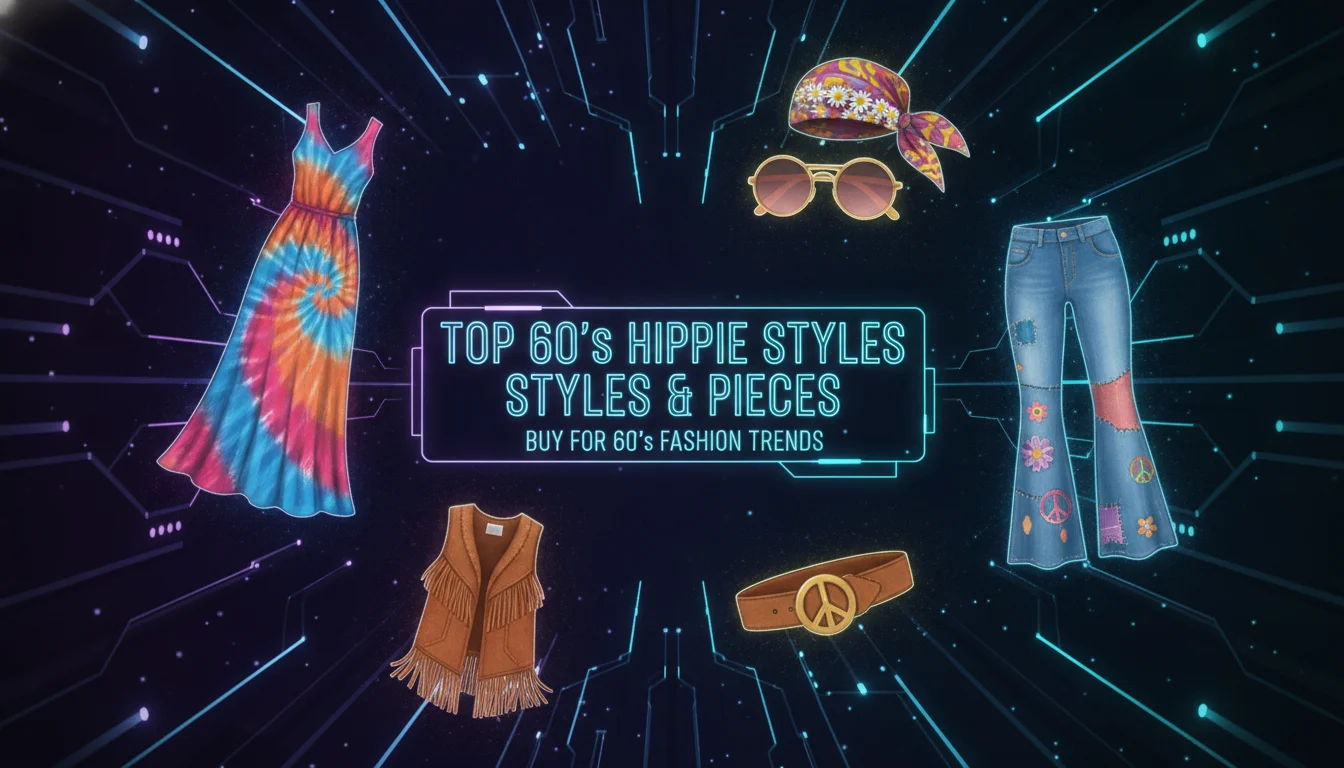
Women’s 60’s Hippie Fashion
For women, the core starts with smocked maxi dresses, A-line skirts, and wide-leg beach pants. Add peasant blouses in white or earthy tones with embroidered necklines. Janis Joplin remains a major inspiration for the bohemian side of the look, according to Vintage Dancer, so layered jewelry, long hair, and eclectic textures all belong here. A-line skirts swing from casual cotton to patchwork or paisley prints, and they pair easily with flat sandals or a barefoot-style look.
Men’s 60’s Hippie Fashion
Men’s hippie fashion in the late 1960s centered on tie-dye, loose-fitting shirts, velvet vests, and increasingly colorful, patterned garments. The Fashion History Timeline at FIT notes that menswear saw more color and pattern, military influence, and rock stars stepping in as fashion icons. Start with a tie-dye tee or loose cotton shirt, add flared denim, and layer in a velvet or suede vest. Earthy tones like brown, beige, olive green, and mustard keep the whole palette grounded.
Gender-Neutral and Shared Pieces
Many pieces crossed gender lines in the late 1960s without apology. Denim jeans and long hair became shared markers of the counterculture, according to Rare Historical Photos. Fringed jackets, suede vests, round sunglasses, beaded jewelry, and moccasins work across wardrobes regardless of who’s wearing them. Footwear stayed minimal: sandals, moccasins, or nothing at all. This blurring of gendered fashion is part of what makes the category feel so relevant heading into 2026.
Comparison Table: Key 60’s Hippie Pieces and Buying Considerations
| Piece | Key Features | Best Material | Price Tier | Styling Notes |
|---|---|---|---|---|
| Bell-bottom jeans | Fitted thigh, flare from knee | Cotton denim with stretch | Mid-range ($30-$75) | Pair with peasant blouse or tie-dye tee |
| Maxi dress | Ankle/floor length, flowy | Cotton, rayon, or hemp | Mid-range ($35-$80) | Add fringed vest or long pendant necklace |
| Peasant blouse | Loose fit, gathered neckline, embroidery | Cotton or linen | Budget to mid ($15-$40) | Tuck front into wide-leg pants or A-line skirt |
| Tie-dye tee | Irregular psychedelic patterns | 100% cotton | Budget ($10-$30); sets around $32.99 on Amazon | Layer under denim jacket or suede vest |
| Suede vest | Sleeveless, often fringed | Real suede or faux | Premium ($80+) | Wear over maxi dress or with flared jeans |
| Round metal sunglasses | Colored circle lenses | Metal frame | Budget ($6.99 and up) | Instant 60s-70s retro party accessory |
How to Style 60’s Hippie Outfits Today
Women’s Outfit Ideas
Pair a smocked maxi dress with a fringed suede vest and round metal sunglasses for a festival-ready look. Tuck a peasant blouse into an A-line skirt with flat sandals for warm days. Wear wide-leg beach pants with a fitted tank and a long pendant necklace to bridge vintage and modern. Use earthy tones plus one saturated tie-dye accent to avoid looking like a costume rental.
Men’s Outfit Ideas
Pair bell-bottom jeans with a loose tie-dye tee and a velvet vest. Wear a plain cotton henley under a fringed suede jacket with slim-cut flared trousers. For a lower-key version, choose brown or olive wide-leg pants with a muslin shirt and leather sandals. The key is relaxed layering, not head-to-toe pattern overload.
Layering and Accessories
Layering is a signature of hippie fashion, according to Hippie Shop. Pair a flowy top with a denim jacket, or a maxi dress with a kimono. Add long necklaces, beaded bracelets, and rings featuring shells, stones, or wood. Stick to earthy tones as the base, then introduce one floral, paisley, or tie-dye statement piece to do the talking.
Care & Maintenance for Natural Fabrics and Tie-Dye
Care for natural fibers and hand-dyed garments differently than you’d treat synthetic pieces. Wash 100% cotton, linen, and hemp in cold water on a gentle cycle, and air dry to avoid shrinking. Turn tie-dye pieces inside out before washing, and wash them separately for the first few cycles because excess dye can bleed onto everything else in the load. For suede and faux suede vests, spot clean only and store them away from direct sunlight and moisture. Hang maxi dresses and wide-leg pants on padded hangers to preserve their drape, and fold heavy knits to prevent stretching at the shoulders.
Pros and Cons
Pros
- Natural fabrics like cotton, linen, hemp, and wool are breathable, durable, and genuinely comfortable for everyday wear.
- The loose, flowing silhouette flatters a wide range of bodies and works across seasons with light layering.
- Entry-level pieces like sunglasses and tie-dye tees make the style accessible on almost any budget.
- Gender-neutral pieces like fringed jackets and suede vests give the wardrobe real versatility.
Cons
- Faux suede and heavily fringed pieces can wear out faster than natural-fiber basics.
- Vintage sizing runs smaller than modern sizing, which complicates online shopping.
- Tie-dye pieces need separate washing for the first several cycles or they’ll bleed onto other garments.
- Cheap costume-grade sets can look flat and synthetic next to authentic natural-fiber pieces.
What’s Missing From Most Hippie Style Guides
Most guides skip the full arc of the decade, and that context changes how you shop. Runway 7’s timeline shows the 1960s moving through Jacqueline Kennedy’s tailored elegance, then Mary Quant’s mod and Space Age geometry, before landing on the hippie look most people picture today. Designers like Hubert de Givenchy and Cristóbal Balenciaga defined that early polished phase, which is worth knowing if you ever want to mix a structured blazer with your bell-bottoms for contrast. Menswear also absorbed a strong military influence during this stretch, showing up in fitted jackets and epaulette details layered against tie-dye and denim. As of 2026, that push and pull between structure and freedom is exactly what makes 60’s fashion trends hippies pieces so easy to remix into a modern wardrobe.
“Their fashion sense became a form of cultural warfare, with vibrant, handcrafted garments replacing the manufactured uniformity of corporate America.” – Rare Historical Photos
Conclusion: Shopping 60’s Fashion Trends Hippies in 2026
60’s fashion trends hippies are more than a costume category. They’re a late-1960s design language built on natural fabrics, loose silhouettes, and handcrafted decoration. By shopping for material first, verifying fit against your measurements, and layering earthy basics with one statement piece, you can build a wardrobe that honors the countercultural roots without reading as a theme-party cliché. Use the comparison table and five-step process above to guide your next purchase, and prioritize quality natural fibers whenever your budget allows. This year, that approach separates a wearable wardrobe from a one-night costume.
Frequently Asked Questions
What are the essential hippie pieces to buy first?
Start with bell-bottom jeans or a maxi dress, a peasant blouse, and a tie-dye tee. These four anchor most late-1960s looks and layer easily with pieces you likely already own.
Are 60’s hippie clothes true to size?
Many reproduction pieces run intentionally loose, so always check size charts before you buy. Vintage originals tend to run smaller than modern sizing, so measure your chest, waist, and hips first.
Is 60’s hippie fashion durable enough for everyday wear?
Natural cotton, linen, hemp, and wool hold up well when washed cold and air-dried. Faux suede and fringe wear faster, so inspect the stitching closely before you commit to a purchase.
What is the best value for a budget 60’s hippie outfit?
A tie-dye tee or round metal sunglasses under $10 combined with a cotton peasant blouse around $20 delivers the look without draining your wallet. Amazon currently lists round hippie sunglasses at $6.99.
Can I wear 60’s hippie fashion outside costume parties?
Yes, absolutely. Layering flowy tops under modern denim, pairing bell-bottoms with plain tees, and sticking to earthy tones makes the style wearable for festivals, casual days, and creative workwear alike.
Pretty N Poison doesn’t do costumes, we do statements. If the free spirit of 60’s fashion trends hippies speaks to your rebellious side, channel that same fearless energy into your next night out. Discover your duality at prettynpoison.com.