Vintage dresses for women are garments styled after or sourced from past decades, prized for tailored silhouettes and construction rarely found in fast fashion. We’re breaking down eras, fit, price, and how to make one dangerous enough for the night.
Key Takeaways
- Vintage dresses for women span 1920s flapper to 1950s swing, plus faithful modern reproductions.
- Always check material composition, sizing charts, and return policies before you buy.
- For nightlife, pair vintage dresses with contemporary accessories like ankle boots and a leather jacket.
- Custom-made dresses from brands like Heart My Closet offer a precise fit and one-of-one designs.
- Proper care, including hand-washing and correct storage, extends the life of delicate vintage fabrics.
- Prices span roughly $37 on Amazon to $339 for premium linen and beaded pieces from boutique labels.
Why Vintage Dresses Are a Timeless Wardrobe Staple
Vintage dresses stay relevant because their silhouettes were engineered to flatter, not just to trend. A swing dress is a style built with a fitted bodice and a full, flared skirt, iconic to the 1950s and still lethal on a dance floor today. These garments often feature superior construction, French seams, hand-finished hems, details rarely found in mass-market clothing now. According to ModCloth, its vintage-inspired collection spans sizes XS to 4X, proving these classics were never meant for one body type.
“The best vintage pieces survive because they were built to last, not built to sell fast,” notes fashion historian commentary frequently cited by Who What Wear when discussing heritage silhouettes.
Types of Vintage Dresses for Women
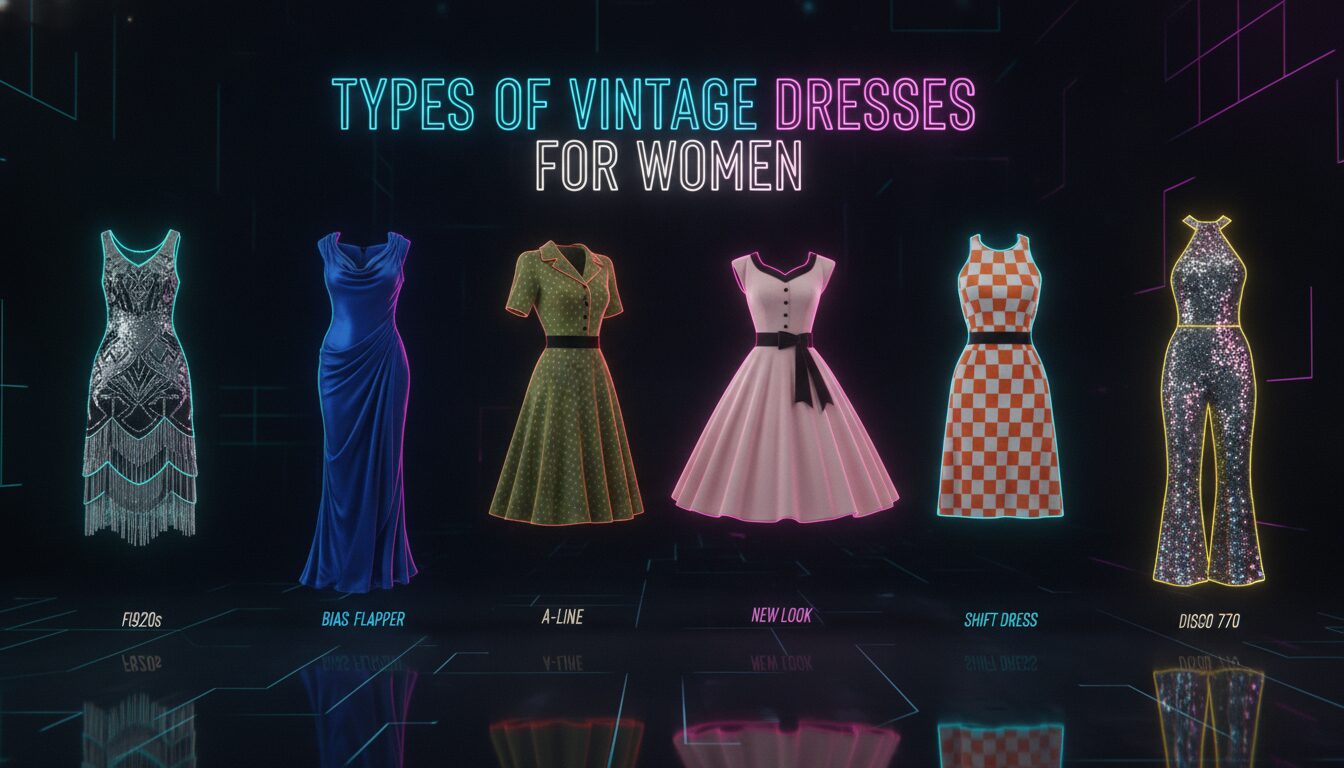
The best vintage dress for you depends on the era whose silhouette matches your mood, from flapper fringe to bohemian maxi. Whether you crave the drop-waist rebellion of the 1920s or the structured wiggle dress of the 1950s, the range is vast. Here are the defining eras:
- 1920s Flapper Dresses: Straight, loose silhouettes with beaded fringe, popularized by brands like WardrobeShop.
- 1940s Tea Dresses: Defined waists and midi lengths, often in rayon or crepe. Tea length means a hemline falling between mid-calf and ankle.
- 1950s Swing Dresses: Full skirts and cinched waists, available at Unique Vintage across hundreds of styles.
- 1960s Shift Dresses: Mod, boxy shapes with bold prints, made for a retro-chic edge.
- 1970s Maxi Dresses: Bohemian florals and peasant sleeves, often in breathable fabrics like linen from Son de Flor.
Style Tip: A 1930s bias-cut slip dress is the closest vintage era gets to our Poison Edit. Dark, liquid, unapologetic. Wear it like you own the room, because you will.
What to Look For When Buying Vintage Dresses
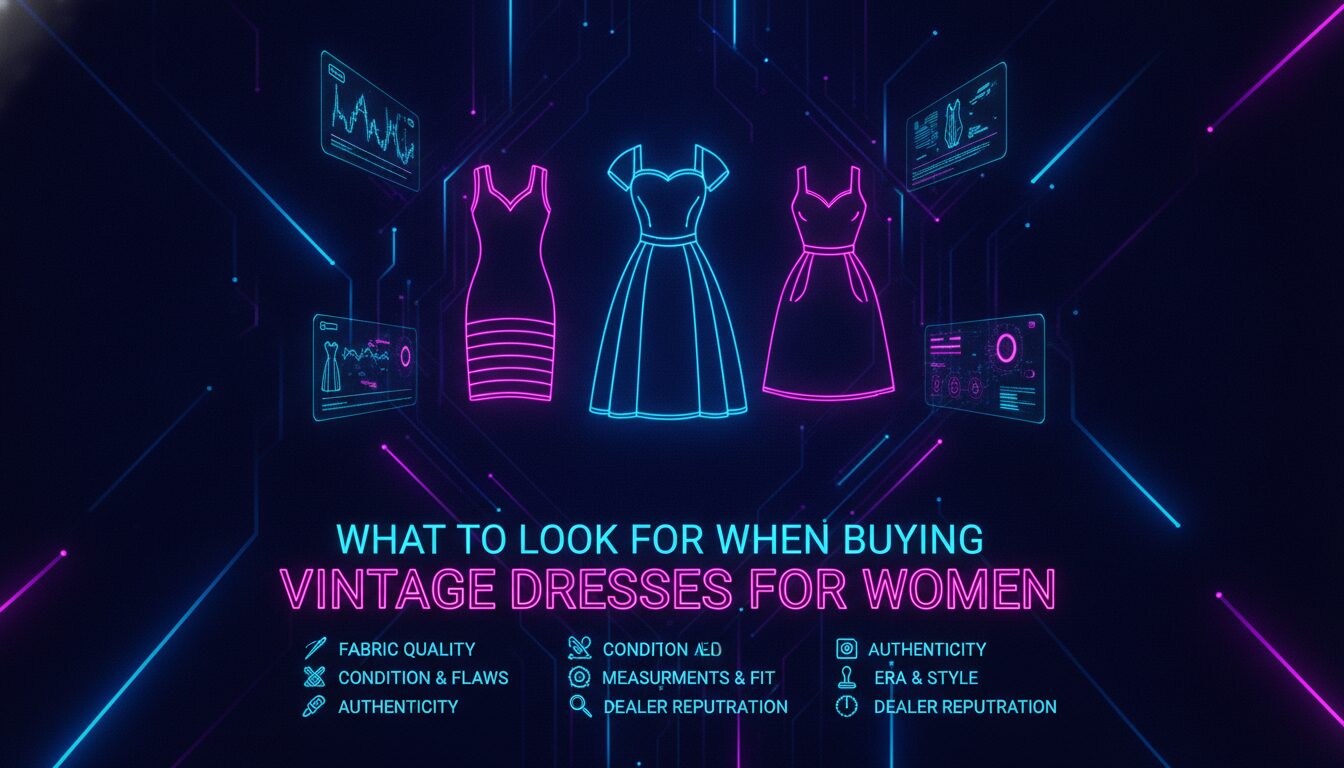
The most important thing to check when buying vintage dresses for women is fabric composition, since natural fibers age better and feel infinitely more luxurious against skin. A cotton-blend twill is a durable, structured fabric used by custom reproduction brands like Heart My Closet. Adored Vintage builds its pieces from cotton, linen, and rayon specifically to keep the fabric breathable. Sizing is critical: vintage cuts often run smaller than modern standards, so consult the chart every single time. Many retailers, including Unique Vintage, offer free returns and exchanges, so you can experiment risk-free.
Price Range Expectations
- Budget (Under $70): Amazon lists more than 40,000 retro dress options, with brands like Milreason starting around $37.
- Mid-Range ($70-$200): ModCloth runs $40 to $134 with deals up to 75% off, while Unique Vintage sits between $68 and $178.
- Premium ($200+): Adored Vintage climbs to $248, and Son de Flor’s linen pieces range from €231 to €339.
How to Style Vintage Dresses for Nightlife
Styling a vintage dress for nightlife means contrasting soft, romantic construction with something darker and modern. Here’s how we do it:
- Choose a dark or jewel-toned dress: A velvet 1930s bias-cut gown or a black 1950s wiggle dress sets the mood instantly.
- Add modern edge: Layer on a studded leather jacket, chunky platform boots, or a metallic belt to break the sweetness.
- Accessorize boldly: Stack chunky necklaces or opt for a sleek choker; fishnet stockings add a punk undercurrent.
- Finish with a dark lip and smoky eye: Makeup is the bridge between decades. It’s what turns costume into statement.
This is the whole point of duality dressing: pretty bones, poison attitude. If a 1950s swing skirt is your Pretty Edit instinct, let your accessories do the Poison Edit talking.
Sustainable and Custom-Made Vintage-Inspired Dresses
Vintage dresses for women are sustainable by nature because they keep existing garments in circulation instead of demanding new resources. Brands like Son de Flor use 100% linen and offer free shipping over €300, while Heart My Closet crafts made-to-measure cotton-blend twill pieces, cutting down on sizing waste and returns. Per Adored Vintage‘s stated ethos, choosing natural fibers over synthetics reduces fashion’s environmental impact over the garment’s lifetime.
Authenticating a True Vintage Dress
Authenticating a vintage dress means examining its labels, closures, and stitching for era-specific clues before you trust the seller’s claim. Look for metal zippers instead of plastic, union labels sewn into interior seams, and hand-finished hems with slightly irregular stitching. Pinked seam edges, a zigzag pattern cut with pinking shears, became common from the 1940s onward and can help date a piece. Buying from established sellers, whether a curated online boutique or a reputable vintage market stall, dramatically lowers your risk of paying vintage prices for a modern reproduction.
Shopping Vintage in Person
Physical thrift stores, estate sales, and vintage markets remain some of the best places to find one-of-a-kind pieces you’ll never see on a size chart. Try on everything in person since vintage sizing rarely matches modern numbering, inspect seams under good light, and always ask the seller about the garment’s era and provenance before you commit.
Renting Vintage for a Single Night
If you want the drama of a beaded 1920s gown without the long-term commitment, rental services focused on vintage and vintage-inspired formalwear have grown into a real option for one-off events. They’re worth considering for weddings, galas, or a single unforgettable night out when buying outright doesn’t make sense.
Caring for Your Vintage Dresses
Caring for vintage dresses properly means treating them gently: hand-wash or dry clean, store flat or padded, and keep them away from light. Delicate fabrics like chiffon and silk, common in many WardrobeShop designs, require hand-washing or professional dry cleaning rather than a machine cycle. Store dresses in breathable cotton garment bags away from direct sunlight to prevent yellowing. Never hang heavy beaded items; fold them instead with acid-free tissue paper. For everyday wrinkles, steam rather than iron to protect fragile seams.
WardrobeShop notes it fulfills most orders within 24 hours and offers free shipping over $75, a reminder that convenience and vintage romance aren’t mutually exclusive anymore.
Top Vintage Dress Brands Comparison
| Brand | Price Range | Size Range | Notable Materials | Style Focus | Key Policy |
|---|---|---|---|---|---|
| ModCloth | $40-$134 | XS-4X | Cotton, poly blends | Retro casual & party | Deals up to 75% off |
| Unique Vintage | $68-$178 | XS-4X, plus | Variety | Vintage reproduction | Free returns & exchanges |
| WardrobeShop | Varies | XS-XL | Variety, chiffon & silk | Vintage style dresses | Free ship over $75, ships in 24 hrs |
| Heart My Closet | Custom quotes | Custom made | Cotton-blend twill | Custom vintage repro | Made-to-order |
| Son de Flor | €231-€339 | XS-XL | 100% linen | Romantic vintage | Free ship over €300 |
| Adored Vintage | $58-$248 | XS-XL | Cotton, linen, rayon | Feminine & eco-friendly | Portland boutique |
Prices and policies current as of 2026. Always verify directly with the retailer before purchasing.
Pros and Cons
Pros
- Construction quality, like French seams and hand-finished hems, often beats fast fashion at similar price points.
- Every era offers a distinct silhouette, so you can match the dress to your mood or the night ahead.
- Buying vintage or vintage-inspired keeps garments in circulation, which is a genuinely sustainable choice.
- Sizing ranges have expanded significantly, with brands like ModCloth and Unique Vintage now covering XS to 4X.
Cons
- True vintage sizing frequently runs smaller than modern standards, making fit unpredictable without a chart.
- Delicate fabrics like silk, chiffon, and beaded panels demand careful, time-consuming maintenance.
- Authentic vintage pieces can be one-of-a-kind, meaning no reorders if something doesn’t fit.
- Premium and custom pieces, especially made-to-measure gowns, can climb well past $250.
Frequently Asked Questions
Where can I buy vintage dresses for women online?
Trusted online stores include ModCloth, Unique Vintage, WardrobeShop, and Son de Flor, each with a distinct aesthetic and size range. Adored Vintage is another strong option for feminine, eco-conscious pieces built from cotton, linen, and rayon.
What is the difference between vintage and vintage-inspired?
True vintage refers to garments that are at least 20 years old, while vintage-inspired pieces are newly made items that emulate past styles with modern construction. Both can deliver the same silhouette, but only true vintage carries original-era craftsmanship and history.
What are the most iconic vintage dress styles?
The 1920s flapper dress, the 1950s swing dress, and the 1960s mod shift dress are widely considered the most iconic vintage silhouettes. Each represents a distinct decade’s approach to movement, structure, and rebellion against the era before it.
How should vintage dresses for women be cleaned?
Hand-wash or dry clean delicate fabrics like silk, rayon, and beaded items rather than machine washing them. Avoid wringing, lay flat to dry, and steam instead of ironing to protect old seams.
Are vintage dresses appropriate for weddings?
Yes, 1920s beaded gowns and 1950s tea-length dresses make elegant choices for formal events, especially paired with modern hair and makeup. Rental services are also worth exploring if you want a showstopping vintage gown for one night only.
How can I verify a dress’s authenticity?
Check for metal zippers, union labels, and hand-finished hems with slightly irregular stitching. Buying from established sellers, whether online boutiques or reputable vintage markets, significantly reduces your risk of paying vintage prices for a modern reproduction.
Own Your Signature Vintage Look
With endless eras, sustainable options, and perfect-fit custom designs, vintage dresses for women let you build a wardrobe that’s entirely yours. Whether you grab a $37 swing dress or invest in a bespoke gown that costs hundreds, the era you choose says something. Now decide what it says about you tonight. Discover your duality at prettynpoison.com.
2000s fashion trends are the defining clothing styles that dominated nightlife from 2000-2009, mixing futuristic minimalism with nostalgic revivals and unapologetic glamour.
Key Takeaways
- fashion trends evolved from Y2K futurism to boho chic to the skinny jean revolution
- Low-rise denim, trucker hats, Juicy tracksuits, and Ugg boots were the era’s power pieces
- Celebrity paparazzi culture accelerated trend cycles and created the “It” item obsession
- Modern sustainable brands reinterpret these iconic these trends for today’s nightlife scene
Y2K Futurism: When Fashion Met the Future
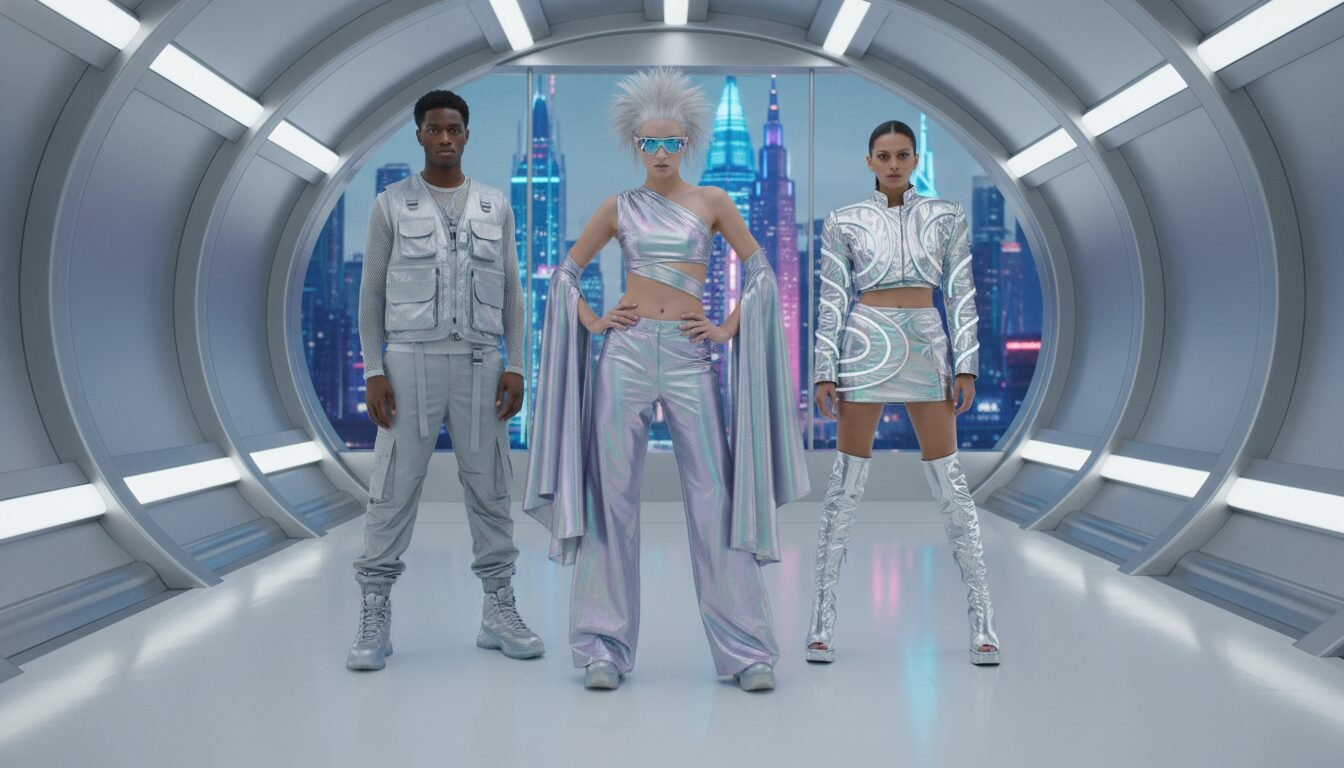
The early such trends carried the tech-obsessed energy of the millennium shift. Think Matrix vibes meets club kid fantasy , metallic silvers, black leather, and harness-like details dominated every runway worth watching.
The All-Black Everything Era
Fashion got dark and we lived for it. Fashion History Timeline documents how Fall 2001 runways were saturated with black , Balenciaga, Yves Saint Laurent, and Calvin Klein went full goth, creating the cyberpunk aesthetic that still influences club wear today.
“The catwalks in Spring and Fall 2001 were dominated by the use of black, with designers such as Balenciaga, Yves Saint Laurent Rive Gauche, and Calvin Klein using black almost exclusively.”
Low-Rise Flared Jeans: The Hip-Hugger Revolution
Denim became religion in the early 2000s. Low-rise flared jeans with midriff-baring tops were the uniform of choice for anyone who mattered. True Religion and 7 for All Mankind turned denim into luxury statements , Jessica Alba rocked True Religion on red carpets by 2005, proving these 2000s fashion trends belonged everywhere from premieres to parties.
Boho Chic and the Birth of “It” Culture
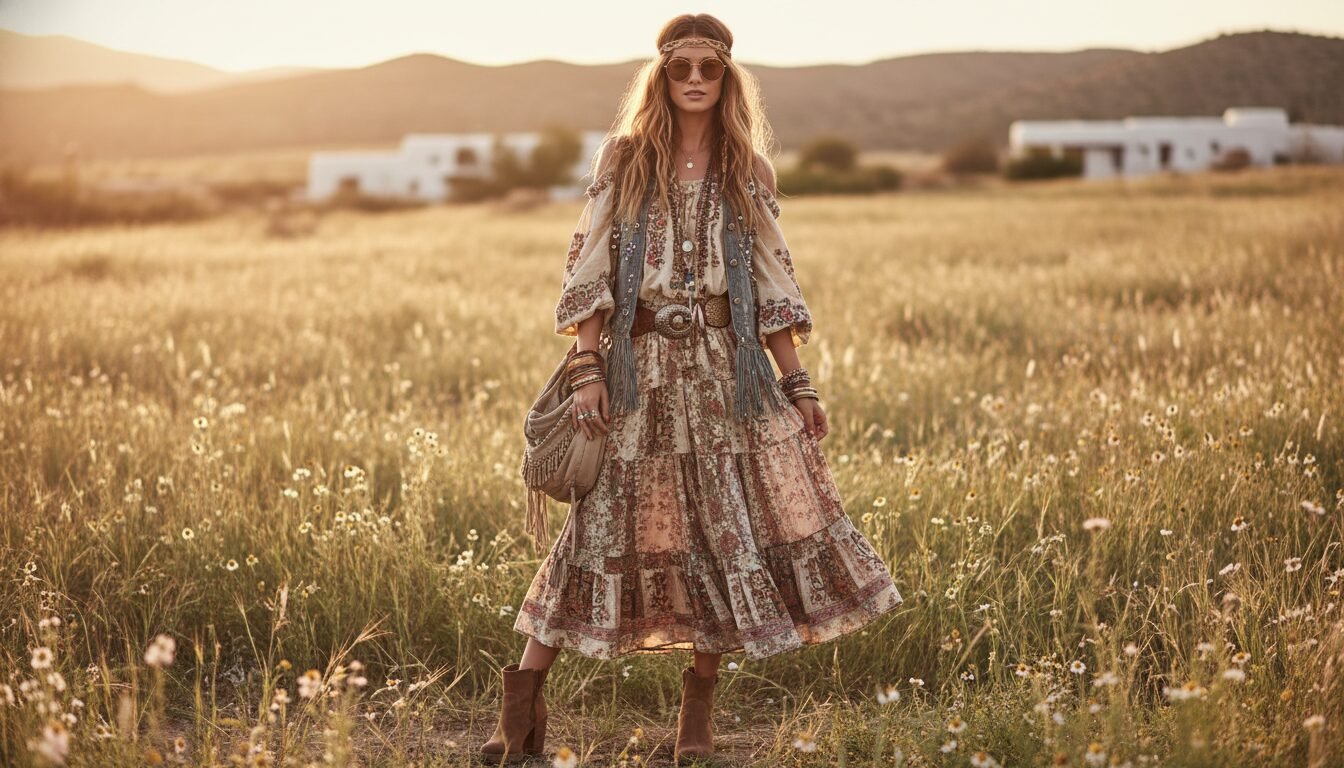
Around 2004, fashion took a romantic turn. Bohemian style mixed peasant blouses with tiered skirts and layered accessories, creating an effortless glamour that felt both vintage and fresh. This era also birthed the “It” item , those must-have pieces that defined your social status.
Sienna Miller: The Boho Queen
Sienna Miller became the poster girl for curated vintage mixing. Unlike grunge’s thrift-store scruffiness, this boho aesthetic was expensive and intentional. Fashion historian Kathryn Hennessey called it “bobo” , bourgeois-bohème , capturing the trend’s upscale, self-aware vibe perfectly.
“Instead of scouring second-hand shops for well-worn oversized sweaters and army surplus gear, bohos went to expensive clothing boutiques.” , Kathryn Hennessey, Fashion: The Ultimate Book of Costume and Style (2012)
The “It” Item Obsession
Von Dutch trucker hats, Juicy Couture velour tracksuits, Ugg boots, and Fendi’s Baguette bag weren’t just accessories , they were status symbols. Paparazzi culture made every celebrity outfit aspirational. Even Beyoncé wearing Uggs with a denim mini at a 2004 Super Bowl party became a moment, cementing the casual-luxe hybrid that defined these 2000s fashion trends.
The Skinny Jean Revolution
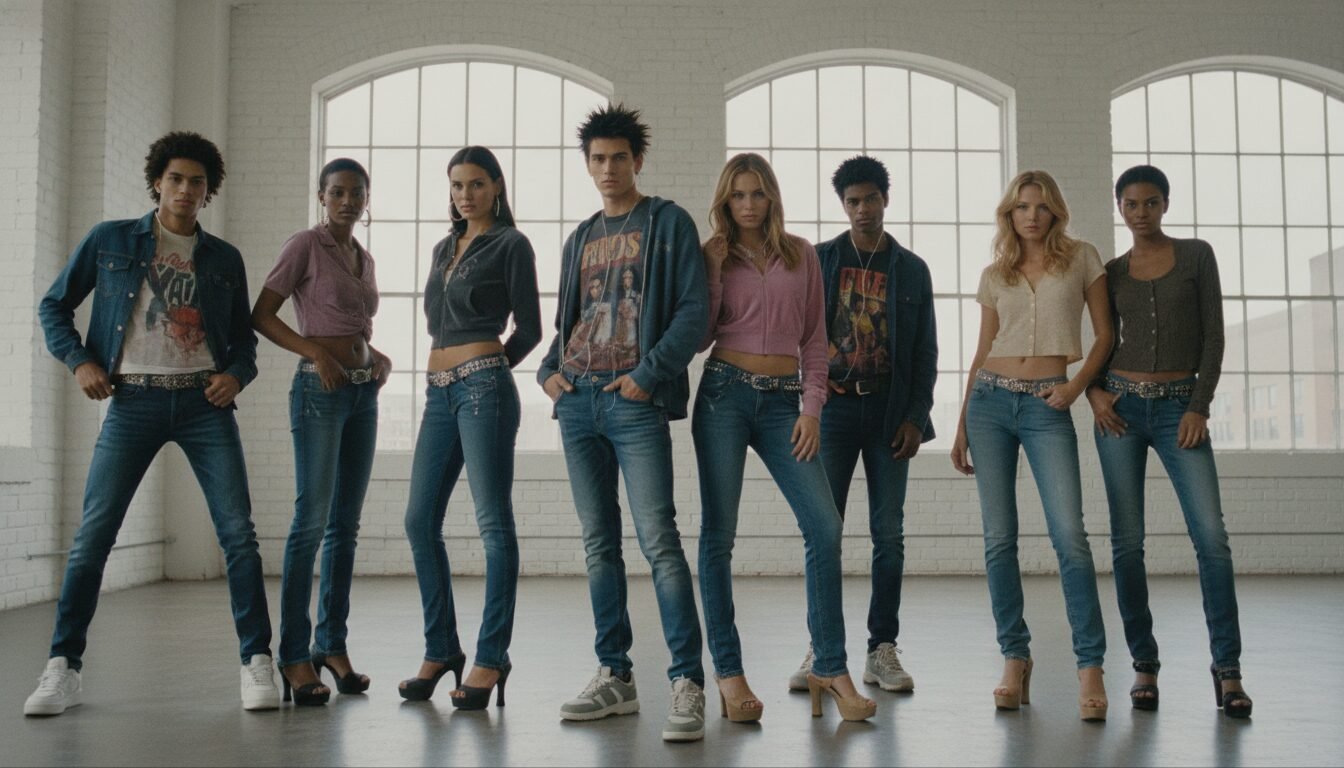
By 2005, denim took a dramatic turn. Skinny jeans emerged as the decade’s defining silhouette, tight from hip to ankle and worn by everyone from indie rockers to Hollywood royalty. This shift marked the beginning of body-conscious dressing that would dominate the late 2000s.
From Bootcut to Body-Con
The evolution happened fast. Stretch fabric technology allowed skinny jeans to hug every curve while remaining comfortable. Distressed finishes , strategic rips, fraying, and fading , added rock-and-roll edge. By 2006, skinny jeans were everywhere, proving that 2000s fashion trends could pivot quickly when the culture demanded it.
| Denim Style | Key Characteristics | Peak Popularity | Notable Brands |
|---|---|---|---|
| Low-rise flared | Low waist, flare from knee, body-hugging | 2000–2003 | True Religion, 7 for All Mankind |
| Bootcut | Slight flare, mid-rise, versatile | 2004–2005 | Seven, Citizens of Humanity |
| Skinny | Tight from hip to ankle, stretch fabric | 2006–2009 | J Brand, Cheap Monday |
The Galaxy Dress and 1980s Revival
Roland Mouret’s Galaxy Dress in 2005 changed everything. That square neckline, nipped waist, and figure-hugging pencil skirt became red-carpet gold. Power shoulders returned, bodycon dresses conquered club scenes, and statement belts defined waists. The late 2000s were all about structured glamour that foreshadowed the muscular luxury of the next decade.
Men’s Style Evolution
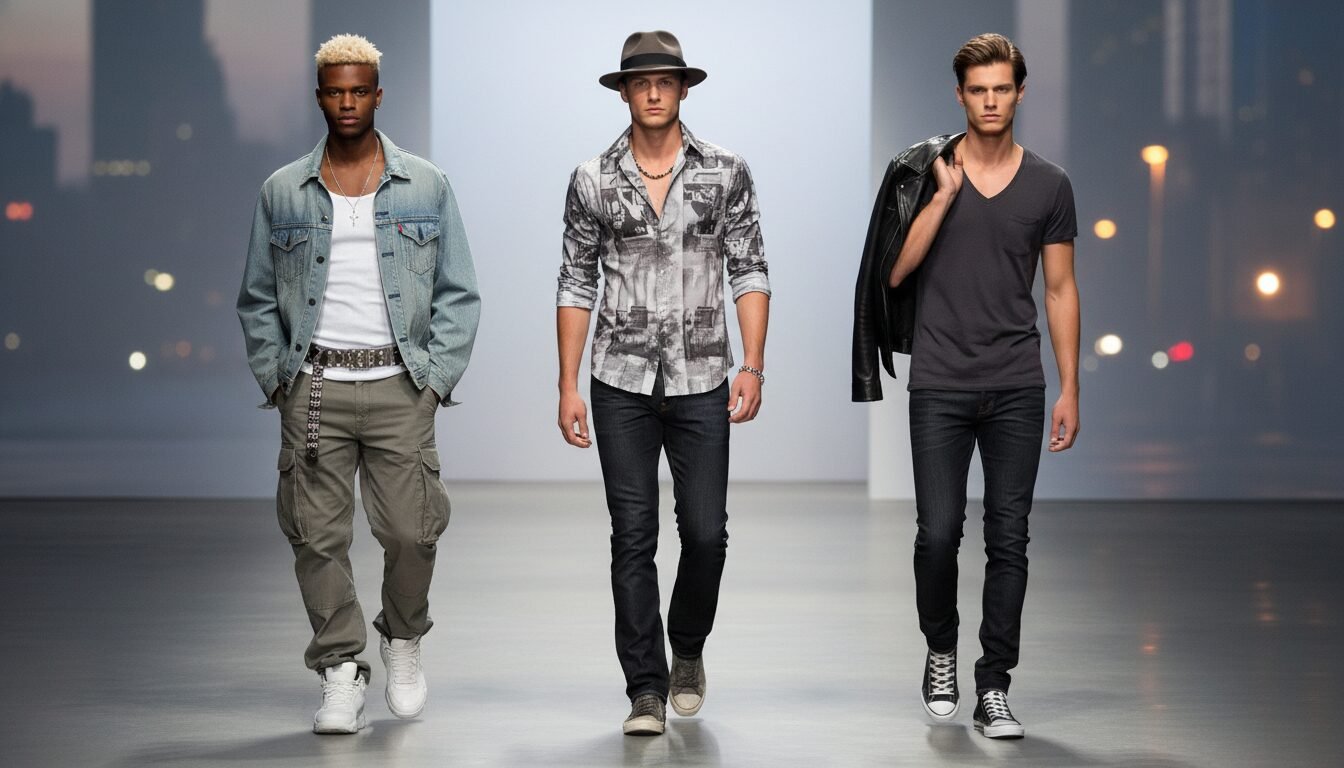
Men’s 2000s fashion trends moved from baggy streetwear to slim-fit sophistication. Hip-hop influences brought oversized everything in the early years, while preppy layering dominated the mid-2000s. By 2007, slim suits became the gold standard for polished nightlife looks.
Baggy to Fitted: The Complete Transformation
Early 2000s men lived in ultra-baggy denim and graphic tees. FUBU, Rocawear, and Sean John ruled the streets. But by 2005, everything contracted. Slim-fit jeans, polo shirts, and V-neck sweaters replaced the oversized gear. Ed Hardy’s embellished tees became divisive but undeniable, while tailored two-button suits with skinny ties signaled the return of formal nightlife dressing.
Subculture Style: The Underground Influence
Beyond mainstream trends, the 2000s nurtured vibrant subcultures whose fashion choices heavily influenced alternative nightlife. Emo, scene, and rave styles offered dark, expressive alternatives that continue to inspire today’s club culture.
Emo and Scene Aesthetics
Emo fashion peaked mid-decade with black skinny jeans, band tees, studded belts, and side-swept bangs. Scene kids added neon colors, teased hair, and playful accessories. These looks thrived in underground venues and MySpace culture, shaping club aesthetics with their emphasis on self-expression through clothing.
Rave and Cyber-Goth Energy
Parallel to emo, rave communities embraced neon fishnets, chunky platforms, and UV-reactive clothing. Brands like Lip Service and Tripp NYC supplied the club kids and industrial crowds. This underground stream continues inspiring modern sustainable partywear brands who reinterpret these bold silhouettes in eco-conscious materials.
Denim: The Decade’s Defining Fabric
Denim was the backbone of every 2000s wardrobe. Whether low-rise flares or spray-on skinnies, jeans defined social belonging and personal identity. Understanding denim’s journey reveals the deeper narrative of how 2000s fashion trends reflected cultural shifts.
The Designer Denim Explosion
Premium denim brands transformed workwear into luxury signifiers. True Religion’s thick stitching and horseshoe logo, 7 for All Mankind’s squiggle back-pocket design , these details commanded $150-$300 per pair. The premium denim market grew exponentially, reflecting a cultural shift where jeans became acceptable at formal events and workplaces.
Stretch Technology and Distressing Techniques
Elastane blends after 2005 allowed super-skinny fits while maintaining comfort. Distressing techniques , hand-sanded whiskering, ripped knees, acid washes , added rebellious dimension. This marriage of comfort and edge directly influenced later athleisure and streetwear, proving innovation in denim was constant throughout the decade.
Pros and Cons
Pros
- Bold self-expression through clothing became mainstream and acceptable
- Diverse style options from futuristic minimalism to bohemian romance
- Celebrity influence democratized high fashion for everyday wear
- Denim innovation created comfortable, flattering silhouettes for all body types
- Subculture styles influenced mainstream fashion, creating inclusive trends
Cons
- Fast fashion acceleration led to disposable clothing culture
- Extreme low-rise trends were unflattering and impractical for many
- “It” item culture created unsustainable consumption patterns
- Heavy focus on thinness excluded diverse body representation
- Trend cycles moved too quickly, making investment pieces obsolete
Sustainable Y2K: Reimagining 2000s Fashion Trends
Today’s nostalgia for 2000s fashion trends is being filtered through an eco-conscious lens. Sustainable fabrics and ethical production are breathing new life into Y2K aesthetics, especially for party and nightlife scenes.
Eco-Friendly Materials for Y2K Partywear
Contemporary brands use recycled polyester, organic cotton, and deadstock fabrics to recreate the slinky, body-con styles of 2000s club culture. Metallic mesh tops, low-rise cargo pants, and faux-leather minis now come in materials that reduce environmental impact without sacrificing the glossy, attention-grabbing aesthetic.
Building Your Sustainable Y2K Capsule
Embrace 2000s fashion trends sustainably with these curated pieces:
- Statement bottom: High-stretch, recycled-fabric skinny jeans or faux-leather micro-mini inspired by Y2K silhouettes
- Metallic or mesh top: Silver halter or see-through mesh long-sleeve channeling cyber-goth energy
- Cropped layer: Faux-fur bolero or eco-leather biker jacket for that essential 2000s layering
- Sustainable accessories: Chunky platform boots in vegan materials, recycled-acetate trucker hat, or baguette bag in sustainable leather
- Eco-friendly sparkle: Organic, biodegradable body glitter for Y2K shimmer without microplastics
Mix modern ethics with nostalgic silhouettes to party like it’s 2001 , without trashing the planet. Discover your duality at prettynpoison.com
Frequently Asked Questions
What were the most iconic 2000s fashion trends?
Low-rise flared jeans, bohemian peasant tops, velour tracksuits, trucker hats, and skinny jeans defined the decade. Accessories like Ugg boots, Baguette bags, and body glitter were also quintessential to the era’s aesthetic.
Why did low-rise jeans become so popular in the 2000s?
Low-rise jeans rebelled against high-waisted fits of previous decades and were heavily promoted by pop stars like Britney Spears and Christina Aguilera. They offered a sexy, casual look that dominated early 2000s nightlife and red carpets.
How did celebrity culture influence 2000s fashion trends?
Celebrities like Paris Hilton, Sienna Miller, and Lindsay Lohan were constantly photographed in tabloids and early social media, making their outfits instantly aspirational. This fueled the rise of “It” items and fast fashion knockoffs.
Are 2000s fashion trends coming back?
Yes, Y2K fashion has seen a major revival since the early 2020s, with Gen Z embracing low-rise silhouettes, baby tees, claw clips, and chunky highlights. The trend has been reinterpreted by sustainable brands for modern audiences.
What was the difference between emo and scene style in the 2000s?
Emo fashion centered on dark, emotional expression with black skinny jeans, band merch, and dyed black hair. Scene style was more colorful and playful, incorporating neon accents, teased hair, and cartoon print tees.
How can I wear 2000s trends sustainably today?
Shop secondhand or from brands using recycled materials to find Y2K-inspired pieces. Build a capsule of versatile, high-quality items that mimic the decade’s silhouettes without contributing to fast fashion waste.