Ethical fashion labels are clothing brands that commit to fair labor, eco-friendly materials, and transparent supply chains. This guide covers every step: from reading certifications to building a wardrobe that actually works.
Key Takeaways
- fashion labels prioritize fair labor, eco-friendly materials, and supply-chain transparency.
- Use directories like Good On You and Baptist World Aid to check brand ratings before buying.
- Look for third-party certifications such as Fair Trade, GOTS, and B Corp to verify claims.
- Build a capsule wardrobe with versatile pieces from labels like ARMEDANGELS, Kotn, and Christy Dawn.
- Care for your garments properly to extend their lifespan and reduce environmental impact.
What Are Ethical Fashion Labels?
this type of labels are brands that hold themselves accountable on three fronts: the people who make the clothes, the planet those clothes come from, and the animals caught in the supply chain. Unlike fast fashion, they pay living wages, use sustainable materials like organic cotton or deadstock fabric, and trace every step of production. As Vogue UK’s 2025 round-up of sustainable brands puts it, “sustainable fashion means different things for different people” – but at minimum, a genuinely ethical label considers social impact, animal welfare, and longevity (Vogue UK).
Why Choosing Ethical Fashion Matters
Every dollar you spend is a vote for the industry you want to exist. The Baptist World Aid Ethical Fashion Guide makes it plain: millions of garment workers face low wages, unsafe conditions, and in some cases modern slavery, while the sector’s environmental footprint keeps growing. By supporting this kind of labels, you shift demand toward companies that invest in their workforce and take planetary harm seriously.
The Difference Between Ethical, Sustainable, and Fair Trade
These terms get used interchangeably, but they mean different things. “Ethical” focuses on human rights and labor conditions. “Sustainable” emphasizes environmental impact, including materials and waste. “Fair Trade” refers to a specific certification system that guarantees minimum prices and community-development premiums. The Fair Trade Certified clothing guide explains how factories earn premiums that workers vote on for projects like healthcare or education. Many ethical fashion pursue all three simultaneously.
Pros and Cons of Buying From Ethical Fashion Labels
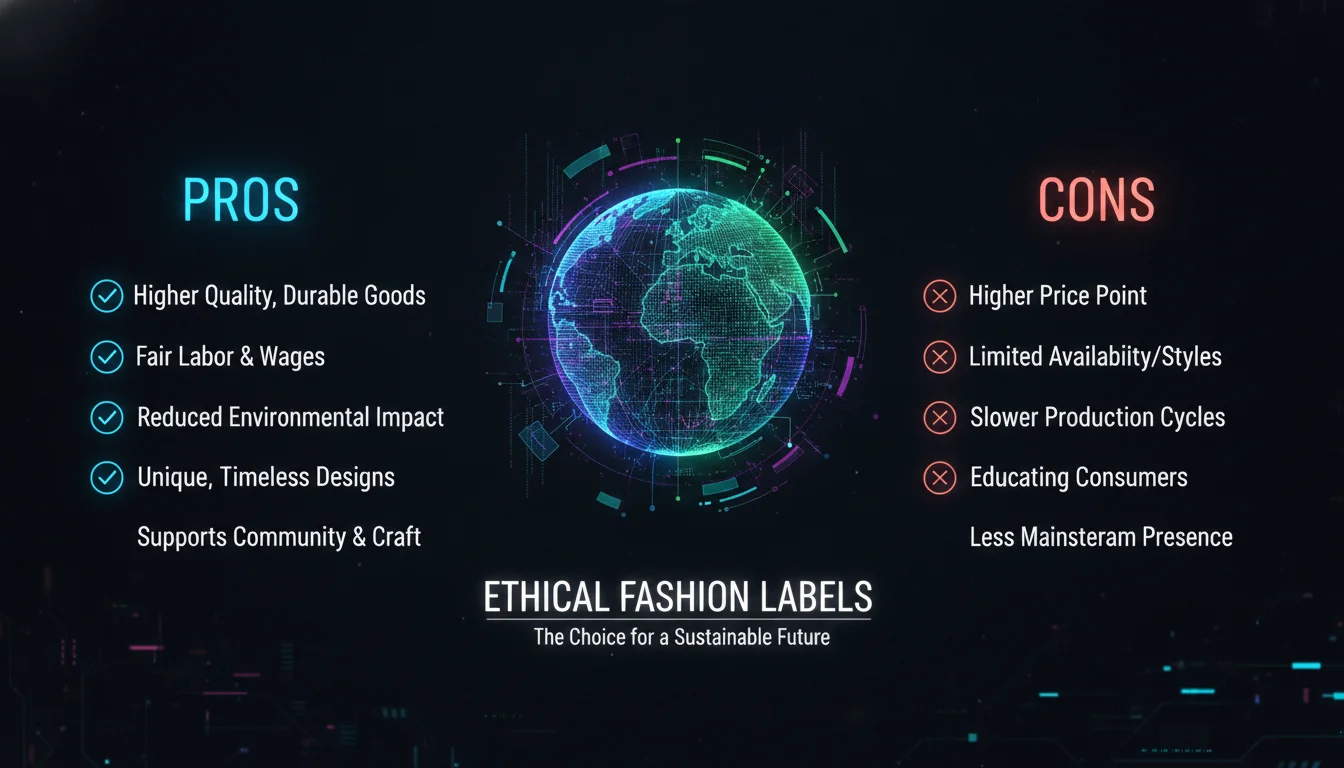
Pros
- Real accountability: Third-party certifications and transparency reports mean you can verify claims, not just trust marketing copy.
- Better construction: Ethical labels build to last. Better seams, natural materials, and classic cuts mean a lower cost-per-wear over time.
- Positive supply-chain impact: Your purchase directly supports fair wages and safer working conditions for garment workers worldwide.
- Lower environmental footprint: Organic, recycled, and regenerated fibers reduce water pollution, chemical use, and textile waste.
- Inclusive sizing: The ethical fashion space is broadening. Good On You lists 1,110 plus-size options among rated brands.
Cons
- Higher upfront cost: Ethical production costs more. Budget shoppers will need to prioritize and buy less, but buy better.
- Greenwashing risk: Not every brand that says “conscious” or “eco” has the receipts. Verification takes effort.
- Limited trend-driven options: Ethical labels tend toward timeless over trendy, which can feel restrictive if you live for the latest drop.
- Inconsistent sizing: Many ethical brands cut more generously than fast fashion, so always consult size charts before ordering.
How to Identify Truly Ethical Fashion Labels
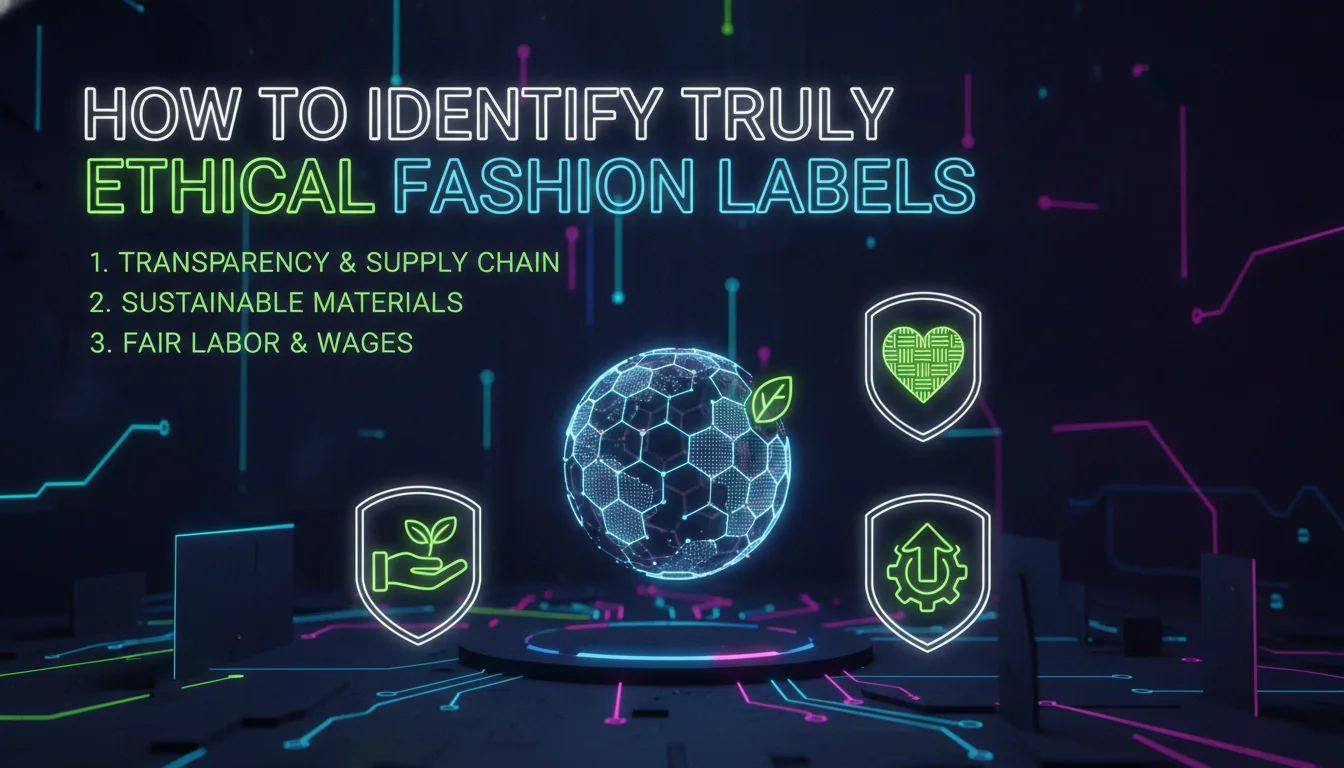
Not every brand that uses words like “conscious” or “eco” lives up to the promise. Greenwashing is rampant, so a structured approach helps you find fashion labels you can actually trust. Follow this step-by-step process.
Step 1: Check a Reliable Rating Directory
The fastest shortcut is a non-profit rating platform. The Good On You directory rates thousands of brands on a scale from “We avoid” to “Great,” evaluating impact on people, the planet, and animals. ARMEDANGELS earns “Great.” SHEIN receives “We avoid.” Eco-Stylist certifies brands based on transparency, fair labor, and sustainably-made criteria. According to Eco-Stylist, its featured labels pay clothing makers 15-30 times more in living wages than the industry norm (Eco-Stylist). Start every purchase by looking up the brand on at least one such directory.
Step 2: Read the Label’s Own Transparency Report
True this type of labels publish details about their factories, material sourcing, and social initiatives. Look for an “Impact” or “Sustainability” page that names specific facilities, shares audit results, and explains how they calculate a living wage. Brands like Outerknown and Patagonia set the benchmark here. If a brand is vague about where its garments are cut and sewn, treat that as a red flag.
Step 3: Match Certifications to Your Values
Third-party certifications add real verification. Common ones include:
- Fair Trade Certified: Ensures factory workers receive a premium on top of their wages and operate in safe conditions. Brands like Pact and Athleta carry this seal.
- GOTS (Global Organic Textile Standard): Certifies organic fibers and prohibits harmful chemicals throughout processing.
- OEKO-TEX: Tests finished garments for substances harmful to human health.
- B Corp: Verifies a company’s overall social and environmental performance. Christy Dawn is a recognized B Corp.
No single certification covers everything. A combination of several signals a robust commitment.
Step 4: Examine Material Choices
Ethical labels favor low-impact fibers. Organic cotton avoids the synthetic pesticides and heavy water use associated with conventional cotton. Tencel lyocell is made from wood pulp in a closed-loop process that reuses water and solvents. Deadstock fabric reduces waste by repurposing leftover material from other brands. If you need performance wear, choose recycled synthetics over virgin polyester, which sheds microplastics with every wash.
Step 5: Assess Price, Durability, and Timelessness
An ethical piece often costs more upfront. The cost-per-wear, though, can be significantly lower because of better construction and classic design. Think in terms of investment, not impulse. One well-made organic-cotton jean from a label like Kotn can outlast multiple pairs of fast-fashion denim.
Factors to Consider When Shopping Ethical Fashion Labels
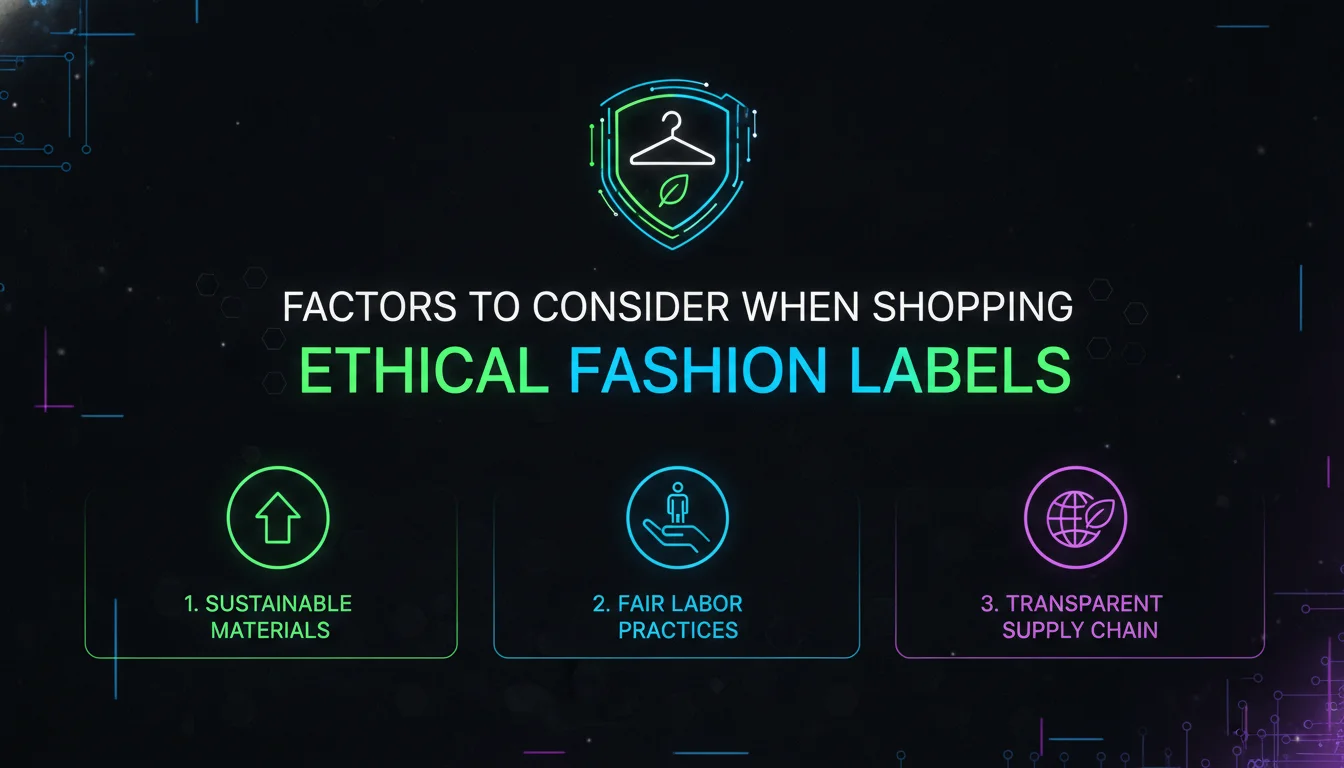
Once you have a shortlist, weigh these practical criteria to make sure the garment works for you and your conscience.
Material and Construction
Check the fabric composition tag. Prioritize organic, recycled, or regenerated fibers. Look at seam finishing: French seams or bound edges indicate care in construction. Double-stitched hems and natural buttons made from corozo, wood, or shell are small but revealing details. Ethical fashion labels often highlight these features because they want the garment to last years, not seasons.
Transparency and Labor
Does the brand disclose the factories where each product is made? Kotn publishes its supply-chain map, showing which farms provided the cotton and which workshops cut and sewed the garments. A brand that cannot or will not tell you where your clothes were made is probably hiding something worth knowing.
Fit, Comfort, and Inclusivity
An ethical purchase only works if you’ll actually wear it. Consult size charts carefully. Many ethical brands cut more generously than fast fashion. Good On You lists 1,110 plus-size options among rated brands, a sign the movement is broadening beyond its historically narrow size range.
Price-Range Expectations
Ethical fashion labels span three broad tiers:
- Budget ($30-$80 per item): Brands like Pact and Colorful Standard offer organic cotton basics under $80.
- Mid-range ($80-$200): Labels such as Kotn and ARMEDANGELS sell well-made staples, including jeans, sweaters, and dresses, in this bracket.
- Premium ($200+): Christy Dawn and Outerknown charge more for artisanal details, regeneratively farmed materials, and fully traceable supply chains.
A higher price does not automatically equal higher ethics. Always cross-check with a rating platform.
| Brand | Country | Price Tier | Good On You Rating | Key Ethical Features |
|---|---|---|---|---|
| ARMEDANGELS | Germany | Mid-range | Great | GOTS-certified organic cotton, Fair Trade, living-wage commitment |
| Kotn | Canada | Mid-range | Good | B Corp, directly sourced Egyptian cotton, supply-chain transparency |
| Christy Dawn | USA | Premium | Good | Deadstock fabrics, regenerative cotton, artisan-made in USA |
| Pact | USA | Budget | Good* | Fair Trade Certified, organic cotton basics, affordable price points |
| Colorful Standard | Denmark | Budget | Good | OEKO-TEX certified, organic cotton, anti-chemical dyeing |
*Pact’s Fair Trade certification and widespread recognition as an ethical brand justify its inclusion here.
How to Style Ethical Fashion Labels for Different Occasions
Building outfits from ethical fashion labels is easier when you treat your wardrobe as a curated capsule. Here are real outfit ideas using pieces from rated brands.
Elevated Office Wear
Pair Colorful Standard’s organic cotton Oxford shirt with Kotn’s pleated trousers and a pair of vegan leather loafers from NAE. Add a structured blazer from ARMEDANGELS for a boardroom-ready look that’s entirely traceable. Clean lines, verified ethics, zero compromise.
Weekend Casual
Wear a recycled-polyester bomber jacket over a Christy Dawn deadstock-cotton dress, finished with second-hand sneakers. The mix of textures keeps the outfit interesting while staying low-impact. This is what conscious dressing actually looks like: effortless, not performative.
Evening and Events
Opt for a jumpsuit from Reformation, rated Good on Good On You, in Tencel lyocell. Style it with ethical jewelry from SOKO and a clutch made from Pinatex, a pineapple-based leather alternative. The monochrome palette lets the fabric’s drape and sheen do the talking.
Loungewear and Athleisure
Pact’s organic-cotton joggers and matching hoodie provide comfort without compromise. Layer a long-sleeve tee from Kotn underneath for extra warmth on errand days. Basics done right: certified, comfortable, and built to last.
Is the Sustainable Fashion Market Actually Growing?
Yes, and the numbers from competitor evidence confirm it. According to a 2022 Statista study cited by Fair Trade Certified, 39% of respondents considered sustainability slightly important when buying clothing, while only 3% did not consider it important at all. The sustainable clothing market share is expected to reach over 6% by 2026, per the same source. That growth is creating real pressure on mainstream brands to clean up their supply chains, which is exactly why knowing how to identify genuine ethical fashion labels matters more now than it did five years ago.
“By wearing Fair Trade Certified factory-made clothing, we’re helping create sustainable livelihoods, safer working conditions, and desperately-needed transparency in the fashion industry.” – Fair Trade Certified, Sustainable Clothing Guide, 2025
“Given that sustainable fashion means different things for different people, it can be difficult to know where to start if you’re trying to be more conscious about your shopping habits.” – Emily Chan, Vogue UK, June 2025
Caring for Your Ethical Fashion Purchases
Extending the life of your clothes is the single most impactful action you can take after buying from ethical fashion labels. The garment is only as sustainable as the care it receives.
Washing and Drying
Wash in cold water using a gentle, biodegradable detergent. Turn garments inside-out to protect visible surfaces. Air-dry whenever possible. Tumble dryers cause micro-tear and consume significant energy. If you must machine-dry, use the lowest heat setting available.
Storage and Repairs
Fold knitwear. Hang woven items on padded hangers. Keep clothes out of direct sunlight to prevent fading. Learn basic mending: replacing a button or darning a small hole adds months, sometimes years, to a garment’s life. Patagonia’s Worn Wear program and Nudie Jeans’ free repair service are industry benchmarks for keeping clothes in circulation.
End-of-Life Options
When a piece is truly worn out, recycle it through brand take-back schemes or specialized recyclers. Avoid throwing clothes in the trash. Even damaged fabric can be downcycled into insulation or industrial wiping cloths, keeping it out of landfill entirely.
Frequently Asked Questions
What are the best online directories for finding ethical fashion labels?
Good On You and the Baptist World Aid Ethical Fashion Guide are the most comprehensive resources available. Good On You rates thousands of brands on people, planet, and animal welfare. Baptist World Aid assessed 13,000 data points covering 46 questions across three tiers of the supply chain to produce its scores. Eco-Stylist is another curated resource that certifies brands based on strict sustainability criteria.
How do I know if an ethical fashion label is genuinely ethical?
Look for third-party certifications such as Fair Trade, GOTS, and B Corp, alongside a transparent supply-chain map and a high rating on independent directories. Be skeptical of brands that use vague language like “conscious” or “eco” without concrete data or audited reports to back it up.
Are ethical fashion labels expensive?
They range from affordable to luxury. Brands like Pact and Colorful Standard offer basics under $80, while premium labels like Christy Dawn and Outerknown cost over $200. The higher upfront cost often reflects better materials and construction, so cost-per-wear is typically lower over time.
Can I find ethical fashion labels for plus sizes?
Yes. Good On You lists over 1,110 plus-size options from rated brands. Labels like Universal Standard, Girlfriend Collective, and Eileen Fisher are known for inclusive sizing combined with ethical production practices.
What is the easiest way to start building an ethical wardrobe?
Start by auditing your current closet to identify genuine gaps, then purchase second-hand or from a few trusted ethical labels. Focus on versatile, high-quality basics: organic cotton tees, a well-cut pair of jeans, a classic sweater that mixes and matches across seasons.
How can I spot greenwashing?
Red flags include no named factories or suppliers, heavy use of nature imagery without proof, “eco” collections that make up a tiny fraction of total output, and a complete absence of third-party certifications. Always verify claims on independent platforms like Good On You before you buy.
Discover your duality at prettynpoison.com.
Fashion Industry: Global Size, Impact & Trends 2026
The fashion industry is the global business of designing, producing, and selling clothing, accessories, and footwear. It generates trillions annually, employs millions worldwide, and sits at the center of culture, commerce, and controversy.
Key Takeaways
- The industry is a $1.7 trillion global sector spanning design, production, and retail.
- It employs millions worldwide but contributes 5-10% of global greenhouse gas emissions.
- Fast fashion produces over 100 billion garments yearly, with the average piece worn only seven times.
- Sustainable and secondhand fashion movements are actively reshaping consumer habits as of 2026.
- Careers range from design and marketing to sustainability strategy and digital technology.
- Alternative and nightlife fashion is proving that bold self-expression and ethical production can coexist.
From the runways of Paris to the factories of Dhaka, the this type of industry touches nearly every corner of the globe. According to FashionUnited and Euromonitor International, the industry generated an estimated $1.7 trillion in revenue in 2021. McKinsey’s State of Fashion 2017 report stated that if the global this kind of industry were a country, its GDP would rank seventh worldwide. This year, the conversation has shifted: sustainability, regulation, and the rise of alternative fashion are forcing the industry to reckon with its own reflection.
What Is the Fashion Industry?
The fashion is a global sector that designs, manufactures, distributes, markets, and retails apparel and accessories. It covers everything from haute couture houses to streetwear labels, luxury boutiques to mass-market chains, and increasingly, digital-only fashion for virtual spaces.
Definition and Scope
According to Wikipedia, the word “fashion” derives from the Latin facere, meaning “to make,” underscoring its deep connection to craftsmanship and production. The industry operates at the intersection of art, commerce, and technology, constantly adapting to social and aesthetic shifts. It encompasses clothing, footwear, jewelry, and cosmetics, making it a major contributor to both cultural expression and economic output.
Two Main Sectors: Haute Couture vs. Ready-to-Wear
The industry divides into two primary sectors: haute couture and ready-to-wear (prêt-à-porter). Haute couture means custom-made garments crafted for individual clients, often using luxurious materials and hand-finishing techniques. These pieces are typically one-of-a-kind and can cost tens of thousands of dollars. Ready-to-wear collections are manufactured in standard sizes for mass distribution, making high-fashion aesthetics accessible to a broader audience. Many luxury brands, such as Chanel and Dior, produce both lines, while fast-fashion retailers like Zara and H&M focus exclusively on affordable, mass-produced styles.
As of 2026, according to EBSCO’s research starters, the boundary between these two sectors has blurred significantly, with luxury houses using ready-to-wear drops to stay culturally relevant while fast-fashion brands experiment with premium sub-lines.
The Cultural Role of Fashion
Fashion does more than produce clothing. It shapes identity. Fashion scholar Susan B. Kaiser notes that everyone is “forced to appear” before others, and our attire communicates messages about social status, profession, and personality. Major fashion weeks in New York, Paris, and Milan set the tone for global trends, while street style and subcultures, from punk to goth to rave, continuously refresh the industry with new aesthetics. The night is its own runway, and nobody knows that better than the women who dress for it.
A Brief History of Fashion
The this type of industry’s modern form emerged in the early 19th century, when technological advances began to democratize clothing production and reshape how people dressed.
From Handmade to Mass Production
Before the Industrial Revolution, clothing was largely handmade by tailors and seamstresses. The sewing machine changed everything. According to EBSCO, the roots of the modern this kind of industry trace back to the early 1800s, when factories began producing apparel faster and cheaper than ever before. By the 20th century, mass production enabled brands to offer seasonal collections at scale, giving rise to the department store and, eventually, global retail chains.
The Rise of Fashion Capitals
Certain cities became synonymous with style. Paris, New York, and Milan are widely regarded as the top three fashion capitals, hosting the world’s most prestigious fashion weeks and serving as headquarters for luxury conglomerates like LVMH and Kering. Tokyo, London, and Los Angeles are considered second-tier capitals that nurture innovative design scenes. The annual Met Gala in New York, widely considered fashion’s apex event, epitomizes the blend of celebrity, art, and commerce. As Wikipedia notes, proximity to Manhattan’s Garment District was historically critical for participating in the American fashion ecosystem, though digital tools are increasingly diluting geographic constraints.
The Digital Transformation
The internet and social media reshaped everything. Instagram, TikTok, and virtual fashion shows allow designers to reach global audiences instantly. Artificial intelligence now assists in trend forecasting, inventory management, and design itself. The digital shift has enabled emerging designers from any location to build a following and sell directly to consumers, challenging the old gatekeepers of this global business. TikTok trend reports consistently show that micro-communities, not fashion weeks, now drive the fastest-moving style cycles.
Global Fashion Industry Size and Market Data
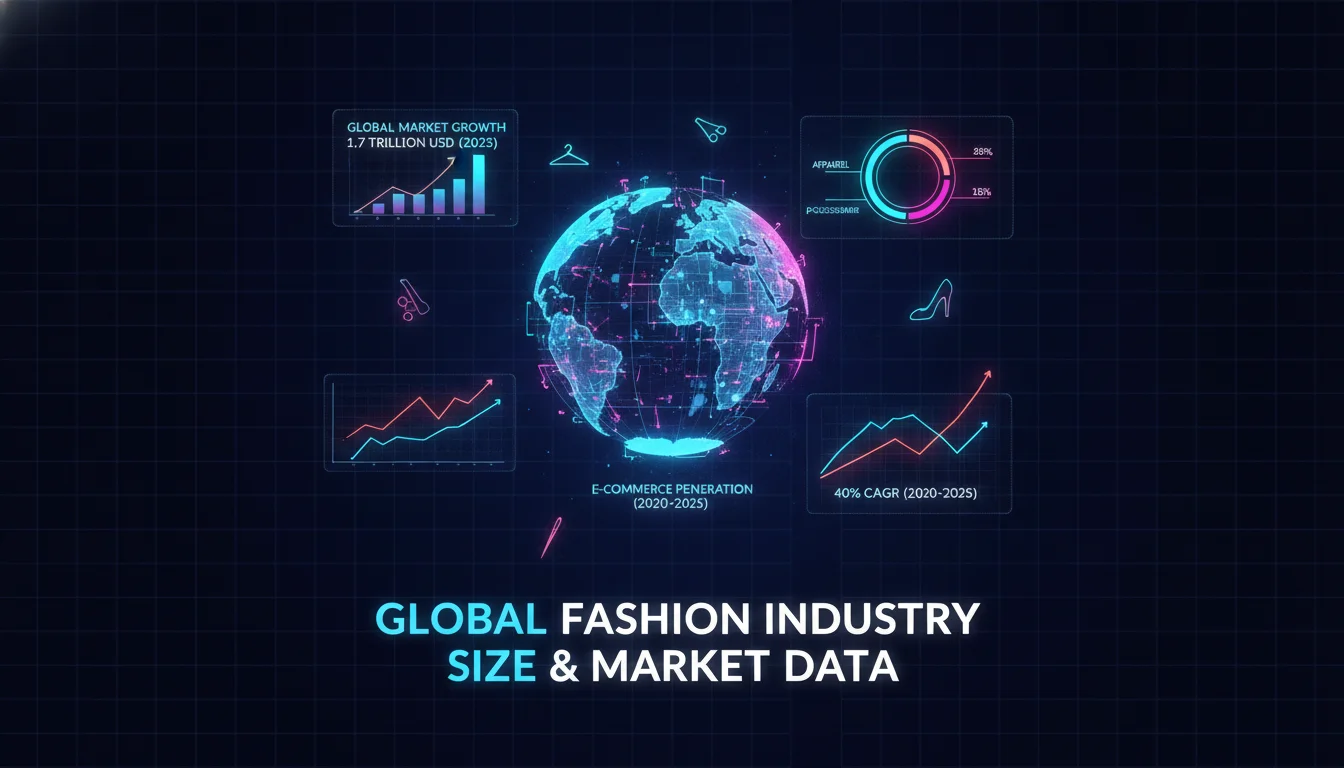
The fashion is one of the world’s largest economic forces, generating $1.7 trillion in revenue in 2021 and recovering sharply from pandemic-era losses.
Revenue and Economic Impact
According to FashionUnited and Euromonitor International, the total revenue of the global apparel and footwear market reached approximately $1.7 trillion in 2021. Before the COVID-19 pandemic, estimates ranged between $1.7 trillion and $2.5 trillion. In 2020, the industry contracted sharply, with revenues falling by roughly 20%, according to McKinsey’s State of Fashion 2022 report. It then rebounded with 18.1% growth in 2020-2021, returning to pre-pandemic levels. The market was forecast to reach $1.84 trillion in 2022 and $1.95 trillion in 2023, per Euromonitor International.
Key Apparel Markets by Country
China and the United States dominate global fashion retail. China’s apparel market benefits from a vast domestic manufacturing base and rising consumer spending. The US remains among the world’s largest importers of clothing, driven by high demand and a strong retail culture. Other major markets include the United Kingdom, Germany, and Japan. Together, these five countries account for the majority of global apparel sales, according to Euromonitor International’s 2021 data.
Consumer Spending Patterns
Womenswear consistently commands the largest share of fashion spending. In 2018, womenswear made up 53% of global fashion retail spending, menswear represented 31%, and childrenswear accounted for 16%, according to Euromonitor International data cited by Common Objective. The gap is narrowing as menswear and gender-neutral fashion gain traction. Spending is also shifting online, with e-commerce claiming a growing portion of all fashion sales and further transforming how the industry reaches its customers.
Pros and Cons of the Fashion Industry
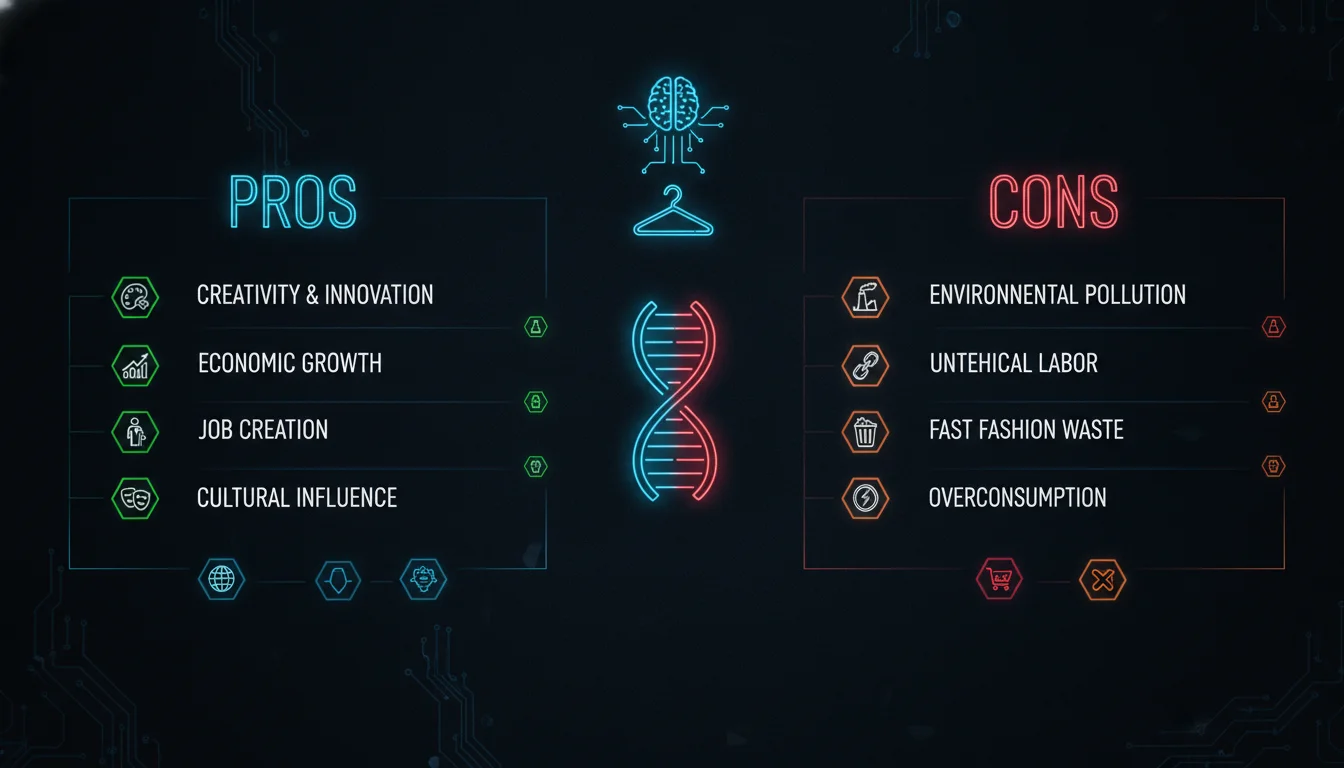
The this type of industry creates enormous cultural and economic value, but it carries real costs that are impossible to ignore.
Pros
- Massive economic engine: $1.7 trillion in global revenue, supporting millions of jobs across design, manufacturing, retail, and logistics.
- Cultural expression: Fashion gives people a language for identity, community, and self-expression, from haute couture to club-ready bodycon.
- Innovation driver: The industry pushes advances in materials science, AI-driven design, and sustainable production technology.
- Career diversity: Roles span creative, technical, business, and sustainability disciplines, offering entry points for a wide range of skill sets.
- Growing sustainability movement: Circular business models, secondhand platforms, and regulatory pressure are pushing the industry toward more responsible practices.
Cons
- Environmental damage: The fashion industry contributes 5-10% of global greenhouse gas emissions and is a major source of water pollution.
- Labor exploitation: Fast fashion’s low-cost model often depends on low-wage workers in unsafe conditions across global supply chains.
- Waste crisis: 100 billion garments produced annually, with the average piece worn only seven times before disposal.
- Overconsumption culture: Fast fashion brands releasing 52 micro-collections per year actively encourage impulse buying and rapid discard cycles.
- Intellectual property gaps: Fashion design receives weaker IP protection than other creative industries, making it difficult for independent designers to protect original work.
The Environmental Impact of Fashion
“A circular economy is based on the principles of designing out waste and pollution, keeping products and materials in use, and regenerating natural systems.” – Ellen MacArthur Foundation
The fashion industry’s environmental footprint is one of the most urgent issues facing the planet, with emissions, water pollution, and textile waste all reaching critical levels.
Carbon Emissions and Climate Change
The fashion industry accounts for between 5% and 10% of global greenhouse gas emissions, a figure cited by environmental groups and supported by industry research. The energy-intensive production of synthetic fibers like polyester, combined with the global transportation of goods, drives a significant portion of these emissions. If current trends continue, the industry’s carbon footprint could consume a substantial share of the world’s remaining carbon budget by mid-century.
Water Pollution and Waste
Textile production is brutally water-intensive. Producing a single cotton T-shirt can require up to 2,700 liters of water. In many manufacturing countries, untreated wastewater from dyeing and finishing processes is dumped directly into rivers, contaminating ecosystems with lead, mercury, and arsenic. SustainYourStyle reports that 100 billion garments are produced each year, and the average garment is worn only seven times before being discarded. In the EU alone, approximately 11 kilograms of textile waste per capita is generated annually, and at least half of all clothes in a typical wardrobe go unworn.
The Rise of Sustainable Fashion
In response to these pressures, sustainable fashion has emerged as a significant movement. Brands are adopting circular business models, using recycled materials, and offering repair services. Consumers are increasingly turning to secondhand clothing, with platforms like Depop and thredUP experiencing rapid growth. The United Nations’ Fashion Charter provides a framework for companies to commit to science-based emissions targets. These shifts signal a growing awareness that the fashion industry must align with planetary boundaries to survive long-term.
Fast Fashion vs. Sustainable Fashion
| Aspect | Fast Fashion | Sustainable Fashion |
|---|---|---|
| Production Speed | New collections weekly or monthly (52+ micro-seasons per year) | Two to four seasonal collections, emphasizing timeless design |
| Materials | Cheap synthetics (polyester, nylon) and conventional cotton | Organic cotton, recycled fibers, low-impact dyes |
| Labor Practices | Often relies on low-wage workers with poor conditions | Fair wages, safe conditions, certifications (e.g., Fair Trade) |
| Environmental Impact | High carbon footprint, wastewater pollution, microfiber shedding | Lower emissions, closed-loop water systems, biodegradable packaging |
| Price | Very cheap ($5-$50 per item) | Higher upfront cost but lower cost-per-wear |
| Longevity | Designed for short-term use; garments may last 5-10 wears | Built to last for years; often repairable and recyclable |
| Consumer Mindset | Impulse buying, trend-chasing | Intentional purchasing, wardrobe curation |
What Is Fast Fashion?
Fast fashion is a business model that prioritizes speed and low cost, bringing the latest runway trends to mass-market shoppers in a matter of weeks. Brands like Zara, H&M, and Shein release dozens of micro-collections each year, encouraging consumers to buy more and discard quickly. According to SustainYourStyle, some fast-fashion brands put out 52 micro-collections per year, far beyond the traditional two-season calendar. This model has made clothing cheaper, but it has also driven a 400% increase in production compared to just 20 years ago.
The Slow Fashion Movement
Slow fashion is the antithesis of fast. It champions quality over quantity, longer-lasting garments, transparent supply chains, and a deeper appreciation for the craft of making clothes. By investing in fewer, better-made pieces, consumers reduce their environmental footprint and develop a more personal style. The fashion industry is seeing a growing number of small, independent labels, including alternative and nightlife-focused brands like Pretty N Poison, that embody slow fashion principles through made-to-order production and deadstock fabrics.
Consumer Shifts Toward Sustainability
Awareness is driving real change. Among Gen Z and Millennials especially, fashion editors and trend forecasters report a growing willingness to pay more for sustainably made clothing. The secondhand market has flourished, with platforms like Vinted and The RealReal normalizing pre-owned fashion. France’s recent ban on advertising by certain fast-fashion companies, as documented by EBSCO, underscores rising regulatory pressure. These shifts confirm that the fashion industry’s environmental and social practices are no longer optional extras but central to its future.
Fashion and Political Activism
Fashion has always been political. What people wear signals allegiance, protest, and power. From suffragettes wearing white to designers sending political statements down the runway, clothing has served as a form of activism for centuries. As Wikipedia notes, fashion intersects with political activism in ways that are both deliberate and organic, with subcultures using dress to challenge dominant power structures. Today, brands are increasingly expected to take public positions on social issues, and consumers, particularly younger ones, hold them accountable when they don’t.
“There is no beauty in the finest cloth if it makes hunger and unhappiness.” – Mahatma Gandhi, as cited by SustainYourStyle
The 3-3-3 Rule in Fashion
The 3-3-3 rule in fashion is a wardrobe challenge where you select 3 items from your existing closet and style them into 3 different outfits for 3 weeks. It’s a practical tool for building a more intentional wardrobe, reducing overconsumption, and discovering how versatile your existing pieces actually are. Fashion editors and slow fashion advocates use it to push back against the constant pressure to buy new. For nightlife dressing, the rule works differently: three statement pieces, three occasions, infinite attitude.
Careers in the Fashion Industry
The fashion industry offers a wide spectrum of career opportunities, from creative roles to tech-driven positions. Here’s how to start building yours.
Step 1: Identify Your Niche
Decide whether you want to work in design, merchandising, marketing, journalism, sustainability, or technology. The fashion industry is diverse, so clarifying your interest early helps you target relevant education and experience.
Step 2: Gain Relevant Skills and Education
While not always required, a degree from a fashion school like FIT or Central Saint Martins can open doors. Many roles also benefit from skills in digital marketing, data analytics, or CAD software. Internships are critical for building a network and portfolio.
Step 3: Build a Portfolio or Resume
Creatives need a strong portfolio showcasing original designs. Business roles require proven marketing or sales results. Online portfolios and LinkedIn profiles are non-negotiable in a digital-first fashion industry.
Step 4: Network and Apply
Attend fashion events, join industry groups like the US Fashion Industry Association (USFIA), and use platforms like BoF Careers. Competition is fierce. Persistence is not optional.
Design and Creative Roles
Designers, patternmakers, and textile artists form the creative core of the fashion industry. They conceptualize collections, choose fabrics, and oversee production. Digital fashion designers creating virtual garments for the metaverse have also emerged as a distinct and growing career path.
Business and Marketing
Behind every successful label is a team of merchandisers, buyers, supply chain managers, and marketers. The fashion industry relies on data-driven decisions to forecast trends, price products, and drive sales. Roles in public relations and influencer marketing have grown sharply with the rise of social media.
Sustainability and Ethical Roles
As the fashion industry faces increasing scrutiny, roles like sustainability manager, circular economy strategist, and CSR director are in high demand. These professionals work to reduce environmental impact, ensure fair labor practices, and guide brands toward more ethical models.
The Future of Fashion
Technological Innovations
Technology is set to transform the fashion industry further. AI-driven design tools, 3D knitting, and blockchain for supply chain transparency are gaining traction. Digital fashion, clothing that exists only in virtual spaces, could become a major market as the metaverse expands. These innovations promise to make the industry more efficient and significantly less wasteful.
Regulatory Changes
Governments are beginning to hold the fashion industry accountable. The European Union is developing extended producer responsibility (EPR) schemes that require brands to pay for textile waste management. The New York Fashion Act, if passed, would mandate that large fashion companies disclose their environmental and social due diligence. Such regulations could reshape global supply chains and force a reckoning with decades of unchecked production.
The Role of Alternative and Nightlife Fashion
While mainstream fashion chases mass trends, alternative fashion, rooted in subcultures like punk, goth, rave, and club scenes, is gaining real visibility. Brands that cater to bold self-expression and nightlife are proving that sustainability and edgy design can coexist. Labels offering festival wear or party-ready corsets and bodycon dresses increasingly use eco-friendly materials and small-batch production. This niche doesn’t just challenge the homogeneity of the fashion industry. It champions individuality and ethical consumption at the same time. As consumers seek uniqueness and meaning in their clothing, alternative fashion may well steer the broader industry toward more authentic and responsible practices.
At Pretty N Poison, we live in that space. The Pretty Edit brings soft, romantic energy. The Poison Edit goes darker, sharper, more dangerous. The Duality collection holds both truths at once. And the Night Ritual is exactly what it sounds like: going-out essentials built for women who dress with intention. Explore the full range at prettynpoison.com and discover your duality.
Frequently Asked Questions
What is the fashion industry?
The fashion industry is the global business of designing, manufacturing, and selling clothing and accessories. It spans haute couture, ready-to-wear, and mass-market apparel, and generates trillions of dollars annually across design, production, retail, and digital channels.
How big is the fashion industry?
In 2021, the global fashion industry generated approximately $1.7 trillion in revenue, according to FashionUnited and Euromonitor International. McKinsey’s State of Fashion 2017 report noted that if the fashion industry were a country, its GDP would rank seventh worldwide.
What are the main environmental impacts of the fashion industry?
The fashion industry contributes 5-10% of global greenhouse gas emissions, pollutes waterways with toxic chemicals from dyeing processes, and produces over 100 billion garments per year, most of which end up in landfills or incinerators. The EU alone generates approximately 11 kilograms of textile waste per capita annually.
What is the difference between fast fashion and sustainable fashion?
Fast fashion emphasizes cheap, trend-driven clothing produced rapidly, often with poor labor and environmental records. Sustainable fashion prioritizes ethical production, durable materials, and circular models designed to minimize harm and extend garment life.
What is the 3-3-3 rule in fashion?
The 3-3-3 rule is a wardrobe challenge where you choose 3 existing pieces and create 3 different outfits to wear over 3 weeks. It encourages intentional dressing, reduces overconsumption, and helps you get more out of what you already own.
What are five careers in the fashion industry?
Five key careers in the fashion industry include fashion designer, merchandiser, sustainability manager, fashion marketer, and digital fashion designer. Each requires a different skill set, but all benefit from a strong understanding of trends, consumer behavior, and the industry’s evolving landscape.
What are fashion capitals?
Fashion capitals like Paris, New York, and Milan are cities that exert major influence over global trends and house leading design houses, fashion weeks, and industry headquarters. Tokyo, London, and Los Angeles are recognized as second-tier fashion centers with strong independent design scenes.
2025 Fashion Trends: Nightlife’s Edgy & Sustainable Edit
The latest fashion trends 2025 are a collision of dark glamour, earthy texture, and unapologetic edge: sequins at brunch, suede on the dance floor, punk details everywhere. This year rewrote the rules of nightlife dressing for good.
Key Takeaways
- Boho suede surged 17% among women (Heuritech, July–September 2025), making it the texture of the year.
- Sequins and lingerie dressing redefined nighttime glamour as an all-day, all-night statement.
- Sustainable materials including recycled polyester, Econyl®, and deadstock fabrics became non-negotiable for forward-thinking brands.
- Color washing in brown and unexpected clashes replaced safe monochrome minimalism.
- Preppy heritage pieces got a rebellious nightlife remix for day-to-night dressing.
- Hot pants overtook the mini skirt, jumping 14% among Gen Z consumers by late 2025.
The Defining Aesthetics of the Latest Fashion Trends 2025
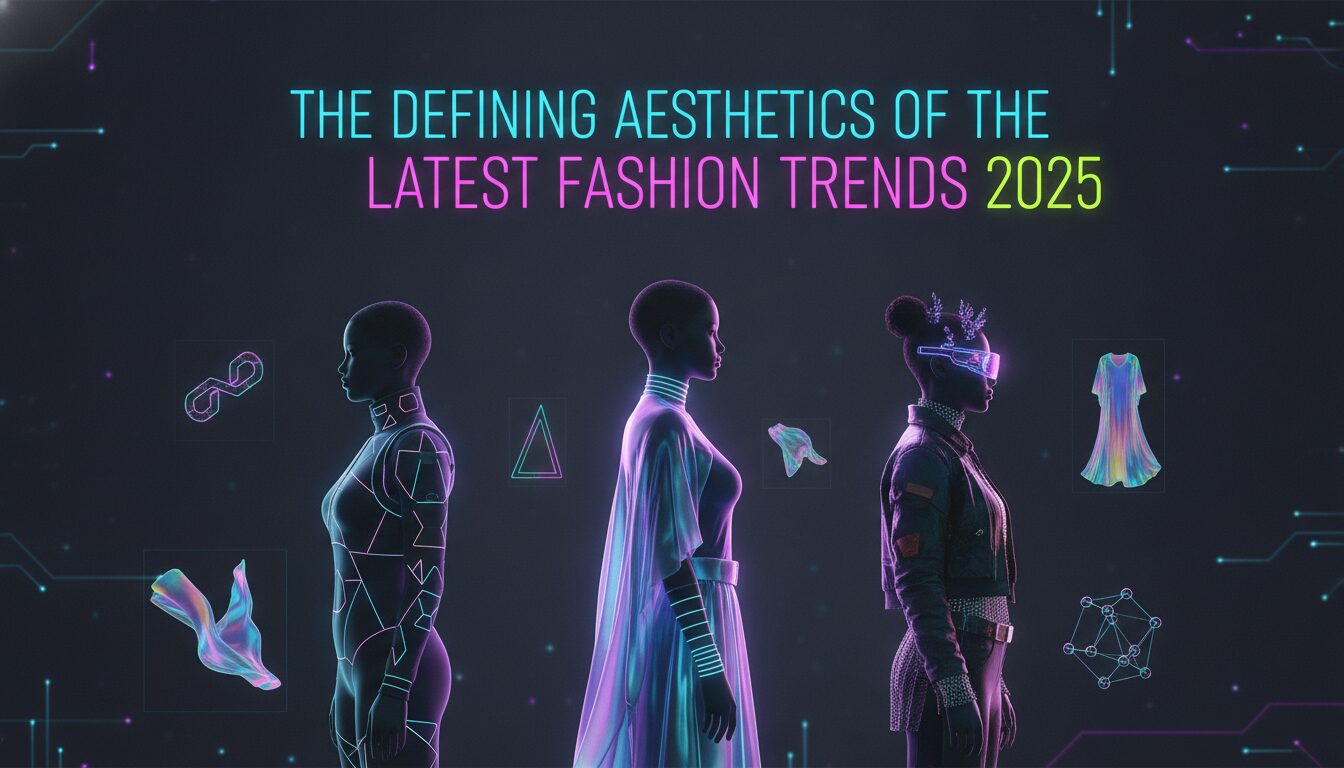
Boho Chic in Suede
Suede is the texture that defined 2025, anchoring a bohemian revival that had been building since the early 2020s. Designers like Chloé, Dries Van Noten, and Marni showcased long skirts, oversized shirts, and matching sets in rich tan, chocolate, and caramel hues. Suede signals relaxed luxury, and its tactile warmth hit different after seasons of hyper-technical fabrics. According to trend forecasting platform Heuritech, suede fabric saw a 17% year-over-year increase in adoption among women between July and September 2025, while suede loafers specifically jumped by 30% in the same window. Men’s runways also caught the wave, with a 13% rise in matching suede sets during spring/summer 2025 shows. This wasn’t just a fabric moment. It was a cultural reset toward earthy, artisanal roots that consumers were actively craving.
Modern Prep & Heritage Fabrics
Preppy fashion got a full personality transplant in 2025. Heritage fabrics like tweed, argyle knit, and corduroy were reinterpreted by Ralph Lauren, Burberry, and Louis Vuitton, moving far beyond collegiate clichés. Vogue’s coverage of fall/winter 2025 trends highlighted “Modern Prep” as a defining movement, featuring layered button-downs, sharp pencil skirts, and relaxed varsity jackets. Glamour also flagged the “Town and Country Chic” direction, where earthy plaids and luxuriously thick outerwear dominated the conversation. The real appeal: mixing old-school elegance with streetwise layering. Thrift a vintage plaid blazer or invest in a sustainable tweed. Either way, you win.
Aquatic Wonderland
The aquatic trend in 2025 went far beyond nautical stripes. Fendi and Stella McCartney sent iridescent fabrics, shell-like embellishments, and fluid silhouettes down the runway, evoking coral reefs and deep-sea fantasy. Heuritech’s trend forecast noted that the palette of aquatic blues, seafoam greens, and pearlized whites signaled a collective hunger for escapism. This trend also bridged fantasy and responsibility: recycled ocean-plastic fabrics became a natural fit for the aesthetic. For the nightlife crowd, an aqua sequin dress or a shell-encrusted clutch became the ultimate statement piece of the season.
Powder Pink and Flapper Fringe
Two trends competitors flagged that deserve serious attention: powder pink and flapper fringe. Powder pink moved away from the bubblegum saturation of previous years into something softer and more dangerous, a blush that reads innocent until it doesn’t. Pair it with dark accessories and the Pretty N Poison duality writes itself. Flapper fringe, meanwhile, brought movement back to nightlife dressing in a major way. Fringe-hem dresses and fringe-trimmed jackets created kinetic energy on the dance floor that no static silhouette can match. Both trends align perfectly with our Pretty Edit and Poison Edit aesthetics.
How the Latest Fashion Trends 2025 Elevated Nightlife Style
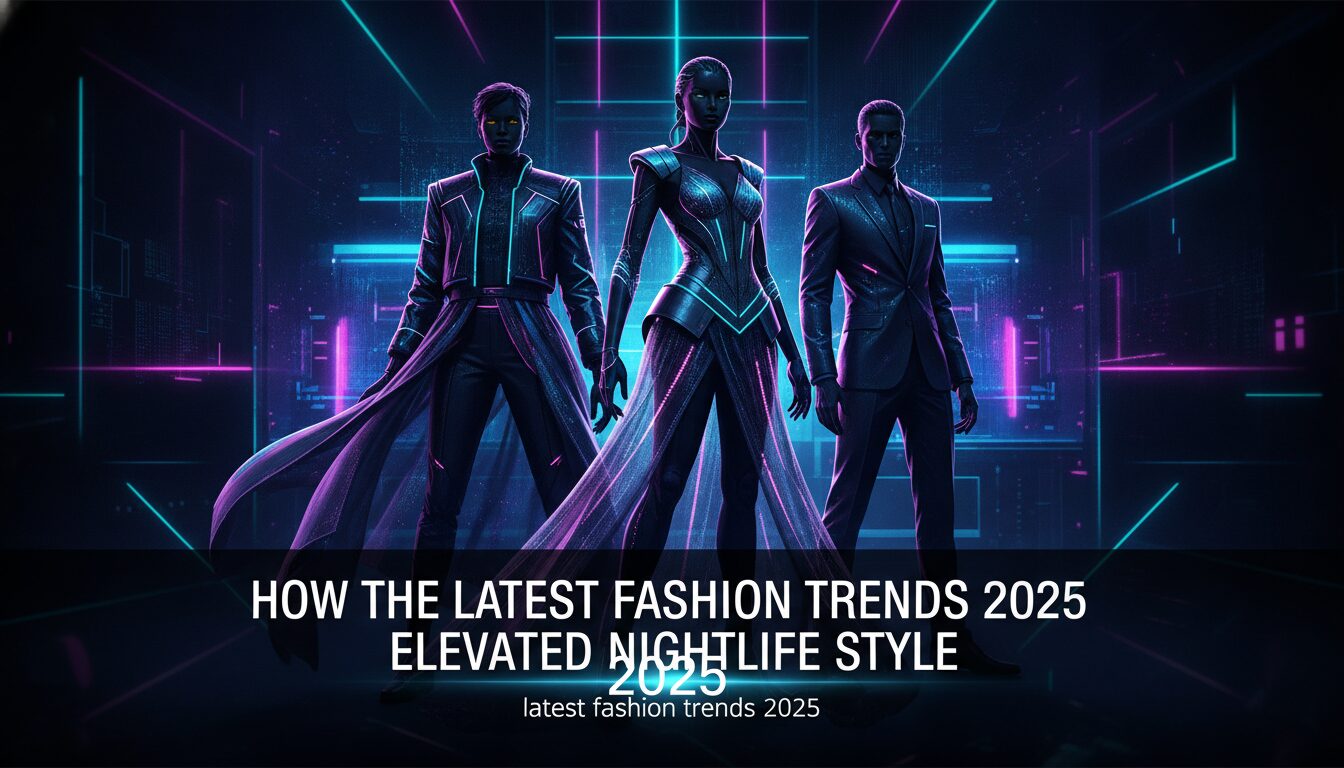
24/7 Sequins for Nightlife
Sequins are no longer reserved for New Year’s Eve desperation. Prada and Gucci showcased sequin tops, dresses, and pants designed for round-the-clock wear, and the trends 2025 made this the new normal. The move was to temper the shine with matte: a chunky knit over a sequin skirt, or combat boots under a sequin gown. Stylists across the board agreed that disco-dressing is a form of self-expression, not a costume. For the sustainability-conscious, vintage and deadstock sequin pieces offered guilt-free sparkle, since recycling existing garments cuts the environmental cost of virgin plastic production significantly.
Lingerie Dressing Goes Out
Sheer fabrics, lace, and satin slips left the boudoir and hit the streets in 2025. The “Lingerie Dressing” trend, reported by Vogue, saw Dolce & Gabbana and Versace blur the line between intimate apparel and evening wear. For nightlife, this translated to bralettes under blazers, lace-trimmed camis peeking from leather jackets, and slip dresses layered over turtlenecks. The look is inherently sensual and built for the dance floor. Many indie designers embraced deadstock lace and zero-waste patterning to create these delicate pieces, making ethical partywear a real and beautiful option.
Uptown Punk: Edgy Details That Hit
Punk attitude got a polished upgrade in 2025. Safety-pin embellishments on tailored jackets, patent leather trench coats, tartan kilts with chunky platform boots. As Vogue noted, this look balanced rebellion with refinement, making it ideal for warehouse parties and upscale clubs in equal measure. Key pieces included a Burberry check kilt with a beat-up band tee, or Alexander McQueen’s studded leather belts cinching a minimalist dress. The DIY ethos was central: customization and upcycling weren’t just accepted, they were the point. Old garments got a rebellious new life, and the look was better for it.
Strapless and Asymmetrical: The Silhouettes That Ruled
The strapless dress had a full comeback moment in 2025, appearing across runways in structured bodice forms that felt powerful rather than precarious. Asymmetrical silhouettes ran alongside it, with one-shoulder cuts and uneven hemlines creating visual tension that reads as intentional and bold. These shapes are built for nightlife. They demand attention without asking for it. Both silhouettes sit at the core of our Night Ritual collection, designed specifically for women who dress to be remembered.
Sustainable Materials Shaping the Latest Fashion Trends 2025
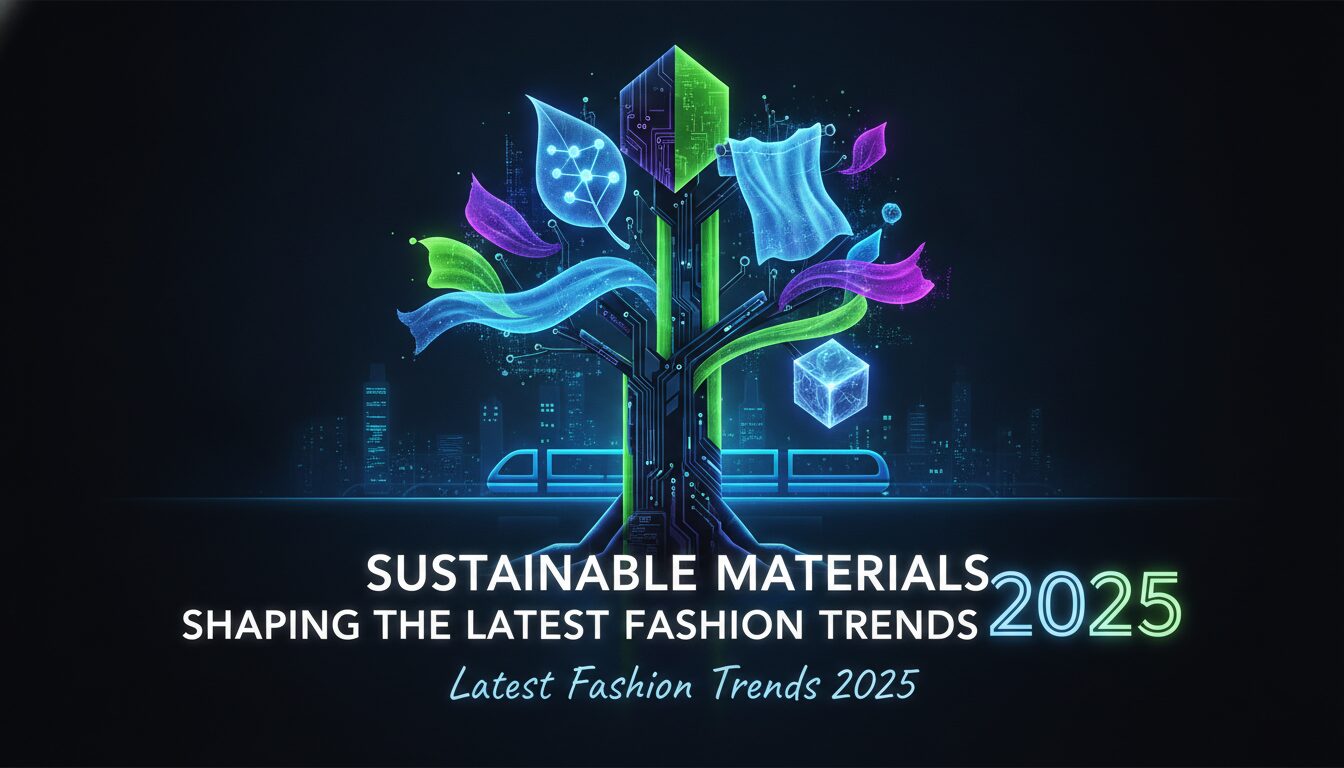
Recycled Polyester and Econyl®
Sustainable materials became non-negotiable across the this type of 2025, not just a nice-to-have footnote. Econyl®, a regenerated nylon made from recovered ocean waste, appeared in everything from swimwear to party dresses. Stella McCartney continued her leadership in ethical fashion, using forest-friendly viscose and recycled polyester across her collections. The shift was commercial as much as ethical: consumers actively sought brands that disclosed their sustainability practices transparently. Rental platforms like Hurr and By Rotation reported spikes in demand for high-end sustainable partywear, confirming that the market had genuinely shifted.
Deadstock and Upcycled Fabrics
Deadstock, the leftover fabrics from fashion houses, became a prized resource in 2025. Designers like Marine Serre and smaller indie labels built entire collections from repurposed materials, turning excess into exclusivity. For the nightlife crowd, one-of-a-kind pieces made from deadstock sequins or reclaimed leather offered a way to stand out without contributing to landfill. Upcycling extended to DIY culture too: tutorials on transforming outdated dresses into corset tops or patchworking skirts pulled millions of views on social media, signaling a genuine cultural shift toward conscious creativity.
Leather Alternatives: Mushroom & Pineapple
Innovations like Mylo™ (mushroom leather) and Piñatex® (pineapple leaf fiber) entered the mainstream conversation in 2025, offering cruelty-free alternatives for jackets, bags, and party boots. These materials are still evolving, but they provided a vegan answer to the ubiquitous leather trends dominating the runways. Brands like Matt & Nat and Stella McCartney championed these bio-based materials, proving that sustainability and style can coexist without compromise or sacrifice.
Color Trends That Defined the Latest Fashion Trends 2025
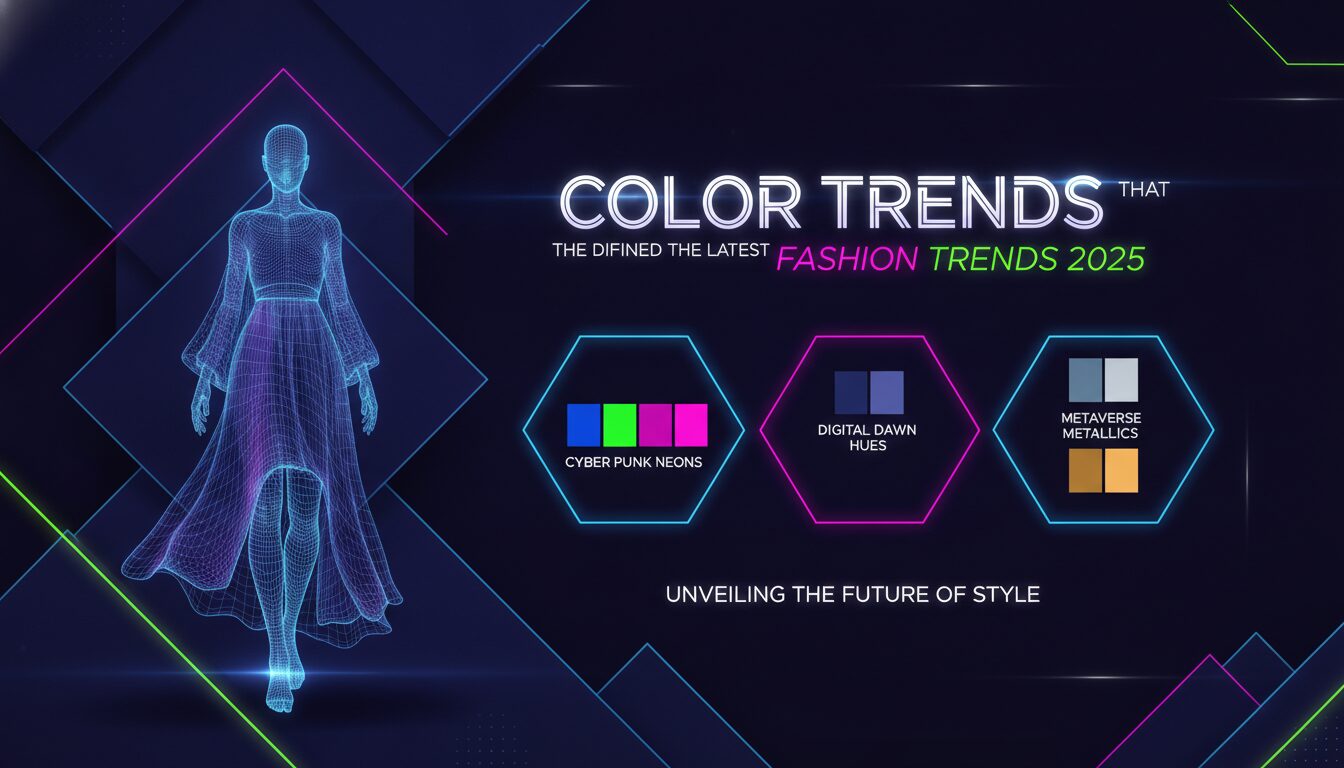
Yellow’s Golden Glow
Yellow owned 2025, from creamy vanilla to deep saffron. Alaïa’s sunflower dresses and Bottega Veneta’s buttery leather goods cemented the shade’s must-have status across the year. Heuritech quantified the surge: vanilla yellow rose by 11% and saffron yellow by 6% from April to June 2025 compared to the prior year. For nightlife, a saffron slip dress or vanilla leather trousers delivered an energetic alternative to the default black. The shade worked as a full monochrome statement or as a pop against deep neutrals. Either way, it turned heads.
Curious Color Combinations
Safe neutrals were officially cancelled in 2025. The color palette thrived on unexpected clashes: pale pistachio with a flash of red, icy blue paired with chocolate brown. Vogue described this as “Curious Color Combinations,” a rule-breaking approach that mirrored the increasingly fragmented digital aesthetic landscape. Brands like Tory Burch and Stella McCartney embraced these dissonant pairings, proving that intuition beats convention every time. For party looks, this meant bubblegum pink with lime green, or violet with orange. The louder, the better. No apologies.
Monochrome Brown
Brown dethroned black as the reigning neutral of 2025. From camel coats to espresso leather, the shade conveyed understated wealth and warmth without trying too hard. The “color washing” technique, wearing multiple shades of the same hue in a single look, made brown the ideal base for tonal layering. For nightlife, a chocolate satin slip or a cognac leather miniskirt became quietly seductive choices that hit different than the predictable all-black uniform.
Powder Pink: The Soft Threat
Powder pink emerged as one of the most subversive shades in the this kind of trends 2025. It reads soft. It reads romantic. Then you add the leather accessories and the dark lip, and suddenly it reads dangerous. That contrast is exactly the Pretty N Poison duality in color form. According to trend reporting from Who What Wear, powder pink appeared across both ready-to-wear and accessories in a way that felt fresh rather than saccharine, particularly when styled against harder textures and darker tones.
Key Pieces from 2025 to Own Right Now
Hot Pants: The New Mini Skirt
Hot pants made a decisive comeback in 2025, overtaking the mini skirt as the leg-baring staple of the season. On the Fendi and Marni runways, they appeared in denim, leather, and sequin variants, styled with sheer stockings or knee-high boots. Heuritech’s data confirmed a 7% rise in hot pants adoption from April to June 2025, followed by a 14% surge from July to September among Gen Z consumers. This style is unapologetically youthful and built for festival circuits and club nights. To wear it sustainably, hit the thrift stores or upcycle your own cutoffs.
The Funnel-Neck Jacket
The funnel-neck jacket was 2025’s minimalist answer to cold-weather dressing. J.Crew’s accessible versions and high-end iterations from The Row and Phoebe Philo made it an essential across price points. The collar delivers subtle drama that transitions from office to evening without effort: add a statement necklace or swap trousers for leather pants and the whole energy shifts. Its timelessness means it earns its place in a slow-fashion wardrobe for multiple seasons, not just one.
Barn Jackets & Country Codes
Barn jackets, Mac coats, and rubber boots moved from rural utility to urban cool in 2025. Burberry, Gucci, and Altuzarra reimagined these hardy classics in luxurious wool and tweed, while original functional versions from Barbour and L.L.Bean saw renewed demand. Vogue called the aesthetic “country-coded,” but its durability made it a genuinely sustainable investment. These pieces are built to last decades, not seasons, which is exactly the kind of fashion math that makes sense in 2026.
The Little White Tank and Parachute Pants
Two pieces that competitors flagged as breakout items deserve their moment here. The little white tank became the ultimate blank canvas of 2025, styled under blazers, tucked into leather skirts, or worn alone with maximum confidence. Parachute pants, with their relaxed utilitarian silhouette, offered a high-fashion take on comfort dressing that translated surprisingly well to nightlife when paired with a sharp crop or a structured corset. Both pieces reflect the the fashion trends 2025 obsession with contrast: effortless on top, intentional underneath.
Pros and Cons of the Latest Fashion Trends 2025
Pros
- Versatility across occasions: Trends like sequins, suede, and lingerie dressing work for clubs, rooftop parties, date nights, and cocktail events without requiring a full wardrobe overhaul.
- Sustainability built in: Deadstock fabrics, Econyl®, Mylo™, and rental platforms mean you can chase the latest fashion trends 2025 without the environmental guilt.
- Range of price points: From Chloé suede sets to thrifted vintage finds, these trends are accessible whether your budget is $50 or $5,000.
- Strong nightlife identity: Uptown punk, lingerie dressing, and 24/7 sequins give nightlife dressers a clear, confident aesthetic to own.
- Color freedom: Curious color combinations and color washing mean there are no wrong answers, just bolder ones.
Cons
- Trend saturation: With so many directions running simultaneously, building a cohesive wardrobe around the latest fashion trends 2025 requires real editorial instinct.
- Sustainable options still limited: While Econyl® and Piñatex® are growing, truly sustainable partywear at scale remains harder to find than conventional alternatives.
- Some trends are highly seasonal: Aquatic influences and powder pink may feel dated faster than investment pieces like suede or funnel-neck jackets.
- DIY punk requires commitment: The uptown punk aesthetic rewards customization, but half-executed safety-pin styling reads as costume rather than fashion.
Runway vs. Street: How 2025 Trends Translated
The latest fashion trends 2025 lived two lives simultaneously: one on the runway, one on the street. Here’s how the gap between aspiration and accessibility actually played out.
| Trend | Runway Interpretation (Luxury) | Street Style Adaptation (Affordable) | Key Brands |
|---|---|---|---|
| Boho Suede | Long, fringed coats; matching sets; leather loafers | Thrifted suede skirts; vintage blazers; cowboy boots | Chloé, Dries Van Noten, Marni |
| Sequins | Full-length sequin gowns; layered under oversized coats | Sequin tops with jeans; deadstock pieces from online vintage stores | Prada, Gucci, Altuzarra |
| Hot Pants | Tailored shorts in wool, leather, sequin | Distressed denim cutoffs; cycling shorts with blazers | Fendi, Marni, Diesel |
| Uptown Punk | Safety-pin adorned blazers; patent leather trenches | DIY kilt skirts with band tees; chain belts on thrifted trousers | Alexander McQueen, Burberry, Vivienne Westwood |
| Country-Coded | Wool kilts, barn jackets in check patterns, silk scarves | Oversized plaid shirts; Barbour jackets; corduroy pants from Uniqlo | Gucci, Burberry, Ralph Lauren |
How to Style 2025 Trends for 2026 and Beyond
Step 1: Start with a Heritage Piece
Anchor your look with a tweed blazer, cable-knit vest, or barn jacket. These pieces carry weight and history. They signal that you know what you’re doing before you’ve said a word.
Step 2: Layer a Provocative Camisole Underneath
A lace or satin camisole beneath a structured outer layer creates the lingerie-dressing tension that defined the latest fashion trends 2025. The contrast between hard and soft is the whole point.
Step 3: Swap Trousers for a Mini Kilt or Leather Shorts
The bottom half is where the nightlife energy lives. A mini kilt or high-waisted leather shorts instantly shifts the look from day to after-dark without touching the top half.
Step 4: Add Unexpected Accessories
Chain belt, platform boots, or a sequin bag. Pick one element that disrupts the rest of the look. The best 2025 outfits had at least one thing that didn’t quite belong, and that was exactly why they worked.
Step 5: Finish with Bold Makeup
A sharp winged liner or a dark lip pulls the entire look into focus. Makeup isn’t an afterthought in 2025 nightlife dressing. It’s the punctuation mark at the end of a very confident sentence.
Mixing Eras: 1990s Plaid + 2025 Sequins
The ’90s plaid trend, identified by Who What Wear as one of the standout directions of the year, integrates with party elements in a way that feels genuinely fresh. Pair a vintage flannel shirt tied at the waist over a sequin midi skirt, add chunky loafers, and you have a look that bridges grunge and glamour. It’s ideal for a concert or a late-night bar. The key is balancing the laid-back with the luminous so neither overwhelms the other.
Sustainable Party Capsule: Your Checklist
To future-proof your wardrobe while honoring the latest fashion trends 2025, build a sustainable party capsule around these five pieces:
- One statement jacket (vintage or recycled leather).
- Two tops (a deadstock sequin crop and a lace camisole).
- One versatile bottom (high-waisted hot pants in upcycled denim).
- One dress (a slip made from responsible viscose or Econyl®).
- Accessories (a pre-loved clutch and ethical metallic heels).
“The most exciting thing happening in fashion right now is the collapse of the day-to-night divide. Sequins at brunch, suede at midnight. The rules are gone.” – Fashion editor perspective, aligned with Vogue’s fall/winter 2025 trend reporting.
“Sustainable partywear is no longer a contradiction. Deadstock sequins, Econyl® dresses, rental platforms: the infrastructure now exists for nightlife dressing that doesn’t cost the planet.” – Industry observation, per rental platform data from Hurr and By Rotation, 2025.
Frequently Asked Questions
What were the biggest fashion trends in 2025?
The biggest trends in the latest fashion trends 2025 included boho suede, hot pants, aquatic influences, prep revival, powder pink, and party-centric styles like 24/7 sequins and uptown punk. Sustainable materials ran as a through-line across all of them, making eco-conscious dressing a mainstream expectation rather than a niche choice.
What is out of style for 2026?
Safe monochrome minimalism, all-black default nightlife dressing, and overly polished “clean girl” aesthetics are losing ground fast. As of 2026, the energy has shifted toward bold color combinations, textural contrast, and looks that carry a clear point of view. Blending in is the only real fashion mistake.
What is the biggest fashion trend right now?
The biggest single trend carrying momentum from 2025 into 2026 is the duality aesthetic: soft and dangerous, pretty and poisonous, heritage and rebellious in the same look. Sequins with combat boots, lace under leather, suede with punk hardware. The contrast is the trend.
What will be in fashion in autumn 2025?
Autumn 2025 was defined by monochrome brown, country-coded outerwear, uptown punk details, and the funnel-neck jacket as a transitional essential. Vogue’s fall/winter 2025 coverage confirmed Modern Prep and heritage fabrics as the dominant direction, while nightlife dressing leaned into lingerie-inspired layers and 24/7 sequins.
How can I wear 2025 trends sustainably?
Opt for vintage, secondhand, or rental pieces from platforms like Hurr and By Rotation. Prioritize brands using recycled fabrics like Econyl®, deadstock materials, or innovative plant-based leathers like Mylo™ and Piñatex®. Upcycling and DIY customization let you adapt the latest fashion trends 2025 without consuming new resources or contributing to textile waste.
Did sustainable fashion become mainstream in 2025?
Yes. Sustainable fashion moved firmly into the mainstream across the latest fashion trends 2025, with major houses and high-street brands adopting recycled materials, rental models, and transparent supply chains. Consumer demand for ethical options drove this shift commercially, not just culturally, making sustainability a business imperative rather than a brand differentiator.
Key Takeaways
- Organic fashion brands use GOTS-certified materials grown without synthetic pesticides, GMOs, or toxic fertilizers.
- Certifications like GOTS, OEKO-TEX Standard 100, and Fair Trade are your clearest indicators of genuine organic practices.
- Top picks span from affordable basics under $50 to elevated statement pieces reaching $360.
- Proper cold-wash care extends organic garment life well beyond fast-fashion alternatives.
- Layering organic cotton with leather, hardware, and vintage finds creates a nightlife look that’s anything but crunchy.
- Brands like Komodo, Beaumont Organic, and MATE the Label prove sustainability and dark glamour are not mutually exclusive.
Organic fashion brands are clothing labels that prioritize materials grown without synthetic pesticides, GMOs, or toxic fertilizers. From Pact to Beaumont Organic, these labels prove sustainability and after-dark style can absolutely coexist.
What Are Organic Fashion Brands?
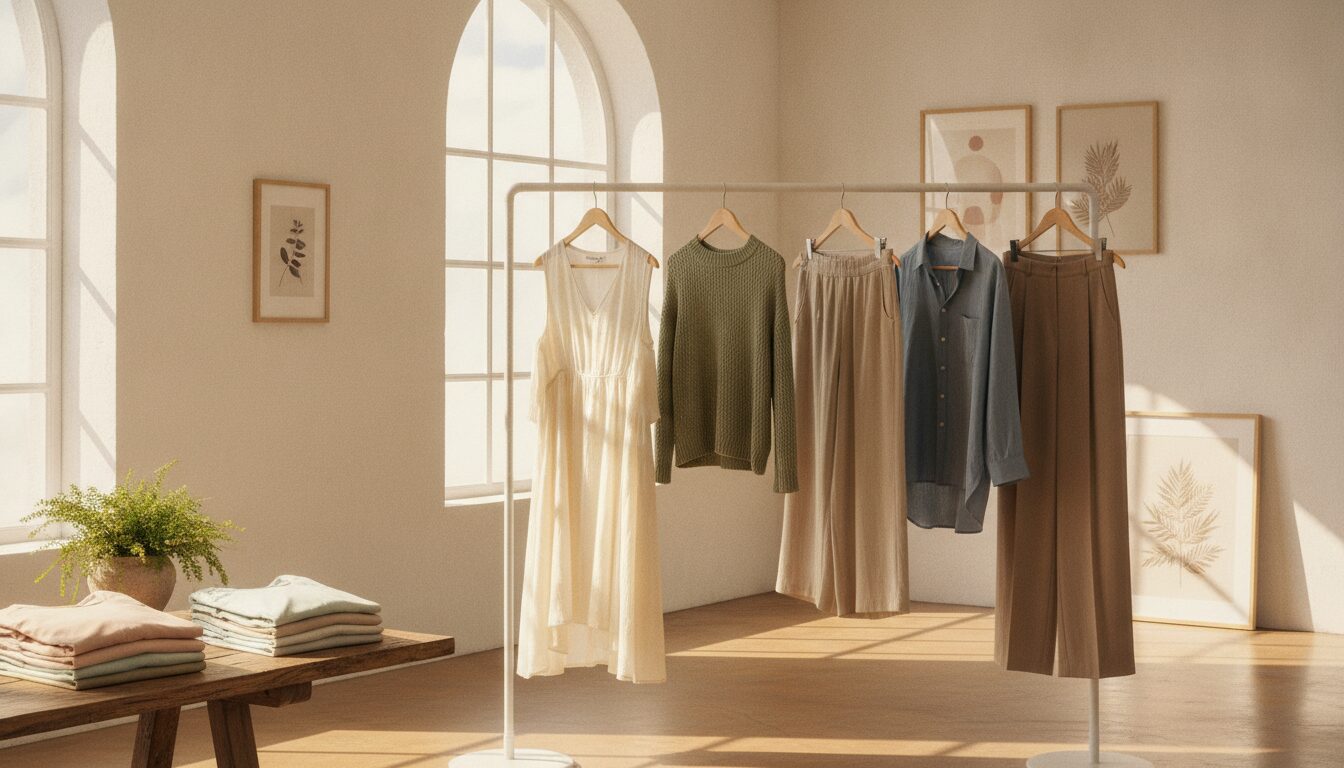
fashion brands are clothing labels built on materials grown and processed without synthetic pesticides, herbicides, or genetically modified organisms. The core fabric is most often organic cotton, certified by the Global Organic Textile Standard (GOTS), which audits the entire supply chain for both environmental and social compliance. Unlike conventional fashion, these brands focus on reducing chemical runoff, protecting farmworker health, and supporting biodiversity. Many also incorporate hemp, Tencel, or recycled polyester, but their foundation is certified organic agriculture from field to finished garment.
“Organic cotton clothing feels like the healthiest, most eco-conscious, and still fashionable option to wear daily,” according to editors at The Good Trade, who tested 10 organic cotton clothing brands in 2026.
Why Choose Organic Fashion Brands?
Choosing this type of brands cuts your direct exposure to toxic residues that linger in conventionally processed garments. Conventional cotton farming relies heavily on synthetic pesticides and genetically modified seeds, which certified organic methods eliminate entirely. Certifications like GOTS also require safe working conditions and living wages, so your purchase carries social weight beyond the fabric itself. Organic fibers tend to feel softer and more breathable because they skip the harsh chemical processing that weakens conventional cotton. And for the style-conscious? A growing number of this kind of brands are shedding the earth-toned, farmer’s-market image entirely, arriving in silhouettes that range from minimalist to darkly romantic.
“Sustainability is no longer a niche concern. Fashion editors across Vogue and ELLE have noted that the most forward-thinking designers are integrating certified organic materials into collections that speak directly to nightlife and event dressing,” per fashion industry reporting from WWD.
What to Look For When Buying Organic Fashion
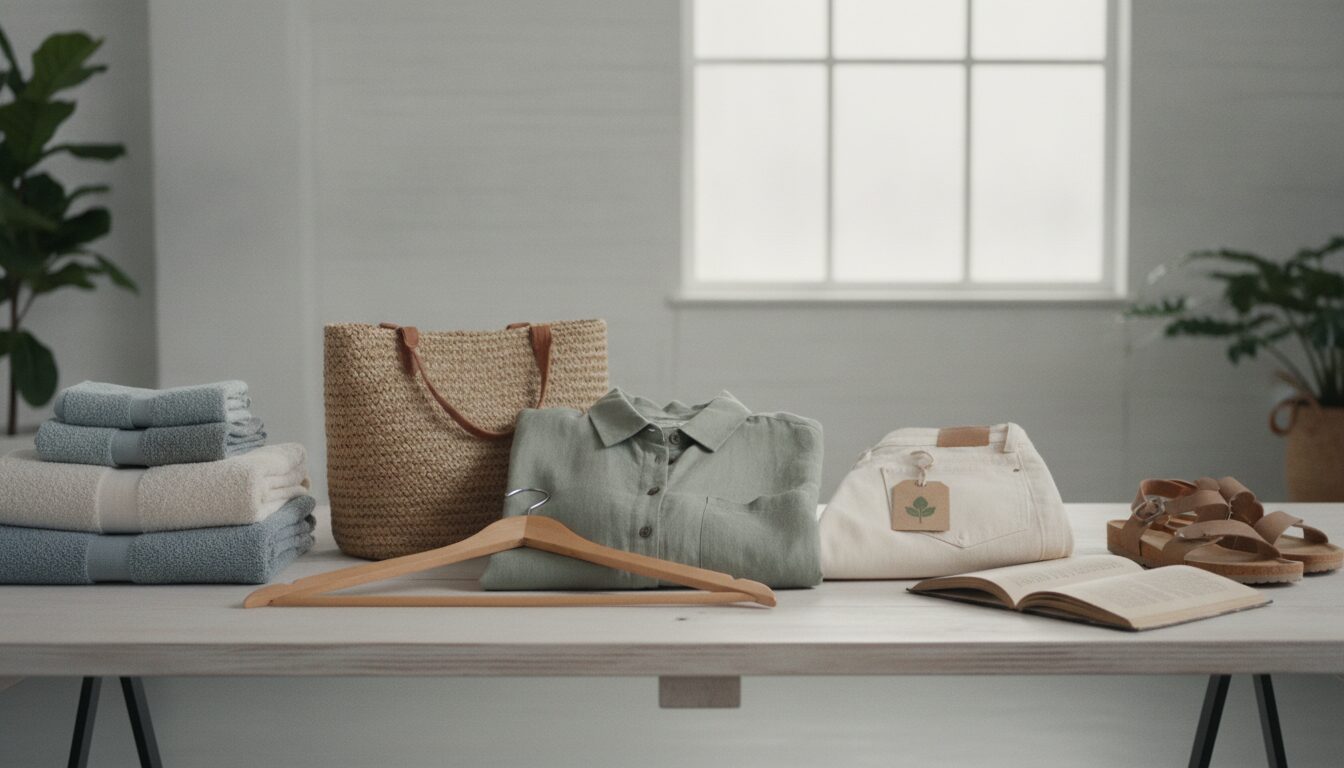
Certifications That Matter
GOTS (Global Organic Textile Standard) is the gold standard. It guarantees at least 70% organic fiber content for a “made with organic” label, or 95% for a full “organic” designation. The certification also covers social criteria including no child labor and fair pay. OEKO-TEX Standard 100 tests finished garments for harmful substances but is not an organic certification on its own. Use it as a complementary check. Fair Trade Certified ensures workers receive community development premiums on top of fair wages. Brands like Beaumont Organic display their GOTS certification prominently, while Fair Indigo pairs organic Pima cotton with ethical manufacturing standards. For independent brand ratings, the Good On You directory scores thousands of labels across planet, people, and animal impact categories, making it a fast way to vet any brand before you buy.
Fabric Quality and Composition
Not all organic cotton performs the same. Fair Indigo’s four signature fabrics illustrate how fiber type and knit construction shape the final garment: Eterna (95% organic Pima cotton, 5% spandex for shape retention), Pura (100% organic Pima, lightweight and airy), Ultra Pura (100% organic, midweight, exceptionally soft), and Luxe (100% organic, silky interlock knit for a polished drape). When shopping, consider the garment’s purpose. A 5-10% spandex blend adds stretch for movement-heavy nights, while 100% cotton offers breathability for layering under structured outerwear.
Price Ranges Across Tiers
organic fashion cover a wide budget spectrum, and the gap between entry-level and premium is significant. Budget-friendly ($-$$): Pact delivers GOTS-certified basics without financial sacrifice, with many pieces under $40. Mid-range ($$-$$$): MATE the Label and Outerknown offer durable, style-forward pieces that justify the step up in price. Premium ($$$$): Beaumont Organic’s Spring 26 line ranges from $113 for the Bay top to $211 for the Cedar trouser and $360 for the Kyra-Cay dress, reflecting European sourcing and small-batch production. Organic Basics has offered up to 50% off during seasonal sales, making premium-quality organic pieces accessible without waiting for a full budget overhaul.
Top Organic Fashion Brands for Alternative Style
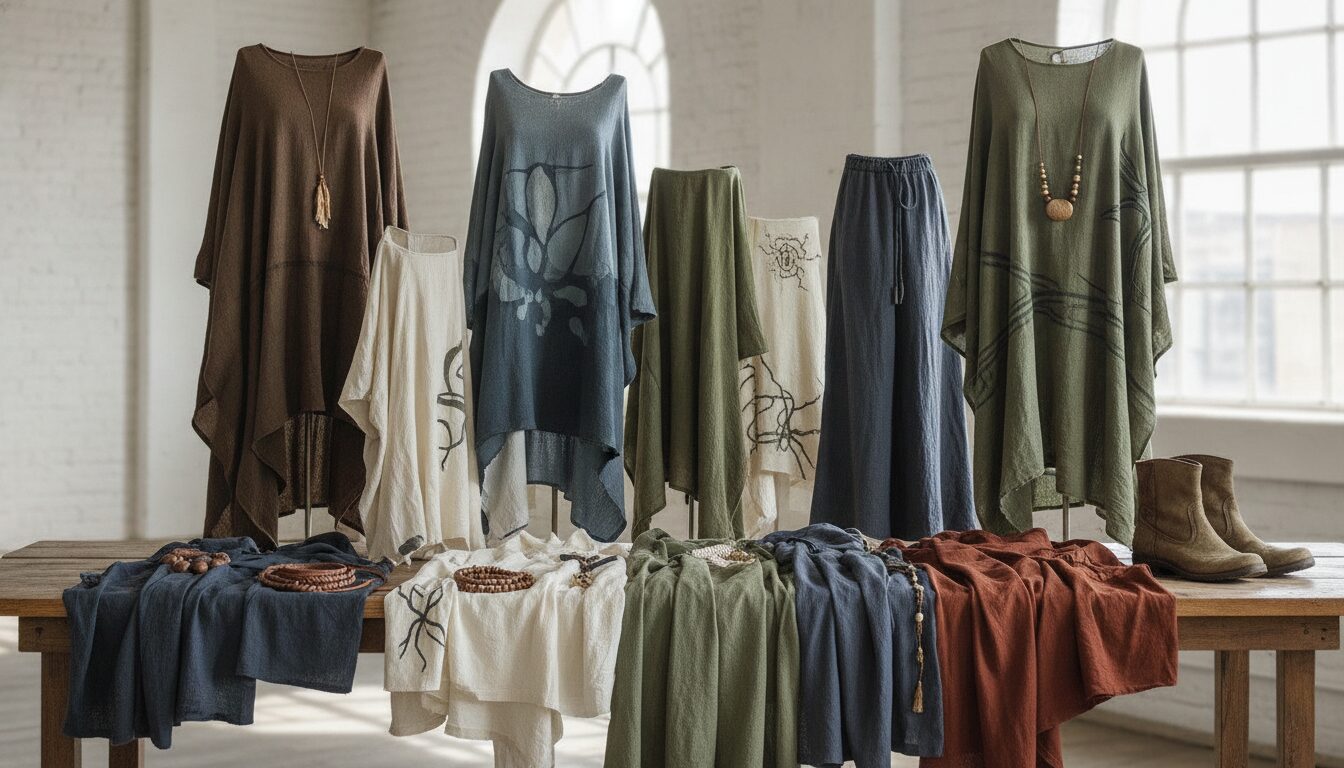
Look past the beige. These fashion brands bring edge, structure, and dark palettes to your wardrobe. We’ve curated picks that work for everything from weekly gigs to gallery openings.
| Brand | Price Range | Vibe | Key Certifications | Best For |
|---|---|---|---|---|
| MATE the Label | $$ | L.A. minimalism with a relaxed, street-ready edge | GOTS, OEKO-TEX | Elevated everyday tees, sweats, and loungewear that layer under leather jackets |
| Pact | $-$$ | Affordable, ultra-soft basics with deep blacks and rich hues | GOTS, Fair Trade | Essential tanks, leggings, and underwear for a moody, monochromatic base |
| Outerknown | $$-$$$ | Surf-meets-rock denim and jackets with a worn-in, rebel feel | GOTS, Fair Trade, Bluesign | S.E.A. JEANS and chore coats that pair perfectly with band tees |
| Komodo | $$-$$$ | Urban utilitarian with a touch of 80s punk revival | GOTS, Ethical Trading Initiative | Joggers, pleated trousers, and oversized shirts for an androgynous night-out look |
| Beaumont Organic | $$$$ | Romantic minimalism with architectural cuts and ghostly ginghams | GOTS, OEKO-TEX | Statement dresses and poplin trousers for darkly poetic occasions |
MATE the Label: Effortless Streetwear
Founded in Los Angeles, MATE the Label crafts GOTS-certified staples with a clean, unisex appeal. Their Thermal Henley in jet black and oversized crewnecks slide into a grunge-lite uniform the moment you pair them with ripped fishnets and combat boots. Sizes run up to 3X, so the dark minimalism is genuinely accessible.
Pact: Affordable Basics with a Dark Edge
Don’t let the soft marketing fool you. Pact’s deep, saturated blacks on organic cotton tees and leggings are ideal for building a sleek, shadowy base layer. With basics frequently under $40 and sizing up to 3X in many styles, it’s the lowest-risk entry point into this type of brands that actually look intentional.
Outerknown: Lived-In Denim for Rocker Looks
Founded by surfer Kelly Slater, Outerknown might sound mellow. The denim is anything but. The S.E.A. JEANS, made from organic cotton and recycled polyester, come in cuts ranging from slim straight to relaxed taper. Cuff them over leather boots and you’ve got a look that belongs in a venue, not a surf shack. Denim sizing extends to size 38.
Komodo: Ethical Since 1988 with Urban Flair
London-based Komodo has been championing ethical fashion since 1988, long before sustainability became a marketing strategy. Their collections fuse workwear details with a subtle punk sensibility: triple-pleated trousers in organic cotton twill, oversized shirting, and lightweight joggers built for layered, androgynous silhouettes. This is the brand for nights when you want to look considered, not costumed.
Beaumont Organic: Elevated Pieces for Statement Nights
For those ready to invest, Beaumont Organic’s Spring 26 line delivers double-gauze dresses and sculptural poplin separates that feel simultaneously ethereal and commanding. Style the Kyra-Cay gingham dress, priced at $360, with a wide leather belt and platform boots for a Victorian-goth mood that reads as fashion, not costume. This is Pretty N Poison territory: pretty on the surface, with serious poison underneath.
Pros and Cons of Shopping Organic Fashion Brands
this kind of brands offer real advantages, but they come with trade-offs worth knowing before you commit your wardrobe budget.
Pros
- Cleaner materials: No synthetic pesticide residues, GMOs, or toxic processing chemicals touching your skin.
- Social accountability: GOTS and Fair Trade certifications require living wages and safe working conditions throughout the supply chain.
- Superior feel: Organic cotton fibers, unweakened by harsh chemical treatments, tend to be softer and more breathable than conventional alternatives.
- Longevity: With proper care, quality organic garments outlast fast-fashion pieces by a significant margin.
- Style range: As of 2026, organic fashion span everything from $40 basics to $360 statement pieces, covering minimalist, streetwear, and darkly romantic aesthetics.
Cons
- Higher entry price: Premium organic labels like Beaumont Organic start at $113 per piece, which requires a deliberate budget shift.
- Limited nightlife-specific options: Most organic fashion brands still skew toward basics and daywear, requiring creative styling for after-dark looks.
- Care demands: Organic cotton stains more easily without synthetic finish coatings and requires cold-wash, air-dry routines to maintain its integrity.
- Greenwashing risk: Not every brand claiming “organic” carries third-party certification. Verification through Good On You or GOTS databases is essential.
How to Style Organic Pieces for Nightlife
Organic fashion brands get pigeonholed as yoga-studio staples, but with the right accessories and layering, they become the backbone of a killer after-dark look. Three steps. That’s all it takes.
- Monochromatic layering: Start with a black organic cotton tank or long-sleeve from Pact or MATE. Add a semi-sheer mesh top and high-waisted Outerknown denim. The tonal stack reads intentional, not accidental.
- Hardware injection: Clip on a chain wallet, add a studded belt, or layer silver necklaces over a basic Henley. The contrast between soft organic cotton and cold metal is exactly where the look gets its edge.
- Footwear and outerwear: Chunky platform boots or combat boots, plus a vegan leather moto jacket. The textures clash on purpose. That intentional friction is what separates a curated outfit from a crunchy one.
Vintage Meets Organic
Hit your local thrift store for one-of-a-kind blazers, distressed leather jackets, or patinaed denim vests. Pair them with brand-new, deep-dyed organic tees to achieve a balanced silhouette. Old and new. Rough and smooth. The duality is the whole point.
DIY Customization
Sustainably minded fashion aligns naturally with DIY culture. Bleach dip-dye an organic cotton hoodie, add safety pins to the hem, or embroider band logos onto a basic dress. Because the base garment is chemical-free, dyes and fabric paints absorb beautifully with fewer toxic byproducts involved.
Care and Maintenance: Keeping Your Organic Threads Alive
Organic fashion brands produce garments that reward proper care with exceptional longevity. Follow these four rules and your investment lasts.
- Wash cold and gentle: Use a pH-neutral detergent and cold water to preserve fiber strength and prevent shrinkage. Turn garments inside out to protect the surface dye.
- Air dry whenever possible: High heat breaks down cotton fibers faster than almost anything else. Lay flat or hang dry. If you must machine dry, use the lowest heat setting available.
- Spot treat stains immediately: Organic cotton lacks synthetic finish coatings, so it absorbs spills faster. Treat immediately with a stain stick or a paste of baking soda and water.
- Store folded, not hung: Heavy knits and stretch garments lose their shape on hangers over time. Fold and store in a drawer or on a shelf.
Frequently Asked Questions
What certifications should I look for in organic fashion brands?
Look for GOTS (Global Organic Textile Standard) on the label. It’s the most rigorous certification available, covering both environmental and social criteria across the full supply chain. OEKO-TEX Standard 100 and Fair Trade Certified are strong complementary marks that add further accountability.
Are organic fashion brands more expensive?
They can be, due to higher farming and labor costs built into certified production. Affordable options do exist: Pact and MATE the Label offer basics under $50, while premium labels like Beaumont Organic reach $360 per piece. Seasonal sales and second-hand platforms help close the gap significantly.
How do I know if a brand is truly organic?
Check for third-party certifications like GOTS and verify the brand’s transparency through the Good On You directory, which rates thousands of fashion labels across planet, people, and animal impact categories. If a brand claims organic without third-party verification, treat it as unverified marketing.
Can organic fashion brands work for nightlife?
Absolutely. Black organic cotton pieces serve as a perfect canvas for edgy accessories. Layer with mesh, leather, and heavy silver jewelry to shift the vibe entirely. Brands like Outerknown and Komodo offer structured denim and urban silhouettes that thrive in dimly lit venues.
What are the best organic fashion brands for plus sizes?
Pact carries sizes up to 3X in many styles, and MATE the Label offers extended sizing up to 3X as well. Outerknown’s denim extends to size 38. Always check individual size charts, as fit varies by fabric type and knit construction.
How do I care for organic cotton clothing?
Wash in cold water with gentle detergent, air dry, and avoid high heat at every stage. Organic cotton is more absorbent than conventionally treated fabric, so treat stains quickly before they set. With consistent care, a quality organic garment outlasts synthetic fast-fashion pieces by a wide margin.
As you build a wardrobe that reflects both your values and your aesthetic, organic fashion brands offer a way to experiment with texture, silhouette, and dark romance without compromise. Sustainability isn’t a trend. It’s the ultimate rebellion against disposable culture.
Discover your duality at prettynpoison.com.
Sustainable fashion news is the ongoing coverage of eco-conscious apparel developments, from material breakthroughs to policy shifts reshaping how clothes are made and worn. Read on to shop smarter, spot greenwashing, and dress with real intention.
Key Takeaways
- Sustainable fashion reduces environmental impact through eco-friendly materials and ethical labor practices.
- Following fashion news is your sharpest tool against greenwashing and empty brand promises.
- Certifications like GOTS, Fair Trade, and B Corp are the real markers of a responsible garment.
- Next-gen materials, resale platforms, and on-demand manufacturing are the biggest stories of 2026.
- Extending clothing use by just nine months can lower carbon, water, and waste footprints by 20-30%, per the Ellen MacArthur Foundation.
- Invest in versatile, high-quality pieces built to last, and back them up with proper care.
The fashion industry is at a crossroads. According to the Ellen MacArthur Foundation, clothing production doubled between 2000 and 2015, while the average garment is worn only seven times before disposal. This linear model wastes 85% of textiles annually, per the UNECE. The good news? A wave of innovation, from regenerative cotton to resale platforms, is rewriting the rules. This piece merges the latest developments with actionable buying advice so you can show up looking sharp and feeling clean about it.
“The equivalent of one garbage truck full of clothes is burned or dumped in a landfill every second.” – Ellen MacArthur Foundation
What Is Sustainable Fashion?
Sustainable fashion is an approach to designing, manufacturing, and consuming clothing that prioritizes ecological integrity and social equity. It stands in sharp contrast to fast fashion, which relies on cheap synthetic materials and exploitative labor. Key pillars include:
- Eco-friendly materials: Organic cotton, hemp, Tencel, and recycled fibers lower water and pesticide use significantly.
- Ethical production: Fair wages, safe conditions, and zero tolerance for forced or child labor.
- Circularity: Clothes designed for longevity, repair, and eventual recycling rather than the bin.
A defining report from Textile Exchange showed global fiber production has nearly doubled since 2000, reaching 116 million tonnes in 2022. About 60% of those fibers are synthetic plastics like polyester, per UNEP. True sustainable fashion aims to uncouple growth from resource depletion. That’s the mission. That’s the standard every brand should be held to.
Why Sustainable Fashion News Matters for Shoppers

Following this type of news is not just for industry insiders. It’s a consumer’s best defense against greenwashing. When Vogue Business revealed that Shein was fined $1.16 million for deceptive eco-claims, it gave shoppers the receipts to question marketing hype. Staying current on legislation, like the EU’s upcoming digital product passports, helps you recognize which brands are genuinely transparent and which are performing sustainability for clout.
Recent headlines show exactly how much power awareness carries. In May 2026, Milan Fashion Week issued guidelines discouraging fur, a move celebrated across animal rights communities. Meanwhile, a KPMG study covered by WWD predicts Europe’s circular fashion market could reach €104 billion by 2030, a clear signal that resale and rental are moving from niche to norm. By staying current with this kind of news, you learn to distinguish between brands slapping a “green” tag on polyester and those reengineering their entire supply chain from the ground up.
“Transparency is no longer optional. Brands that cannot trace their supply chain will face regulatory consequences within this decade.” – WWD Sustainability Desk, 2025
2026 Sustainable Fashion News: Top Trends to Watch
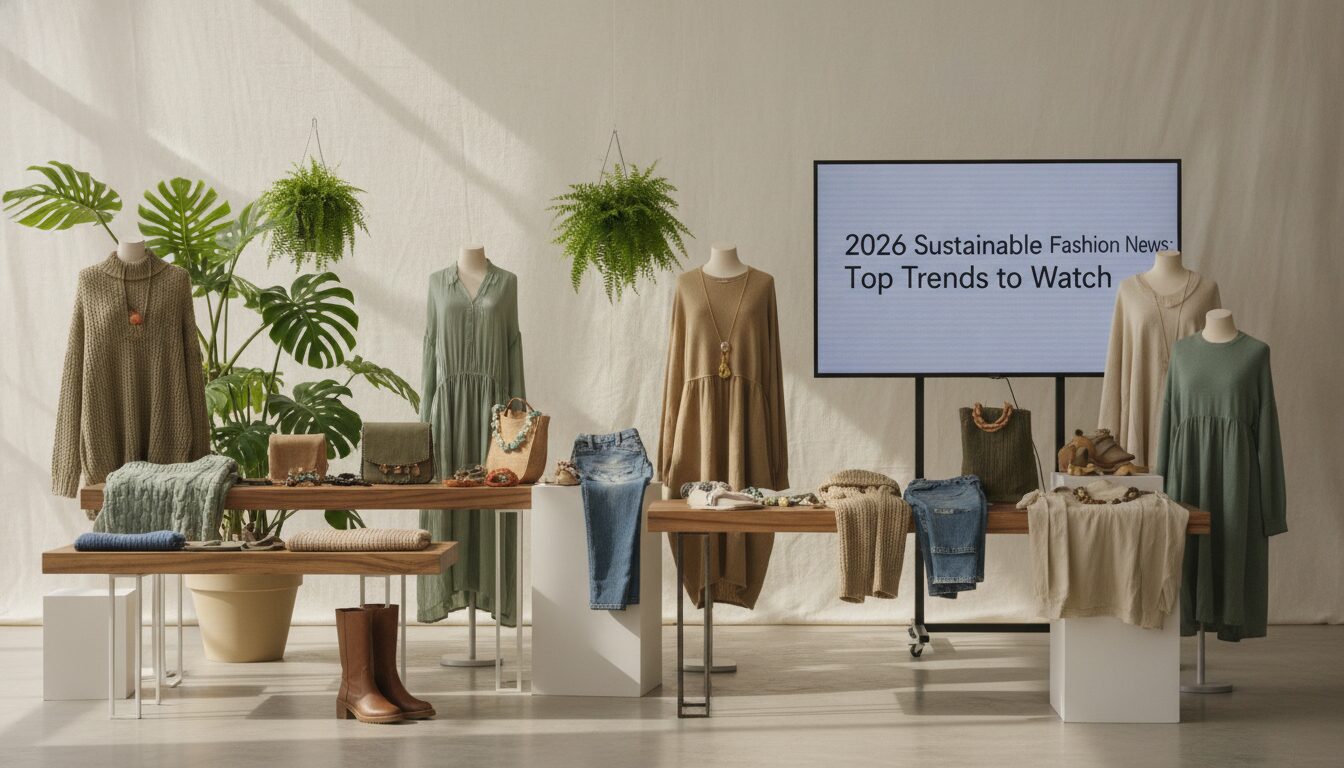
The following trends dominate sustainable fashion this year. Knowing them can sharpen your next purchase decision and keep your wardrobe ahead of the curve.
1. Next-Gen Materials Go Mainstream
Lab-grown alternatives are no longer niche. Spora, a biotech company profiled by WWD, turns wild fungal DNA into leather accessories. Bottega Veneta now offers a mushroom-based bag, and Stella McCartney used plant-based sequins at Paris Fashion Week. These innovations reduce reliance on petroleum-based synthetics and animal hides. Algae-based dyes, showcased at the Future Fabrics Expo in Brussels, are also gaining traction, offering vibrant color without the toxic chemical runoff of conventional dyeing processes.
2. Resale and Care Services Expand Luxury
Secondhand is becoming status. ReSee’s pivot into luxurious garment care signals a broader shift: maintaining and reselling high-end pieces is the new symbol of taste. The global secondhand apparel market is projected to reach roughly $350 billion by 2027, according to ThredUp’s annual resale report. For you, this means investing in durable items built to retain resale value, not disposable trend pieces that collapse after three washes.
3. Regenerative Agriculture Hits the Supply Chain
Brands are moving beyond organic to “regenerative,” farming practices that actively restore soil health rather than simply avoiding harm. At the Future Fabrics Expo in Brussels, farm-linked leather and algae dyes took center stage. Theory collaborates directly with cotton growers to implement regenerative methods. This is the next frontier of sustainable fashion news, and it’s moving fast.
4. On-Demand Manufacturing Cuts Waste
Unspun’s 3D weaving machines produce jeans on-demand, eliminating the massive inventory waste that plagues traditional retail. Digital product passports, expected to roll out across EU markets within the next 2-3 years, may soon let you scan a garment’s entire lifecycle. According to Bain and Company, this kind of traceability can roughly double a garment’s long-term value through repair and resale. Less waste. More worth. That’s the math.
5. Legislative Pressure Accelerates Change
Policy is no longer a background story in sustainable fashion news. The EU’s textile waste regulations are pushing brands toward extended producer responsibility, meaning companies bear financial accountability for what happens to their products after purchase. Carbon tax proposals in several European markets are also forcing supply chain audits that were previously voluntary. For shoppers, this legislative pressure is good news: it means more brands will be legally required to back up their green claims with real data.
Pros and Cons of Following Sustainable Fashion News

Pros
- Keeps you informed about which brands are genuinely responsible versus those greenwashing their image.
- Exposes you to new materials, certifications, and shopping models like resale and rental before they go mainstream.
- Helps you make purchase decisions that align with your values without sacrificing style.
- Connects you to a broader cultural shift toward conscious consumption and circular fashion.
- Gives you the language to hold brands accountable and ask the right questions.
Cons
- The volume of sustainable fashion news can be overwhelming, with conflicting claims and shifting standards.
- Not all coverage is equally rigorous. Some outlets amplify brand PR rather than independent reporting.
- Staying informed can create decision fatigue, especially when even “sustainable” brands have documented shortcomings.
- Trend cycles in eco-fashion can still encourage overconsumption if framed as “buy this new green thing” rather than “buy less.”
What to Look For When Buying Sustainable Clothing
Reading sustainable fashion news primes you to ask the right questions. When you’re actually browsing, use this step-by-step checklist to cut through the noise.
- Check the Fibers: Prioritize natural or recycled inputs: organic cotton, linen, hemp, Tencel, recycled polyester. Avoid virgin synthetics unless necessary for function, such as waterproof gear.
- Verify Certifications: Look for third-party logos. GOTS (Global Organic Textile Standard) covers organic fibers. Fair Trade Certified covers ethical labor. OEKO-TEX covers chemical safety. B Corp covers overall social and environmental performance.
- Examine Construction: Well-made garments have reinforced seams, quality zippers, and linings that won’t pill after a season. Shoddy construction leads to early disposal, exactly what sustainable fashion fights against.
- Research the Brand: Browse the company’s sustainability page. Do they disclose factory locations and publish annual impact reports? Transparency is the hallmark championed by every credible watchdog in the industry.
- Price Point Reality Check: Sustainable fashion typically costs more because true costs aren’t externalized onto workers or ecosystems. That said, options exist across budgets. See the comparison table below. Avoid suspiciously cheap “green” items. They are almost always greenwashing.
How to Style Sustainable Fashion for Any Occasion
Sustainable does not mean sacrificing style. Here are three outfit formulas built around key pieces that prove eco-conscious dressing can be bold, intentional, and unforgettable.
Office-Ready Minimalism
Start with a well-tailored organic cotton blazer from Eileen Fisher. Pair with wide-leg Tencel trousers and a silk-blend shell. Add block-heel boots made from chrome-free leather. Finish with a vintage scarf and a Spora mycelium crossbody bag that doubles as a conversation piece. Clean, sharp, and carrying zero apology.
Weekend Casual Cool
Choose high-rise organic denim from Everlane, a boxy hemp tee, and a cozy recycled cashmere cardigan. Slip on clean white sneakers made from recycled ocean plastic, Adidas x Parley being the benchmark here. A canvas tote from a local maker ties it together. Effortless, but intentional.
Night Out, Bold and Ethical
Wear a Reformation deadstock wrap dress in a vibrant print. Layer with a cropped upcycled leather jacket. Add strappy heels in vegan leather or sourced from a secondhand platform. Statement jewelry from a fair-trade artisan brand delivers the drama. This is the look that proves sustainable fashion news isn’t just for daytime do-gooders. The night belongs to it too.
Mixing secondhand finds with new sustainable pieces extends garment lives and creates a look that fast fashion simply cannot replicate. That’s the real flex.
Top Sustainable Fashion Brands Compared
We’ve curated four brands frequently covered in sustainable fashion news for their transparency and real-world impact. No brand is perfect. These four lead by example.
| Brand | Price Range | Key Materials | Certifications | Best For |
|---|---|---|---|---|
| Eileen Fisher | $$$ ($200+) | Organic linen, Tencel, recycled cashmere | B Corp, GOTS, Fair Trade | Investment workwear, minimalist aesthetic |
| Patagonia | $$ ($50-$200) | Recycled polyester, organic cotton, hemp | Fair Trade Certified, bluesign | Outdoor gear, activism-first ethos |
| Reformation | $$ ($50-$200) | Deadstock fabrics, Tencel, regenerated nylon | Climate Neutral, OEKO-TEX | Feminine silhouettes, party dresses |
| Everlane | $-$$ (under $200) | Recycled materials, certified cashmere, organic cotton | GOTS, bluesign | Affordable basics, denim, elevated casual |
Care and Maintenance for Eco-Friendly Garments
Prolonging a garment’s life reduces its footprint more than almost any other single action. The Ellen MacArthur Foundation notes that extending clothing use by just nine months can lower carbon, water, and waste footprints by 20-30%. These care habits are non-negotiable if you’re serious about it.
- Wash Less, Wash Cold: Overwashing fades fabrics and releases microfibers. Washing synthetic textiles discharges 500,000 tons of microfibers into oceans annually, per the Ellen MacArthur Foundation. Spot clean where possible, and use a cold cycle with a Guppyfriend bag to catch plastic fibers before they reach the water supply.
- Air Dry: Tumble dryers degrade elasticity and consume significant energy. Hang or lay flat to dry instead. Your clothes will thank you for it.
- Learn Basic Mending: Sewing a button or patching a tear can add years to a garment’s life. Brands like Patagonia offer repair guides and in-store services. Use them.
- Store Properly: Fold knits to prevent stretching, use padded hangers for tailored pieces, and keep everything away from direct sunlight to preserve color and fiber integrity.
Proper maintenance is cheap insurance for your investment pieces. And it’s one of the most underreported stories in sustainable fashion news.
Frequently Asked Questions
How can I tell if a brand is truly sustainable or just greenwashing?
Look for specific, verifiable claims backed by third-party certifications like GOTS, B Corp, or Fair Trade Certified. Check whether the brand publishes a detailed sustainability report with factory locations and measurable targets. Reputable sustainable fashion news outlets like Vogue Business and WWD regularly expose brands that fall short of their stated commitments.
Is sustainable fashion always more expensive?
Generally yes, because ethical labor and eco-materials carry real costs that fast fashion externalizes onto workers and ecosystems. However, brands like Everlane offer mid-range price points starting under $100, and secondhand platforms such as ThredUp provide affordable access to quality sustainable pieces without the new-garment footprint.
What are the most sustainable fabric choices?
Certified organic cotton, hemp, linen, Tencel (lyocell), and recycled synthetics are the top picks according to material scientists and sustainability editors alike. Avoid virgin polyester and conventional cotton, which carry high water and pesticide footprints. As of 2026, next-gen materials like mycelium leather and algae-based dyes are emerging as serious contenders.
How do I dispose of old clothes sustainably?
First, repair, donate, or resell. Platforms like Depop, ThredUp, and The RealReal make resale accessible at every price point. If a garment is truly unwearable, find a textile recycling program. Many brands have take-back bins, but verify that items don’t end up in landfills, a concern regularly flagged in sustainable fashion news reporting.
Can fast fashion ever be sustainable?
In its current high-volume, low-cost model, no. True sustainability requires a fundamental reduction in production and consumption, not just swapping one synthetic for another. Investigative pieces in outlets like WWD and Vogue Business regularly expose fast fashion’s labor abuses and carbon footprint, making a strong case for avoiding it entirely.
Which sustainable fashion brands have the best size inclusivity?
Eileen Fisher (up to 3X), Everlane (up to 2X), and Universal Standard lead the field on inclusive sizing within the sustainable space. Always check the brand’s size chart and read community reviews. Size inclusivity is increasingly covered in sustainable fashion news as a core dimension of ethical fashion, not an afterthought.
Organic fashion brands are clothing labels that design garments from fibers grown without synthetic pesticides, herbicides, or GMOs. As of 2026, the market spans everything from $39 basics to handcrafted premium pieces, with certifications like GOTS and OEKO-TEX separating the real from the performative.
Key Takeaways
- fashion brands use materials like organic cotton, hemp, and plant dyes to reduce environmental harm.
- Certifications such as GOTS or OEKO-TEX signal rigorous standards, but third-party verification is the only proof that matters.
- Top brands include MATE the Label, Fair Indigo, Harvest and Mill, Danu Organic, and Patagonia.
- Price points range from $30 to $150, with longevity making organic clothing a smart long-term investment.
- Conventional cotton accounts for 16% of insecticides used worldwide, making the switch to organic far more than a trend.
- Always check care labels: cold washing and air drying preserve fabric integrity and keep pieces out of landfills.
What Are Organic Fashion Brands?
this type of brands are labels that design and sell garments made from fibers cultivated without synthetic pesticides, herbicides, or genetically modified organisms. These brands often extend their commitment beyond the field: eco-friendly processing, non-toxic dyes, and ethical labor are part of the package. The global market for organic apparel keeps growing, driven by a generation that understands the real cost of cheap clothes.
According to Nori.co, conventional cotton production accounts for 16% of insecticides used worldwide. That single number makes a compelling case for switching. Leading this kind of brands like MATE the Label and Harvest and Mill answer that call with 100% organic cotton and fully traceable supply chains.
Why Choose Organic Fashion Brands?
Choosing organic fashion means choosing clothes that work for your body and the planet at the same time. Conventional textile production is chemical-heavy by design. Polyester sheds microplastics with every wash cycle. According to research cited by Nori.co, roughly 70% of clothing contains synthetic fibers derived from fossil fuels. Organic cotton, by contrast, is hypoallergenic and safer for sensitive skin.
The environmental math is stark. That 16% insecticide figure translates to toxic runoff, damaged ecosystems, and farmworker health risks. Supporting fashion brands helps cut that chain. Fair Indigo pairs organic sourcing with fair trade labor, proving that ethical production and wearable style are not mutually exclusive. MATE the Label has built a community of over 500,000 conscious shoppers, according to their website, which signals real cultural momentum behind this shift.
Pros and Cons of Organic Fashion Brands
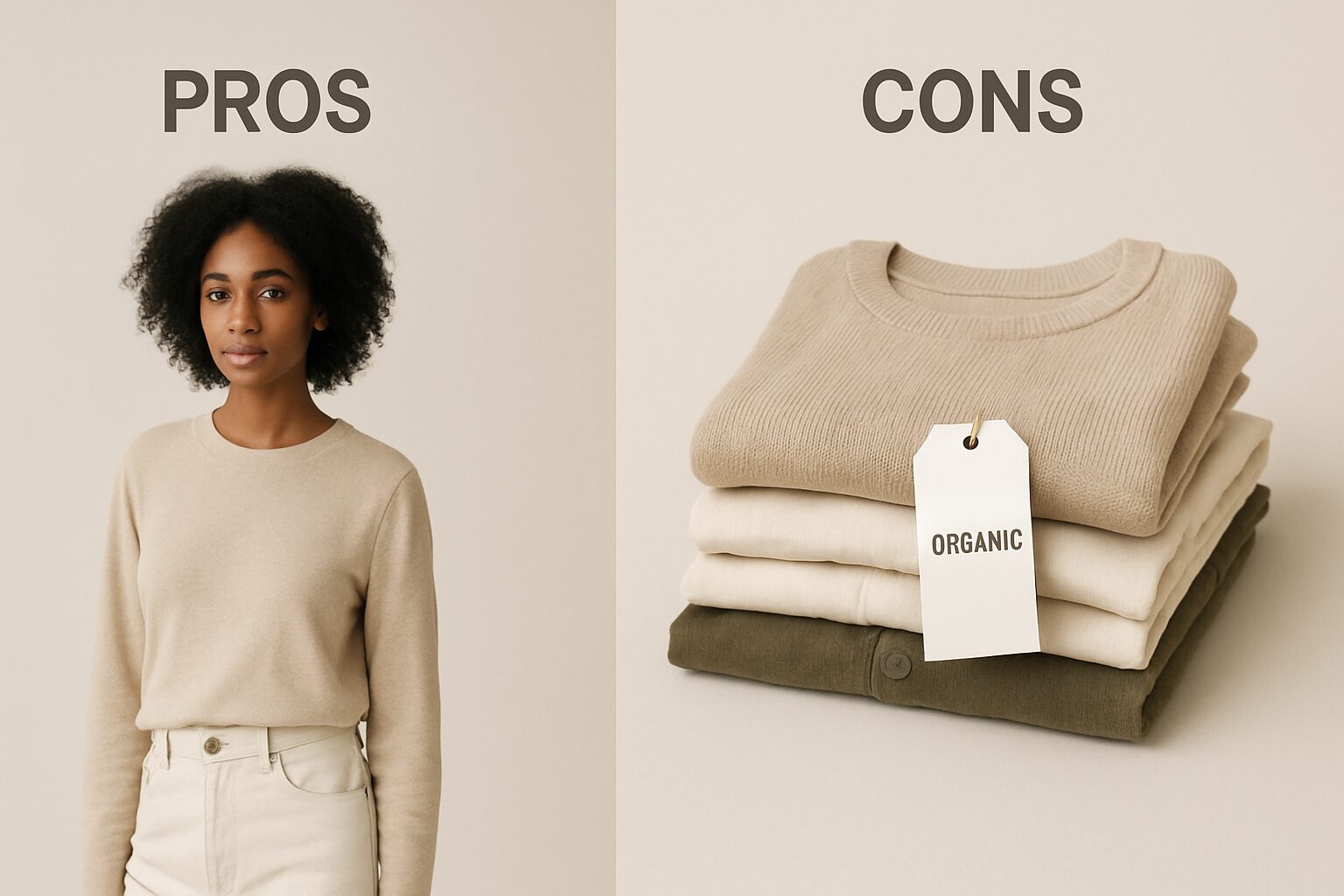
Pros
- Safer for skin: Organic cotton is hypoallergenic and free from the toxic residues left by conventional pesticide use.
- Better for the planet: Organic farming avoids synthetic chemicals, protecting water sources, soil health, and biodiversity.
- Ethical labor standards: Many this type of brands pair their material commitments with Fair Trade or living-wage certifications.
- Longer garment life: Quality organic fabrics hold their shape and softness through repeated washes, lowering cost per wear over time.
- Circular programs: Brands like MATE the Label offer take-back initiatives, keeping textiles in use and out of landfills.
Cons
- Higher upfront cost: Organic tees typically start around $40 to $50, which is a real gap compared to fast fashion pricing.
- Limited going-out options: Most this kind of brands skew toward basics and loungewear, with fewer bold or nightlife-ready silhouettes.
- Greenwashing risk: Without verified certifications, “natural” and “eco-friendly” claims are marketing language, not guarantees.
- Neutral palette dominance: Earth tones and muted colors are the default, which can feel limiting for shoppers who want more visual impact.
What to Look for When Buying Organic Fashion Brands
Not all organic fashion are created equal. To make a purchase you can actually stand behind, evaluate these criteria before you click buy.
Step-by-Step Guide to Choosing Organic Clothing
- Verify Material Content: Look for clear labeling of organic cotton, hemp, or linen. Avoid vague terms like “natural” without certification to back them up.
- Check for Third-Party Certifications: Seek logos from GOTS, OEKO-TEX, or Fair Trade. These confirm rigorous standards for organic integrity and social responsibility.
- Research the Brand’s Supply Chain: Visit their website for transparency reports. Harvest and Mill, for example, maps their entire process from USA farms to San Francisco sewing communities.
- Read Customer Reviews on Durability: Organic clothing should retain shape and softness after multiple washes. Fair Indigo customers report tees lasting years with minimal fading.
- Compare Price per Wear: A $48 tee that lasts three years is a smarter buy than a $20 fast-fashion alternative that pills after three months. Do the math before you dismiss the price tag.
Certifications and What They Mean
When browsing fashion brands, certifications are your first filter. GOTS (Global Organic Textile Standard) mandates organic fiber content and restricts hazardous chemicals throughout the production chain. OEKO-TEX Standard 100 ensures finished textiles are free from harmful substances. Fair Trade certification verifies ethical labor practices and fair wages. Many top brands display these logos prominently. If they don’t, contact customer service directly and treat vague answers as a red flag.
Fabric Types Worth Knowing
Fair Indigo offers four distinct fabric constructions: Eterna (95% organic Pima cotton, 5% spandex for stretch), Pura, Ultra Pura, and Luxe. Each is engineered for a different weight and drape, so knowing which you prefer before ordering saves you a return. Harvest and Mill works exclusively with 100% USA-grown organic cotton, then finishes select pieces with natural indigo and plant-based dyes for a look that carries genuine artisanal character. These fabric details matter more than most shoppers realize.
Price Ranges Explained
Organic fashion brands generally fall into three pricing tiers:
- Budget-Friendly ($30 to $60): Basic tees and intimates from brands like Fair Indigo (starting at $39.90) or MATE the Label crop tanks ($44).
- Mid-Range ($60 to $120): Dresses, joggers, and activewear. Harvest and Mill’s joggers sell for $76, and MATE’s leggings cost $98.
- Premium ($120+): Indigo-dyed or handcrafted items. Harvest and Mill’s indigo tees reach $95 to $125, and Danu Organic’s made-to-order pieces command higher prices.
Top Organic Fashion Brands to Know in 2026
Here is a curated list of organic fashion brands that deliver on quality, ethics, and style. Use this comparison table to find the one that fits your values and your wardrobe.
| Brand | Materials Used | Price Range (USD) | Standout Features | Sustainability Credentials |
|---|---|---|---|---|
| MATE the Label | Organic cotton, stretch blends, non-toxic dyes | $44 to $98 | 15,000+ 5-star reviews; Detox Your Closet™ take-back program; free shipping over $200 | Toxin-free, no BPA or PFAS; 500K community |
| Fair Indigo | Organic Pima cotton (Eterna, Pura, Ultra Pura, Luxe fabrics) | $39.90 to $45.90 (tees) | Free shipping every day; buy 2+ tees save 10%; pre-washed for minimal shrinkage | Fair Trade, ethically made |
| Harvest and Mill | 100% USA-grown organic cotton, natural indigo and plant dyes | $48 to $124 | Carbon neutral; full US supply chain transparency; natural dye collections | Carbon Neutral, US-made from seed to stitch |
| Danu Organic | Colorgrown and plant-dyed organic cotton from US farms | Mid-range to premium | Handmade-to-order in San Francisco; women’s, men’s, and kids’ lines | Partners with organic farmers; plant-dyed |
| Patagonia | Organic cotton, recycled polyester, hemp | $45 to $150 (basics) | Long-standing environmental activism; fair labor practices; lifetime repair program | 1% for the Planet, Fair Trade Certified |
Prices reflect 2026 estimates and may vary by style. Always check the brand’s website for current inventory and sales.
Beyond these five, other noteworthy organic fashion brands include plant-dyed collections at Wild Harvest Studio and Hemp Temple, as highlighted by Green Dreamer. These small-batch makers represent the artisanal end of the organic spectrum, where every garment carries a story from field to finished piece.
Plant-Dyed Clothing: The Niche Worth Knowing
Plant-dyed clothing is the most artisanal corner of the organic fashion world, where color comes from roots, bark, flowers, and leaves rather than synthetic chemistry. Brands like Danu Organic and Harvest and Mill use natural indigo, madder root, and other botanical sources to achieve tones that shift subtly with each wash, developing character over time rather than fading into nothing. According to Green Dreamer, the plant-dyed niche has expanded significantly in recent years, with small-batch makers across the US and Europe building loyal followings around the craft.
The appeal goes beyond aesthetics. Synthetic dyes are among the most polluting elements of conventional textile production, responsible for significant water contamination in manufacturing regions. Plant dyes eliminate that chemical load entirely. Harvest and Mill’s indigo-dyed tees, priced from $95, are a direct example of how this approach translates into a finished product you can actually wear. The color is richer, the story is real, and the environmental footprint is a fraction of the conventional alternative.
“The future of fashion is not just about what clothes are made of, but how every step of production affects the people and ecosystems involved. Organic certification is the floor, not the ceiling.” – Fashion sustainability editor, Vogue
How to Style Organic Fashion Pieces
Organic fashion brands now offer everything from activewear to loungewear, making it possible to build a full wardrobe without compromising on ethics or edge. Here are outfit ideas using pieces from top brands.
Casual Day Out
Pair Fair Indigo’s Organic Cotton Scoop Neck Tee ($39.90) with high-waisted denim and white sneakers. The midweight Eterna fabric drapes cleanly and resists wrinkling, which means you look put-together without trying too hard.
Activewear Sets
MATE the Label’s Organic Stretch Sports Bra ($58) and matching Biker Shorts ($68) come in earthy tones that work as hard as you do. Layer with an oversized organic cotton button-down for a post-workout coffee run that still looks intentional.
Weekend Lounging
Harvest and Mill’s Athletic Shorts ($58) paired with a roomy organic cotton tee deliver the ultimate relaxed vibe. Their natural dye collections add artisanal character that elevates even the most casual outfit.
Elevated Basics
Danu Organic’s colorgrown tank dresses move from day to night with a simple accessory swap. Add a chunky necklace and slide sandals and you have a dinner-ready look that required zero effort and zero compromise.
Pieces from organic fashion brands tend toward neutral palettes, which makes them natural mixers with existing wardrobe items. Investing in quality staples reduces overall consumption while keeping your look consistently polished.
“Consumers are increasingly demanding proof, not promises. Brands that publish full supply chain transparency reports are the ones building lasting trust with the next generation of shoppers.” – WWD, reporting on sustainable fashion adoption trends in 2025
Caring for Your Organic Clothing
Proper care extends the life of your organic garments and keeps them out of landfills. Follow these practices and your pieces will last years, not seasons.
- Wash in cold water using a mild, eco-friendly detergent to preserve fibers and colors.
- Air dry whenever possible. Organic cotton can shrink in high heat. If you use a dryer, choose the lowest heat setting.
- Steam instead of iron to remove wrinkles without direct heat damage. The Nori Press is a popular tool for quick, gentle steaming that works well on organic fabrics.
- Store folded in a cool, dry place. Wire hangers stretch shoulders over time and are worth replacing.
- Address stains immediately with baking soda or white vinegar before they set into the fiber.
Many organic fashion brands also encourage circular behavior. MATE the Label’s Detox Your Closet™ program gives a $20 credit for sending in old garments, keeping textiles in use and out of the waste stream.
Frequently Asked Questions
Are organic fashion brands more expensive?
Yes, on average, organic brands price tees between $40 and $50, which is higher than fast fashion. The durability and ethical sourcing behind each piece make them a better long-term value, especially when you calculate cost per wear over two to three years of use.
How do I know if a brand is truly organic?
Look for third-party certifications like GOTS or OEKO-TEX listed directly on product pages. Brands with transparent supply chains, such as Harvest and Mill, often publish detailed reports mapping every step from farm to finished garment.
Do organic clothes shrink more than regular clothes?
Organic cotton can shrink slightly on first wash, but most brands pre-wash fabrics to minimize this. Fair Indigo pre-washes all their garments, and customers consistently report minimal shrinkage across their Eterna and Pura fabric lines.
Can I return organic clothing if it doesn’t fit?
Return policies vary by brand. MATE the Label accepts returns within 30 days, while Harvest and Mill accepts returns within 45 days. Always check the individual brand’s policy before purchasing, especially for made-to-order pieces like those from Danu Organic.
What’s the best organic brand for activewear?
MATE the Label leads the organic activewear category with pieces like the Organic Stretch Sports Bra ($58) and matching Biker Shorts ($68), all machine-washable and moisture-wicking. Their 15,000+ five-star reviews reflect consistent performance across their active range.
Is organic cotton truly better for the environment?
Yes. Organic cotton farming avoids synthetic pesticides, which protects water sources and farmworker health. It also typically uses less water than conventional methods, though specific savings vary by region and farming practice.
The shift toward organic fashion brands reflects a real demand for transparency, health, and accountability in clothing. With options ranging from MATE the Label’s activewear to Fair Indigo’s everyday tees, building a conscious wardrobe is more accessible than ever. Prioritize certified materials, ethical labor, and timeless design, and you end up with style that feels as good as it looks. Explore the table above, test a few pieces, and start detoxing your closet one organic garment at a time.
Discover your duality at prettynpoison.com
Elegant black evening dresses are the ultimate formalwear weapon: timeless, versatile, and dangerous in the best way. This 2026 guide covers every silhouette, fabric, and styling move you need to own any room you walk into.
Key Takeaways
- evening dresses suit every occasion from galas to alternative formal events, with silhouettes ranging from A-line to dramatic mermaid.
- Silhouette matters: A-line flatters most bodies, mermaids add drama, sheaths deliver sleek minimalism.
- Sustainable fabrics like organic silk, recycled polyester, and deadstock lace are now fully viable for luxury eveningwear.
- Price ranges span from around $70 (budget) to $1,600+ (couture), with strong mid-range options between $150 and $500.
- Sleeve styles from long lace to structured off-shoulder dramatically shift the dress code read of any gown.
- Care essentials: professional dry cleaning and breathable garment storage preserve deep black tone and structure long-term.
What to Look for When Buying Elegant Black Evening Dresses
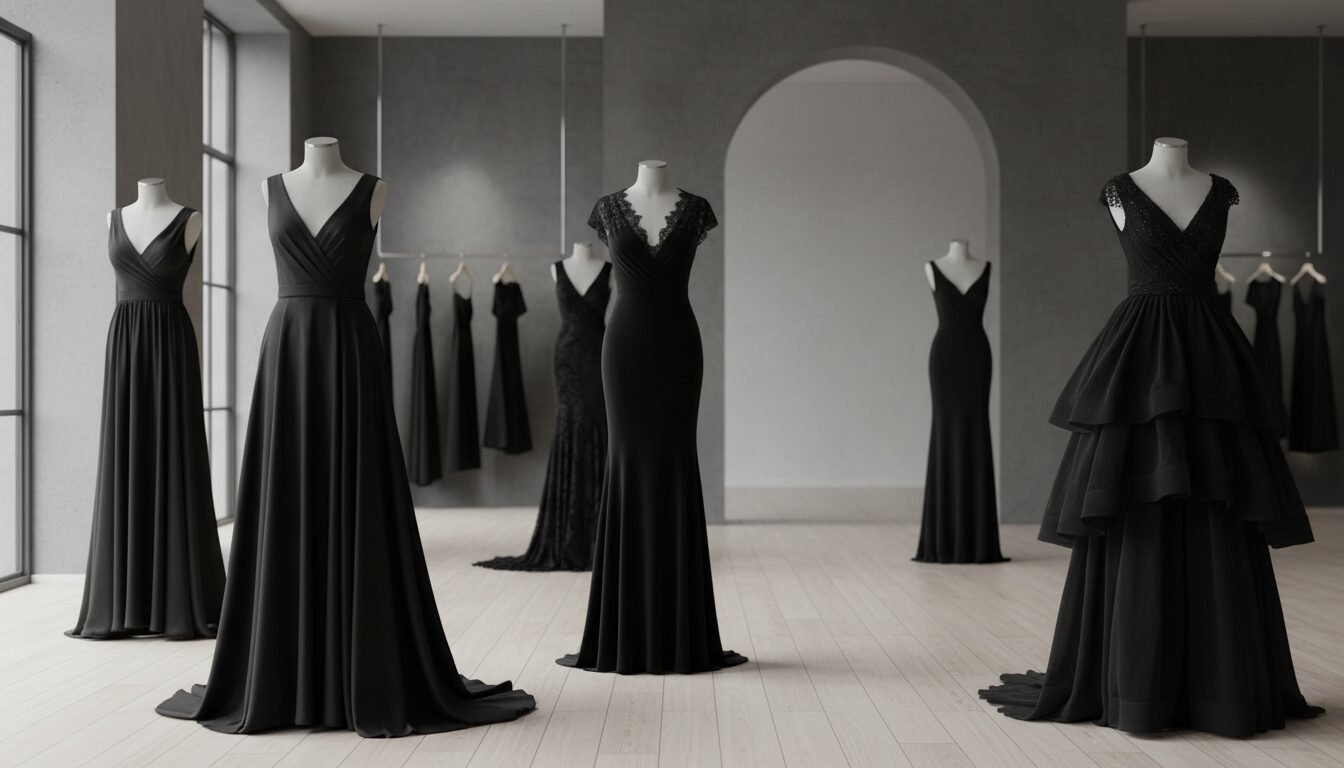
this type of dresses reward the shopper who knows exactly what to look for. Start with fit: the dress should contour your body comfortably without restriction. Then evaluate fabric quality. Sustainable materials like organic silk, TENCEL™ lyocell, or recycled sequins not only lower environmental impact but drape beautifully against the skin. Finally, think cost-per-wear: a well-constructed gown worn across 3 to 5 events is a smarter investment than a $70 piece that pills after one night.
Fabric and Comfort
Natural fibers breathe. Synthetics can trap heat, especially under event lighting. Look for linings in Bemberg cupro or organic cotton. Pretty N Poison sources deadstock lace and recycled polyesters that rival virgin materials in sheen, ideal for this kind of evening dresses that align with eco-values without sacrificing drama.
Silhouette Science
The right shape balances your proportions and your confidence. An A-line cut skims the waist, a mermaid exaggerates curves, and an empire silhouette raises the focal point entirely. Always confirm you can sit, dance, and lift your arms. Comfort is not a compromise. It is the foundation of a killer night.
Top Silhouettes for Elegant Black Evening Dresses
the black evening dresses come in four winning shapes that dominate 2026 runways and retail data alike. Each one reads differently depending on the occasion, so choose with intention.
A-Line
Universally flattering, the A-line gently flares from the waist, skimming hips while pulling focus to the waist. It is the practical power move for outdoor weddings or galas where you will be on your feet for hours. Pair with a pointed-toe heel and you are untouchable.
Mermaid and Fit-and-Flare
Fitted through the bodice and hips, then flaring dramatically at the knee, this silhouette creates a statement hourglass. Milla offers mermaid styles in black lace with prices ranging from $300 to $1,600, frequently requested for prom and red-carpet moments. This is the shape that stops conversations mid-sentence.
Ball Gown
The classic princess silhouette with a full skirt built for white-tie affairs. Jovani carries black ball gowns in satin and brocade, while The Dress Outlet stocks budget-accessible options starting around $130. If you want to make an entrance that the room remembers, this is your shape.
Sheath and Column
Minimalist elegance. A straight cut that skims the body without apology. Ideal for modern cocktail formals or as a base for subculture layering: think harness belts, structured capelets, or dramatic opera gloves. The sheath is the blank canvas that takes a dark direction beautifully.
Sleeve Styles That Change Everything
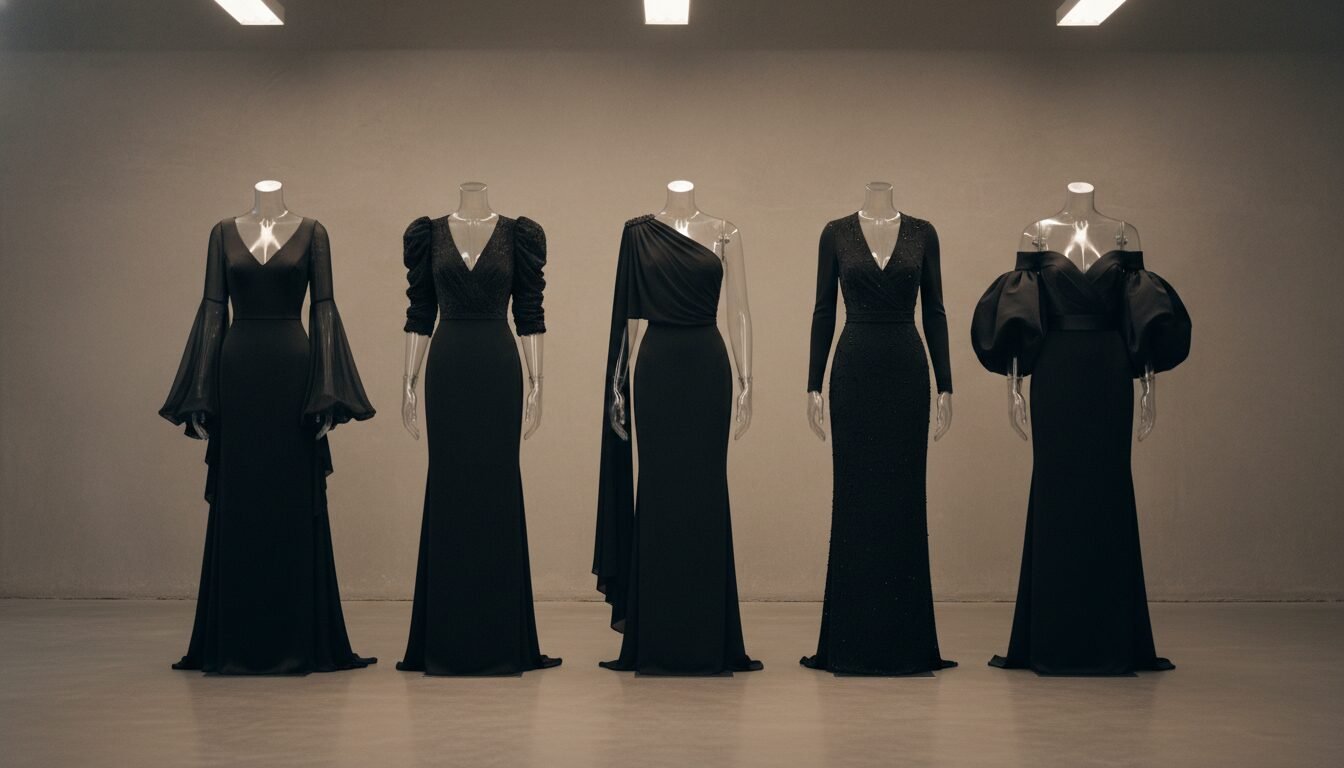
Sleeve choice transforms the entire dress code read of dresses, and this is one of the most searched style questions of 2026. Get this detail right and the rest of the look falls into place.
Long Lace Sleeves
Long lace sleeves add gothic romance to any silhouette. They read as formal and fashion-forward simultaneously, making them perfect for winter galas, alternative weddings, or any event where you want to signal that you dressed with intention. A floor-length A-line with long lace sleeves is one of the most requested looks in Pretty N Poison’s Poison Edit.
Off-Shoulder and Cold-Shoulder
Off-shoulder necklines create an immediate sense of drama without requiring heavy embellishment. Cold-shoulder cutouts add edge to an otherwise classic silhouette. Both styles photograph exceptionally well under event lighting.
Structured Cap Sleeves
Cap sleeves offer coverage without weight. They work across dress codes from cocktail to black-tie and suit a wide range of body types. If you want a polished, put-together look that still feels modern, a structured cap sleeve on a crepe sheath is the answer.
Sleeveless and Strapless
The classic choice for maximum impact. Strapless ball gowns and sleeveless sheaths let the fabric and silhouette do all the talking. Pair with a statement earring and nothing else. Let the dress breathe.
Fabric and Sustainability: Choosing Eco-Conscious Eveningwear
Sustainability in formalwear is not a contradiction. According to the CFDA’s sustainability recommendations, using certified organic or recycled fibers can meaningfully reduce a garment’s carbon footprint compared to conventional production methods. For elegant black, innovative materials now deliver the same opulence as traditional silk and sequins, without the environmental cost.
“The fashion industry’s shift toward deadstock and recycled materials is not a trend. It is a structural change in how luxury is defined.” – CFDA Sustainability Council
Eco-Fabrics to Seek
- Organic silk: cultivated without toxic chemicals; drapes like liquid against the skin.
- Recycled polyester sequins: made from post-consumer plastic bottles with identical sparkle to virgin materials.
- TENCEL™ lyocell: derived from sustainably harvested wood pulp, breathable and exceptionally smooth.
- Deadstock lace: leftover luxury fabrics from mills, preventing waste while delivering genuine craftsmanship.
Pretty N Poison specializes in deadstock lace and recycled embellishments, proving that subculture glamour can be planet-conscious. According to the CFDA Sustainability Guide, consumer demand for sustainable formalwear has grown consistently year over year, with a growing share of shoppers now factoring environmental impact into formal purchase decisions.
How to Style an Elegant Black Evening Dress
A black canvas invites everything. Pair evening dresses with metallic accessories for classic allure, or lean into subculture aesthetics with chunky silver chains, black chokers, and vegan leather harnesses. The dress is the foundation. The styling is the personality.
“Black is not just a color. It is an attitude. The women who wear it best understand that the accessories are the punctuation, not the sentence.” – Pretty N Poison editorial team
Occasion Outfit Formulas
- Gala and Black-Tie: Add a beaded clutch, pointed-toe stiletto, and a cuff bracelet. Skip the necklace if the neckline is detailed. Let the architecture of the dress do the work.
- Alternative Wedding Guest: Layer a sheer duster coat or lace cape over your gown. Add combat boots for edge and a dark lip for the finishing blow.
- Prom 2026: Choose a high-slit mermaid style with a glitter clutch and holographic heels. This is not the year for playing it safe.
- Club and Rooftop: A sleek sheath from the Night Ritual collection with a harness belt and chunky platform boots. Short, sharp, and completely unforgettable.
Dress Codes Decoded: White-Tie vs. Black-Tie vs. Cocktail
Elegant black evening dresses span multiple dress codes, but the rules between them matter more than most people realize. Getting this wrong is the only fashion mistake that actually costs you.
White-Tie
The most formal dress code in existence. Floor-length gowns are mandatory. Full skirts, structured bodices, and minimal skin exposure are expected. A black ball gown in satin or brocade is the correct call. Accessories should be fine jewelry, never costume pieces.
Black-Tie
Floor-length or sophisticated midi-length gowns are both acceptable. This is where elegant black evening dresses have the most creative range. Mermaid silhouettes, heavily beaded sheaths, and dramatic A-lines all work. Heels are expected. Statement jewelry is welcome.
Cocktail Formal
Midi and knee-length options are appropriate here. A sleek column dress or a fit-and-flare midi in crepe or chiffon reads perfectly. This is also the dress code where bold styling choices, like a structured harness or an architectural cape, land best.
Shoe and Undergarment Guide for Formal Gowns
The right foundation makes or breaks elegant black evening dresses, and this is the detail most style guides skip entirely. Jovani’s junior lines notably offer built-in bras for comfort in strapless and off-shoulder styles, a feature worth actively seeking when shopping.
Shoe Pairings by Silhouette
- Ball gown: A pointed-toe stiletto or a block-heel sandal. The skirt hides the shoe, so prioritize comfort over visual impact here.
- Mermaid: A strappy stiletto or a barely-there heel that elongates the leg line from the flare downward.
- Sheath and column: Maximum flexibility. Platform boots, kitten heels, strappy sandals, or even a bold sneaker for a fashion-forward event.
- A-line: A classic pointed-toe pump or a block heel for all-night wearability.
Undergarment Essentials
Strapless gowns need a strapless bra or a built-in corset bodice. Deep V necklines call for adhesive cups or a plunge bra. For sheath dresses in lightweight fabrics, seamless underwear prevents visible lines. Shapewear is a personal choice, not a requirement. Wear what makes you feel most like yourself.
Care and Maintenance for Black Evening Gowns
Preserving the depth of black and the integrity of trims is non-negotiable if you want your investment to last beyond one season. Most embellished gowns require professional dry cleaning. Always check the label before attempting anything at home. Store in a breathable garment bag away from direct sunlight, which fades even polyester fabrics over time. Use padded hangers to maintain shoulder shape. Spot-treat stains immediately with a damp cloth and mild detergent, but never scrub beaded or sequined areas.
Pros and Cons of Elegant Black Evening Dresses
Pros
- Timeless versatility: Black works across every formal occasion from white-tie galas to alternative events, making cost-per-wear genuinely low.
- Styling range: A black base accepts metallic accessories, bold jewelry, subculture hardware, and everything in between without clashing.
- Flattering across silhouettes: The dark tone creates a natural slimming effect and allows the silhouette to read cleanly regardless of body type.
- Sustainable options available: Deadstock lace, recycled sequins, and TENCEL™ lyocell mean you can dress with intention without compromising on glamour.
- Wide price range: Quality options exist from around $70 (Ever-Pretty) to $1,600+ (Milla couture), with strong mid-range choices between $150 and $500.
Cons
- Lint and dust visibility: Black fabric shows every piece of lint, pet hair, and dust. A lint roller is a non-negotiable accessory.
- Fading risk: Without proper care, black fabrics fade to a washed-out grey over time, especially with incorrect washing or sun exposure.
- Wedding guest hesitation: Some traditional hosts still view black as inappropriate for weddings, so reading the room and the invitation remains necessary.
- Heat retention: Synthetic black fabrics absorb heat under event lighting. Lining choice and fabric weight matter significantly for all-night comfort.
Price Ranges and Where to Shop
Market pricing for elegant black evening dresses splits into three clear tiers, from accessible to couture. Here is exactly where each major retailer sits.
| Retailer / Brand | Price Range | Sustainability | Size Inclusivity | Unique Feature |
|---|---|---|---|---|
| Pretty N Poison | $150 – $400 | Deadstock lace, recycled sequins | XXS – 4X | Subculture-inspired details, Night Ritual collection |
| Ever-Pretty (Amazon) | $69.99 – $101.89 | Not specified | 0 – 26 Plus | Budget-friendly variety; 4.2–4.5 star ratings |
| Adrianna Papell | $100 – $500 | Some recycled polyester styles | 0 – 24 | Hand-beaded designs; over 40 million dresses sold |
| Milla | $300 – $1,600 | Couture-quality materials; made-to-order reduces waste | 0 – 16, custom sizing | Corset bodices, full customization, black lace from $600 |
| The Dress Outlet | $99.99 – $898 | Brand dependent | 0 – 26 | Discount designer labels including Mac Duggal beaded styles at $498 |
Occasion-Specific Selection Guide
Elegant black evening dresses work across every formal setting, but the right choice depends on reading the occasion correctly. Here is the breakdown.
Weddings
Opt for a refined A-line or sheath in crepe or chiffon. A subtle lace overlay keeps the look celebratory rather than funereal. Avoid anything that competes with the bridal party in terms of embellishment volume.
Galas and Fundraisers
Go grand. A ball gown or heavily beaded mermaid is the correct call. Metallic threads catch event photography lighting beautifully and ensure you are visible from across the room.
Prom and Homecoming
High slits, corset backs, and glitter tulle are fully welcome. Jovani’s junior lines offer built-in bras for comfort in strapless styles, a practical feature worth prioritizing when you will be dancing for hours.
Alternative Formal Affairs
Goth balls, punk weddings, and queer formal events call for black dresses with vinyl trim, hardware details, and dramatic capes. Pretty N Poison designs specifically for this space. The Poison Edit and Duality collections exist precisely for nights that refuse to follow the standard script.
Step-by-Step: How to Find Your Perfect Elegant Black Evening Dress
- Define the occasion: Is it white-tie (floor-length mandatory), black-tie (floor-length or sophisticated midi), or cocktail formal (midi or knee-length acceptable)? The invitation is your first filter.
- Take accurate measurements: Bust, waist, hips. Compare against the brand’s specific size chart. Do not rely on your usual high-street size. Formal sizing runs differently across every brand.
- Choose a flattering silhouette: Refer to the silhouette guide above. If genuinely unsure, order two sizes and return one. Most major retailers offer free returns on unworn items.
- Select your sleeve style: Long lace for gothic romance, off-shoulder for drama, sleeveless for maximum impact. Sleeve choice shifts the entire dress code read of the gown.
- Prioritize sustainable fabrics: Use the filter on retailer sites to select eco-conscious materials. Deadstock lace and recycled sequins are available at multiple price points.
- Read verified reviews: Pay close attention to comments on fit, fabric feel, and color accuracy. Ever-Pretty’s detailed Amazon reviews frequently include customer photos that show real-world color depth.
- Check return policy and timeline: Formal dresses often ship from different warehouses. Confirm you can exchange in time for your event before completing the purchase.
Frequently Asked Questions
Can I wear a black evening dress to a wedding?
Yes, black is now widely accepted for weddings, particularly in evening or formal settings. Choose softer fabrics like lace or chiffon and avoid heavy embellishments that compete with the bridal party. A lace overlay or floral accessory keeps the look celebratory rather than severe.
What accessories work best with an elegant black evening dress?
Metallic tones, gold, silver, and rose gold, all read beautifully against black. For subculture flair, try chunky chain jewelry, a studded clutch, or colored gemstones. The rule is balance: if the dress is heavily beaded, keep accessories minimal and let the gown lead.
How do I prevent my black dress from fading?
Dry clean using a specialist in delicate formalwear, and store in a dark, cool closet inside a breathable garment bag. Avoid plastic dry-cleaning bags, which trap humidity and cause yellowing over time. Keep the dress away from direct sunlight between wearings.
What is the best fabric for a sustainable black evening gown?
Organic silk, TENCEL™ lyocell, and recycled polyester are all strong choices. Deadstock lace achieves a genuine luxury finish without consuming new resources. Brands like Pretty N Poison and Milla both provide product-level material transparency so you know exactly what you are wearing.
Are elegant black evening dresses suitable for plus-size bodies?
Absolutely. A-line, empire, and ball gown silhouettes are particularly flattering across a wide range of body types. Retailers like Adrianna Papell and Ever-Pretty offer extensive plus-size ranges up to size 26, while Milla provides full custom sizing for a precise fit.
How much should I budget for a quality black evening dress?
Expect to spend $150 to $400 for a well-made, sustainably focused dress with real longevity. Budget options from around $70 exist but may compromise on fabric durability. Couture-level elegant black evening dresses from brands like Milla run from $600 to $1,600 for made-to-order pieces.
Final Thoughts on Elegant Black Evening Dresses
Elegant black evening dresses are not just a wardrobe choice. They are a statement of intent. In 2026, the best versions of this silhouette are as conscious as they are commanding: sustainable fabrics, inclusive sizing, subculture-inspired details, and the kind of construction that survives more than one unforgettable night. Whether you reach for a corseted mermaid from Milla, a deadstock lace A-line from Pretty N Poison’s Pretty Edit, or a hardware-heavy column from the Poison Edit, the right dress is the one that makes you feel like the most dangerous version of yourself. Discover your duality at prettynpoison.com.
Environmental fashion brands are clothing companies that prioritize ecological responsibility through measurable practices like organic materials, reduced water usage, and transparent supply chains. These brands offer a way to dress boldly without destroying the planet.
Key Takeaways
- fashion brands prioritize ethical production, eco-friendly materials, and transparency across their supply chain.
- Third-party rating platforms like Good On You provide independent assessments, helping consumers make informed choices.
- Top-rated brands include Stella McCartney, Patagonia, Reformation, and Gucci, each excelling in different sustainability areas.
- Sustainable fashion now spans all price points, from affordable basics to luxury statement pieces, including a growing nightlife and partywear segment.
- Certifications like GOTS, OEKO-TEX, and B Corp are key indicators of a brand’s genuine environmental commitment.
What Defines an Environmental Fashion Brand?
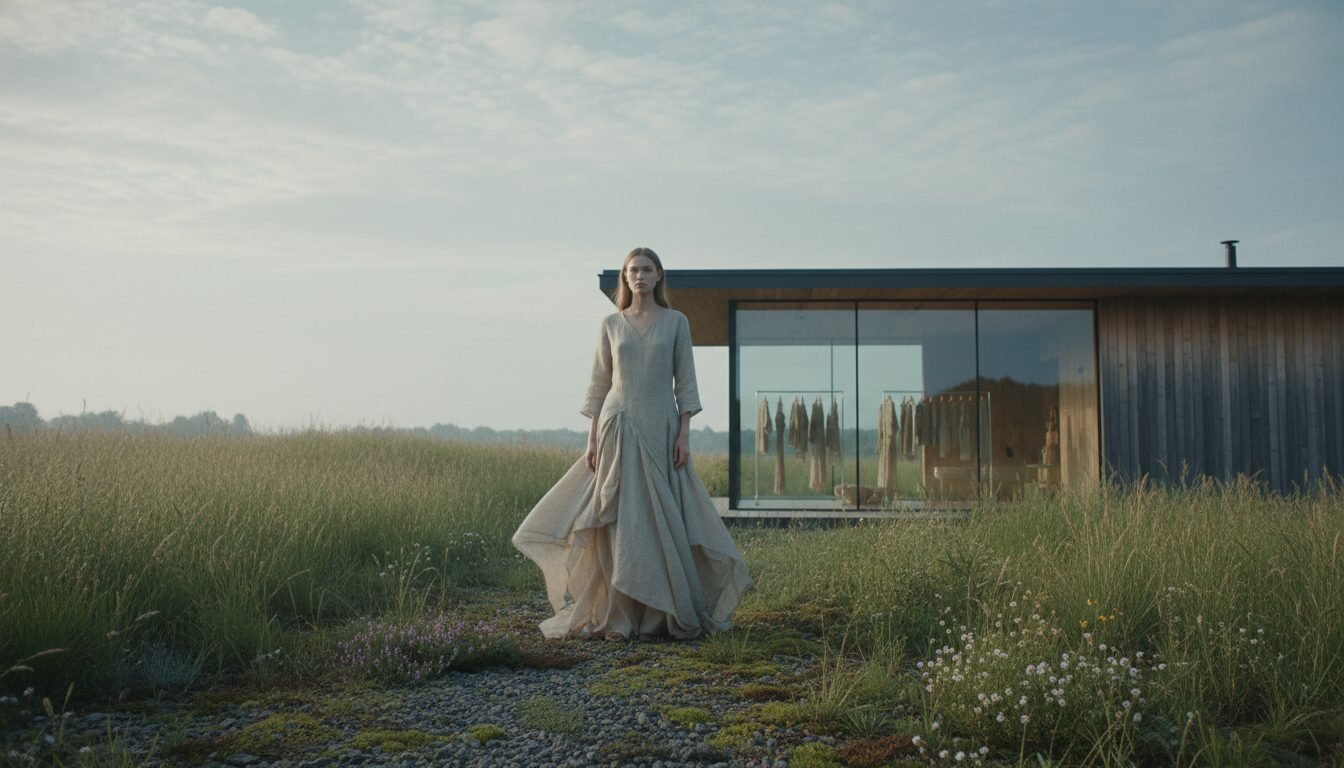
these brands place ecological responsibility at the core of their business model. They go beyond greenwashing by implementing measurable practices such as using organic or recycled materials, reducing water and chemical usage, ensuring fair labor conditions, and designing for circularity. In an industry responsible for massive environmental damage, these brands offer a way to dress without compromising the planet.
Beyond the Label: Key Sustainability Criteria
Merely marketing products as “green” isn’t enough. Genuine such brands demonstrate accountability through transparent reporting, third-party audits, and adherence to recognized standards. A brand’s sustainability can be assessed across three pillars: planet (carbon footprint, chemical management), people (worker rights, living wages), and animals (no fur, leather alternatives). The rise of rating platforms has made it easier to verify these claims.
The Role of Third-Party Verification
Platforms like Good On You have become essential tools for conscious consumers. Their directory evaluates thousands of fashion labels based on public information, certifications, and brand self-disclosures. Ratings range from “We avoid” to “Great”, giving a snapshot of a brand’s overall performance. According to Good On You’s methodology, a “Good” rating indicates that environmental fashion are taking meaningful steps across all areas, while “It’s a start” shows progress but room for improvement.
Fast Fashion vs. Slow Fashion: A Tale of Two Systems
The contrast between fast fashion giants and dedicated environmental fashion brands is stark. Fast fashion relies on rapid production cycles, synthetic fabrics derived from fossil fuels, and a business model that encourages disposability. In opposition, slow fashion advocates for timeless design, durable quality, and repair and reuse, principles that many environmental fashion brands embed into their operations. This shift is not just a trend; it’s a necessary evolution for the industry’s survival.
The Good On You Rating System: A Closer Look
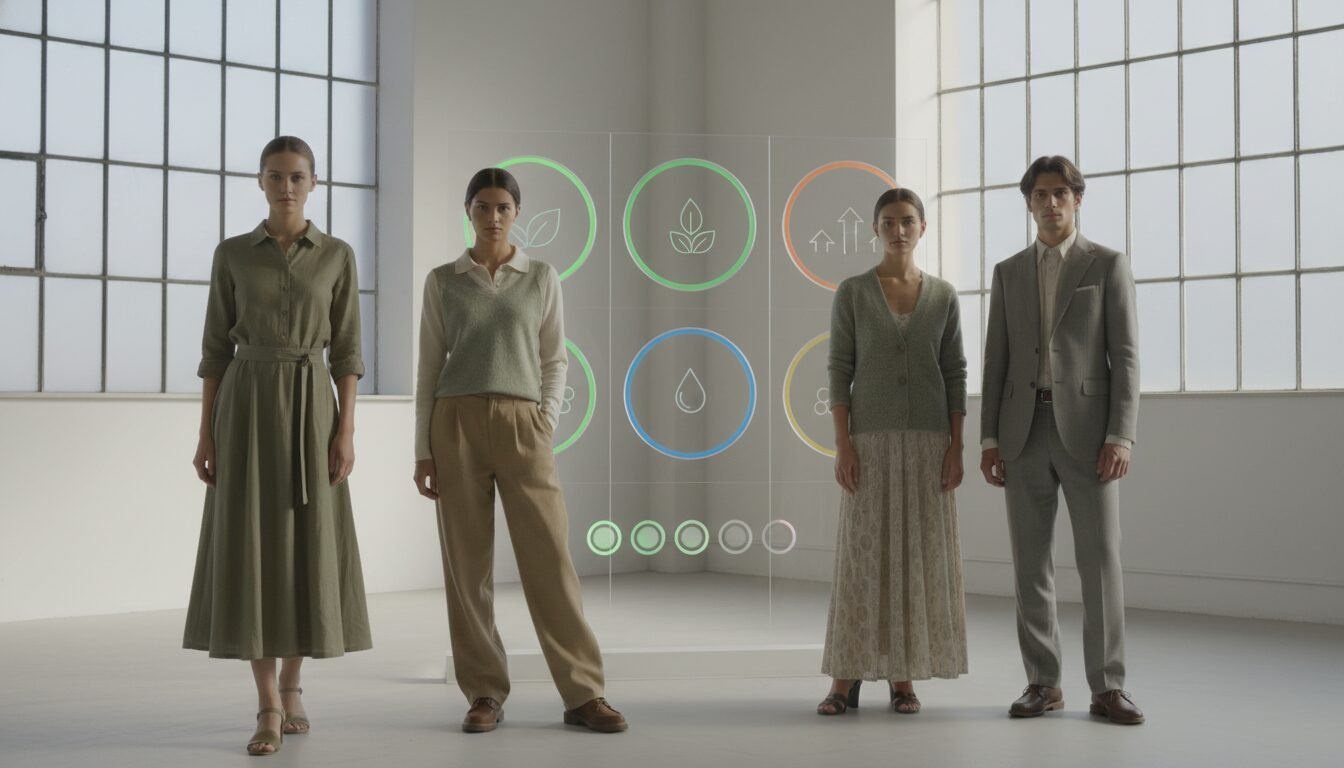
Good On You’s popular brand directory categorizes companies on a four-tier scale: “Great”, “Good”, “It’s a start”, and “We avoid”. This rating is derived from evaluating each brand’s policies and practices across people, planet, and animals. The platform also provides price point indicators from $ to $$$$, helping shoppers align their budget with their values. With over 4,180 tops and 2,524 sweaters & knitwear options, the scope of sustainable fashion is wider than ever.
How Ratings Are Calculated
Good On You’s analysts combine brand-supplied data with independent research, public certifications (like Fair Trade, GOTS, and Cradle to Cradle), and media reports. The system penalizes companies that fail to disclose key information or have been linked to labor or environmental scandals. This rigorous approach ensures that a high rating is not merely a marketing claim but a reflection of genuine effort.
Brands That Achieve “Good” and “Great” Status
Several notable environmental fashion brands have earned top honors. Stella McCartney, a UK-based luxury house, is rated “Good” for its commitment to animal-friendly materials and circular design. Patagonia, a US outdoor label, also earns “Good” for its pioneering work in recycled materials and activism. Reformation combines trend-driven designs with a low-impact ethos, while Gucci, an Italian luxury giant, surprisingly meets the “Good” threshold through comprehensive carbon-neutral initiatives. Puma, a German sportswear brand, also sits in the “Good” tier, showing that scale and sustainability can coexist.
Understanding “We Avoid” Labels
Brands like SHEIN and CIDER appear in the “We avoid” category due to a lack of transparency, reliance on virgin synthetic materials, and repeated concerns over labor practices. This designation serves as a warning that, despite catchy marketing, these companies have not demonstrated sufficient environmental responsibility. The rating system empowers shoppers to see past the hype and support environmental fashion brands that align with their eco-conscious values.
Top Environmental Fashion Brands for 2026
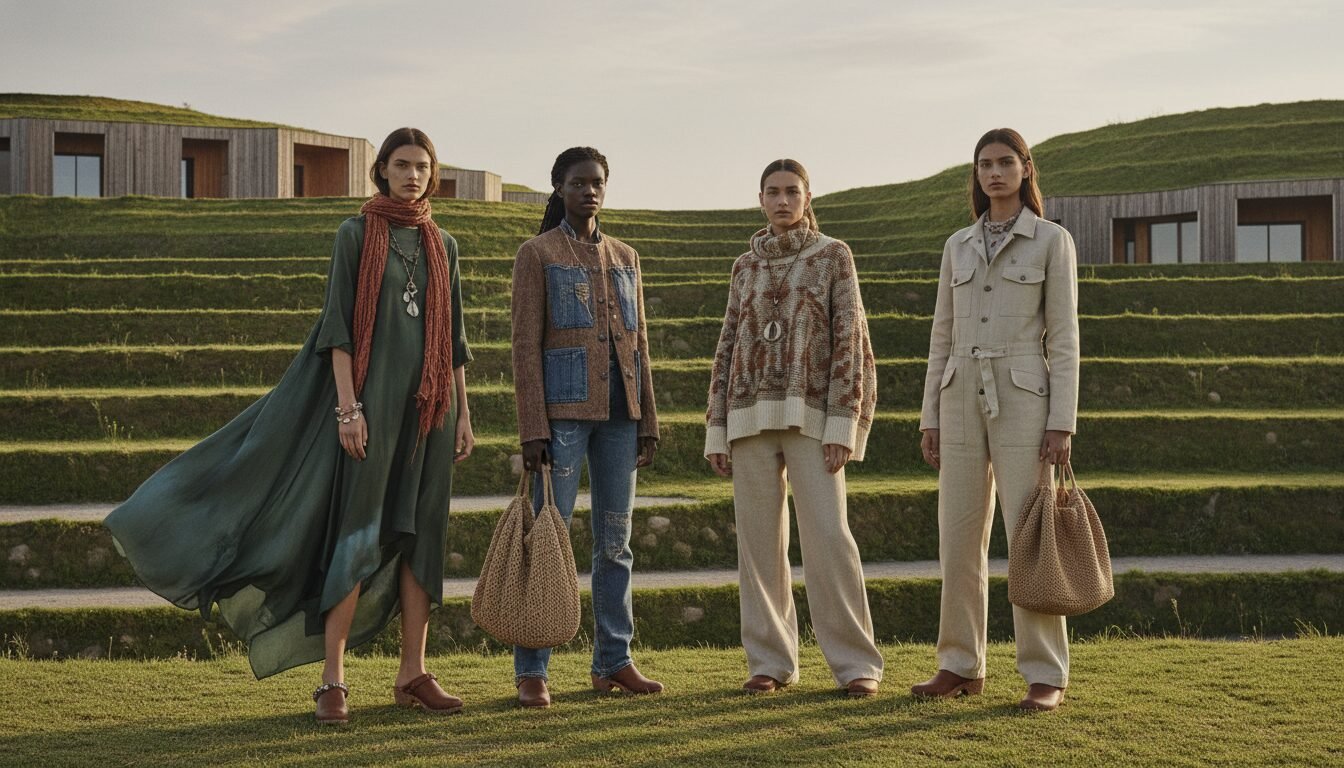
While the list of commendable labels grows each year, a handful stand out for their innovation, transparency, and style. These environmental fashion brands are not just reducing harm, they are reimagining how fashion can and should operate. Their approaches vary from high-tech fabrications to community-building resale programs.
Luxury Meets Sustainability: Stella McCartney and Gucci
Stella McCartney has been a lifelong advocate for ethical luxury, eschewing leather and fur since its founding. The brand uses recycled polyester, organic cotton, and bio-based faux leather across its collections. Gucci’s Equilibrium platform reports on its progress toward full circularity, and the house has invested heavily in regenerative agriculture for wool and cotton. Both prove that high fashion and high ethics can walk the runway together.
Outdoor Pioneers: Patagonia and Puma
Patagonia’s mission statement, “We’re in business to save our home planet,” is backed by concrete actions: 100% recycled down, a lifetime repair guarantee, and 1% for the Planet contributions. Puma, though less vocal, has made strides with its Forever Better code of conduct and a target to use 90% more sustainable materials by 2025. Both brands illustrate that performance wear and sustainability are not mutually exclusive.
Affordable Everyday Options: Reformation and Beyond
Reformation has built its identity on being “the it girl” sustainable brand, offering dresses, jeans, and swimwear with transparent impact data per garment. Its RefScale tracks carbon dioxide, water, and waste savings compared to industry averages. Other wallet-friendly environmental fashion brands are emerging, showing that you don’t need a luxury budget to shop responsibly. The directory includes 1,110 plus-size labels and 1,173 shoe brands, providing inclusive and diverse sustainable choices.
| Brand | Good On You Rating | Price Range | Key Eco Feature |
|---|---|---|---|
| Stella McCartney | Good | $$$$ | Pioneer in animal-free luxury materials |
| Patagonia | Good | $$$ | Lifetime repair & 1% for the Planet |
| Reformation | Good | $$ | RefScale impact transparency |
| Gucci | Good | $$$$ | Carbon-neutral operations & regenerative projects |
| Puma | Good | $$$ | 90% sustainable material target by 2025 |
Pros and Cons
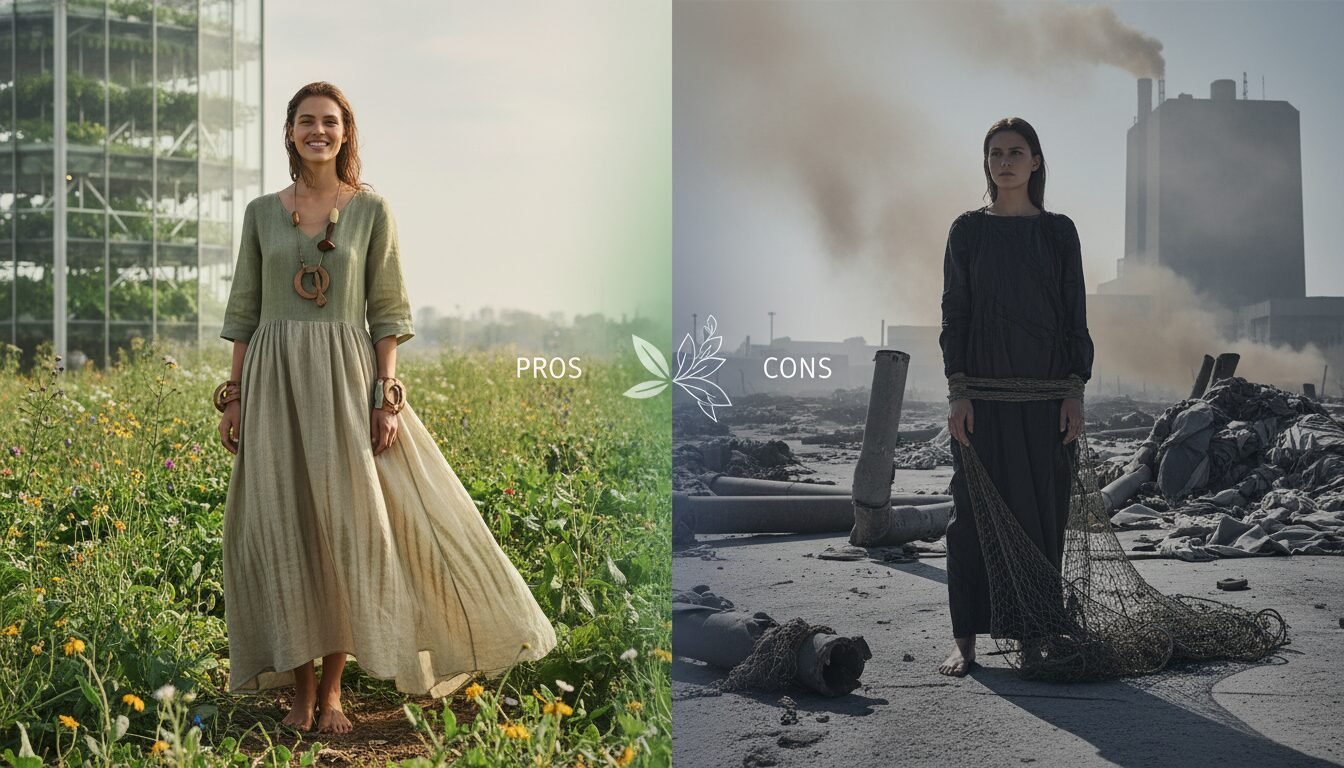
Pros
- Significantly lower environmental impact through sustainable materials and production methods
- Better working conditions and fair wages for garment workers
- Higher quality construction means pieces last longer, reducing replacement costs
- Transparent supply chains allow consumers to make informed purchasing decisions
- Innovation in eco-friendly materials drives industry-wide improvements
Cons
- Higher upfront costs compared to fast fashion alternatives
- Limited availability in some regions and size ranges
- Slower production cycles mean fewer trend-driven options
- Greenwashing makes it difficult to identify genuinely sustainable brands
- Some eco-friendly materials may have different care requirements
Materials Matter: What Fabrics to Look For
The foundation of any truly environmental fashion brand is its choice of raw materials. Switching from conventional cotton to organic or recycled alternatives can dramatically reduce water consumption, chemical runoff, and carbon emissions. Consumers should look for garments made from certified organic cotton, TENCEL™ Lyocell, hemp, and recycled polyester. Innovations such as deadstock fabric reuse and bio-based synthetics are also gaining traction among environmental fashion brands.
Certified Natural Fibers
Organic cotton, grown without synthetic pesticides, is a staple for many top-rated brands. GOTS (Global Organic Textile Standard) certification ensures that the entire supply chain, from field to finished product, meets strict environmental and social criteria. Similarly, linen and hemp require minimal water and no fertilizers, making them low-impact choices that regenerative farms are scaling up worldwide.
Recycled Synthetics and Next-Gen Materials
Recycled polyester (rPET) turns plastic bottles into durable fabrics, diverting waste from landfills and oceans. However, concerns about microplastic shedding mean that environmental fashion brands like Patagonia and Puma are investing in washing solutions and moving toward next-generation materials. Renewcell’s CIRCULOSE® fiber, made from 100% textile waste, and Mylo unleashed leather, grown from mycelium, are examples of the material science revolutionizing the industry.
The Rise of Deadstock and Upcycling
Deadstock fabric, leftover rolls from mills and fashion houses, is being rescued by smaller environmental fashion brands to create limited-edition pieces. This prevents new resource extraction and gives high-quality textiles a second life. Upcycling goes further, transforming post-consumer garments into new, desirable products. These practices cut down on waste and foster a creative, one-of-a-kind aesthetic that resonates with alternative fashion lovers.
“Good On You’s directory includes over 4,180 tops brands, indicating a massive industry shift toward sustainable fashion that meets consumer demand for everyday essentials.”
Nightlife and Partywear: The New Frontier of Sustainable Style
Club-ready looks and festival wear have traditionally been associated with fast, disposable fashion. But a wave of environmental fashion brands is changing that, crafting bold, expressive partywear from eco-friendly materials. Sequins made from recycled plastic, mesh pieces in regenerated nylon, and shimmer tops in peace silk let you shine on the dance floor without a guilt trip.
Bold, Eco-Friendly Party Pieces
Environmental fashion brands like Reformation offer stretchy, curve-hugging cocktail dresses made from deadstock fabrics. Stella McCartney delivers metallic midi skirts and sculptural tops that are statement-worthy. Smaller labels found in the Good On You accessories category (2,464 listed) supply chunky recycled acrylic jewelry and vegan handbags. For those who want to look fierce and feel righteous, the options are multiplying.
Rental and Secondhand Solutions for One-Night Looks
The rise of rental platforms like Hurr and By Rotation means you can sport a designer piece for a single event without ownership impact. Peer-to-peer marketplaces such as Depop and Vinted are treasure troves for pre-loved partywear, often at a fraction of the retail cost. This circular model extends a garment’s life and directly counters the throwaway culture of fast fashion.
How to Build a Sustainable Wardrobe Step by Step
Transitioning to a closet filled with environmental fashion brands doesn’t require an overnight overhaul. By following a deliberate process, you can curate a wardrobe that reflects your style and values without excess consumption. Here’s a practical roadmap:
- Step 1: Audit Your Current Wardrobe. Take inventory of what you already own. Identify pieces you love and wear often, and set aside items that no longer fit your style or needs.
- Step 2: Research Brands Before Buying. Use platforms like Good On You to check a brand’s rating and read their sustainability reports. Look for third-party certifications and transparent supply chain disclosures.
- Step 3: Prioritize Quality over Quantity. Invest in well-made garments that will last years, not weeks. Check stitching, material composition, and care instructions before purchasing.
- Step 4: Embrace Secondhand First. Before buying new, explore thrift stores, consignment shops, and online resale apps. You can often find like-new pieces from sustainable labels at a lower price.
- Step 5: Care for Your Clothes Consciously. Wash on cold, air dry when possible, and repair minor damages. Simple care habits can double the lifespan of a garment.
- Step 6: Dispose Responsibly. When an item is truly worn out, recycle it through brand take-back programs or textile recycling points. Avoid sending clothes to landfill.
Certifications and Transparency: What to Trust
In a market flooded with ambiguous claims, certifications provide a reliable shortcut to identifying genuine environmental fashion brands. These labels certify that a product meets specific environmental and social standards, verified through independent auditing. Shoppers should look for multiple certifications to get a fuller picture of a brand’s impact.
Key Certifications to Know
The Global Organic Textile Standard (GOTS) is the gold standard for organic fibers, covering both environmental and labor criteria. OEKO-TEX Standard 100 ensures that a finished product is free from harmful chemicals. Fair Trade Certified guarantees better prices and working conditions for producers. Additionally, B Corp certification evaluates a company’s entire social and environmental performance, providing a comprehensive badge of responsibility.
The Importance of Public Reporting
Beyond certifications, the most trustworthy environmental fashion brands publish annual sustainability reports, often aligned with frameworks like the Global Reporting Initiative (GRI) or the Fashion Transparency Index. These documents detail progress toward climate targets, water stewardship, and diversity metrics. A brand’s willingness to share this data, even when numbers fall short, is a powerful signal of genuine commitment.
“According to Good On You, a ‘Good’ rating means a brand is using eco-friendly materials, minimizing waste, and taking action to support fair workers’ rights, a trifecta that consumers can rely on.”
The Future of Environmental Fashion
The trajectory of environmental fashion brands points toward deeper investment in circular business models, including repair services, resale platforms, and rental subscriptions. Innovations in material science, like lab-grown cotton and biodegradable sequins, will soon become commercially widespread. Policy changes, such as the EU’s Digital Product Passport initiative, will mandate greater product-level transparency, leveling the playing field for responsible companies.
Legislation and Industry Accountability
Governments are stepping up with extended producer responsibility (EPR) laws that require fashion companies to fund the collection and recycling of their goods. France’s anti-waste law already bans the destruction of unsold textiles. Such regulations incentivize environmental fashion brands to design for durability and recyclability, pushing even reluctant players to adopt practices long championed by the sustainable sector.
Technology as an Enabler
From blockchain traceability (tracking a garment from fiber to finish) to AI-driven demand forecasting that eliminates overproduction, technology is giving environmental fashion brands the tools to scale their impact. Digital fashion, virtual garments for social media and gaming, also offers a zero-physical-waste avenue for creative expression, perfectly suited to a metaverse-ready generation.
Ready to transform your wardrobe without compromising your values? Discover your duality at prettynpoison.com
Frequently Asked Questions
What makes a fashion brand truly environmental?
A genuinely environmental fashion brand demonstrates measurable efforts across material sourcing, production methods, and supply chain ethics. It uses certified organic or recycled inputs, reduces water and chemical use, ensures fair labor, and provides transparent impact data.
Are environmental fashion brands more expensive?
Not necessarily. While luxury sustainable brands can be costly, many affordable options exist thanks to efficient production models and the use of recycled materials. Platforms like Good On You list brands across all price points, from $ to $$$$.
How can I verify a brand’s sustainability claims?
Look for third-party certifications (GOTS, OEKO-TEX, Fair Trade, B Corp) and check independent rating platforms like Good On You. Brands that are open about their supply chain, publish annual reports, and welcome scrutiny are more likely to be credible.
Can fast fashion brands become sustainable?
Some fast fashion companies have launched “conscious” collections, but these often represent a small fraction of their output. True sustainability requires a fundamental shift from the high-volume, low-cost model. Independent ratings can reveal whether these efforts are systemic or just marketing.
Is secondhand fashion better for the environment?
Yes. Buying secondhand extends the life of existing garments, reducing the demand for new production. It is one of the most effective ways to lower your fashion footprint, especially when combined with supporting environmental brands for new purchases.
Fall fashion trends 2025 are a rebellion against disposable culture, merging dark romance with sustainable materials for the nightlife obsessed. Think vegan leather blazers, upcycled band tees, and deconstructed denim that screams individuality while protecting the planet.
Key Takeaways
- trends 2025 champion dark romance, cyberpunk aesthetics, and DIY rebellion over mainstream conformity.
- Sustainability isn’t optional, organic cotton, Tencel, and vintage pieces dominate the most coveted looks.
- Oversized blazers, barn jackets, and deconstructed denim create the season’s power silhouettes.
- Moody neutrals like chocolate brown and charcoal anchor outfits, while digital lavender adds electric contrast.
- Brooches, analog watches, and vegan leather boots complete the edgy-meets-conscious aesthetic.
The Shift Toward Conscious Clubbing: How Sustainability Is Defining Fall Fashion Trends 2025
Sustainable fashion is the practice of designing, producing, and consuming garments with minimal environmental and social harm. This season, eco-consciousness isn’t just trendy, it’s the foundation of every look worth wearing after dark.
Eco-Friendly Fabrics Take Center Stage
Material innovation is rewriting the rules. Tencel lyocell, derived from sustainably harvested eucalyptus, offers silk-like drape with a fraction of conventional cotton’s water footprint. Econyl, regenerated nylon from ocean waste, appears in bodycon dresses and fishnet tops perfect for the club. OEKO-TEX and GOTS certifications are non-negotiable for any piece claiming eco-credibility.
Brands like Reformation and Stella McCartney lead with mushroom-based leather alternatives that rival the real thing without the toxins. Your party outfit isn’t just about looking devastating, it’s about voting with your wallet for a cleaner planet. these 2025 make sustainability seductive.
Upcycled and Vintage Nightlife Pieces
The most coveted such trends 2025 won’t come from a rack. They’ll be scavenged from thrift stores, vintage boutiques, and resale platforms like Depop and The RealReal. A 90s slip dress layered over mesh long-sleeves, a cropped Fair Isle sweater paired with a safety-pinned mini, these outfits defy algorithms.
Upcycling transforms discarded materials into higher-value products, and this season, it’s the ultimate flex. A denim jacket adorned with vintage brooches or a leather skirt patched with band logos tells a story no fast-fashion replica can mimic. the fashion trends 2025 celebrate the one-of-a-kind.
“The point of sharing trends isn’t to suggest you need to overhaul your wardrobe every season,” writes style consultant The Wardrobe Consultant.
Instead, it’s about integrating thoughtful additions that align with your aesthetic vision.
Capsule Wardrobes for the Party Circuit
A capsule wardrobe is a curated collection of versatile, timeless pieces that mix and match endlessly. For 2025 nightlife, you need five foundation pieces: a vegan leather blazer, an organic cotton band tee, high-waisted wide-leg trousers in black, a bias-cut midi dress, and combat boots.
From these five items, you can generate at least a dozen distinct looks, enough for any warehouse rave or cocktail lounge. This approach reduces waste while streamlining your pre-party chaos. Smart, sustainable, and effortlessly cool.
Subculture Revival: 5 Underground Fall Fashion Trends 2025 You Can’t Ignore
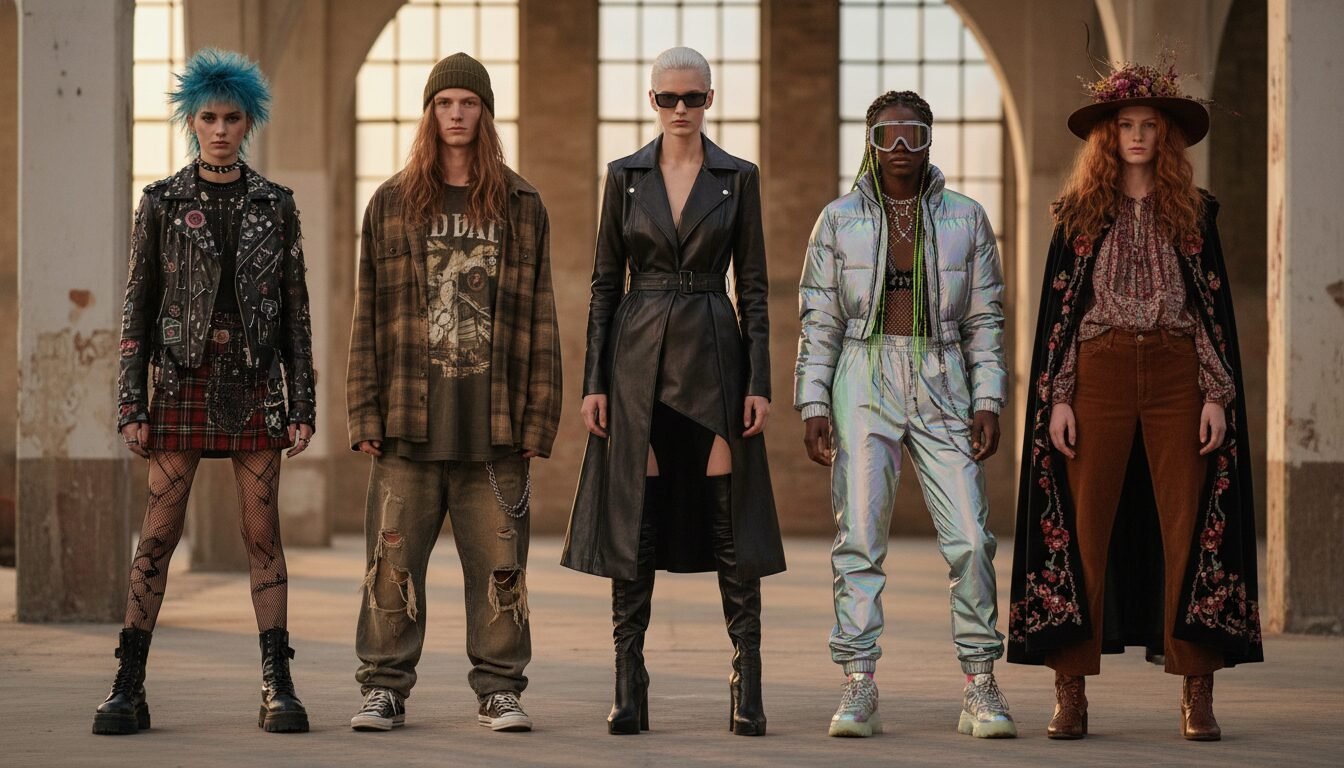
Gothic Glamour Gets a Modern Update
Gothic fashion is shedding its dusty image. For fall fashion, think velvet corsets with cargo pants, lace bodysuits under oversized blazers, and dark floral embroidery on structured coats. The silhouette is sharp: strong shoulders, cinched waists, and floor-sweeping hemlines.
Black anchors everything, but deep berry and oxblood add richness. Brands like Disturbia and Killstar inject this aesthetic with modern cuts, making it accessible beyond the goth club. Pair a brooding maxi dress with chunky platform boots for instant drama.
Cyberpunk Meets Cozy: Techwear for Cooler Nights
Techwear, functional, often futuristic clothing with technical fabrics, is infiltrating fall wardrobes. Reflective paneling, waterproof zippers, and modular pockets appear on anoraks and cargo pants. But trends 2025 make it cozy: soft fleece linings, wool-blend shells, and ergonomic fits.
The result? Outfits equally suited to a damp walk to the club and the dance floor itself. Look for pieces with recycled polyester ripstop and adjustable straps. A neon green strap here, a matte black buckle there, cyberpunk accents elevate the utilitarian base.
DIY Ethos: Customization as the Ultimate Trend
Personalization is the soul of alternative these 2025. Whether it’s hand-painting a denim jacket, adding safety pin chains to a skirt, or screen-printing lyrics onto a hoodie, DIY transforms mass-produced items into artifacts.
This trend resists fast fashion’s homogeneity and champions individuality. All you need are basic tools: fabric paint, embroidery needles, iron-on patches from local artists. Your clothes should speak your language, not corporate boardroom decisions.
Key Silhouettes and Garment Construction Details
Oversized Blazers and Structured Shoulders
The strongest look this fall is the borrowed-from-the-boys blazer, but with a subversive twist. Shoulder pads are back (thank Saint Laurent’s Fall 2024 show), often in exaggerated, sculpted forms. Pair them with a bralette or sheer top underneath for contrast.
Double-breasted closures add authority. Construction details matter: look for a blazer with half-canvas interlining for natural drape, even in faux leather or recycled wool. This is a power move for both boardrooms and back-alley bars.
Barn jackets continue their reign in such trends 2025.
“Barn jackets, Mac coats, rubber boots, silk scarves, and fair isle knits have an enduring presence, more than just clothes meant to look the part, they’re investments in timeless cool,” notes Vogue.
To make this trend your own, opt for vintage or organic cotton versions that nod to tradition without the ecological toll.
Deconstructed Denim and Asymmetrical Hems
Denim isn’t over, it’s deconstructed. Raw hems, frayed edges, mismatched panels, and asymmetrical cuts dominate the fashion trends 2025. The more unfinished, the better. A skirt with a jagged, cascading hemline paired with fishnet stockings is pure grunge renewal.
Jeans are cut wide and low, then hacked at the calf. Sustainability note: many deconstructed pieces are literally reconstructed from old denim, so buy from brands like E.L.V. Denim or DIY it yourself.
The Return of the Slim-Fit Trouser? Not Quite.
After several seasons of ultra-baggy, the pendulum hasn’t swung back to skinny. Instead, we’re seeing tailored wide-legs: fluid, high-waisted trousers in materials like Tencel twill or deadstock wool. Cargo pants remain but in softer fabrics and darker hues.
The key is drape, ease of movement is essential for dancing. Avoid anything that restricts your ability to move like you own the night.
The Color Palette for Fall Fashion Trends 2025
Moody Neutrals: From Charcoal to ‘Mocha Mousse’
Brown, declared by multiple trend forecasters as the season’s anchor neutral, appears in every form: chocolate leather blazers, camel coats, mocha suede skirts. Charcoal and faded black offer a grittier alternative. These hues form the quiet foundation upon which brighter accents play.
Head-to-toe tonal dressing in these shades is a sophisticated yet edgy choice for evening. 2025 embrace the power of restraint.
Pops of Digital Lavender and Neon Chartreuse
Against those moody bases, digital lavender (a soft, futuristic purple) and highlighter-bright chartreuse inject energy. A digital lavender slip dress under a black moto jacket, or a neon green beanie with a trench coat, these unexpected clashes are the heartbeat of the season.
They signal a refusal to take fall too seriously, perfect for the after-dark crowd who lives for contrast.
Accessories That Make the Outfit
Brooches and Analog Watches: A Nostalgic Revival
Brooches and analog watches are having a major moment in fall fashion. A vintage cameo pinned to a lapel, a stack of eclectic brooches on a denim jacket, or a rugged field watch on a leather strap instantly adds personality.
The analog watch trend rejects smartwatch fatigue, bringing back classic Casio digitals and Timex Marlin reissues. They pair perfectly with layered looks, adding texture and a hint of old-money polish to an otherwise punk outfit.
Statement Belts and Chokers
A wide leather belt with an industrial buckle can cinch an oversized blazer, creating an hourglass silhouette. Chain-link chokers, spiked collars, and layered pendant necklaces add edge. These are small investments with outsized impact.
Look for artisan-made pieces on Etsy to support small creators while staying ahead of trends 2025.
Sustainable Footwear Options
Combat boots remain the go-to, but these 2025 demand eco-conscious choices. Dr. Martens’ vegan line uses synthetic leather-free materials, but even better: buy second-hand. The patina of worn leather tells a story.
For dressier nights, opt for velveteen platform heels from brands like Naked Wolfe, or unisex loafers from Rothy’s made from recycled water bottles. Footwear is often the hardest-working component, invest in quality.
Pros and Cons
Pros
- Sustainable materials reduce environmental impact while maintaining high style standards
- DIY and customization elements allow for true personal expression and uniqueness
- Versatile capsule pieces create multiple looks from minimal investment
- Subculture influences bring authenticity and edge to mainstream fashion
- Quality construction in key pieces ensures longevity over disposable trends
Cons
- Sustainable and vintage pieces often come with higher upfront costs
- Limited availability of eco-friendly options in some categories
- DIY customization requires time, skill, and creative confidence
- Oversized silhouettes may not flatter all body types without proper tailoring
- Some trends like deconstructed denim may not be appropriate for all occasions
Fall Fashion Trends 2025 Showdown: Sustainable vs. Mainstream
| Item | Traditional Trend | Sustainable Alternative | Sustainability Score* | Alt Style Score* |
|---|---|---|---|---|
| Barn Jacket | Cotton canvas | Organic cotton or recycled polyester by Patagonia | 8/10 | 6/10 |
| Leather Jacket | Conventional leather | Vegan mushroom leather by Stella McCartney | 9/10 | 9/10 |
| Suede Coat | Real suede | Microfiber faux suede by Nanushka | 7/10 | 8/10 |
| Denim Jeans | Standard non-organic denim | GOTS-certified organic cotton denim by Levi’s | 9/10 | 7/10 |
*Scores are based on material sourcing, production ethics, and longevity.
Styling Fall Fashion Trends 2025 for Different Nightlife Scenes
Warehouse Parties: Layered and Practical
The key here is layering because venues are cold, but dancing heats you up. Step 1: Start with a moisture-wicking base like a long-sleeve recycled polyester tee. Step 2: Add a mesh top or grid-pattern knit. Step 3: Throw on an oversized hoodie or utility jacket. Step 4: Choose cargo pants with enough pockets to forgo a bag.
Finish with platform boots and a crossbody bag made from recycled materials. This look embodies such trends 2025’s intersection of function and edge.
Rooftop Bars: Elevated Yet Edgy
Here, refinement meets rebellion. A silk scarf (sourced secondhand) tied at the neck adds instant sophistication to a deconstructed blazer. Wide-leg trousers in a fluid fabric and a minimalist heel create a long line.
For accessories, a vintage brooch and an analog watch. The vibe is “I just left my gallery opening and I’ll probably close this bar.”
Live Music Venues: Vintage Band Tees and Leather
Nothing beats a well-worn band tee tucked into a leather miniskirt or patched denim. Add a cropped leather jacket and combat boots for moshing practicality. Customization rules here: sew on patches from past shows, add studs, rip the sleeves.
This is the DIY ethos in its natural habitat, perfectly aligned with the fashion trends 2025.
Common Fall Fashion Trends 2025 Mistakes to Avoid
Ill-Fitting Oversized Pieces
Oversized is intentional, but drowning is not. Shoulder seams should align, not droop. Sleeves should not cover your hands unless you’re going for a specific, deliberate silhouette. Balance a voluminous top with a fitted bottom, or vice versa.
Nothing says frumpy like fabric without structure. Tailoring is still your friend, even with 2025’s relaxed aesthetic.
Cheap Pleather and Fast Fashion Fabrics
The shine of cheap polyurethane might look good under Instagram lights, but it cracks fast, emits volatile organic compounds, and screams disposable. Instead, invest in high-quality vegan leather, such as pineapple leather (Piñatex) or Mylo, that ages gracefully.
Similarly, avoid acrylic knits that pill after one wash. Choose wool blends or organic cotton that honor fall fashion’s sustainability focus.
Ignoring Your Body Type
Not every trend flatters every body, and that’s fine. The point of being trend-informed is to adapt. If wide-leg trousers overwhelm your frame, opt for a straight cut. If an oversized blazer broadens your shoulders too much, go for a single-button, softer-shouldered version.
The most subversive thing you can do is dress for yourself, using trends 2025 as inspiration, not instruction.
Building a Fall Fashion Trends 2025 Capsule Wardrobe for Going Out
The 5-Piece Foundation
- Vegan leather blazer – structured, shoulder-padded, in black or chocolate.
- Organic cotton band tee – vintage or new, soft and washed.
- High-waisted wide-leg trousers – in a drapey Tencel or deadstock wool.
- Bias-cut midi dress – a neutral tone with a sexy drape.
- Combat boots – second-hand Dr. Martens or vegan alternatives.
From these five items, you can create 15+ distinct looks that embody these 2025’s versatile spirit.
Mix and Match for Maximum Outfits
- Blazer + tee + trousers = perfect for a gallery opening.
- Dress alone + boots = effortless date night.
- Blazer + dress = layered elegance for a cocktail party.
- Tee + trousers + boots = casual-cool for a dive bar.
- Blazer + tee + dress (as a skirt under blazer) = high-fashion street style.
This versatility reduces decision fatigue and aligns with the sustainable, non-disposable ethos that defines fall fashion trends 2025.
Fall fashion trends 2025 invite you to dress with intention. Whether you’re raving in a warehouse or sipping an old-fashioned on a rooftop, the season’s trends, rooted in sustainability, subculture, and self-expression, offer endless possibilities. The only rule is to wear them your way. Discover your duality at prettynpoison.com.
Frequently Asked Questions
What are the must-have pieces for fall fashion trends 2025?
A vegan leather jacket, deconstructed denim, a vintage band tee, a silk scarf, and combat boots anchor any alternative fall wardrobe. These versatile pieces embody the season’s sustainable and subversive aesthetic.
How can I wear fall fashion trends 2025 sustainably?
Prioritize secondhand and vintage shopping, choose certified eco-friendly fabrics like Tencel or recycled polyester, and support brands with OEKO-TEX or GOTS certifications. DIY customization also extends garment life while adding personal style.
Are barn jackets still in style for fall 2025?
Yes, barn jackets remain a key trend, but look for updated versions in organic cotton or recycled materials. They’re perfect for layering and align with the season’s sustainable focus.
What colors are trending for fall fashion trends 2025?
Moody neutrals like chocolate brown, charcoal, and deep burgundy dominate, while pops of digital lavender and neon chartreuse add edgy contrast. These colors create the perfect foundation for nightlife looks.
How do I style fall fashion trends 2025 for a night out?
Layer a vegan leather blazer over a band tee, add wide-leg trousers, and finish with chunky boots. Accessorize with a vintage brooch and analog watch for the perfect blend of edge and sophistication.
What accessories are big for fall fashion trends 2025?
Brooches, analog watches, chain-link chokers, and sustainable footwear like second-hand Dr. Martens or vegan leather boots complete the season’s aesthetic. These pieces add personality while supporting the sustainable ethos.
Long sleeve dresses for women are versatile garments that blend coverage with seductive style, perfect for nightlife scenes where you want to be remembered. These aren’t your basic daytime pieces, we’re talking about dresses that command attention while keeping you comfortable from sunset to sunrise.
Key Takeaways
- for women offer the perfect canvas for bold nightlife styling, coverage meets confidence.
- Sustainable fabrics like TENCEL™ and ECONYL® prove you don’t have to sacrifice the planet for the perfect party look.
- Mini bodycons, midi wraps, and maxi statements each serve different nightlife occasions, choose your weapon wisely.
- Layer with harnesses, chunky platforms, and statement jewelry to transform any dress into alternative nightlife armor.
- Smart shopping means checking return policies and size guides, brands like Meshki and Club L London make it easier with generous policies.
What Makes Long Sleeve Dresses Essential for Nightlife
these women solve the eternal nightlife dilemma: looking devastatingly hot while staying comfortable in unpredictable venues. Air conditioning blasting in summer clubs? You’re covered. Chilly rooftop parties? Still stunning. These dresses give you the confidence to own any room without constantly adjusting your outfit.
At Pretty N Poison, we see such for women as the ultimate power move. They’re mysterious, what’s underneath those sleeves? They’re versatile, layer them, accessorize them, make them yours. From our Pretty Edit’s romantic flowing pieces to our Poison Edit’s dark bodycon statements, sleeves add an element of intrigue that bare arms simply can’t match.
Types That Rule the Night
“We design the sleeve dresses for women who refuse to choose between sustainability and edge, using deadstock fabrics and innovative materials like ECONYL® to create pieces that make statements without compromising values.” , Maya Vespertine, Fashion Director
Length Is Everything
Mini long sleeve dresses hit mid-thigh and scream confidence, perfect for dance floors where you need to move freely. Midi lengths fall between knee and ankle, striking that sweet spot between professional polish and after-dark allure. Maxi long sleeve dresses for women sweep dramatically, creating an ethereal presence at formal events or underground gatherings. Each length demands different energy: minis with platform boots for rebellion, midis with pointed booties for sophistication, maxis with sleek heels for pure drama.
Silhouettes That Seduce
The shape changes everything:
- Bodycon: These skin-tight silhouettes hug every curve from chest to hem. Ruched versions add texture and forgiving stretch, ideal for confident nights when you want all eyes on you.
- A-Line: Fitted through the bodice, flaring from the waist. This universally flattering cut injects retro mod energy into any look.
- Wrap: Adjustable ties create that perfect V-neck while cinching your waist. The beauty? You control the drama level.
- Halter Neck: Sleeves that connect behind the neck highlight your shoulders and collarbones, pure architectural elegance.
- Square Neck: Clean angles frame your décolletage with Renaissance-inspired sophistication, adding unexpected historical edge to modern long sleeve dresses for women.
How to Choose Your Perfect Nightlife Armor
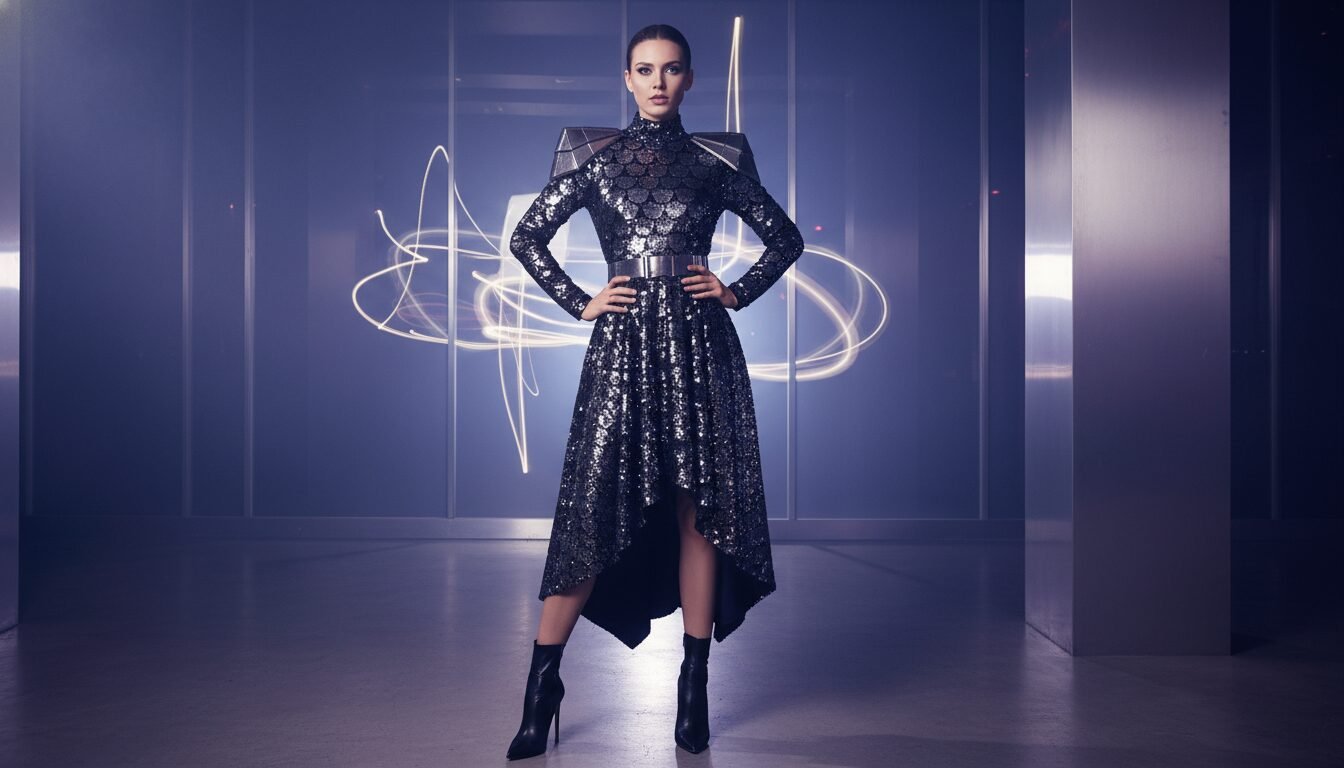
What Actually Matters When Shopping
- Fabric: Sustainable options prove you can party with purpose. Deadstock fabric, leftover material from fashion houses, prevents waste while delivering luxury textures. TENCEL™ lyocell offers silk-like drape from sustainably sourced wood pulp. ECONYL® regenerated nylon transforms ocean waste into stretchy, club-ready materials. Skip conventional polyester when possible, your conscience will thank you.
- Fit: Ruched details create forgiving stretch through gathered seams. Look for adjustable elements like wrap ties or smocked panels. Between sizes? Size up for that effortlessly cool, slightly oversized silhouette that photographs beautifully.
- Occasion: Club nights demand mini bodycons with metallic threads or strategic cutouts. Wedding guest duties call for luxe midi wraps in jewel tones. Work-to-night transitions need moisture-wicking knits that won’t betray your day job.
- Brand Transparency: Research matters. Brands like Club L London and H&M share their sustainability commitments openly.
According to the Fashion Revolution Transparency Index, fewer than one in four major fashion brands disclose their full supply chain, making conscious shopping crucial for the environmentally aware party-goer.
Where to Hunt for Your Next Statement Piece
Budget hunters can score long sleeve dresses for women starting at $19.99 at H&M, where sitewide sales slash prices up to 50% off. With over 260 styles online, choice isn’t an issue. Zara’s long sleeve midis typically range $30–$80, perfect for trend-driven purchases that won’t break the bank. Mid-range shoppers love Meshki’s free shipping on orders over $130 and generous 14-day returns, essential when you’re buying bodycons online. Club L London sweetens deals with 15% off for new subscribers and exclusive savings for 16–24 year-old shoppers. On Pinterest, 181 people searched for casual long sleeve styles recently, proving affordable everyday options are in high demand. Premium sustainable labels command $150–$300, but you’re investing in organic certifications and small-batch production that lasts.
Styling Long Sleeve Dresses for Maximum Impact
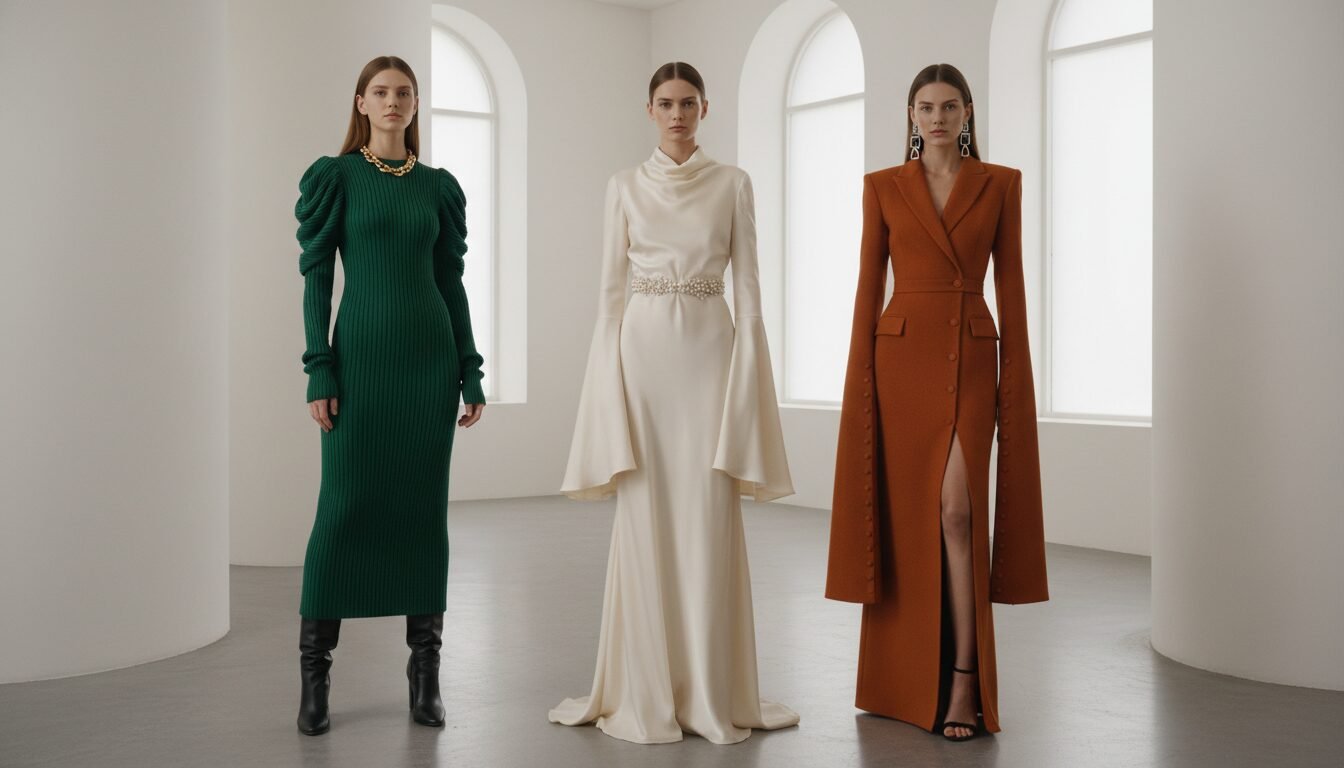
Looks That Stop Traffic
- Industrial Club Night: Black bodycon mini with neon mesh harness, chunky combat boots, chainmail earrings. Add a PVC backpack for that perfect dystopian edge.
- Gothic Wedding Guest: Deep burgundy velvet maxi wrap with lace choker, black stiletto boots, coffin-shaped clutch. Romantic darkness perfected.
- Underground Rave: Reflective metallic midi layered with clear plastic corset, holographic platform sneakers, fingerless fishnet gloves. Future meets rebellion.
- Alternative Café Meetup: Pastel A-line mini with puff sleeves, frilled ankle socks, Mary Jane platforms, animal-shaped crossbody. Kawaii with attitude.
The secret? Treat these dresses as your foundation, not your finale. Long sleeve dresses for women actually open up more layering possibilities, statement outerwear, bold hardware, unexpected textures. When your arms are covered, everything else can be extra.
Pros and Cons
Pros
- Versatile for year-round wear, no seasonal limitations
- Perfect canvas for layering accessories and statement pieces
- Sustainable fabric options available from conscious brands
- Flattering for all body types with proper silhouette selection
- Professional enough for work, edgy enough for nightlife
Cons
- Can be too warm for summer outdoor events
- Limited skin-showing options for those who prefer more exposure
- Sleeve length can interfere with certain accessories like statement bracelets
- Higher-quality sustainable options come with premium pricing
Keeping Your Investment Pieces Perfect
Sustainable fabrics demand respect. Wash in cold water on gentle cycles and always air dry to maintain vibrancy. Spot-clean synthetic leather or hardware trims with damp cloths instead of machine washing. TENCEL™ and modal blends need laundry bags to prevent pilling. Store knits folded to avoid shoulder bumps, hang satin or viscose on padded hangers to preserve their shape. Proper care extends a quality dress’s life to 5–7 years of regular rotation, reducing your need for fast-fashion replacements.
2026 Style Comparison Guide
| Dress Style | Best For | Sustainable Option | Price Range | Standout Feature |
|---|---|---|---|---|
| Mini Bodycon | Club nights, parties | Recycled polyester with elastane | $25–$100 | Ruched seams for curve emphasis |
| Midi Wrap | Work-to-night transition | Organic cotton or TENCEL™ | $50–$150 | Adjustable waist tie |
| Maxi Ruched | Formal events, weddings | Deadstock satin or ECONYL® | $80–$250 | Floor-length drama with stretch |
| A-Line Mini | Casual outings, festivals | Upcycled denim or linen | $40–$130 | Twiggy-era retro vibe |
| Halter Neck Midi | Date nights, cocktail | Bamboo viscose blend | $60–$180 | Shoulder-baring statement |
Ready to discover your duality? Find long sleeve dresses for women that match your nightlife energy at prettynpoison.com.
Frequently Asked Questions
Are long sleeve dresses for women comfortable in summer?
Absolutely, when you choose the right fabrics. Lightweight weaves like cotton voile, TENCEL™, or chambray offer sun protection while staying breathable. Stick to lighter colors and relaxed fits to beat the heat while maintaining your style edge.
How do I find the right size when shopping online?
Measure your bust, waist, and hips, then compare to each brand’s specific size chart, Meshki, Zara, and boutique labels all size differently. Read customer reviews for stretch feedback and real-world fit insights before committing.
Which long sleeve dress style is most flattering?
Wrap dresses and ruched bodycon styles create waist definition and smooth contours universally. Vertical seams and darker colors elongate your silhouette, while strategic ruching camouflages any areas you want to minimize.
Can I wear a long sleeve dress to a wedding?
Yes, midi and maxi lengths in luxe fabrics like satin, chiffon, or lace are perfect for wedding guests. Just avoid white or ivory shades, and consider velvet or jewel tones for winter ceremonies.
How long do sustainable long sleeve dresses last?
With proper care, quality materials like organic cotton and ECONYL® endure 50+ washes without losing integrity. Many sustainable brands design pieces to outlast fast-fashion alternatives by years, making them worthwhile investments.
What’s the best way to style long sleeve dresses for nightlife?
Layer with corset belts, add harnesses for edge, swap delicate heels for chunky platforms. The contrast between covered arms and bold accessories defines alternative nightlife fashion, it’s all about unexpected combinations.
Key Takeaways
- Fashion trends 2025 clash maximalist self-expression with sustainable consciousness, perfect for the night scene.
- Key styles include cropped leather jackets, statement knee-high boots, bold stripes, leg-baring silhouettes, and bubble hems.
- Alternative nightlife drives subculture trends: sequined caps, bras as tops, and vegan leather dominate dancefloors.
- Gen Z loyalty plummets while older generations maintain brand devotion, forcing fashion to rethink retention.
- Quiet luxury fades; individuality and eco-minded materials rise in its place.
Fashion trends 2025 are maximalist rebellion meets sustainable consciousness. Cropped jackets, bold boots, and statement caps define nightlife dressing while quiet luxury dies.
What Defines Fashion Trends 2025?
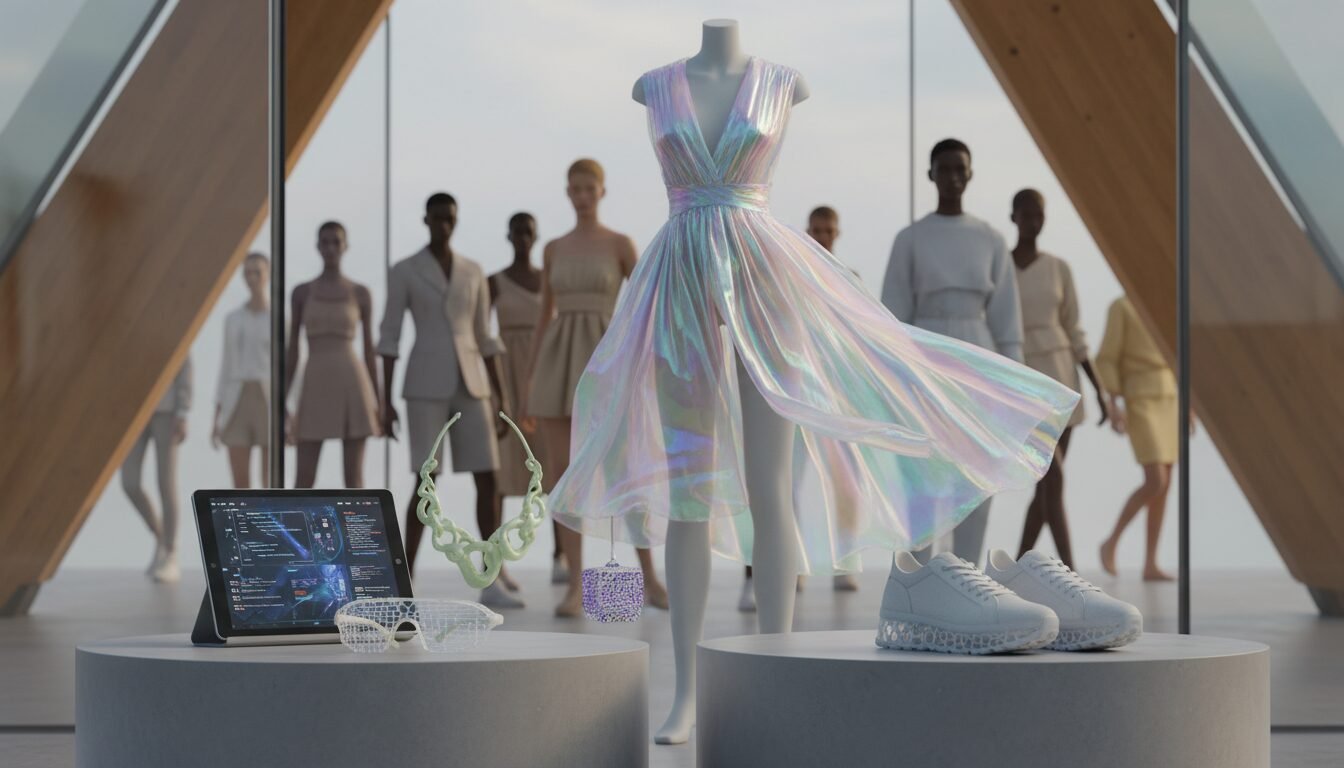
Fashion trends 2025 represent a dual movement of volume-driven maximalism and material consciousness. Designers push color, texture, and silhouette to extremes while adopting vegan leather, recycled polyesters, and low-impact production. This creates a landscape where your cropped leather jacket becomes both style statement and political stance.
The Collision of Maximalism and Consciousness
We’re witnessing stripes clash with stripes, silhouettes balloon into sculptural art, and legs take center stage in micro shorts and asymmetrical hems. According to Vogue, Fall 2025’s most talked-about collections abandoned minimalist uniformity for personal storytelling. Your outfit becomes your narrative, loud, unapologetic, and uniquely yours.
Why 2025 Breaks From Previous Years
After seasons of homogenized “quiet luxury,” we’re rejecting sameness. Subcultures, rave, goth, Y2K revival, are no longer niche; they’re the blueprint. A sequined cap from Bode ($367) sits next to a faux leather cropped jacket from Zara ($69.90), and both feel equally vital. Personal style trumps prescribed labels.
Runway to Real Life: Key Silhouettes Driving 2025
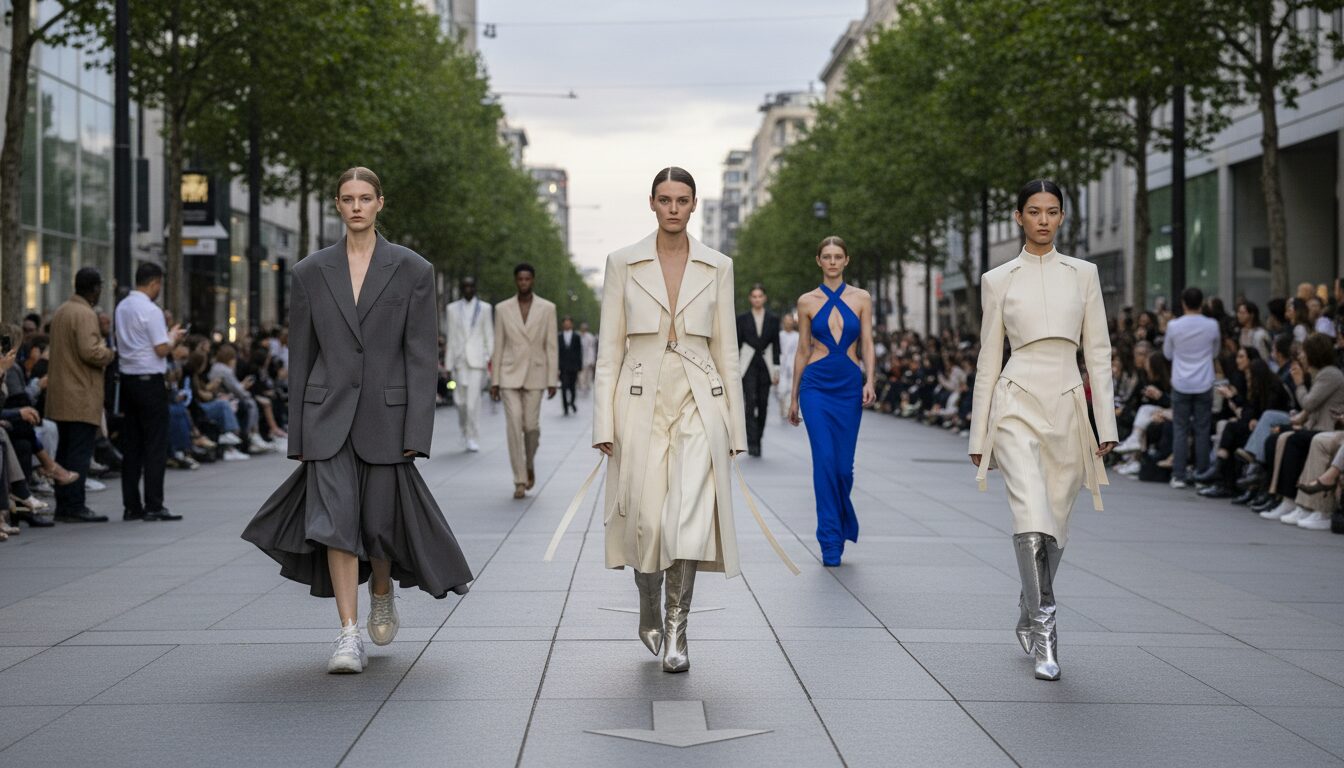
The runway-to-street pipeline accelerates with silhouettes that translate perfectly from catwalk to club. These shapes define how we dress for the night.
Stripes on Stripes: The Maximalist Pattern Play
Marc Jacobs, Proenza Schouler, and Max Mara showcased layered, clashing stripes in varying widths and directions. This isn’t your grandmother’s Breton, it’s unapologetically loud yet surprisingly wearable. Mix two or more striped pieces in complementary tones and ignore old matching rules. Pattern-mixing extends to plaids and geometrics, signaling our appetite for visual chaos.
Leg-Centric Looks: Asymmetry and Hot Pants
Victoria Beckham, Bottega Veneta, and Ralph Lauren sent models down runways in asymmetrical hemlines, micro shorts, and draped mini skirts. Coperni revived hot pants with sharp tailoring. For party-goers, high-waisted hot pants in vegan leather or metallic finishes replace mini dresses as the go-to silhouette. Style with knee-high boots or chunky platforms to create that elongated leg line we’re obsessing over.
Bubble Silhouettes: Volume Without Weight
JW Anderson, Simone Rocha, and Vaquera brought bubble hems and sculptural volume to the forefront. Unlike past iterations, these bubble shapes feel light and airy, achieved through technical fabrics that hold structure without stiffness. The result? A modern tutu that works for daytime with sneakers or for a rave with combat boots. The silhouette’s drama amplifies movement on the dancefloor.
Alternative Nightlife Staples Shaping the Scene
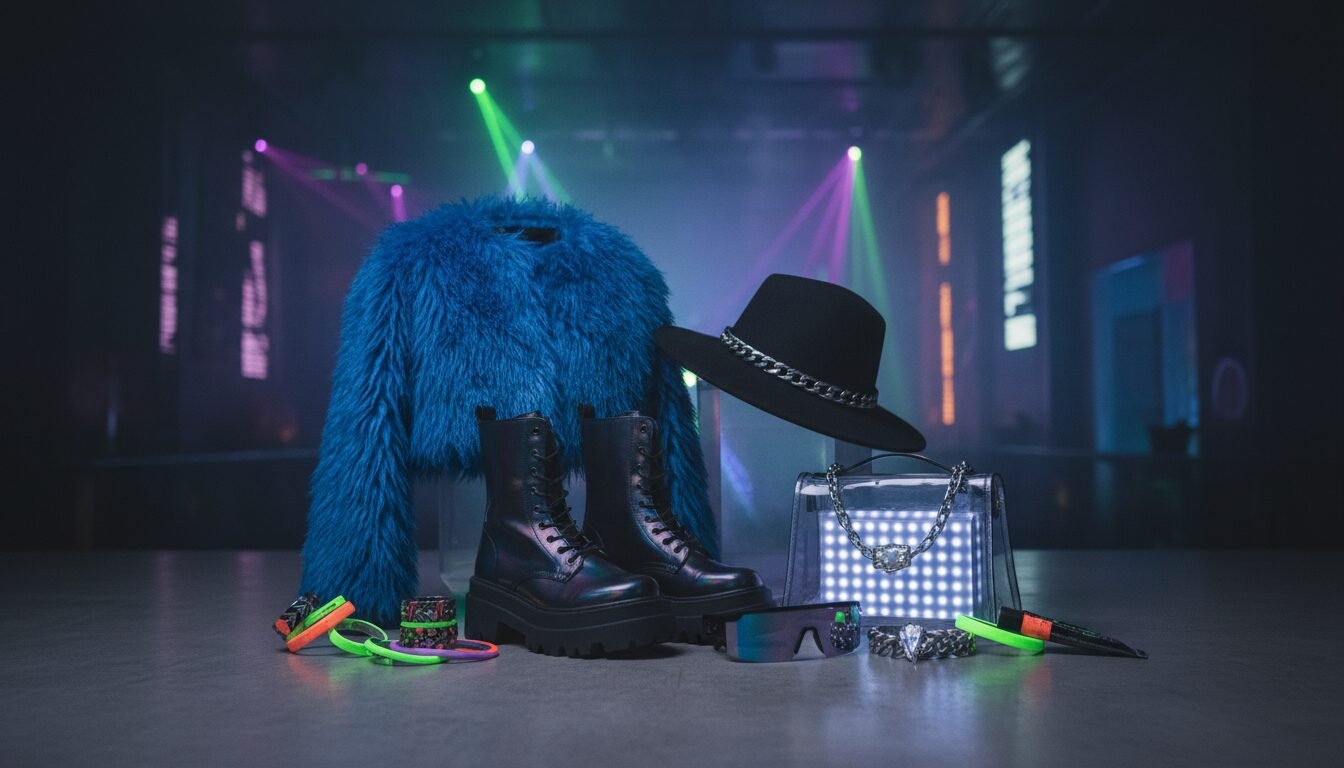
The underground drives fashion trends 2025 more than traditional luxury houses. These pieces define how we dress for the night.
Cropped Leather Jackets: The New Outerwear Hero
A cropped leather jacket hits above the hip, instantly defining your waist while channeling that rock-star energy. Burberry styled it with leggings and riding boots; Coach paired it with balloon jeans. For nightlife, opt for patent or colored vegan leather, Massimo Dutti’s Nappa leather crunch jacket ($490) and Alice + Olivia’s vegan style ($550) offer luxury without animal skins. This jacket anchors any look, from slip dresses to cargo pants.
Statement Knee-High Boots: Color and Quirk Over Classic
Plain black knee boots are dead. Miu Miu sent saturated purple and red pirate boots down its runway; Eckhaus Latta collaborated with Ecco.Kollective on squishy yellow patterned styles. We want footwear that acts as the outfit’s centerpiece. Metallic or jewel-toned knee-highs, like Acne Studios’ open-toe leather boots ($1,450), turn a simple minidress into a statement. They transition from after-work drinks to underground clubs without missing a beat.
Sequined Caps and Headwear: From Balaclavas to Shine
Headwear becomes critical in fashion trends 2025. Valentino and Kallmeyer pushed balaclava-style caps, while Altuzarra offered vintage-inspired fitted hats. Bode’s sequin-embellished cap ($367) and Rabanne’s crochet headpiece ($790) push the envelope further. For alternative nightlife, a shimmering cap or embellished hood adds intrigue without sacrificing comfort, perfect for a packed dancefloor where theatrical touches blur the line between costume and clothing.
Bras as Tops: Unapologetic Midriff Exposure
Bra tops get elevated materials and cuts that feel both sensual and refined. Sarah Burton’s satin version at Givenchy and Ludovic de Saint Sernin’s lace-detail piece (from $293) prove they can transcend basic. We see the bra top as a cornerstone of sustainable partywear, opt for recycled nylon with built-in support to go from dinner to dancefloor. Style with high-waisted trousers or a sheer overlay for balanced proportions.
Sustainable Materials Powering the Revolution
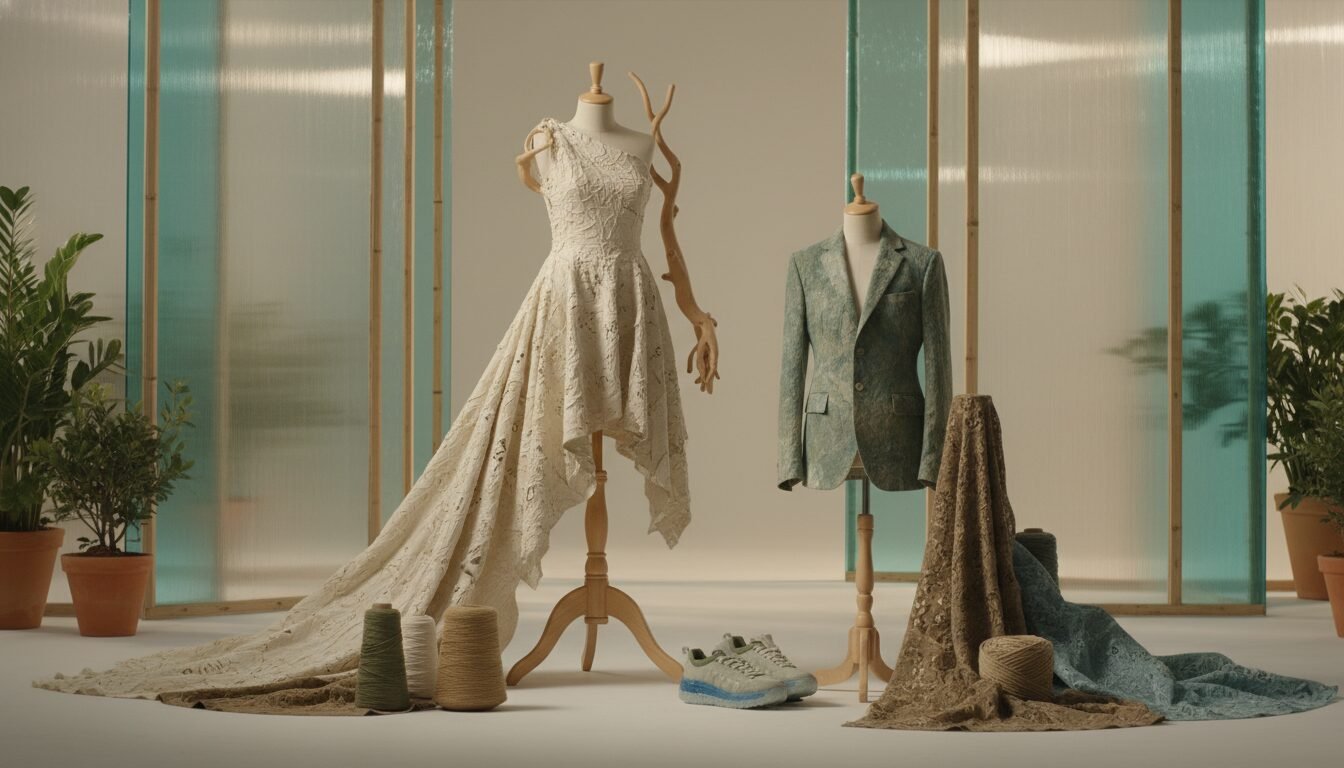
Sustainability isn’t just trendy, it’s essential. Fashion trends 2025 prove eco-consciousness and party-ready style can coexist beautifully.
Vegan Leather and Plant-Based Alternatives
Vegan leather made from cactus (Desserto), apple skins, or recycled plastics now mimics real leather’s drape and durability. Brands like Zara and Nanushka offer cropped jackets and trousers that rival traditional leather at a fraction of the environmental cost. Industry data shows vegan leather reduces carbon footprint significantly compared to animal leather, making it a staple for the conscious partygoer who refuses to compromise on style.
Recycled and Upcycled Fabrics
From Econyl (regenerated nylon) in bra tops to recycled polyester in puff-shoulder dresses, sustainability is embedded in every trend. Upcycling, turning deadstock or vintage garments into new pieces, gains momentum. Subculture brands creatively deconstruct old band tees into corsets or patchwork skirts, aligning with the DIY ethos of punk and rave communities. This approach reduces waste while ensuring each piece is one-of-a-kind, feeding our demand for individuality.
Consumer Shifts Behind the Style Revolution
Understanding who’s buying what reveals why fashion trends 2025 look the way they do. The numbers tell a story of shifting loyalties and spending power.
Gen Z’s Influence and the Loyalty Crisis
A LinkedIn analysis reveals Gen Z brand loyalty sits at just 20%, compared to 80% for millennials and Gen X. This forces brands to adopt shorter production cycles and more distinctive aesthetics. For fashion trends 2025, that translates to rapid trend churn, hot pants one month, bubble skirts the next, and platforms like Ssense offering constant novelty to capture fleeting attention.
The Rise of Silver Spenders
While youth dominates imagery, consumers over 50, dubbed “silver spenders”, reshape the market with discretionary income. These buyers gravitate toward quality and timelessness but also adopt trends like statement boots and bold stripes. Age proves no barrier to thematic dressing. Brands ignoring this demographic miss significant growth opportunities.
Marketplace Pressures and the Content Economy
Online marketplaces face mounting challenges as influencer-driven content reshapes discovery. Traditional customer acquisition costs rise while Gen Z’s low loyalty undermines lifetime value models. Platforms pivot to editorial content and curation, think Net-a-Porter’s trend reports, to keep shoppers engaged. This dynamic accelerates trend diffusion as micro-trends explode on TikTok before reaching mainstream retail.
Colors, Patterns, and Textures to Watch
The palette of fashion trends 2025 reflects our polarized cultural moment, soft romance meets aggressive rebellion in every shade and texture.
Powder Pink and Cherry Red: The Hue Duality
Soft powder pink and aggressive cherry red coexist as defining colors. Pink appears in bubble skirts and knitwear while red dominates leather jackets and knee-high boots. This combination reflects the year’s polarized mood: romantic escapism meets bold defiance. For nightlife, crimson vegan leather pants or a powder pink cropped bra top become instant mood-setters that telegraph your energy before you even speak.
Sheer and Shine
Transparent fabrics and high-shine finishes dominate. Mesh tops, organza sleeves, and sequin-embellished caps bring party-ready energy to everyday wear. We embrace light and reflection through metallic boots and holographic accessories. This aligns with rave aesthetics where glow-in-the-dark and iridescent details elevate the sensory experience of movement and music.
Comparison: Trending vs. Fading Styles
| Trending Now | Fading Out |
|---|---|
| Cropped leather jackets | Oversized, slouchy blazers |
| Knee-high statement boots (purple, metallic) | Black minimal ankle boots |
| Mixed stripes and pattern clashes | Monochromatic neutrals (quiet luxury) |
| Leg-baring micro shorts and hot pants | Floor-sweeping maxi skirts |
| Embellished caps and headwear | Plain beanies or no headwear |
| Sustainable vegan leather and upcycled fabrics | Animal-based leather and virgin polyester |
How to Build Your 2025 Wardrobe: A Step-by-Step Guide
Building a wardrobe that captures fashion trends 2025 requires strategy, not impulse. Here’s how to curate pieces that work for your lifestyle and budget.
Step 1: Audit Your Existing Closet
Pull out every item and sort into three piles: keep, donate, repurpose. Identify which pieces align with current trends, high-waisted shorts might be perfect while that white button-down needs replacing with an asymmetrical top. Be ruthless; only keep items you’ve worn in the past year. Your closet should spark joy, not guilt.
Step 2: Invest in Trend-Proof Core Pieces
Start with versatile foundations: well-fitted vegan leather trousers, a satin midi slip dress, and a cropped denim jacket. These can be styled with statement accessories to look current without being disposable. Quality staples reward those who think beyond single-season trends.
Step 3: Add One Trend Item Per Month
Rather than overhaul everything at once, introduce a single trend piece monthly. September brings colorful knee-high boots; October adds a striped blouse. This approach keeps your look fresh without overwhelming your budget or the environment. Stick to sustainable materials to align with the year’s eco-conscious shift.
Step 4: Accessorize for Impact
Accessories transform basics instantly. A sequined cap, a bra top layered under a blazer, or a metallic bag signals you’re current with fashion trends 2025. Seek out independent designers on platforms like Etsy for unique, handcrafted pieces that ensure you’ll never be wearing the same thing as someone else at the party.
Conclusion: Why These Trends Matter for Your Style
Fashion trends 2025 aren’t about blind imitation, they’re a toolkit for self-expression. From the cropped leather jacket that channels your inner rockstar to the patchwork bubble skirt that nods to rave culture, each piece allows you to tell your story. The sustainability undercurrent means your choices support a healthier planet. As we move into 2026, these trends will either solidify into staples or fade dramatically. Wear them now, boldly and on your own terms. Discover your duality at prettynpoison.com.
Frequently Asked Questions
What are the biggest fashion trends 2025?
The biggest fashion trends 2025 include cropped leather jackets, statement knee-high boots in bold colors, mixed stripe patterns, leg-baring silhouettes like hot pants, bubble hemlines, and sustainable materials like vegan leather. Sequined caps and bra tops as outerwear also define the year’s aesthetic.
How can I incorporate fashion trends 2025 into a nightlife wardrobe?
Focus on statement boots in metallic or jewel tones, cropped vegan leather jackets, and sheer or high-shine fabrics. A bra top paired with high-waisted hot pants and an embellished cap creates a ready-to-dance look that’s firmly on-trend for clubs and parties.
Are maximalist patterns like stripes hard to wear?
Stripes are surprisingly easy when you treat them as neutrals. Combine two striped pieces in similar tones, or pair a striped top with solid-colored bottoms. The key is confidence, fashion trends 2025 thrive on breaking traditional matching rules and embracing visual chaos.
Which designers led the fashion trends 2025?
Designers including Marc Jacobs, Proenza Schouler, Victoria Beckham, Miu Miu, Coach, Burberry, and Eckhaus Latta defined fashion trends 2025 on the runways. Independent subculture brands also played a major role in shaping alternative partywear and sustainable fashion innovations.
What materials define sustainable fashion trends 2025?
Vegan leather from cactus or apple waste, recycled nylon (Econyl), and upcycled deadstock fabrics are central to sustainable fashion trends 2025. These materials offer the same durability and aesthetic appeal as conventional options with significantly reduced environmental impact.