Black fashion designers have shaped style for over 150 years, from 19th-century dressmakers to 21st-century luxury innovators.
Pioneers like Elizabeth Keckley and Ann Lowe broke racial barriers, dressing first ladies and celebrities without receiving due credit.
Willi Smith is considered the inventor of streetwear, while contemporary brands like Telfar and Fear of God redefine luxury and accessibility.
Sustainability is a growing focus, with brands like JADE Swim using regenerated nylon and Telfar offering vegan leather alternatives.
Online directories such as Black Designer Brands make it easier to discover and purchase from Black-owned labels.
Advocacy groups like the Black in Fashion Council push for systemic change and equal opportunities in the industry.
Black fashion designers are creative visionaries whose work spans centuries, from 19th-century couturieres to today’s streetwear icons, enriching global style with diverse cultural perspectives and challenging industry norms at every turn.
1. The Historical Pioneers of Black Fashion Design
The story of fashion designers begins long before the industry was willing to acknowledge it. These were women and men who built empires with needle and thread, often without credit, often without safety, and always without apology.
Elizabeth Keckley: From Enslavement to the White House
Elizabeth Keckley was born into slavery in Virginia but became the personal dressmaker and confidante of Mary Todd Lincoln in the 1860s. After purchasing her freedom, she established herself as a sought-after seamstress for Washington D.C.’s elite, creating gowns that blended Victorian elegance with her own distinct vision. According to L’Officiel USA, Keckley’s journey from bondage to the White House exemplifies the resilience and talent that this type of designers have always possessed, even when their stories were erased from mainstream fashion history.
Zelda Wynn Valdes and the Golden Age of Hollywood Glamour
Zelda Wynn Valdes, born in Pennsylvania in 1905, overcame the brutal racial segregation of her era to become one of the most influential this kind of designers of the mid-20th century. She started as a stockroom worker and climbed to seamstress, eventually opening her own boutique in 1948. That same year, she designed Maria Cole’s iconic off-the-shoulder wedding dress. Valdes created show-stopping looks for Ella Fitzgerald and other luminaries, defining a silhouette of hyper-feminine glamour that still reads as timeless.
Ann Lowe: The Uncredited Creator of an Iconic Wedding Dress
Ann Lowe was the first African-American to gain significant recognition as a fashion designer. From the 1920s through the 1960s, her exquisite gowns were worn by high-society women across the country. The pinnacle: she designed Jacqueline Bouvier’s ivory silk taffeta wedding dress for her 1953 marriage to John F. Kennedy. Despite this monumental achievement, Lowe was never publicly credited at the time because of her race. She later opened Ann Lowe Originals on Madison Avenue in 1968, finally claiming a storefront worthy of her talent. Her legacy is a stark reminder that black fashion have always been at the center of American style, even when rendered invisible.
“Black fashion pioneers used their talent to make a name for themselves in a highly competitive, Eurocentric, and predominantly white industry.” – L’Officiel USA
2. Breaking Into the Exclusive World of High Fashion
Breaking into high fashion as a Black designer has never been a matter of talent alone. It has required extraordinary persistence, a refusal to shrink, and the courage to walk into rooms that were never designed to welcome you.
Jay Jaxon’s Journey from Queens to Paris Couture
Jay Jaxon shattered one of fashion’s highest glass ceilings by working as a designer at French couture houses Yves Saint Laurent and Christian Dior. Hailing from Queens, New York, Jaxon created both couture and ready-to-wear pieces in Paris, later bringing his talents to Hollywood, where he crafted garments for performers like Annie Lennox. His career proves that talent knows no racial boundaries, and that fashion designers have always belonged on the world’s most prestigious stages.
Patrick Kelly: Humor, Provocation, and Haute Couture
Mississippi-born Patrick Kelly became the first American inducted into the prestigious Fédération de la Haute Couture et de la Mode in Paris. His designs were exuberant, humorous, and unapologetically rooted in Black culture. Button-embellished overalls. Playful references to Black traditions. A refusal to dilute his identity for European approval. Kelly’s presence in the rarefied world of haute couture during the 1980s forced the industry to confront its own Eurocentric norms, and his influence echoes today among every black fashion designer who refuses to code-switch for a room.
The Rise of Black Designers in the Late 20th Century
Beyond individual icons, organizations like the National Association of Fashion and Accessory Designers (NAFAD), founded in 1949, created a critical support network for African-American creators. Designers such as Ruby Bailey, a contemporary of Valdes and a key figure in Harlem’s cultural scene, specialized in bold prints and embellishments that celebrated Black aesthetics with zero compromise. These collectives paved the way for a more visible generation of this type of designers who emerged in the latter half of the century, from Stephen Burrows to Willi Smith.
3. The Streetwear Revolution Led by Black Designers
Streetwear did not emerge from a boardroom. It came from the streets, the block, the culture. And at its origin stands a Black designer who saw fashion differently from everyone else in the room.
Willi Smith: The Inventor of Streetwear
Widely considered the inventor of streetwear, Willi Smith fused affordable clothing with luxury sensibilities in a way the industry had never seen. He launched WilliWear Ltd. in 1976 and amassed over $25 million in sales by 1986, according to TheIndustry.fashion. His philosophy was democratic and deliberate. His designs were gender-blurred, rooted in what people actually wore on the streets, and proved that this kind of designers could disrupt the industry’s top-down structure from the ground up.
“I don’t design clothes for the Queen, but for the people who wave at her as she goes by.” – Willi Smith
Fear of God’s Jerry Lorenzo and the New Luxury Streetwear
Jerry Lorenzo, an African-American designer and son of former MLB manager Jerry Manuel, founded Fear of God with just $14,000, as noted by Farfetch. The brand captured the sweet spot between streetwear and luxury almost immediately, attracting the attention of Virgil Abloh and leading to collaborations with Zegna, Nike, and adidas. Lorenzo’s trajectory illustrates how black fashion can turn minimal capital into global influence, reshaping the very definition of high-end fashion in the process.
Heron Preston: Bridging Function and Fashion
Heron Preston is a New York City-based designer known for blending workwear functionality with streetwear aesthetics. His eponymous label incorporates sustainable materials and collaborations with organizations like the NYC Department of Sanitation, turning utilitarian uniforms into coveted pieces. Preston represents a new wave of fashion designers who use clothing as a platform for environmental and social commentary.
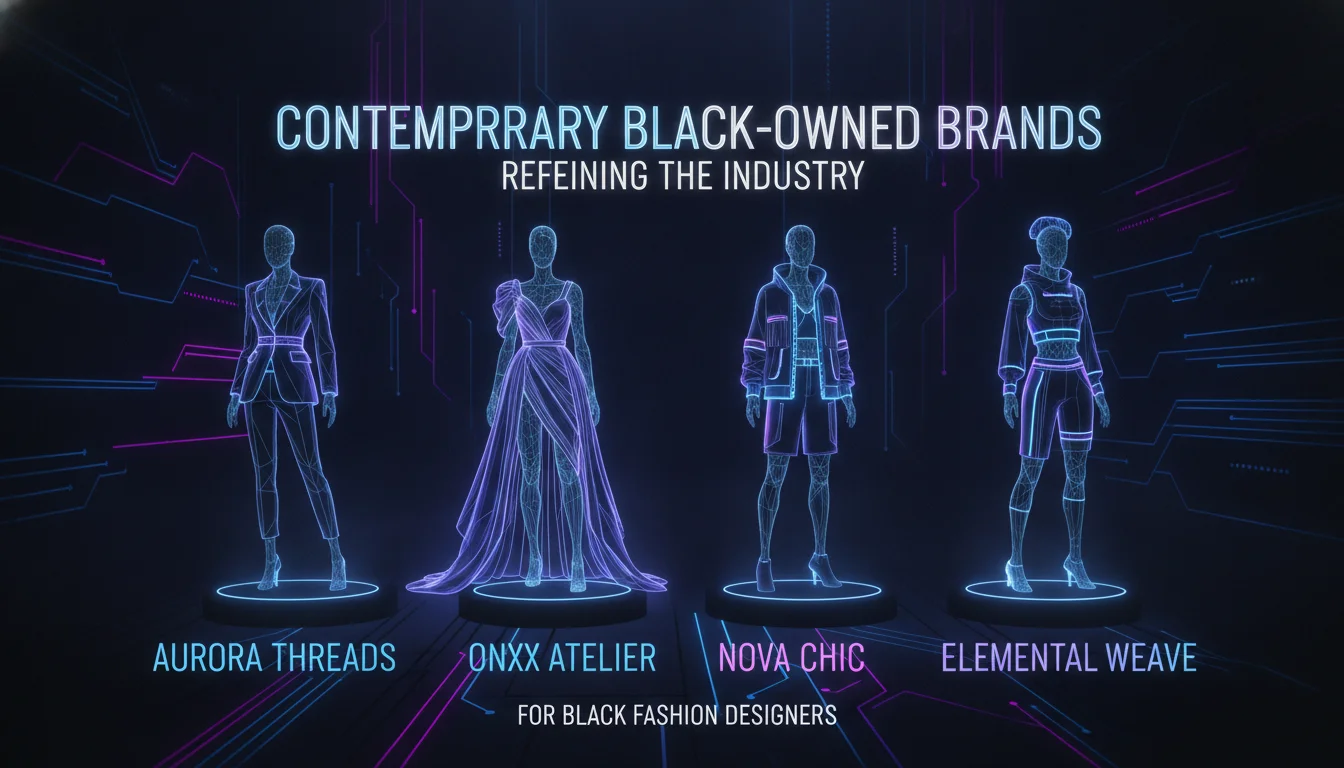
4. Contemporary Black-Owned Brands Redefining the Industry
Contemporary this type of designers are not waiting for the industry to make space. They are building their own tables, their own supply chains, and their own cultural moments.
Telfar Clemens and the Viral Telfar Bag
Telfar Clemens, a Queens-born designer of Liberian descent, turned his eponymous brand into a global phenomenon with the Telfar Shopping Bag: a vegan leather accessory available in three sizes. Often called the “Bushwick Birkin,” the bag’s accessibility and unisex design challenged luxury exclusivity at its core. Telfar’s “Bag Security Program” made the product available to all through an innovative pre-order system, proving that this kind of designers are not only creators but community architects.
JADE Swim: Timeless, Sustainable Luxury
Brittany Kozerski founded JADE Swim after struggling to find flattering, high-quality swimwear that actually fit. The brand uses ECONYL, a 100% regenerated nylon made from ocean and landfill waste, to craft sculpting silhouettes produced in Los Angeles. Kozerski’s commitment to sustainability and timeless design places her among the black fashion at the absolute forefront of ethical fashion.
Pyer Moss, Hanifa, and the Expanding Ecosystem
Today, directories like Black Designer Brands aggregate hundreds of Black-owned labels across clothing, shoes, handbags, jewelry, beauty, and home decor. From Kerby Jean-Raymond’s activism-meets-high-fashion Pyer Moss to Anifa Mvuemba’s curve-celebrating Hanifa, the ecosystem is vast and varied. This curation effort, sparked by a 2020 Instagram post calling for support of Black-owned businesses, makes it easier than ever for consumers to shop with real intention.
Brand
Designer
Style
Key Product
Sustainability Note
Telfar
Telfar Clemens
Genderless, accessible luxury
Vegan leather Shopping Bag
Vegan leather alternative
Fear of God
Jerry Lorenzo
Elevated streetwear
Essentials hoodies, sneakers
Collaborations with eco-conscious brands
JADE Swim
Brittany Kozerski
Minimalist, sculptural swimwear
One-piece suits and bikinis
Uses ECONYL regenerated nylon
Pyer Moss
Kerby Jean-Raymond
Activism-meets-high-fashion
Graphic tees, tailored pieces
Ethical production, community focus
Hanifa
Anifa Mvuemba
Bold, curve-celebrating womenswear
Knit dresses, statement outerwear
Made-to-order reduces waste
Pros and Cons
Pros
Cultural richness: fashion designers bring perspectives shaped by the African diaspora, Harlem’s cultural scene, and global streetwear, producing work that is genuinely original.
Accessibility and innovation: Brands like Telfar and WilliWear challenged luxury’s gatekeeping, making high-design clothing available to real people at real price points.
Sustainability leadership: Many Black-owned labels, from JADE Swim to Hanifa’s made-to-order model, are actively reducing fashion’s environmental footprint.
Community impact: Supporting these designers creates economic equity and funds the next generation of Black creative talent.
Advocacy-driven design: Designers like Kerby Jean-Raymond use their platforms to push for systemic change, making fashion a vehicle for real-world impact.
Cons
Historical erasure: Decades of uncredited work mean many foundational contributions by this type of designers remain unknown to mainstream audiences.
Funding gaps: Black designers have historically faced greater barriers to venture capital, retail partnerships, and press coverage than their white counterparts.
Discovery challenges: Despite directories like Black Designer Brands, many exceptional labels still struggle to reach the audiences they deserve without major platform support.
5. How to Discover and Support Black Fashion Designers
Supporting this kind of designers is one of the most direct ways to put your money where your values are. Here is exactly how to do it.
Online Directories and Curated Platforms
Curated platforms simplify discovery significantly. Black Designer Brands, founded in 2020, offers categorized lists across clothing, shoes, handbags, and more. The Instagram account @blackdesignersdirectory acts as a valuable, community-driven guide. These resources democratize access, allowing shoppers to bypass opaque traditional retail gatekeeping and directly support Black-owned labels with every purchase.
Shopping with Intention: A Practical Guide
Supporting black fashion requires more than a one-time purchase. Here is a step-by-step approach:
Identify your style gaps: Determine what you need, whether a new handbag or sustainable activewear, to make targeted searches more effective.
Use directories and social media: Browse platforms like Black Designer Brands and follow hashtags like #BlackOwnedFashion to find brands that match your aesthetic.
Read brand stories: Learn about a designer’s background and values to ensure your purchase supports ethical practices you believe in.
Prioritize longevity over trends: Many Black-owned brands focus on timeless design. Invest in quality pieces built to last.
Spread the word: Share your finds on social media and with friends to amplify visibility for designers who deserve it.
The Role of Advocacy Organizations
Groups like the Black in Fashion Council, formed in 2020, work to hold brands accountable for diversity and inclusion. They partner with companies like Condé Nast and PVH Corp. to create measurable change. By supporting these organizations, consumers help black fashion designers gain access to funding, mentorship, and retail opportunities that have historically been denied to them.
6. Sustainability and Innovation in Black-Owned Fashion
Black fashion designers are leading the sustainability conversation, not following it. From regenerated nylon to made-to-order production, these creators are building a more responsible industry from the inside out.
Eco-Friendly Materials and Ethical Production
Many black fashion designers source deadstock fabrics, use natural dyes, and implement zero-waste pattern cutting. This environmental commitment is not a marketing trend. It reflects broader community values around resourcefulness, respect for the earth, and building something that lasts beyond a single season.
Case Studies: ECONYL, Vegan Leather, and Beyond
JADE Swim’s use of ECONYL, a regenerated nylon that reduces crude oil dependency and carbon emissions, sets a clear standard. Telfar’s vegan leather bags offer a cruelty-free alternative to traditional luxury goods. These innovations confirm that black fashion designers are not only aesthetically progressive but also technologically forward-thinking, actively challenging the throwaway culture of fast fashion.
The Broader Impact of Conscious Consumerism
When shoppers choose Black-owned brands that prioritize sustainability, they create a dual impact: reducing environmental harm and supporting economic equity simultaneously. This aligned value system encourages more black fashion designers to enter the market, knowing there is a consumer base that values both ethics and aesthetics in equal measure.
7. The FIT Exhibition and Institutional Recognition
Institutional recognition of black fashion designers has been slow, but it is growing. The Museum at the Fashion Institute of Technology in New York City mounted a dedicated exhibition titled “Black Fashion Designers,” exploring how these creators work across a broad range of styles, drawing from African diasporic heritage, western fashion traditions, and everything in between. According to the FIT exhibition, each designer approaches design from a unique perspective, and it is that diversity which most enriches fashion as a whole. Exhibitions like this signal a shift: the industry is finally beginning to document and celebrate what Black designers have always known about themselves.
Frequently Asked Questions
Who is a famous black fashion designer?
Ann Lowe is one of the most historically significant black fashion designers, creating Jacqueline Kennedy’s wedding dress in 1953 without ever receiving public credit for it. Contemporary icons include Telfar Clemens and Jerry Lorenzo of Fear of God, both of whom have reshaped what luxury fashion looks like in the 21st century.
What are some black designer brands?
Notable Black-owned brands include Telfar, Fear of God, JADE Swim, Pyer Moss, and Hanifa. They span luxury, streetwear, and sustainable fashion, offering something for every aesthetic and price point.
Who are the top 10 fashion designers?
Influential black fashion designers consistently cited across fashion media include Patrick Kelly, Willi Smith, Telfar Clemens, Kerby Jean-Raymond, and Heron Preston, among others. Lists vary by era and focus, but these names appear across Vogue, L’Officiel, and Farfetch’s editorial coverage as foundational figures.
Who is the black designer for Gucci?
Dapper Dan, whose Harlem atelier was famously replicated by Gucci before the two eventually partnered officially, is the most significant Black creative associated with the brand. He is not a permanent in-house designer but remains one of the most influential figures in the relationship between Black culture and luxury fashion.
Where can I buy from black-owned fashion brands?
Online directories like Black Designer Brands offer curated shopping links across clothing, shoes, handbags, and more. Most brands also sell directly through their own websites, cutting out the retail middleman entirely.
Why is it important to support black fashion designers?
Supporting black fashion designers helps correct a long history of exclusion, fosters genuinely diverse creativity, and promotes economic equity within an industry that has profited from Black culture while underpaying and undercrediting its Black creators for generations.
8. The Ongoing Influence of Black Fashion Designers
Looking Forward
The future of fashion is inseparable from the contributions of black fashion designers. As of 2026, barriers are crumbling faster than ever, driven by digital platforms, advocacy networks, and a consumer base that is finally voting with its wallet. The next generation of Black designers, armed with social media reach and institutional support that their predecessors never had, is poised to push the industry further than it has ever gone.
A Call to Action
Whether you are a dedicated fashion obsessive or a casual shopper, your choices carry weight. Seek out black fashion designers, celebrate their work publicly, and invest in a more inclusive and vibrant fashion future. Their stories are not just history. They are the blueprint for what this industry can become when it finally gets out of its own way.
Sustainable fashion news is the ongoing stream of reporting on ethical production, circular economy advances, material breakthroughs, and legislation reshaping the apparel industry. This guide ranks the top sources for 2026 by depth, cost, and credibility.
Key Takeaways
Business of Fashion and FashionUnited deliver daily fashion news, covering everything from policy shifts to material breakthroughs.
Subscription costs range from free to premium paid tiers; many outlets offer student and team discounts.
Prioritize sources with rigorous fact-checking, expert commentary, and data-driven reports to cut through greenwashing.
The European circular fashion market is projected to reach €100 billion by 2030, making industry literacy a financial asset, not just an ethical one.
Pair your news intake with direct action: support legislative reforms, back circular startups, and shop with intention.
this type of news is your sharpest tool for separating real change from carefully worded PR. The fashion industry accounts for 2-8% of global carbon emissions and consumes 215 trillion litres of water annually, according to the Ellen MacArthur Foundation. Whether you’re a conscious shopper, a designer, or an investor, the right source helps you call out greenwashing before it costs you.
The Environmental Imperative
Every second, the equivalent of one garbage truck of textiles is landfilled or burned. The UNECE reports that 85% of all garments end up in dumps annually, while less than 1% of clothing material is recycled into new garments. Washing synthetic clothes releases 500,000 tons of microfibers into the oceans each year, the equivalent of 50 billion plastic bottles, as documented by the Ellen MacArthur Foundation. Plastic-based fibers now make up 60% of all fashion materials per UNEP, compounding the crisis at every stage of the supply chain. Following this kind of news equips you to advocate for circular fashion models designed to eliminate waste through reuse and repair.
The Business Case for Staying Informed
The European circular fashion market alone is projected to reach €100 billion by 2030, per a joint study by KPMG and the Fédération de la Mode Circulaire. Regulatory pressure is mounting fast: the EU’s Corporate Sustainability Reporting Directive now mandates standardized environmental disclosures across the industry. A Deloitte study covered by FashionUnited found that Gen X consumers often adopt more sustainable habits than Gen Z, signaling broad demographic engagement that brands can’t afford to ignore. For professionals, sustainable fashion provides early warnings about regulatory shifts and consumer sentiment changes, turning information into a real competitive edge.
Top Sustainable Fashion News Platforms Compared
Top Sustainable Fashion News Platforms Compared – sustainable fashion news | Pretty N Poison
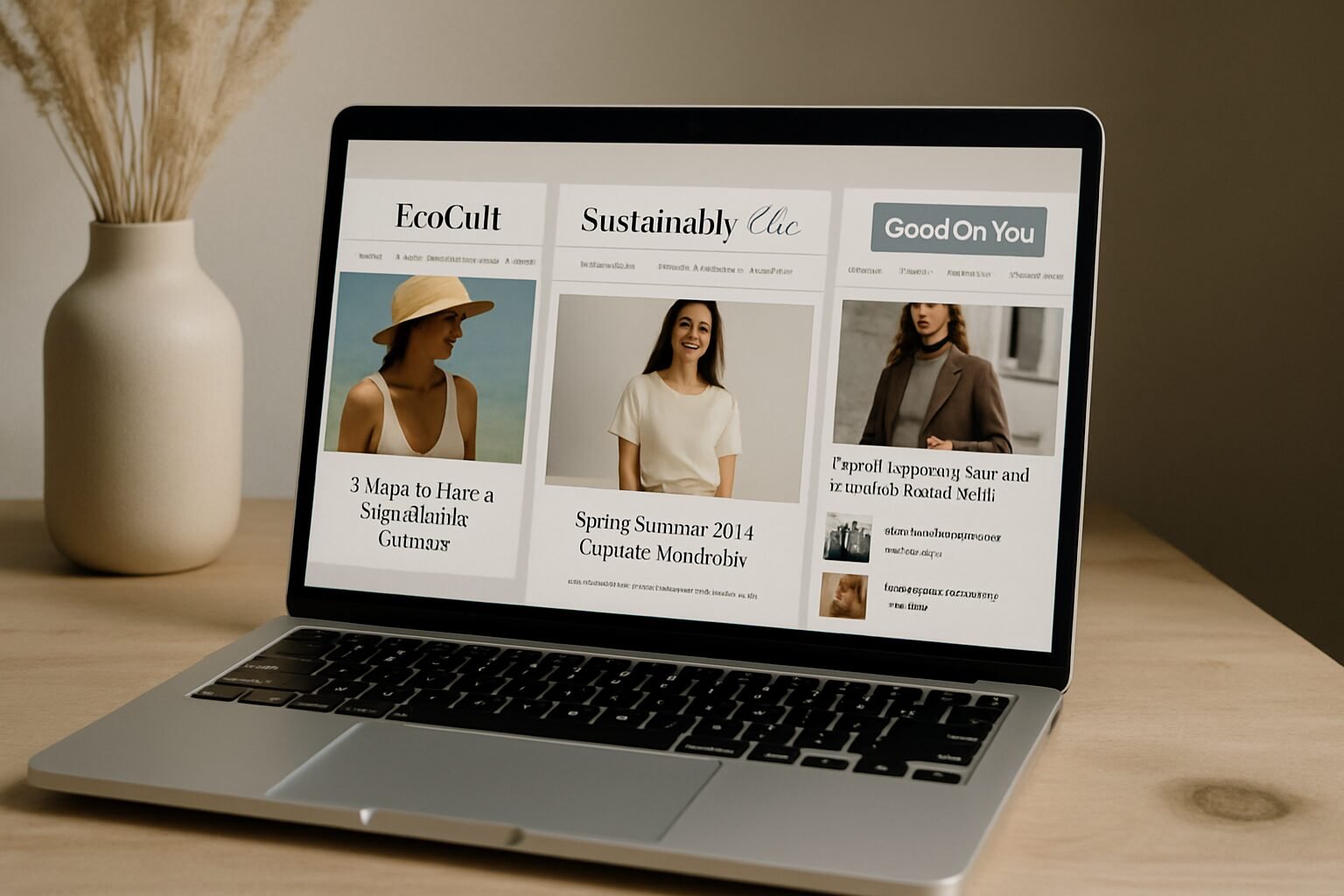
Over a dozen niche platforms now cover sustainable fashion. We focused on those with transparent sourcing, regular updates, and recognized authority. The table below highlights six essential options for 2026.
“The most valuable fashion news sources combine investigative rigor with actionable intelligence. Look for platforms that not only report on commitments but also track progress against them, like H&M’s unusual emissions disclosures covered by BoF.” – Adapted from Sarah Kent, Sustainability Correspondent, Business of Fashion
“Circular fashion is no longer a niche conversation. With the European market forecast to hit €100 billion by 2030, brands that ignore this shift are making a strategic mistake.” – Adapted from KPMG and Fédération de la Mode Circulaire joint market analysis
Pros and Cons of Following Sustainable Fashion News
Pros and Cons of Following Sustainable Fashion News – sustainable fashion news | Pretty N Poison
Pros
Keeps you ahead of regulatory changes like the EU’s Corporate Sustainability Reporting Directive before they affect your wardrobe or business decisions.
Helps you identify genuine sustainability leaders versus brands using greenwashing tactics, with Shein’s $1.16 million fine in 2025 as a documented example.
Connects you to emerging circular economy opportunities, from Losanje’s €6.7 million textile upcycling venture to Ponda’s paludiculture-based BioPuff insulation.
Builds the vocabulary and context to shop, invest, and advocate with real authority.
Free options like FashionUnited and Geneva Environment Network mean staying informed costs nothing.
Cons
Information overload is real. Daily newsletters from multiple platforms can quickly become noise rather than signal.
Premium platforms like Vogue Business and Mintel carry significant subscription costs that may not suit every budget.
Not all outlets are free from advertiser influence. Editorial independence varies widely, and some branded content blurs the line with genuine reporting.
The Circularity Gap Report found that only 0.3% of textile resources come from recycled sources, yet many brand claims suggest far higher figures, making fact-checking a constant requirement.
What to Look for in a Sustainable Fashion News Source
What to Look for in a Sustainable Fashion News Source – sustainable fashion news | Pretty N Poison
Not all this type of news is created equal. To cut through the noise, scrutinize potential subscriptions using these criteria before you commit.
Credibility and Editorial Independence
Check whether the outlet adheres to journalistic standards, discloses conflicts of interest, and cites primary sources like Textile Exchange reports or government audits. Greenwashing has real financial consequences: Shein was fined $1.16 million in 2025, as reported by Fashion Dive. Mintel data shows that over half of UK and German consumers now factor sustainability into fashion purchases, and two in three US shoppers pay attention to eco-claims, making source credibility non-negotiable.
Depth of Coverage: From Headlines to Deep Dives
Free newsletters offer quick updates, but premium services like Vogue Business provide context-rich reports on topics like the Global Fashion Summit’s reframing of sustainability as a financial strategy. Seek sources that explain the “why” behind the news, especially with complex regulations like Extended Producer Responsibility laws. FashionUnited’s coverage of Longchamp’s circular luxury initiative and Ponda’s paludiculture-based insulation material (paludiculture being the practice of farming on rewetted peatlands to reduce carbon emissions) shows the depth needed to grasp emerging solutions before they become mainstream.
Brand Sustainability Reports Worth Tracking
Some of the sharpest this kind of news comes directly from brand accountability reporting. Ganni publishes an annual responsibility report that tracks progress against specific science-based targets, while Longchamp’s circular luxury initiative has drawn coverage from FashionUnited for its leather repair and resale programs. H&M’s sustainability disclosures, described by Business of Fashion’s Sarah Kent as unusual for their transparency around emissions goals, set a benchmark other fast fashion giants are now being measured against. Tracking these reports alongside independent journalism gives you the full picture.
Labor Rights and Supply Chain Investigations
sustainable fashion isn’t only about carbon and circularity. Labor rights investigations remain one of the most critical areas of coverage. The Guardian and outlets like WWD have documented ongoing exploitation concerns in fast fashion supply chains, from Zara’s supplier controversies to the decade-long legacy of Rana Plaza, the 2013 factory collapse that killed over 1,100 workers and permanently changed how the industry discusses accountability. Any source worth following should cover worker welfare alongside environmental metrics.
Frequency and Format
Daily emails may overwhelm; weekly digests might miss breaking developments. Choose based on your actual schedule and attention span. BoF’s daily newsletter suits industry professionals, while FashionUnited’s continuously updated page works for real-time trackers. Mobile-friendly formats and podcast options like BoF’s Debrief add flexibility for on-the-go consumption. Geneva Environment Network offers downloadable PDFs for offline reading, a practical option for researchers and policy advocates.
Price: Free vs. Paid Subscriptions
Budget-conscious readers can rely on free sources like FashionUnited and Geneva Environment Network, which offer extensive coverage without paywalls. Mid-tier options like BoF Professional require a paid subscription but unlock proprietary case studies and reports. Premium subscriptions from Vogue Business and Mintel are best for businesses needing competitive intelligence. Many platforms offer team or academic discounts: students can access BoF Professional at a reduced rate, and The Guardian relies on reader donations to keep its sustainability section free.
User Experience and Accessibility
Consider whether the platform offers a well-designed mobile app, customizable news feeds, or multilingual content. FashionUnited, based in Europe, publishes articles in several languages, while BoF’s app allows offline reading of saved articles. Accessibility ensures you can consume fashion news wherever you are, without friction or frustration.
How to Curate Your Sustainable Fashion News Feed in 5 Steps
Define your focus: Materials innovation? Policy and regulation? Brand campaigns? Narrowing your interest filters out irrelevant updates fast. If circular design is your priority, focus on sources covering textile recycling and upcycling technology like Recover yarns, which processes post-consumer cotton waste into new fiber at industrial scale.
Select your primary sources: Use the comparison table above to pick one free and one paid source. Pairing FashionUnited with a BoF Professional subscription covers both breadth and depth without redundancy.
Set a consumption routine: Dedicate 15 minutes each morning to scan headlines, then block time weekly for long reads. BoF’s archive and Vogue Business long-forms reward return visits. Subscribe to BoF’s Daily Digest to stay consistent without the decision fatigue.
Supplement with social media wisely: Follow journalists and organizations like the Ellen MacArthur Foundation on LinkedIn, but verify claims before sharing. Social platforms surface niche voices quickly, but curated newsletters remain the backbone of reliable this type of news.
Act on what you learn: Use news to guide purchasing decisions. Boycott brands caught in greenwashing scandals, support circular startups like Losanje (which secured €6.7 million in funding), and advocate for policies like the repair tax reform championed by Primark, H&M, and Zalando in their joint statement with the Ellen MacArthur Foundation.
Fashion Weeks, Fur Bans, and Trend Signals
this kind of news extends well beyond supply chain data. Fashion weeks have become a key battleground for sustainability commitments, with major cities including London and Copenhagen using their platforms to spotlight circular designers and enforce fur-free policies. According to Vogue Business, the number of fur-free fashion weeks has grown steadily since 2020, with several major luxury houses publicly committing to fur-free collections. UK slow fashion social media posts rose 29% according to Mintel data, signaling that consumer-driven trend pressure is now shaping what appears on runways, not just in boardrooms. Tracking fashion week coverage through outlets like WWD and Vogue Business gives you early visibility into where the industry is heading before it hits retail.
Final Thoughts
Staying current on sustainable fashion news in 2026 means cutting through a sea of information to find credible, actionable intelligence. Whether you opt for the free breadth of FashionUnited or the premium depth of Vogue Business, being informed is the first step toward a more intentional wardrobe. Complement your reading with direct action, because the most sustainable garment is the one you already own, worn with knowledge and purpose.
What is the best free sustainable fashion news source?
FashionUnited’s dedicated page offers daily updates on materials, certifications, and brand sustainability reports at no cost. Business of Fashion also provides a limited number of free articles each month for readers who haven’t subscribed to a paid plan.
How often should I check sustainable fashion news?
Daily scanning keeps you aware of breaking regulatory changes and brand announcements. A weekly deep-dive into long-form analysis from BoF or Vogue Business adds the context that headlines alone can’t provide.
Are paid sustainable fashion news subscriptions worth it?
For industry professionals, yes. BoF Professional grants access to exclusive case studies and proprietary data, while Mintel’s consumer surveys, including the finding that UK slow fashion social media posts rose 29%, can directly inform business strategy. Students and academics can often access discounted rates that make the investment far more accessible.
How can I spot fake sustainable fashion news?
Verify stories against multiple reputable outlets and be wary of sensational claims without data citations. Credible sources cross-reference with reports from the Ellen MacArthur Foundation or Textile Exchange. The Circularity Gap Report found that only 0.3% of textiles come from recycled sources, so any brand claiming vastly higher recycled content warrants serious scrutiny.
Does any platform cover the latest in circular fashion and legislation?
FashionUnited regularly covers circular initiatives including the €100 billion European market forecast, while Geneva Environment Network details EU policy updates such as the Strategy for Sustainable and Circular Textiles. For luxury-focused circular coverage, Vogue Business remains the strongest paid option.
Can I customize my sustainable fashion news alerts?
Many platforms allow topic-specific alerts. BoF’s newsletter lets readers choose sustainability as a focus area, and Google Alerts can supplement with keyword tracking for niche topics like paludiculture or Extended Producer Responsibility legislation.