Fashion Industry: Global Size, Impact & Trends 2026
The fashion industry is the global business of designing, producing, and selling clothing, accessories, and footwear. It generates trillions annually, employs millions worldwide, and sits at the center of culture, commerce, and controversy.
Key Takeaways
The industry is a $1.7 trillion global sector spanning design, production, and retail.
It employs millions worldwide but contributes 5-10% of global greenhouse gas emissions.
Fast fashion produces over 100 billion garments yearly, with the average piece worn only seven times.
Sustainable and secondhand fashion movements are actively reshaping consumer habits as of 2026.
Careers range from design and marketing to sustainability strategy and digital technology.
Alternative and nightlife fashion is proving that bold self-expression and ethical production can coexist.
From the runways of Paris to the factories of Dhaka, the this type of industry touches nearly every corner of the globe. According to FashionUnited and Euromonitor International, the industry generated an estimated $1.7 trillion in revenue in 2021. McKinsey’s State of Fashion 2017 report stated that if the global this kind of industry were a country, its GDP would rank seventh worldwide. This year, the conversation has shifted: sustainability, regulation, and the rise of alternative fashion are forcing the industry to reckon with its own reflection.
What Is the Fashion Industry?
The fashion is a global sector that designs, manufactures, distributes, markets, and retails apparel and accessories. It covers everything from haute couture houses to streetwear labels, luxury boutiques to mass-market chains, and increasingly, digital-only fashion for virtual spaces.
Definition and Scope
According to Wikipedia, the word “fashion” derives from the Latin facere, meaning “to make,” underscoring its deep connection to craftsmanship and production. The industry operates at the intersection of art, commerce, and technology, constantly adapting to social and aesthetic shifts. It encompasses clothing, footwear, jewelry, and cosmetics, making it a major contributor to both cultural expression and economic output.
Two Main Sectors: Haute Couture vs. Ready-to-Wear
The industry divides into two primary sectors: haute couture and ready-to-wear (prêt-à-porter). Haute couture means custom-made garments crafted for individual clients, often using luxurious materials and hand-finishing techniques. These pieces are typically one-of-a-kind and can cost tens of thousands of dollars. Ready-to-wear collections are manufactured in standard sizes for mass distribution, making high-fashion aesthetics accessible to a broader audience. Many luxury brands, such as Chanel and Dior, produce both lines, while fast-fashion retailers like Zara and H&M focus exclusively on affordable, mass-produced styles.
As of 2026, according to EBSCO’s research starters, the boundary between these two sectors has blurred significantly, with luxury houses using ready-to-wear drops to stay culturally relevant while fast-fashion brands experiment with premium sub-lines.
The Cultural Role of Fashion
Fashion does more than produce clothing. It shapes identity. Fashion scholar Susan B. Kaiser notes that everyone is “forced to appear” before others, and our attire communicates messages about social status, profession, and personality. Major fashion weeks in New York, Paris, and Milan set the tone for global trends, while street style and subcultures, from punk to goth to rave, continuously refresh the industry with new aesthetics. The night is its own runway, and nobody knows that better than the women who dress for it.
A Brief History of Fashion
The this type of industry’s modern form emerged in the early 19th century, when technological advances began to democratize clothing production and reshape how people dressed.
From Handmade to Mass Production
Before the Industrial Revolution, clothing was largely handmade by tailors and seamstresses. The sewing machine changed everything. According to EBSCO, the roots of the modern this kind of industry trace back to the early 1800s, when factories began producing apparel faster and cheaper than ever before. By the 20th century, mass production enabled brands to offer seasonal collections at scale, giving rise to the department store and, eventually, global retail chains.
The Rise of Fashion Capitals
Certain cities became synonymous with style. Paris, New York, and Milan are widely regarded as the top three fashion capitals, hosting the world’s most prestigious fashion weeks and serving as headquarters for luxury conglomerates like LVMH and Kering. Tokyo, London, and Los Angeles are considered second-tier capitals that nurture innovative design scenes. The annual Met Gala in New York, widely considered fashion’s apex event, epitomizes the blend of celebrity, art, and commerce. As Wikipedia notes, proximity to Manhattan’s Garment District was historically critical for participating in the American fashion ecosystem, though digital tools are increasingly diluting geographic constraints.
The Digital Transformation
The internet and social media reshaped everything. Instagram, TikTok, and virtual fashion shows allow designers to reach global audiences instantly. Artificial intelligence now assists in trend forecasting, inventory management, and design itself. The digital shift has enabled emerging designers from any location to build a following and sell directly to consumers, challenging the old gatekeepers of this global business. TikTok trend reports consistently show that micro-communities, not fashion weeks, now drive the fastest-moving style cycles.
Global Fashion Industry Size and Market Data
The fashion is one of the world’s largest economic forces, generating $1.7 trillion in revenue in 2021 and recovering sharply from pandemic-era losses.
Revenue and Economic Impact
According to FashionUnited and Euromonitor International, the total revenue of the global apparel and footwear market reached approximately $1.7 trillion in 2021. Before the COVID-19 pandemic, estimates ranged between $1.7 trillion and $2.5 trillion. In 2020, the industry contracted sharply, with revenues falling by roughly 20%, according to McKinsey’s State of Fashion 2022 report. It then rebounded with 18.1% growth in 2020-2021, returning to pre-pandemic levels. The market was forecast to reach $1.84 trillion in 2022 and $1.95 trillion in 2023, per Euromonitor International.
Key Apparel Markets by Country
China and the United States dominate global fashion retail. China’s apparel market benefits from a vast domestic manufacturing base and rising consumer spending. The US remains among the world’s largest importers of clothing, driven by high demand and a strong retail culture. Other major markets include the United Kingdom, Germany, and Japan. Together, these five countries account for the majority of global apparel sales, according to Euromonitor International’s 2021 data.
Consumer Spending Patterns
Womenswear consistently commands the largest share of fashion spending. In 2018, womenswear made up 53% of global fashion retail spending, menswear represented 31%, and childrenswear accounted for 16%, according to Euromonitor International data cited by Common Objective. The gap is narrowing as menswear and gender-neutral fashion gain traction. Spending is also shifting online, with e-commerce claiming a growing portion of all fashion sales and further transforming how the industry reaches its customers.
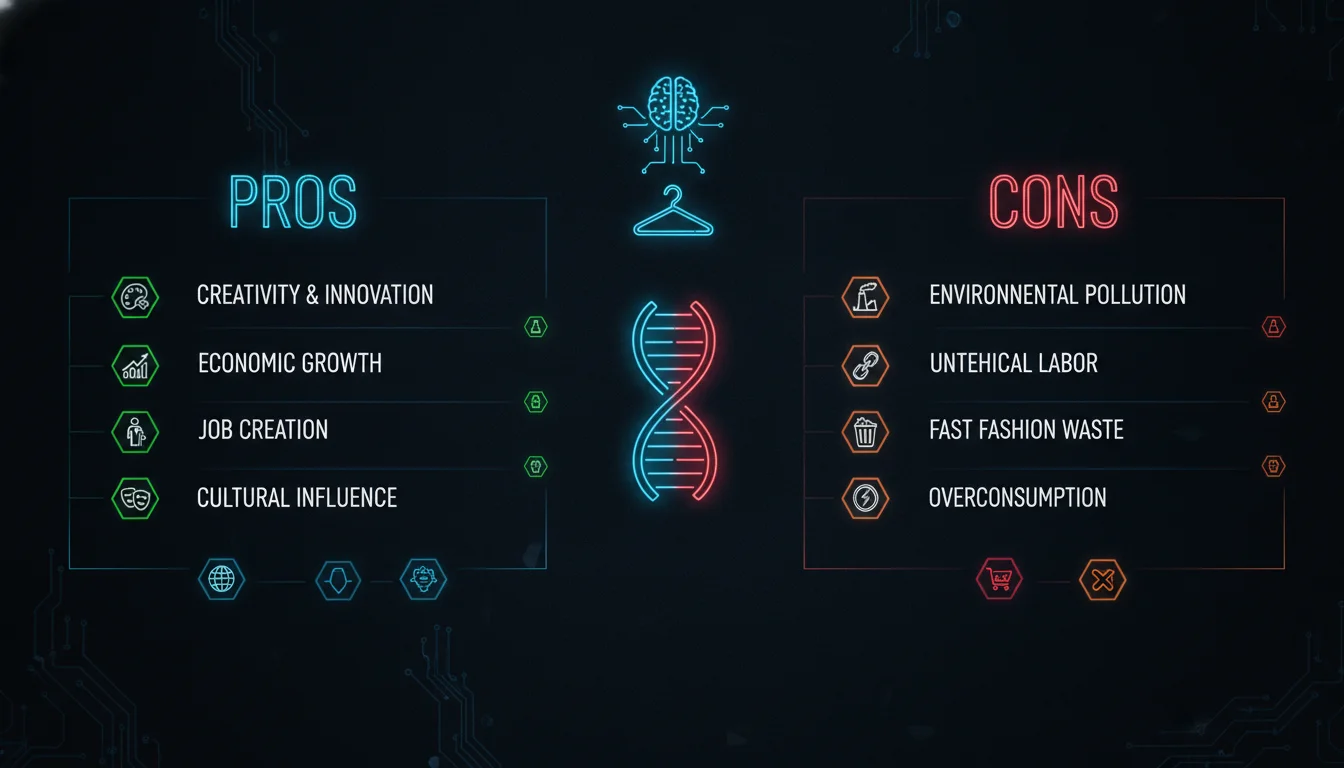
Pros and Cons of the Fashion Industry
The this type of industry creates enormous cultural and economic value, but it carries real costs that are impossible to ignore.
Pros
Massive economic engine: $1.7 trillion in global revenue, supporting millions of jobs across design, manufacturing, retail, and logistics.
Cultural expression: Fashion gives people a language for identity, community, and self-expression, from haute couture to club-ready bodycon.
Innovation driver: The industry pushes advances in materials science, AI-driven design, and sustainable production technology.
Career diversity: Roles span creative, technical, business, and sustainability disciplines, offering entry points for a wide range of skill sets.
Growing sustainability movement: Circular business models, secondhand platforms, and regulatory pressure are pushing the industry toward more responsible practices.
Cons
Environmental damage: The fashion industry contributes 5-10% of global greenhouse gas emissions and is a major source of water pollution.
Labor exploitation: Fast fashion’s low-cost model often depends on low-wage workers in unsafe conditions across global supply chains.
Waste crisis: 100 billion garments produced annually, with the average piece worn only seven times before disposal.
Overconsumption culture: Fast fashion brands releasing 52 micro-collections per year actively encourage impulse buying and rapid discard cycles.
Intellectual property gaps: Fashion design receives weaker IP protection than other creative industries, making it difficult for independent designers to protect original work.
The Environmental Impact of Fashion
“A circular economy is based on the principles of designing out waste and pollution, keeping products and materials in use, and regenerating natural systems.” – Ellen MacArthur Foundation
The fashion industry’s environmental footprint is one of the most urgent issues facing the planet, with emissions, water pollution, and textile waste all reaching critical levels.
Carbon Emissions and Climate Change
The fashion industry accounts for between 5% and 10% of global greenhouse gas emissions, a figure cited by environmental groups and supported by industry research. The energy-intensive production of synthetic fibers like polyester, combined with the global transportation of goods, drives a significant portion of these emissions. If current trends continue, the industry’s carbon footprint could consume a substantial share of the world’s remaining carbon budget by mid-century.
Water Pollution and Waste
Textile production is brutally water-intensive. Producing a single cotton T-shirt can require up to 2,700 liters of water. In many manufacturing countries, untreated wastewater from dyeing and finishing processes is dumped directly into rivers, contaminating ecosystems with lead, mercury, and arsenic. SustainYourStyle reports that 100 billion garments are produced each year, and the average garment is worn only seven times before being discarded. In the EU alone, approximately 11 kilograms of textile waste per capita is generated annually, and at least half of all clothes in a typical wardrobe go unworn.
The Rise of Sustainable Fashion
In response to these pressures, sustainable fashion has emerged as a significant movement. Brands are adopting circular business models, using recycled materials, and offering repair services. Consumers are increasingly turning to secondhand clothing, with platforms like Depop and thredUP experiencing rapid growth. The United Nations’ Fashion Charter provides a framework for companies to commit to science-based emissions targets. These shifts signal a growing awareness that the fashion industry must align with planetary boundaries to survive long-term.
Fast Fashion vs. Sustainable Fashion
Aspect
Fast Fashion
Sustainable Fashion
Production Speed
New collections weekly or monthly (52+ micro-seasons per year)
Two to four seasonal collections, emphasizing timeless design
Materials
Cheap synthetics (polyester, nylon) and conventional cotton
Organic cotton, recycled fibers, low-impact dyes
Labor Practices
Often relies on low-wage workers with poor conditions
High carbon footprint, wastewater pollution, microfiber shedding
Lower emissions, closed-loop water systems, biodegradable packaging
Price
Very cheap ($5-$50 per item)
Higher upfront cost but lower cost-per-wear
Longevity
Designed for short-term use; garments may last 5-10 wears
Built to last for years; often repairable and recyclable
Consumer Mindset
Impulse buying, trend-chasing
Intentional purchasing, wardrobe curation
What Is Fast Fashion?
Fast fashion is a business model that prioritizes speed and low cost, bringing the latest runway trends to mass-market shoppers in a matter of weeks. Brands like Zara, H&M, and Shein release dozens of micro-collections each year, encouraging consumers to buy more and discard quickly. According to SustainYourStyle, some fast-fashion brands put out 52 micro-collections per year, far beyond the traditional two-season calendar. This model has made clothing cheaper, but it has also driven a 400% increase in production compared to just 20 years ago.
The Slow Fashion Movement
Slow fashion is the antithesis of fast. It champions quality over quantity, longer-lasting garments, transparent supply chains, and a deeper appreciation for the craft of making clothes. By investing in fewer, better-made pieces, consumers reduce their environmental footprint and develop a more personal style. The fashion industry is seeing a growing number of small, independent labels, including alternative and nightlife-focused brands like Pretty N Poison, that embody slow fashion principles through made-to-order production and deadstock fabrics.
Consumer Shifts Toward Sustainability
Awareness is driving real change. Among Gen Z and Millennials especially, fashion editors and trend forecasters report a growing willingness to pay more for sustainably made clothing. The secondhand market has flourished, with platforms like Vinted and The RealReal normalizing pre-owned fashion. France’s recent ban on advertising by certain fast-fashion companies, as documented by EBSCO, underscores rising regulatory pressure. These shifts confirm that the fashion industry’s environmental and social practices are no longer optional extras but central to its future.
Fashion and Political Activism
Fashion has always been political. What people wear signals allegiance, protest, and power. From suffragettes wearing white to designers sending political statements down the runway, clothing has served as a form of activism for centuries. As Wikipedia notes, fashion intersects with political activism in ways that are both deliberate and organic, with subcultures using dress to challenge dominant power structures. Today, brands are increasingly expected to take public positions on social issues, and consumers, particularly younger ones, hold them accountable when they don’t.
“There is no beauty in the finest cloth if it makes hunger and unhappiness.” – Mahatma Gandhi, as cited by SustainYourStyle
The 3-3-3 Rule in Fashion
The 3-3-3 rule in fashion is a wardrobe challenge where you select 3 items from your existing closet and style them into 3 different outfits for 3 weeks. It’s a practical tool for building a more intentional wardrobe, reducing overconsumption, and discovering how versatile your existing pieces actually are. Fashion editors and slow fashion advocates use it to push back against the constant pressure to buy new. For nightlife dressing, the rule works differently: three statement pieces, three occasions, infinite attitude.
Careers in the Fashion Industry
The fashion industry offers a wide spectrum of career opportunities, from creative roles to tech-driven positions. Here’s how to start building yours.
Step 1: Identify Your Niche
Decide whether you want to work in design, merchandising, marketing, journalism, sustainability, or technology. The fashion industry is diverse, so clarifying your interest early helps you target relevant education and experience.
Step 2: Gain Relevant Skills and Education
While not always required, a degree from a fashion school like FIT or Central Saint Martins can open doors. Many roles also benefit from skills in digital marketing, data analytics, or CAD software. Internships are critical for building a network and portfolio.
Step 3: Build a Portfolio or Resume
Creatives need a strong portfolio showcasing original designs. Business roles require proven marketing or sales results. Online portfolios and LinkedIn profiles are non-negotiable in a digital-first fashion industry.
Step 4: Network and Apply
Attend fashion events, join industry groups like the US Fashion Industry Association (USFIA), and use platforms like BoF Careers. Competition is fierce. Persistence is not optional.
Design and Creative Roles
Designers, patternmakers, and textile artists form the creative core of the fashion industry. They conceptualize collections, choose fabrics, and oversee production. Digital fashion designers creating virtual garments for the metaverse have also emerged as a distinct and growing career path.
Business and Marketing
Behind every successful label is a team of merchandisers, buyers, supply chain managers, and marketers. The fashion industry relies on data-driven decisions to forecast trends, price products, and drive sales. Roles in public relations and influencer marketing have grown sharply with the rise of social media.
Sustainability and Ethical Roles
As the fashion industry faces increasing scrutiny, roles like sustainability manager, circular economy strategist, and CSR director are in high demand. These professionals work to reduce environmental impact, ensure fair labor practices, and guide brands toward more ethical models.
The Future of Fashion
Technological Innovations
Technology is set to transform the fashion industry further. AI-driven design tools, 3D knitting, and blockchain for supply chain transparency are gaining traction. Digital fashion, clothing that exists only in virtual spaces, could become a major market as the metaverse expands. These innovations promise to make the industry more efficient and significantly less wasteful.
Regulatory Changes
Governments are beginning to hold the fashion industry accountable. The European Union is developing extended producer responsibility (EPR) schemes that require brands to pay for textile waste management. The New York Fashion Act, if passed, would mandate that large fashion companies disclose their environmental and social due diligence. Such regulations could reshape global supply chains and force a reckoning with decades of unchecked production.
The Role of Alternative and Nightlife Fashion
While mainstream fashion chases mass trends, alternative fashion, rooted in subcultures like punk, goth, rave, and club scenes, is gaining real visibility. Brands that cater to bold self-expression and nightlife are proving that sustainability and edgy design can coexist. Labels offering festival wear or party-ready corsets and bodycon dresses increasingly use eco-friendly materials and small-batch production. This niche doesn’t just challenge the homogeneity of the fashion industry. It champions individuality and ethical consumption at the same time. As consumers seek uniqueness and meaning in their clothing, alternative fashion may well steer the broader industry toward more authentic and responsible practices.
At Pretty N Poison, we live in that space. The Pretty Edit brings soft, romantic energy. The Poison Edit goes darker, sharper, more dangerous. The Duality collection holds both truths at once. And the Night Ritual is exactly what it sounds like: going-out essentials built for women who dress with intention. Explore the full range at prettynpoison.com and discover your duality.
Frequently Asked Questions
What is the fashion industry?
The fashion industry is the global business of designing, manufacturing, and selling clothing and accessories. It spans haute couture, ready-to-wear, and mass-market apparel, and generates trillions of dollars annually across design, production, retail, and digital channels.
How big is the fashion industry?
In 2021, the global fashion industry generated approximately $1.7 trillion in revenue, according to FashionUnited and Euromonitor International. McKinsey’s State of Fashion 2017 report noted that if the fashion industry were a country, its GDP would rank seventh worldwide.
What are the main environmental impacts of the fashion industry?
The fashion industry contributes 5-10% of global greenhouse gas emissions, pollutes waterways with toxic chemicals from dyeing processes, and produces over 100 billion garments per year, most of which end up in landfills or incinerators. The EU alone generates approximately 11 kilograms of textile waste per capita annually.
What is the difference between fast fashion and sustainable fashion?
Fast fashion emphasizes cheap, trend-driven clothing produced rapidly, often with poor labor and environmental records. Sustainable fashion prioritizes ethical production, durable materials, and circular models designed to minimize harm and extend garment life.
What is the 3-3-3 rule in fashion?
The 3-3-3 rule is a wardrobe challenge where you choose 3 existing pieces and create 3 different outfits to wear over 3 weeks. It encourages intentional dressing, reduces overconsumption, and helps you get more out of what you already own.
What are five careers in the fashion industry?
Five key careers in the fashion industry include fashion designer, merchandiser, sustainability manager, fashion marketer, and digital fashion designer. Each requires a different skill set, but all benefit from a strong understanding of trends, consumer behavior, and the industry’s evolving landscape.
What are fashion capitals?
Fashion capitals like Paris, New York, and Milan are cities that exert major influence over global trends and house leading design houses, fashion weeks, and industry headquarters. Tokyo, London, and Los Angeles are recognized as second-tier fashion centers with strong independent design scenes.
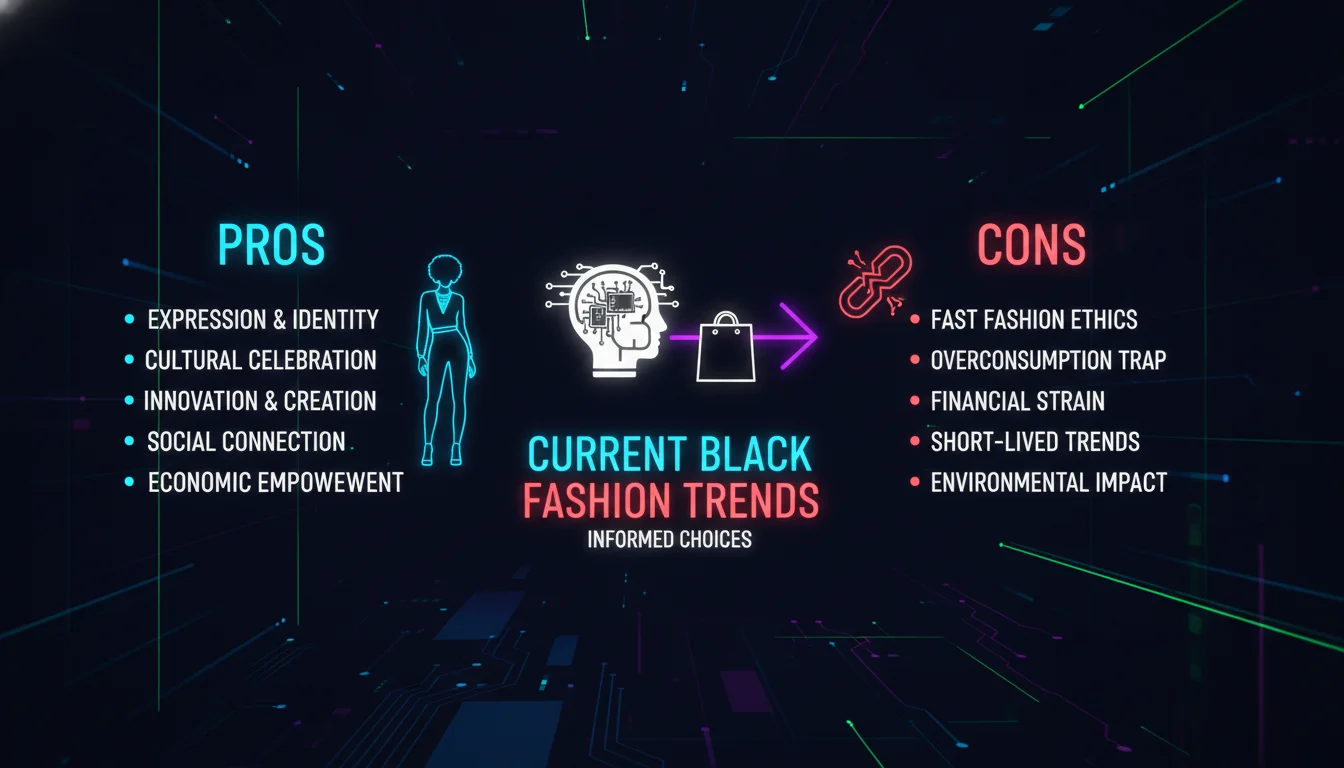
Current black fashion trends are bold, culturally rooted style movements, including sneaker culture, logomania, hoop earrings, nail art, streetwear, and natural hair accessories, that trace directly back to Black communities and continue to define global fashion as of 2026.
Key Takeaways
Six defining trends rooted in Black culture dominate right now: sneaker culture, logomania, hoop earrings, nail art, streetwear essentials, and natural hair accessories.
Every trend has a story. From the Harlem Renaissance to the 1988 Olympics, these looks carry real history worth knowing.
Quality and authenticity matter. Check materials, support Black-owned brands, and buy with intention.
Styling is everything. Mix high and low, layer with purpose, and let one bold piece lead the look.
Care extends the life of your investments, from sneaker conditioning to silk headwrap hand-washing.
Updated for 2026: athleisure, African prints, and the Zoot Suit legacy are shaping the next wave.
The Cultural Roots of Current Black Fashion Trends
fashion trends did not appear on a runway by accident. They were born in communities, worn with intention, and carried into the mainstream long after the culture that created them was overlooked. Understanding where these styles come from is not optional context. It is the whole point.
A Legacy of Innovation
Black culture has produced some of the most enduring fashion movements in modern history. The Harlem Renaissance of the 1920s and 1930s was a defining moment, encouraging vibrant colors, bold silhouettes, and daring self-expression as a form of cultural pride. According to Scrappy Apparel’s history of Black fashion, this era rejected drab, conventional clothing and laid the groundwork for the streetwear we obsess over today. Later, hip-hop culture in the 1970s and 1980s pushed logomania, sneaker culture, and nail art into the global spotlight. Recognizing this lineage is essential for anyone engaging with this type of trends with any real depth.
From Subculture to Global Force
Many looks that now dominate high fashion originated in Black neighborhoods. Hoop earrings, worn by everyone today, were brought back into the modern era by prominent activist figures like Angela Davis in the 1960s and 1970s, according to Crossroads Trading’s exploration of iconic trends. Nail art found its global moment through Florence Griffith-Joyner, whose flamboyant acrylics at the 1988 Olympics redefined what a performance statement could look like. Streetwear evolved from the streets of Harlem and Brooklyn into a force that luxury houses now chase. That context adds weight to every purchase you make.
“Black culture has been a major driving force behind what we wear, how we style it, and why it matters. Long before many trends hit runways or racks, they were being worn with intention and confidence in Black communities.” – Crossroads Trading, February 2026
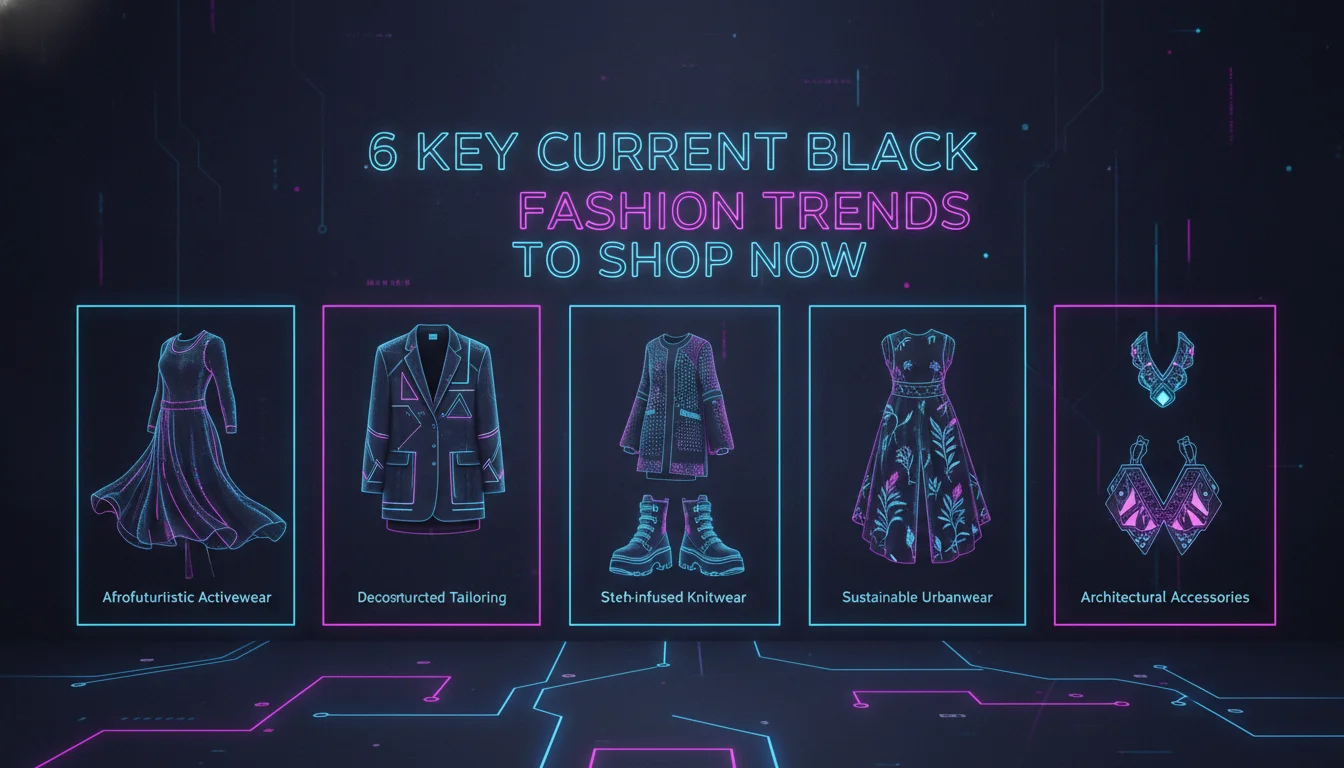
6 Key Current Black Fashion Trends to Shop Now
These are the six this kind of fashion trends defining 2026, each with deep cultural roots and serious style power.
1. Sneaker Culture
Sneaker culture was born from necessity. Black basketball players in the late 1960s needed footwear that actually performed, and the traditional canvas tennis shoe was not it. By the 1970s, brands like Nike recognized the public demand, and a cultural obsession was officially launched. Today, sneakers are both a style statement and a flex. From classic Air Force 1s to limited-edition collabs, the rules are simple: prioritize fit, buy from authentic sources, and check for proper cushioning, durable soles, and breathable uppers. Prices range from under $100 for entry-level throwbacks to over $200 for premium releases.
2. Logomania
Logomania has one origin story worth knowing. Harlem-based designer Dapper Dan changed everything in the 1980s by printing luxury logos across clothing and even car interiors, a move that led to legal battles with designer houses before those same houses came back to collaborate with him. To wear the black fashion trends through logomania, look for both vintage finds and modern reinterpretations. Verify authenticity by examining stitching, tags, and material quality. Budget-friendly logo tees start around $30, mid-range track jackets run $100 to $250, and authentic designer pieces climb well above $500.
3. Hoop Earrings
Hoop earrings carry centuries of history. Visit any museum of Nubian and Egyptian artifacts and you will find them. In the modern era, Black movements in the U.S. during the 1960s and 1970s brought hoops back into cultural consciousness, worn by figures like Angela Davis as a symbol of identity and resistance. Today’s iterations range from tiny 10mm huggies to oversized 70mm statement hoops. Opt for hypoallergenic metals like sterling silver or 14k gold plating. Expect to pay $15 to $50 for quality plated styles, $100 to $300 for solid gold, and over $500 for designer versions.
4. Nail Art
Nail art is one of the oldest beauty practices on record. Egyptian royals painted their nails as symbols of status. Acrylic nails emerged in the U.S. in the 1950s, then became associated with Black disco stars like Diana Ross and Donna Summer in the 1970s, who wore colorful square-tipped designs that defined an era. Florence Griffith-Joyner then cemented nail art as a performance statement at the 1988 Olympics, sporting iconic long acrylics while breaking world records. Today’s current black fashion trends in nail art range from minimalist line work to full 3D embellishments. Press-on kits offer an affordable entry point at $10 to $30. Professional gel or acrylic sets run $50 to $150.
5. Streetwear Essentials
Streetwear was born in the urban landscapes of Harlem and Brooklyn, rooted in hip-hop and skate culture. Bucket hats, oversized graphic tees, and baggy jeans are the classics, but the category has expanded to include everything luxury houses now produce under their own streetwear lines. Quality matters here: look for heavyweight cotton in tees, reinforced seams in denim, and structured brims in hats. Black-owned brands like Pyer Moss and Telfar offer ethically made, culturally resonant pieces. Budget around $30 to $60 for basics, $80 to $200 for statement outerwear, and $250 and up for luxury streetwear.
6. Natural Hair Accessories
Headwraps, turbans, and silk scarves are rooted in African traditions as symbols of beauty, spirituality, and cultural pride, according to D’IYANU’s exploration of Black fashion influence. They protect natural hair while adding serious visual impact. These current black fashion trends come in vibrant Ankara prints, solid silks, and stretchy jersey fabrics. Prioritize silk or satin-lined interiors to prevent breakage. Price points run $10 to $25 for affordable options, $30 to $60 for handcrafted or designer prints, and $80 and up for luxury silk headwraps.
Trend
Key Pieces
Budget (USD)
Mid-Range (USD)
Premium (USD)
Sneaker Culture
Air Force 1, Jordan 1, Adidas Superstar
Under $100
$100–$200
$200+
Logomania
Logo tees, monogram hoodies, branded bags
$30–$60
$100–$250
$500+
Hoop Earrings
Gold-plated, sterling silver, bamboo
$15–$50
$100–$300
$500+
Nail Art
Press-ons, gel kits, acrylic designs
$10–$30
$50–$150
$150+
Streetwear
Bucket hats, oversized tees, baggy jeans
$30–$60
$80–$200
$250+
Natural Hair Accessories
Silk scarves, turbans, headwraps
$10–$25
$30–$60
$80+
The Trends Rising in 2026: What Competitors Are Sleeping On
Beyond the six core trends, three additional movements are shaping current black fashion trends this year and deserve serious attention.
Athleisure: Sport Meets Street
Athleisure is a direct product of Black culture’s celebration of sport, fitness, and self-expression. Leggings, sweatpants, and sports bras that move from the gym to the street without missing a beat have become wardrobe staples, driven by Black athletes, musicians, and influencers who made comfort look like power. This year, the category is evolving fast, with elevated fabrics and sharper silhouettes replacing the purely casual read of early athleisure.
African Prints and Dashikis: Ancestry as Aesthetic
The late 1960s and 1970s saw African Americans turn toward their heritage for style inspiration. Dashikis, kente cloth, and Ankara fabrics became everyday wear: bright, unapologetic, and rooted in history. That energy is back in 2026, showing up in everything from runway collections to custom tailoring. Wearing these prints is not a costume. It is a celebration, and the distinction matters.
The Zoot Suit Legacy: Bold Silhouettes as Resistance
Wide shoulders, billowing pants, razor-sharp tailoring. The Zoot Suit of the 1940s was worn by Black and Latinx youth as a form of protest, defying wartime fabric restrictions and embracing self-definition. Its influence lives in every oversized blazer, exaggerated shoulder, and statement silhouette you see on a runway today. Bold proportions are not just a trend. They are a lineage.
“Clothing has long been a silent, or sometimes very loud, form of resistance, empowerment, and pride in the Black community.” – ATL Tailor
Pros and Cons of Shopping Current Black Fashion Trends
Shopping these trends thoughtfully means knowing both the rewards and the real challenges involved.
Pros
Deep cultural richness: Every piece carries a story that goes far beyond aesthetics.
Versatility across occasions: Streetwear, hoops, and nail art translate from a club night to a rooftop to a cocktail party with the right styling.
Wide price range: Entry points exist at every budget tier, from $10 press-on nails to $500-plus designer logomania.
Supporting Black-owned businesses: Brands like Telfar, Pyer Moss, and Hanifa put money directly back into the communities that created these trends.
Timeless investment pieces: Quality sneakers, solid gold hoops, and silk headwraps hold their value and outlast fast fashion cycles.
Cons
Counterfeit risk is real: Sneakers and logomania pieces attract fakes. Buying from unverified sources is a costly mistake.
Cultural context requires effort: Wearing these trends without understanding their origins risks appropriation rather than appreciation.
Fast fashion versions dilute the story: Mass-market knockoffs of Ankara prints or streetwear essentials often strip the cultural meaning entirely.
How to Style Current Black Fashion Trends
Styling these looks is about intention, not just assembly. Here is how to build outfits that actually land.
Step 1: Start with a Foundation Piece
Choose one bold item, like a logo-heavy hoodie or chunky hoop earrings, and build the entire look around it. Let that piece dictate the color palette and the vibe. An oversized streetwear tee paired with straight-leg jeans and fresh sneakers creates a relaxed silhouette that reads effortless without trying too hard.
Step 2: Mix High and Low
Combine premium logomania accessories with budget-friendly basics. A Dapper Dan-inspired belt can elevate a simple tank top and cargo pants into something that looks considered. Mixing price tiers stretches your budget and creates visual tension that makes an outfit interesting.
Step 3: Layer Thoughtfully
In cooler months, layer a graphic tee under a flannel or a bomber jacket. Add a silk headwrap as the final touch. Balance proportions carefully: wide-leg jeans call for a fitted top. Oversized everything reads sloppy. One relaxed piece, one structured piece. That is the formula.
What to Look for When Buying: Quality, Authenticity, and Support
Buying into current black fashion trends well means knowing exactly what to check before you spend.
Material and Build Quality
Always check fabric composition, stitching, and hardware. For sneakers, confirm the sole is firmly attached and any leather is supple. Jewelry should have smooth clasps and consistent plating. Streetwear pieces made from 100% cotton or heavy fleece will last longer and feel better than cheaper blends.
Ethical Production and Black-Owned Brands
Supporting Black creatives is a direct way to honor the origins of these trends. Look for Fair Trade certifications or clear brand statements about ethical labor. Black-owned labels like Telfar, Pyer Moss, and Hanifa offer high-design pieces that put money back into the community. Online platforms like WeBuyBlack.com and curated marketplaces such as The Folklore Connect make discovery easier.
Fit and Comfort
Sneakers need enough toe room. Hoop earrings should not pull on your lobes. Streetwear should allow real movement. Consult size charts carefully when ordering online, and read user reviews for honest feedback on fit before committing.
Price vs. Value
Set a realistic budget and define what value means to you: longevity, brand story, or cultural resonance. Spending more upfront on sneakers and jewelry you will wear daily almost always saves money over time compared to replacing cheap versions every season.
Care and Maintenance to Preserve Your Investments
The right care routine keeps your pieces looking sharp and extends the life of everything you invest in.
Sneaker Care
Clean sneakers with a soft brush and mild soap after each wear. Use shoe trees to maintain shape and store in a cool, dry place. For leather styles, apply conditioner every few months to prevent cracking.
Jewelry and Nail Art
Store hoop earrings in a lined box to prevent scratches. Remove them before showering or swimming to protect the plating. Press-on nails can be removed gently with warm water and soap. Skip harsh acetone on delicate designs.
Streetwear and Accessories
Wash graphic tees inside out in cold water and air dry to preserve the print. Spot-clean bucket hats rather than machine washing. Silk headwraps deserve hand-washing with mild detergent, then laying flat to dry.
Is Black in Fashion for 2026?
Yes, and it never left. Black as a color and Black culture as a creative force are both dominant in 2026. Fashion editors and trend forecasting from sources like Vogue and Who What Wear consistently point to the staying power of streetwear, logomania, and statement accessories rooted in Black cultural history. The difference this year is that the conversation around credit and attribution has grown louder. Wearing these trends with awareness of their origins is not just respectful. It is the only way to wear them with real style.
Frequently Asked Questions
What are the biggest current black fashion trends in 2026?
The six defining current black fashion trends are sneaker culture, logomania, hoop earrings, nail art, streetwear essentials, and natural hair accessories like silk scarves and headwraps. Each carries deep roots in Black cultural history, from the Harlem Renaissance to the 1988 Olympics. Athleisure, African prints, and bold Zoot Suit-inspired silhouettes are also rising fast this year.
How can I incorporate these trends without appropriation?
Educate yourself on the origins, support Black-owned businesses directly, and wear the styles with genuine respect rather than as a costume or aesthetic shortcut. Avoid attaching negative labels to these looks, since many of those labels carry a long history of being used to dismiss Black women specifically.
Where can I buy authentic Black-owned fashion brands?
Online platforms like WeBuyBlack.com, the direct websites of brands like Telfar and Pyer Moss, and curated marketplaces such as The Folklore Connect offer strong selections. Shopping directly from brand websites ensures your money reaches the creators.
Are these trends suitable for professional settings?
Absolutely. Subtle logomania through a small logo bag or pin, refined hoop earrings in smaller sizes, and tailored streetwear pieces like structured jackets or neat headwraps all translate cleanly into professional environments. The key is proportion and intentionality, not avoidance.
What is the 3-3-3 rule for clothes, and does it apply to these trends?
The 3-3-3 rule suggests building three outfits from three pieces across three occasions. Applied to current black fashion trends, it means choosing versatile anchors: a quality pair of sneakers, a statement hoop earring, and a graphic tee that work across a club night, a rooftop event, and a casual day out. Versatility is the whole point of a well-built wardrobe.
How do I care for nail art to make it last longer?
Wear gloves for chores, avoid using your nails as tools, and apply cuticle oil daily to keep the surrounding skin healthy. For gel or acrylic sets, schedule fill-ins every two to three weeks to maintain the integrity of the design.
Key Takeaways
Black fashion designers have shaped style for over 150 years, from 19th-century dressmakers to 21st-century luxury innovators.
Pioneers like Elizabeth Keckley and Ann Lowe broke racial barriers, dressing first ladies and celebrities without receiving due credit.
Willi Smith is considered the inventor of streetwear, while contemporary brands like Telfar and Fear of God redefine luxury and accessibility.
Sustainability is a growing focus, with brands like JADE Swim using regenerated nylon and Telfar offering vegan leather alternatives.
Online directories such as Black Designer Brands make it easier to discover and purchase from Black-owned labels.
Advocacy groups like the Black in Fashion Council push for systemic change and equal opportunities in the industry.
Black fashion designers are creative visionaries whose work spans centuries, from 19th-century couturieres to today’s streetwear icons, enriching global style with diverse cultural perspectives and challenging industry norms at every turn.
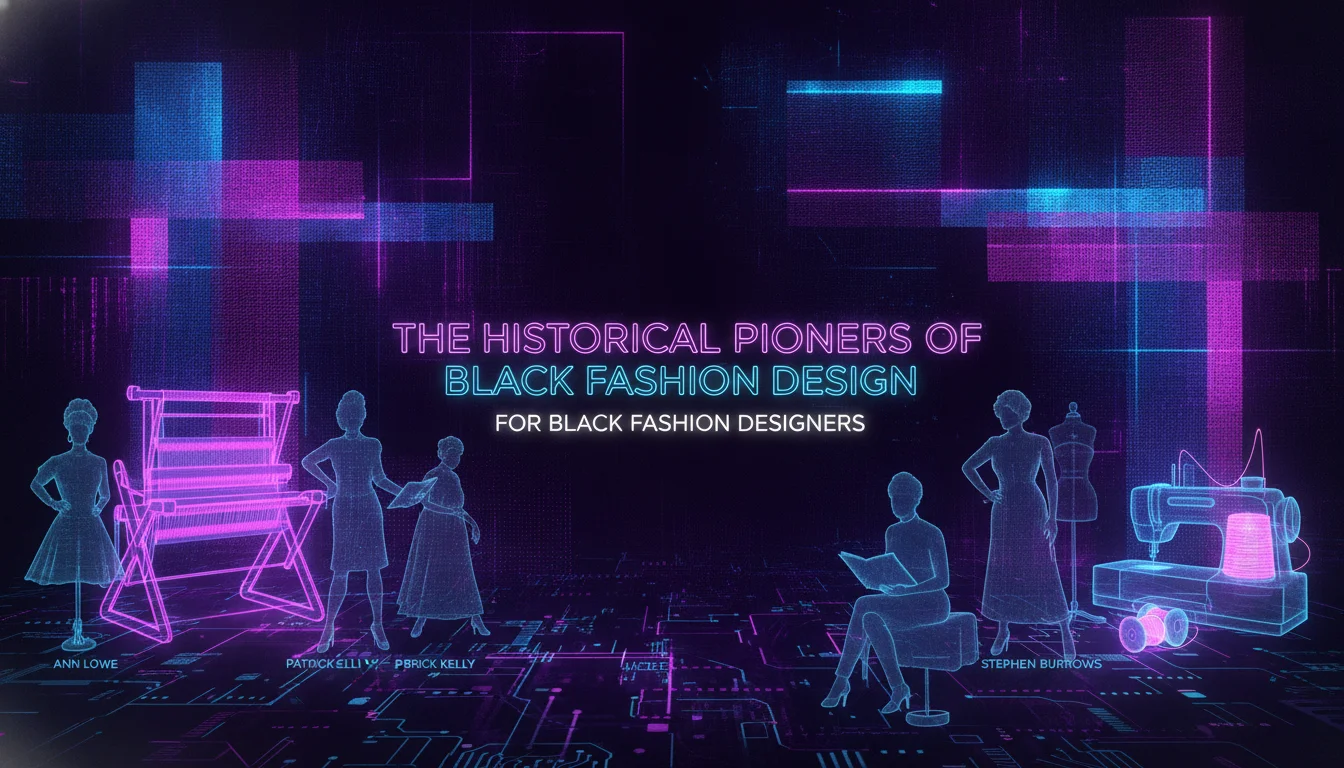
1. The Historical Pioneers of Black Fashion Design
The story of fashion designers begins long before the industry was willing to acknowledge it. These were women and men who built empires with needle and thread, often without credit, often without safety, and always without apology.
Elizabeth Keckley: From Enslavement to the White House
Elizabeth Keckley was born into slavery in Virginia but became the personal dressmaker and confidante of Mary Todd Lincoln in the 1860s. After purchasing her freedom, she established herself as a sought-after seamstress for Washington D.C.’s elite, creating gowns that blended Victorian elegance with her own distinct vision. According to L’Officiel USA, Keckley’s journey from bondage to the White House exemplifies the resilience and talent that this type of designers have always possessed, even when their stories were erased from mainstream fashion history.
Zelda Wynn Valdes and the Golden Age of Hollywood Glamour
Zelda Wynn Valdes, born in Pennsylvania in 1905, overcame the brutal racial segregation of her era to become one of the most influential this kind of designers of the mid-20th century. She started as a stockroom worker and climbed to seamstress, eventually opening her own boutique in 1948. That same year, she designed Maria Cole’s iconic off-the-shoulder wedding dress. Valdes created show-stopping looks for Ella Fitzgerald and other luminaries, defining a silhouette of hyper-feminine glamour that still reads as timeless.
Ann Lowe: The Uncredited Creator of an Iconic Wedding Dress
Ann Lowe was the first African-American to gain significant recognition as a fashion designer. From the 1920s through the 1960s, her exquisite gowns were worn by high-society women across the country. The pinnacle: she designed Jacqueline Bouvier’s ivory silk taffeta wedding dress for her 1953 marriage to John F. Kennedy. Despite this monumental achievement, Lowe was never publicly credited at the time because of her race. She later opened Ann Lowe Originals on Madison Avenue in 1968, finally claiming a storefront worthy of her talent. Her legacy is a stark reminder that black fashion have always been at the center of American style, even when rendered invisible.
“Black fashion pioneers used their talent to make a name for themselves in a highly competitive, Eurocentric, and predominantly white industry.” – L’Officiel USA
2. Breaking Into the Exclusive World of High Fashion
Breaking into high fashion as a Black designer has never been a matter of talent alone. It has required extraordinary persistence, a refusal to shrink, and the courage to walk into rooms that were never designed to welcome you.
Jay Jaxon’s Journey from Queens to Paris Couture
Jay Jaxon shattered one of fashion’s highest glass ceilings by working as a designer at French couture houses Yves Saint Laurent and Christian Dior. Hailing from Queens, New York, Jaxon created both couture and ready-to-wear pieces in Paris, later bringing his talents to Hollywood, where he crafted garments for performers like Annie Lennox. His career proves that talent knows no racial boundaries, and that fashion designers have always belonged on the world’s most prestigious stages.
Patrick Kelly: Humor, Provocation, and Haute Couture
Mississippi-born Patrick Kelly became the first American inducted into the prestigious Fédération de la Haute Couture et de la Mode in Paris. His designs were exuberant, humorous, and unapologetically rooted in Black culture. Button-embellished overalls. Playful references to Black traditions. A refusal to dilute his identity for European approval. Kelly’s presence in the rarefied world of haute couture during the 1980s forced the industry to confront its own Eurocentric norms, and his influence echoes today among every black fashion designer who refuses to code-switch for a room.
The Rise of Black Designers in the Late 20th Century
Beyond individual icons, organizations like the National Association of Fashion and Accessory Designers (NAFAD), founded in 1949, created a critical support network for African-American creators. Designers such as Ruby Bailey, a contemporary of Valdes and a key figure in Harlem’s cultural scene, specialized in bold prints and embellishments that celebrated Black aesthetics with zero compromise. These collectives paved the way for a more visible generation of this type of designers who emerged in the latter half of the century, from Stephen Burrows to Willi Smith.
3. The Streetwear Revolution Led by Black Designers
Streetwear did not emerge from a boardroom. It came from the streets, the block, the culture. And at its origin stands a Black designer who saw fashion differently from everyone else in the room.
Willi Smith: The Inventor of Streetwear
Widely considered the inventor of streetwear, Willi Smith fused affordable clothing with luxury sensibilities in a way the industry had never seen. He launched WilliWear Ltd. in 1976 and amassed over $25 million in sales by 1986, according to TheIndustry.fashion. His philosophy was democratic and deliberate. His designs were gender-blurred, rooted in what people actually wore on the streets, and proved that this kind of designers could disrupt the industry’s top-down structure from the ground up.
“I don’t design clothes for the Queen, but for the people who wave at her as she goes by.” – Willi Smith
Fear of God’s Jerry Lorenzo and the New Luxury Streetwear
Jerry Lorenzo, an African-American designer and son of former MLB manager Jerry Manuel, founded Fear of God with just $14,000, as noted by Farfetch. The brand captured the sweet spot between streetwear and luxury almost immediately, attracting the attention of Virgil Abloh and leading to collaborations with Zegna, Nike, and adidas. Lorenzo’s trajectory illustrates how black fashion can turn minimal capital into global influence, reshaping the very definition of high-end fashion in the process.
Heron Preston: Bridging Function and Fashion
Heron Preston is a New York City-based designer known for blending workwear functionality with streetwear aesthetics. His eponymous label incorporates sustainable materials and collaborations with organizations like the NYC Department of Sanitation, turning utilitarian uniforms into coveted pieces. Preston represents a new wave of fashion designers who use clothing as a platform for environmental and social commentary.
4. Contemporary Black-Owned Brands Redefining the Industry
Contemporary this type of designers are not waiting for the industry to make space. They are building their own tables, their own supply chains, and their own cultural moments.
Telfar Clemens and the Viral Telfar Bag
Telfar Clemens, a Queens-born designer of Liberian descent, turned his eponymous brand into a global phenomenon with the Telfar Shopping Bag: a vegan leather accessory available in three sizes. Often called the “Bushwick Birkin,” the bag’s accessibility and unisex design challenged luxury exclusivity at its core. Telfar’s “Bag Security Program” made the product available to all through an innovative pre-order system, proving that this kind of designers are not only creators but community architects.
JADE Swim: Timeless, Sustainable Luxury
Brittany Kozerski founded JADE Swim after struggling to find flattering, high-quality swimwear that actually fit. The brand uses ECONYL, a 100% regenerated nylon made from ocean and landfill waste, to craft sculpting silhouettes produced in Los Angeles. Kozerski’s commitment to sustainability and timeless design places her among the black fashion at the absolute forefront of ethical fashion.
Pyer Moss, Hanifa, and the Expanding Ecosystem
Today, directories like Black Designer Brands aggregate hundreds of Black-owned labels across clothing, shoes, handbags, jewelry, beauty, and home decor. From Kerby Jean-Raymond’s activism-meets-high-fashion Pyer Moss to Anifa Mvuemba’s curve-celebrating Hanifa, the ecosystem is vast and varied. This curation effort, sparked by a 2020 Instagram post calling for support of Black-owned businesses, makes it easier than ever for consumers to shop with real intention.
Brand
Designer
Style
Key Product
Sustainability Note
Telfar
Telfar Clemens
Genderless, accessible luxury
Vegan leather Shopping Bag
Vegan leather alternative
Fear of God
Jerry Lorenzo
Elevated streetwear
Essentials hoodies, sneakers
Collaborations with eco-conscious brands
JADE Swim
Brittany Kozerski
Minimalist, sculptural swimwear
One-piece suits and bikinis
Uses ECONYL regenerated nylon
Pyer Moss
Kerby Jean-Raymond
Activism-meets-high-fashion
Graphic tees, tailored pieces
Ethical production, community focus
Hanifa
Anifa Mvuemba
Bold, curve-celebrating womenswear
Knit dresses, statement outerwear
Made-to-order reduces waste
Pros and Cons
Pros
Cultural richness: fashion designers bring perspectives shaped by the African diaspora, Harlem’s cultural scene, and global streetwear, producing work that is genuinely original.
Accessibility and innovation: Brands like Telfar and WilliWear challenged luxury’s gatekeeping, making high-design clothing available to real people at real price points.
Sustainability leadership: Many Black-owned labels, from JADE Swim to Hanifa’s made-to-order model, are actively reducing fashion’s environmental footprint.
Community impact: Supporting these designers creates economic equity and funds the next generation of Black creative talent.
Advocacy-driven design: Designers like Kerby Jean-Raymond use their platforms to push for systemic change, making fashion a vehicle for real-world impact.
Cons
Historical erasure: Decades of uncredited work mean many foundational contributions by this type of designers remain unknown to mainstream audiences.
Funding gaps: Black designers have historically faced greater barriers to venture capital, retail partnerships, and press coverage than their white counterparts.
Discovery challenges: Despite directories like Black Designer Brands, many exceptional labels still struggle to reach the audiences they deserve without major platform support.
5. How to Discover and Support Black Fashion Designers
Supporting this kind of designers is one of the most direct ways to put your money where your values are. Here is exactly how to do it.
Online Directories and Curated Platforms
Curated platforms simplify discovery significantly. Black Designer Brands, founded in 2020, offers categorized lists across clothing, shoes, handbags, and more. The Instagram account @blackdesignersdirectory acts as a valuable, community-driven guide. These resources democratize access, allowing shoppers to bypass opaque traditional retail gatekeeping and directly support Black-owned labels with every purchase.
Shopping with Intention: A Practical Guide
Supporting black fashion requires more than a one-time purchase. Here is a step-by-step approach:
Identify your style gaps: Determine what you need, whether a new handbag or sustainable activewear, to make targeted searches more effective.
Use directories and social media: Browse platforms like Black Designer Brands and follow hashtags like #BlackOwnedFashion to find brands that match your aesthetic.
Read brand stories: Learn about a designer’s background and values to ensure your purchase supports ethical practices you believe in.
Prioritize longevity over trends: Many Black-owned brands focus on timeless design. Invest in quality pieces built to last.
Spread the word: Share your finds on social media and with friends to amplify visibility for designers who deserve it.
The Role of Advocacy Organizations
Groups like the Black in Fashion Council, formed in 2020, work to hold brands accountable for diversity and inclusion. They partner with companies like Condé Nast and PVH Corp. to create measurable change. By supporting these organizations, consumers help black fashion designers gain access to funding, mentorship, and retail opportunities that have historically been denied to them.
6. Sustainability and Innovation in Black-Owned Fashion
Black fashion designers are leading the sustainability conversation, not following it. From regenerated nylon to made-to-order production, these creators are building a more responsible industry from the inside out.
Eco-Friendly Materials and Ethical Production
Many black fashion designers source deadstock fabrics, use natural dyes, and implement zero-waste pattern cutting. This environmental commitment is not a marketing trend. It reflects broader community values around resourcefulness, respect for the earth, and building something that lasts beyond a single season.
Case Studies: ECONYL, Vegan Leather, and Beyond
JADE Swim’s use of ECONYL, a regenerated nylon that reduces crude oil dependency and carbon emissions, sets a clear standard. Telfar’s vegan leather bags offer a cruelty-free alternative to traditional luxury goods. These innovations confirm that black fashion designers are not only aesthetically progressive but also technologically forward-thinking, actively challenging the throwaway culture of fast fashion.
The Broader Impact of Conscious Consumerism
When shoppers choose Black-owned brands that prioritize sustainability, they create a dual impact: reducing environmental harm and supporting economic equity simultaneously. This aligned value system encourages more black fashion designers to enter the market, knowing there is a consumer base that values both ethics and aesthetics in equal measure.
7. The FIT Exhibition and Institutional Recognition
Institutional recognition of black fashion designers has been slow, but it is growing. The Museum at the Fashion Institute of Technology in New York City mounted a dedicated exhibition titled “Black Fashion Designers,” exploring how these creators work across a broad range of styles, drawing from African diasporic heritage, western fashion traditions, and everything in between. According to the FIT exhibition, each designer approaches design from a unique perspective, and it is that diversity which most enriches fashion as a whole. Exhibitions like this signal a shift: the industry is finally beginning to document and celebrate what Black designers have always known about themselves.
Frequently Asked Questions
Who is a famous black fashion designer?
Ann Lowe is one of the most historically significant black fashion designers, creating Jacqueline Kennedy’s wedding dress in 1953 without ever receiving public credit for it. Contemporary icons include Telfar Clemens and Jerry Lorenzo of Fear of God, both of whom have reshaped what luxury fashion looks like in the 21st century.
What are some black designer brands?
Notable Black-owned brands include Telfar, Fear of God, JADE Swim, Pyer Moss, and Hanifa. They span luxury, streetwear, and sustainable fashion, offering something for every aesthetic and price point.
Who are the top 10 fashion designers?
Influential black fashion designers consistently cited across fashion media include Patrick Kelly, Willi Smith, Telfar Clemens, Kerby Jean-Raymond, and Heron Preston, among others. Lists vary by era and focus, but these names appear across Vogue, L’Officiel, and Farfetch’s editorial coverage as foundational figures.
Who is the black designer for Gucci?
Dapper Dan, whose Harlem atelier was famously replicated by Gucci before the two eventually partnered officially, is the most significant Black creative associated with the brand. He is not a permanent in-house designer but remains one of the most influential figures in the relationship between Black culture and luxury fashion.
Where can I buy from black-owned fashion brands?
Online directories like Black Designer Brands offer curated shopping links across clothing, shoes, handbags, and more. Most brands also sell directly through their own websites, cutting out the retail middleman entirely.
Why is it important to support black fashion designers?
Supporting black fashion designers helps correct a long history of exclusion, fosters genuinely diverse creativity, and promotes economic equity within an industry that has profited from Black culture while underpaying and undercrediting its Black creators for generations.
8. The Ongoing Influence of Black Fashion Designers
Looking Forward
The future of fashion is inseparable from the contributions of black fashion designers. As of 2026, barriers are crumbling faster than ever, driven by digital platforms, advocacy networks, and a consumer base that is finally voting with its wallet. The next generation of Black designers, armed with social media reach and institutional support that their predecessors never had, is poised to push the industry further than it has ever gone.
A Call to Action
Whether you are a dedicated fashion obsessive or a casual shopper, your choices carry weight. Seek out black fashion designers, celebrate their work publicly, and invest in a more inclusive and vibrant fashion future. Their stories are not just history. They are the blueprint for what this industry can become when it finally gets out of its own way.
80’s fashion for women is a style era defined by exaggerated silhouettes, bold color, and fearless self-expression. Think shoulder pads sharp enough to cut glass, denim cinched high, and accessories loud enough to announce your entrance before you speak.
Key Takeaways
80’s fashion for women centers on power dressing, high-waisted denim, puff sleeves, and maximalist accessories.
Designers like Claude Montana, Emanuel Ungaro, and Yves Saint Laurent built the power suit into a symbol of authority, according to Vogue.
Budget costume sets start under $25 on Amazon, while investment vintage from designer labels can run past $200.
Fabric matters: natural fibers and structured padding signal quality, while cheap polyester falls flat fast.
Style it modern by isolating one statement piece, like a shoulder blazer, and grounding it with contemporary basics.
Care differs by piece: dry clean structured suits, machine wash cotton, and air dry spandex to protect elasticity.
Understanding 80’s Fashion for Women
80’s fashion for women is a movement built on excess, rebellion, and unapologetic self-definition. It isn’t a costume punchline. It’s a style language that still bleeds into runway collections and street style today. According to Vogue, the decade turned clothing into a weapon of power and self-expression, fueled by economic ambition, MTV, and a feminist push that refused to stay quiet. Fashion Gone Rogue notes that today’s revivals prove this decade never really left.
“Power suits didn’t whisper femininity, they roared it,” Vogue writes of the decade’s defining silhouette, crediting designers who built armor for women stepping into rooms that weren’t built for them.
The Power Dressing Movement
Power dressing is a strategy that uses structured tailoring, sharp shoulder pads, and bold color to project authority without saying a word. Women wore it to break down doors that had been locked for generations. Designers like Claude Montana, Emanuel Ungaro, and Yves Saint Laurent crafted suits that read like armor: exaggerated shoulders, double-breasted lines, and beadwork that made femininity impossible to ignore.
Casual and Denim Revolution
Calvin Klein and Gloria Vanderbilt turned denim from workwear into a statement, according to Fashion Gone Rogue. High-waisted jeans, acid wash finishes, and boxy denim jackets became everyday staples. Pair them with a graphic tee or a lace top, channel a little Madonna energy, and you’ve got the uniform half the decade lived in.
Subcultures and Eclectic Styles
The 80s ran on collision: preppy met punk, new wave crossed hip-hop, and nobody agreed on a single look. A YouTube deep dive titled ULTIMATE GUIDE TO 80s FASHION traces the spectrum from Cyndi Lauper’s chaotic layering to the glossy, boardroom glamour of Dynasty. Beyond the mainstream, the New Romantic movement brought theatrical ruffles and dramatic makeup out of London clubs, while goth subculture answered with black lace, teased hair, and a whole lot of eyeliner. Every corner of the decade had its own uniform, and none of them apologized for being loud.
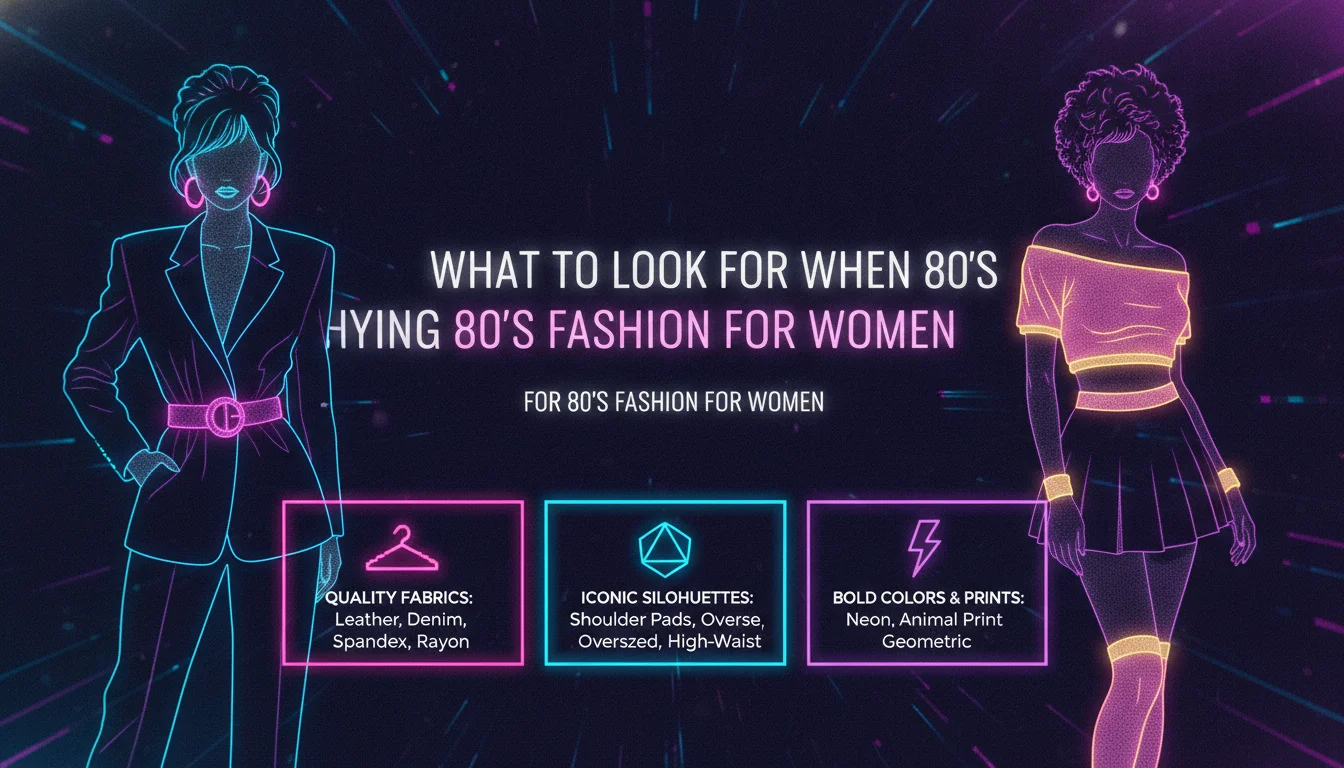
What to Look For When Buying 80’s Fashion for Women
The best way to buy authentic 80’s fashion for women is to check construction, fabric, and detailing before you check the price tag. Whether you’re hunting vintage or a modern reproduction, here’s how to separate the real thing from a flimsy knockoff.
Step 1: Examine the silhouette and construction. A real power blazer holds its shoulder pad structure, it doesn’t collapse. Check the seams too. Genuine vintage tends to have sturdier finishing than fast fashion reproductions.
Step 2: Assess the material. Wool and silk signal higher quality construction, while spandex blends were standard for activewear. Steer clear of stiff, cheap polyester with zero stretch.
Step 3: Check for authentic details. Double-breasted closures, peplum waists, structured puff sleeves, and original labels from names like Thierry Mugler or Yves Saint Laurent all add real value.
Step 4: Consider fit and comfort. Shoulder pads can swallow a petite frame, so try pieces on when you can. Buying online? Check the measurements closely: 80s sizing tends to run smaller than what you’re used to today.
Step 5: Set your budget tier. Decide between budget-friendly reproductions, mid-range vintage finds, or premium designer pieces before you start scrolling.
A puff sleeve, for reference, balloons out from the shoulder or upper arm before tapering at the wrist. It’s one of the most recognizable silhouette details of the entire decade.
Price Range: Budget to Premium
You can build an 80s look at nearly any price point right now. Amazon lists over 10,000 results for 80s outfits for women, with full costume sets starting at $21.98 and accessory bundles from $13.96. Walmart carries comparable budget options.
Budget: Costume sets and accessory bundles typically run under $50, with entry points as low as $13.96 for accessories on Amazon.
Mid-range: Vintage shops and platforms like Etsy sell original 80s denim jackets, power suits, and evening dresses in the $50 to $150 range.
Premium: High-end vintage boutiques and collector pieces can climb past $200, especially for designer labels like Claude Montana.
Must-Have Pieces for an Authentic 80s Wardrobe
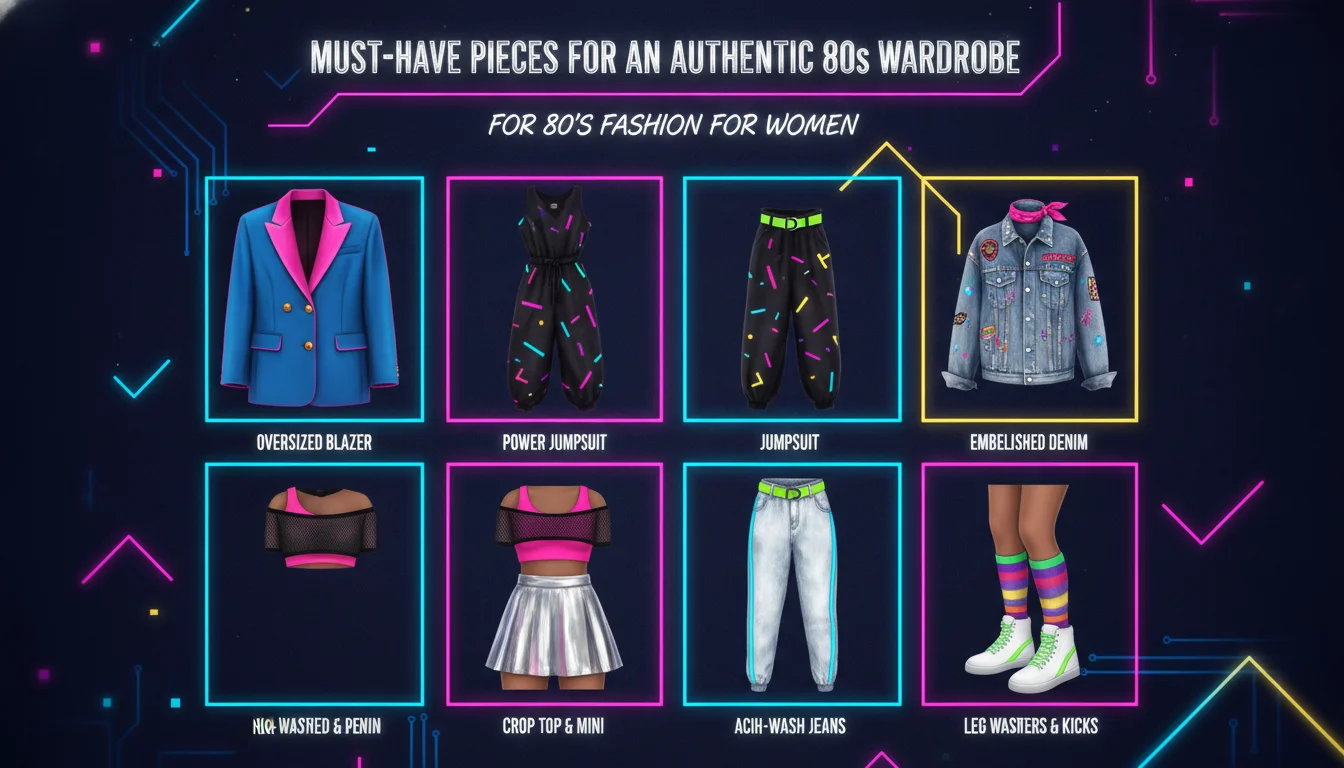
The must-have pieces for an authentic 80s wardrobe are the power suit, high-waisted denim, puff sleeve dresses, statement accessories, and spandex activewear. Each one defined a different corner of the decade, and each one still works for a themed night out or everyday retro styling.
Shoulder Pad Blazers and Power Suits
A power suit with sharp shoulder pads changes a room the second you walk in. Go bold, fuchsia, cobalt, anything that refuses to blend in, the way 1980s corporate culture demanded. Designers like Ungaro made these suits unmistakably feminine with beadwork and saturated color, proving tailoring never had to mean playing small.
High-Waisted Denim
Calvin Klein’s jeans campaigns made high-waist styling iconic, and it’s never fully gone away. Look for rigid denim with a tapered or straight leg. Acid wash and stone wash treatments add instant authenticity.
Puff Sleeve Dresses and Tops
From Cyndi Lauper’s stage looks to prom night classics, puff sleeves build a silhouette that’s part romance, part drama. They work in mini, midi, or maxi, and they’re just as sharp now as they were then.
Statement Accessories
No 80s outfit finishes without accessories: chunky belts, layered pearls, neon fanny packs, fishnet gloves, leg warmers, and earrings big enough to have their own gravitational pull. Amazon’s bundled accessory sets pull these essentials together for a quick, complete look.
Spandex and Activewear
The Jane Fonda-era workout craze put spandex leotards, leg warmers, and high-cut unitards into every closet, according to era retrospectives from vintage archives. These pieces have found a second life as festival wear.
Hair, Makeup, and Shoes: Finishing the Look
Big hair, bold shadow, and statement shoes complete any 80s look, full stop. Crimped or teased hair, bright blue or violet eyeshadow, and a strong blush placement were the beauty rules of the decade. On feet, think chunky sneakers in the style of Reebok Freestyle or L.A. Gear, high-top Converse, or pointed flats for the power-suit crowd. Skip the shoes and hair, and even the most accurate outfit reads as incomplete.
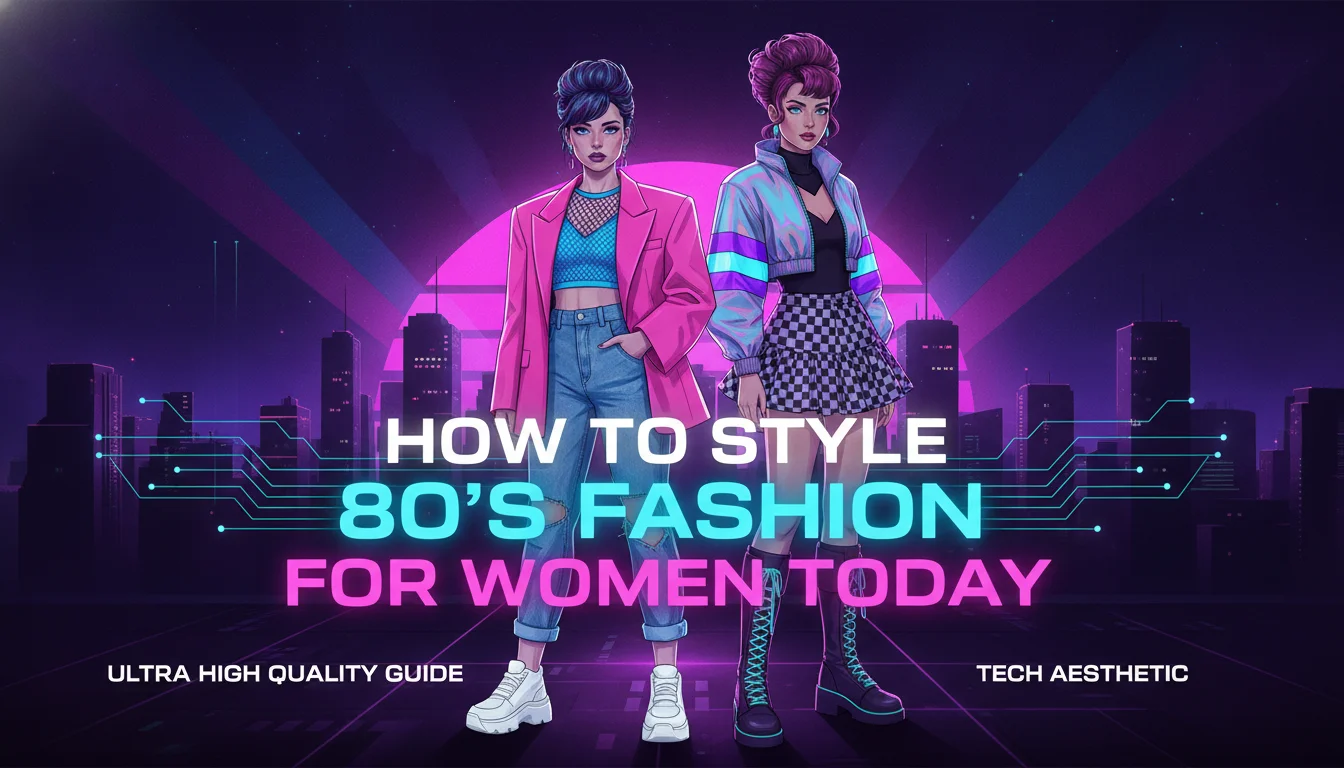
How to Style 80’s Fashion for Women Today
The best way to style 80’s fashion for women today is to isolate one statement piece and build around it with modern basics, rather than recreating the whole decade at once. Here are three outfit formulas that work.
Daytime Casual: The Denim Edit
Pair high-waisted mom jeans with a tucked-in graphic tee referencing an 80s band like Pat Benatar. Add white sneakers and a slouchy denim jacket for an off-duty, Madonna-adjacent vibe.
Office Power Dressing
A tailored double-breasted blazer with shoulder pads over slim trousers or a pencil skirt reads polished, not costumey. Finish with low heels and layered pearls, a nod to Princess Diana’s signature restraint-meets-power dressing.
80s Party Night Out
For a themed event, full costume sets from Amazon bundle neon tees, tutu skirts, fishnet gloves, leg warmers, and a fanny pack, most for well under $35. Or skip the costume aisle entirely: a puff sleeve mini dress with chunky heeled boots and bright eyeshadow gets you there with more edge. If you want something that channels 80s maximalism without the costume-party feel, our Duality collection pulls that same contrast-and-power energy into pieces built for tonight, not just a theme party.
Bold, high-impact pieces that photograph well and stand out at any event.
Wide price range means you can start under $25 or invest in premium vintage.
Silhouettes like power suits and puff sleeves translate easily into modern styling.
Cons
Structured pieces like shoulder pads can be unforgiving on petite frames without tailoring.
Authentic vintage sizing runs smaller, making online shopping trickier.
Some fabrics, especially aging spandex, require careful handling to avoid damage.
Care & Maintenance for 80s Garments
Caring for 80’s fashion for women properly means matching the cleaning method to the fabric, not treating every piece the same way. Vintage pieces especially need tailored handling to survive another decade of wear.
Dry Clean or Hand Wash?
Power suits and silk blouses generally need professional dry cleaning to protect their structured padding. High-waisted denim and cotton tees can go in the machine on a gentle cold cycle. Spandex should always air dry, since heat and tumbling wreck its elasticity fast.
Storage Tips
Store shoulder-padded garments on wide hangers so the structure holds its shape. Fold puff sleeves rather than hanging them to avoid stretching the fabric. Keep vintage pieces out of direct sunlight, since color fades faster than you’d expect.
As one longtime vintage dealer puts it, the difference between a garment that lasts twenty more years and one that falls apart in a season almost always comes down to how it’s stored, not how it’s worn.
Frequently Asked Questions
What defines 80’s fashion for women?
80’s fashion for women is defined by exaggerated silhouettes like shoulder pads and puff sleeves, bold color, and a mix of subcultures spanning power dressing to punk. Music and television, from MTV to Dynasty, shaped much of the look.
How do I dress for an 80s party as a female?
Start with one loud anchor piece, a neon tutu, a puff sleeve dress, or a full costume set, then layer on accessories like fishnet gloves, leg warmers, and a fanny pack. Amazon and Walmart both carry complete costume bundles that make this simple.
What was the biggest fashion trend in the 80s?
Power dressing, built around structured shoulder pads and bold-colored suits, is widely considered the decade’s defining trend. It reflected women’s growing presence in executive spaces and was championed by designers like Claude Montana and Yves Saint Laurent.
Where can I buy affordable 80s outfits for women?
Amazon and Walmart offer costume sets and accessories starting under $25. Vintage stores and Etsy provide more authentic pieces at mid-range prices for anyone chasing the real thing.
Can I wear 80s fashion today without looking costume-like?
Yes. Isolate one statement piece, like a shoulder blazer or a puff sleeve top, and pair it with modern basics like straight-leg jeans and neutral heels. That contrast is what modernizes the whole look instead of reading as a Halloween costume.
80’s fashion for women isn’t a relic. It’s a mood you can still walk into a room wearing tonight, whether that means a shoulder-padded blazer at the office or a puff sleeve mini dress under club lighting. Build your own duality: soft romance up top, dangerous edge below, and never apologize for taking up space. Discover your duality at prettynpoison.com.
Key Takeaways
2025 fashion trends women are chasing reject quiet minimalism for bold texture, color, and personality-driven dressing.
Suede, fringe, and electric blue dominate the season’s most-wanted looks.
Plaid has officially replaced leopard print as the pattern of the moment.
Slouchy bags, elevated slippers, and thong sandals are the accessories finishing every strong outfit.
Hourglass silhouettes and ’90s-inspired tailoring offer a sleek counterpoint to maximalist chaos.
Mix one investment piece with affordable finds from Zara, Mango, or H&M to stay on-trend without the guilt.
2025 fashion trends women are wearing right now are a full rejection of safe, quiet dressing. Runways from New York to Paris delivered suede fringe, electric blues, heritage plaids, and a sharp new take on prep. Here’s what’s dominating, how to wear it, and where to shop.
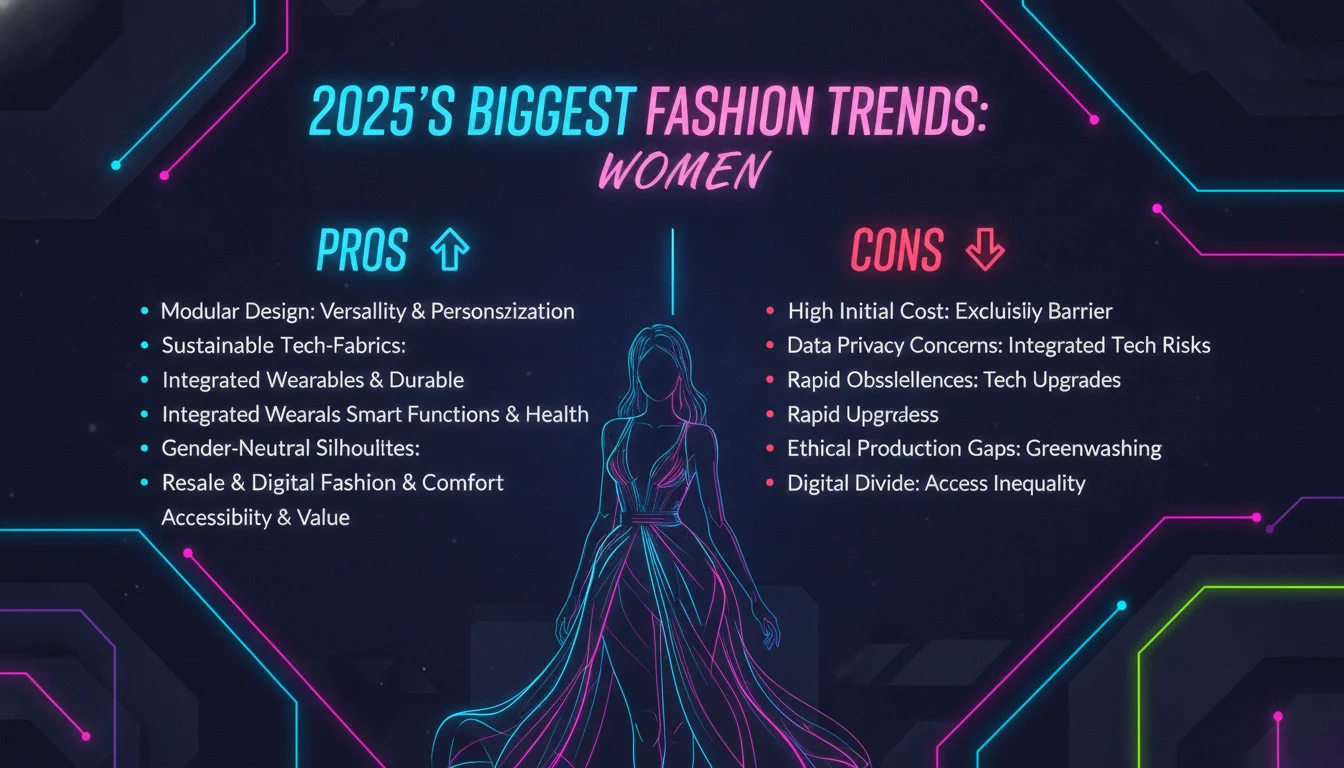
Pros and Cons of 2025’s Biggest Fashion Trends
Pros
Bold color and texture choices make it easy to stand out and express personality.
Heritage pieces like barn jackets and fair isle knits are built to last beyond one season.
High-street retailers like Zara, H&M, and Mango make runway looks accessible at every budget.
The duality of maximalism versus ’90s minimalism means every style preference is covered.
Suede and plaid translate effortlessly from daytime to nightlife looks.
Cons
Trend overload: with 10+ directions at once, it’s easy to over-buy and under-wear.
Investment pieces like the Burberry check wool midi kilt ($2,095) are out of reach for most budgets.
Fringe and extreme draping require confident styling to avoid looking costume-like.
Suede demands care: real suede needs protective spray and dry conditions to stay pristine.
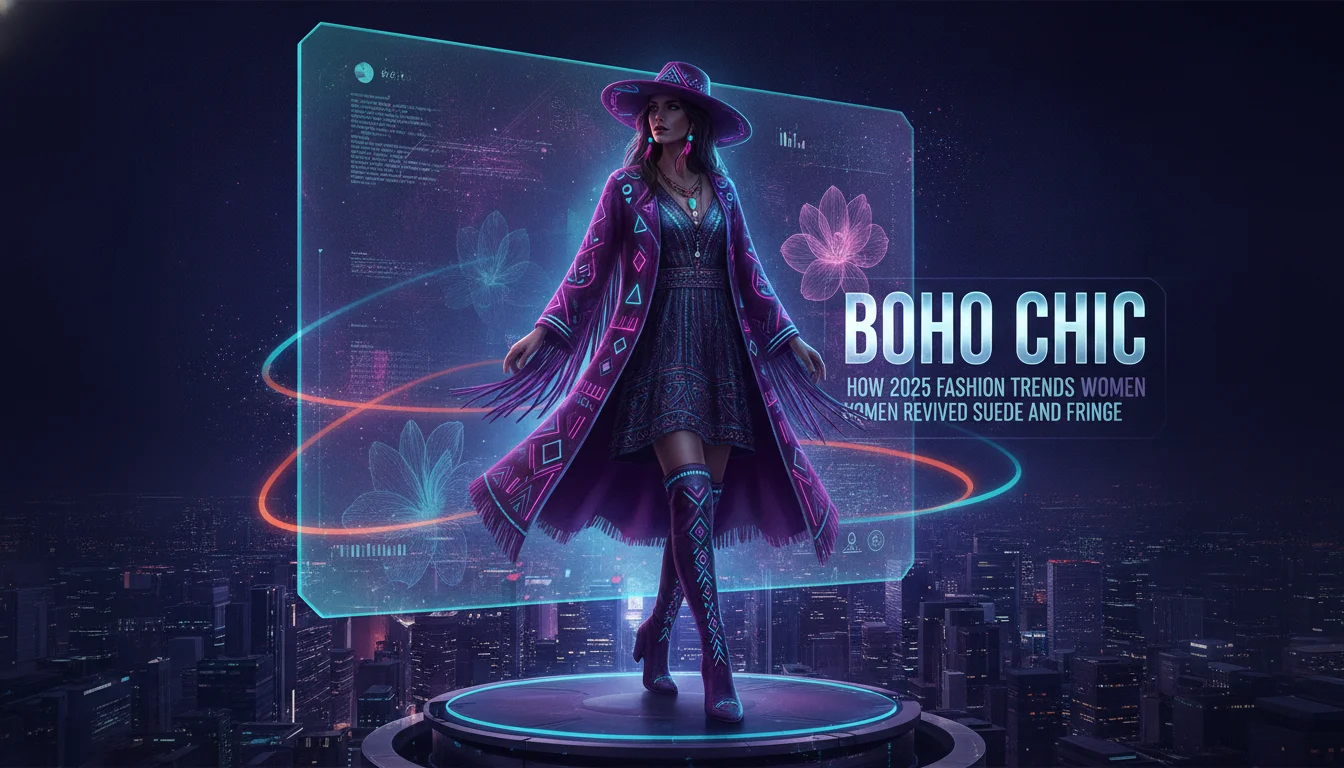
1. Boho Chic: How 2025 Fashion Trends Women Revived Suede and Fringe
The boho aesthetic is back for 2025, and it’s nothing like the watered-down festival looks you remember. According to Vogue’s fall 2025 runway report, designers like Chloé and Dries Van Noten infused their collections with a feminine, bohemian spirit that transcends any sophomoric notion of boho. Two materials anchor the entire revival: suede and fringe.
Suede Everything
Suede is a tactile, napped leather that adds instant richness to any outfit. Heuritech’s AI-powered trend forecasting platform predicts suede will be a standout material for Spring/Summer 2025, appearing on everything from larger bags to skirts and outerwear, and the momentum carries hard into fall. Vogue spotlights the trend through a Dries Van Noten print midi skirt ($1,225) and other pieces. For a more accessible take, hunt for suede blazers or mini skirts at Zara or Mango. The key to modern suede is contrast: try a soft knit underneath or smooth leather boots against it. Real suede needs a quality protective spray and dry conditions to survive. Faux suede offers a cruelty-free alternative that’s easier to maintain and often kinder to your wallet.
Fringe, Tassels, and Extreme Draping
Texture took center stage on fall 2025 runways. As Vogue puts it, even the most quintessential minimalist brands couldn’t resist incorporating “tangible elements such as fringe, tassels, or extreme draping.” This maximalist detail adds movement and a sense of play. A fringed leather jacket or a tassel-trimmed skirt are the investment versions, but you can enter the trend with a fringed scarf or handbag. Maximalism embraces abundance in texture, pattern, and color. Street style shows influencers layering a fringed hem over straight-leg denim, or draping a tassel necklace over a simple silk camisole. Let the texture be the star. Keep everything else grounded.
Maximalism for Minimalists
If head-to-toe fringe feels like too much, start with one piece. A tassel bag, fringed sandals, or a draped scarf nods to the trend without overwhelming your whole look. Let the textured piece be the focal point and keep the rest understated.
“The clothes weren’t the only thing that was interesting this season, but how they were worn, too,” notes Vogue’s fall 2025 runway report.
A sleek tailored blazer over a fringed silk camisole is the move. Fringed earrings or a fringed belt add whimsy without demanding a full outfit overhaul.
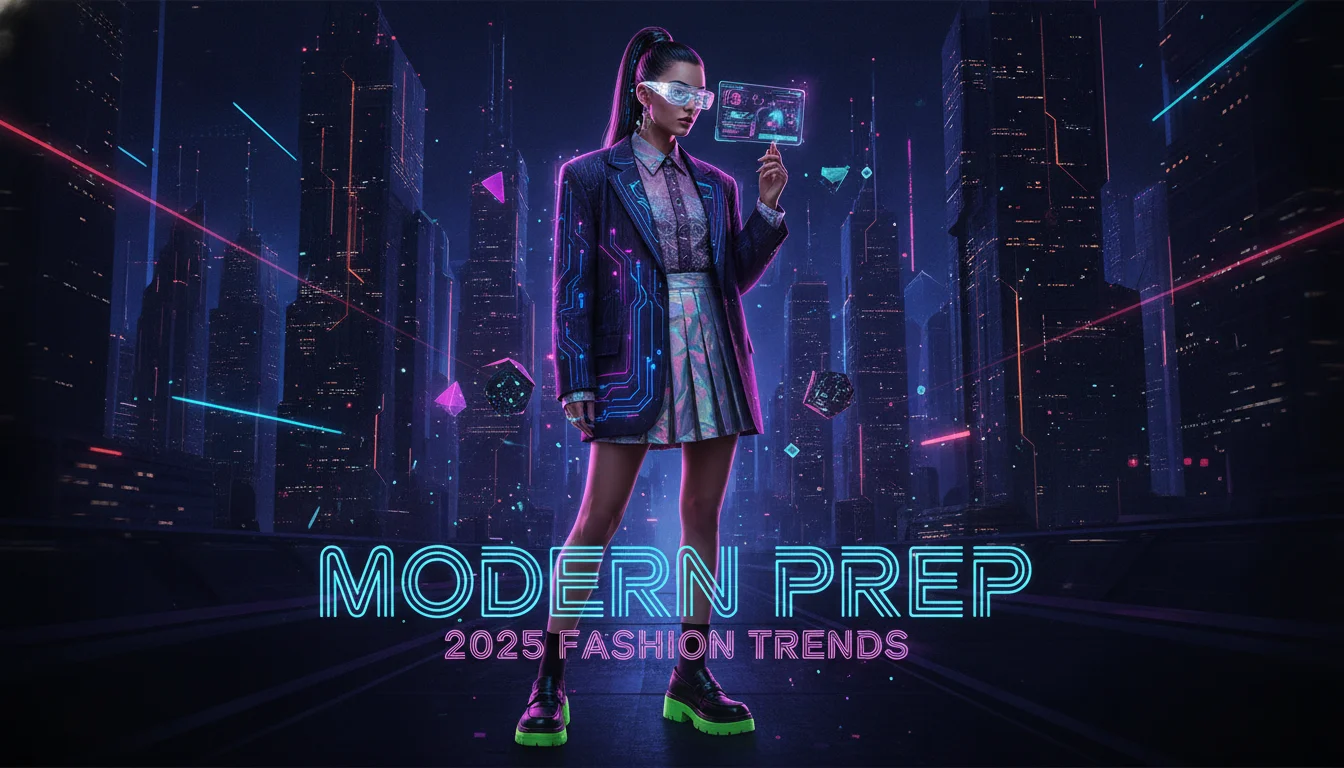
2. Modern Prep: Preppy 2025 Fashion for Women Gets a Twist
Heritage prep got a sharp contemporary update on the 2025 runways, blending classic Ivy League staples with streetwise attitude. Vogue observed a wave of “book-smart styling tricks” from layered button-downs to sharp pencil skirts, all reimagined with an individual twist. This isn’t your boarding school uniform. It’s prep with poison. The 2025 fashion trends women are proving that prep can be subversive: rugby tops with midi skirts, varsity jackets over lace dresses.
The Feminine Polo Shirt
Heuritech singles out the feminine polo shirt as one of the top trends for 2025. The polo is sportswear at its core, but now arrives in soft pastels, cropped cuts, and even puff sleeves. Pair a butter-yellow polo with high-waisted linen trousers for a look that’s both preppy and relaxed. For a more luxurious take, Polo Ralph Lauren’s oversize button-up shirt ($168 at Nordstrom) delivers a crisp, borrowed-from-the-boys vibe. The feminine polo also works layered under a sleeveless slip dress or half-tucked into a midi skirt.
Funnel Necks Reign Supreme
A funnel neck is an extended neckline on a jacket or coat that stands up and folds over, creating a sleek, sculptural silhouette. According to Who What Wear, funnel-neck outerwear has dominated for the last three seasons, kickstarted by Phoebe Philo and now a favorite of Victoria Beckham, Gucci, and Chloé. Mango’s Oversized Cotton Trench Coat, originally $200 and now $89, captures the look at a fraction of the price. The funnel neck works over a chunky sweater or a delicate blouse equally well. For a bolder statement, choose one in electric blue or patent leather to double down on the season’s energy.
Varsity Jackets and Pencil Skirts
Who What Wear and Vogue both highlight the contrast between sporty and tailored pieces. Relaxed varsity jackets paired with razor-sharp pencil skirts create a dynamic outfit formula. Layer a slouchy varsity jacket over a silk slip dress, or pair a fitted pencil skirt with a graphic sweatshirt. Prep in 2025 is no longer rigid. It’s about mixing high and low, masculine and feminine. Look for varsity jackets in unexpected materials like satin or with embroidered details, and pencil skirts in leather or tweed to keep the look fresh.
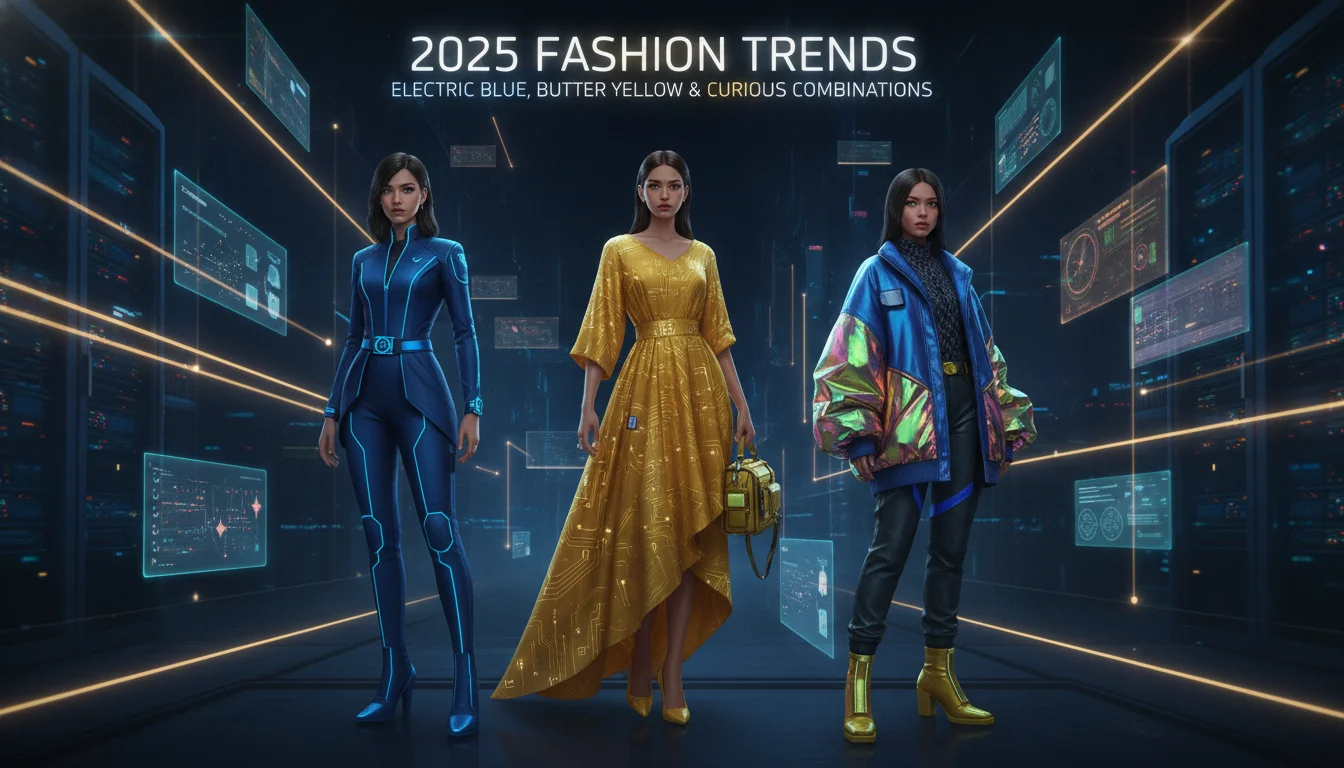
3. Statement Colors: Electric Blue, Butter Yellow, and Curious Combinations
Color in 2025 is everything but quiet. Pastels take a back seat to bold, eye-catching hues, and designers experimented with intentionally “wrong” pairings that somehow work. These vivid palettes are central to the 2025 fashion trends women are gravitating toward for optimism and confidence.
Electric Blue Dominates
From cerulean to turquoise, saturated blues made a splash at Alaïa, MM6 Maison Margiela, Tom Ford, and Marni, according to Who What Wear. Electric blue is a vivid, high-intensity shade that demands attention. The runway embraced it in head-to-toe looks, but you can incorporate it through a statement dress, tailored trousers, or even accessories. Zara’s Asymmetric Poplin Midi Dress ($70) offers an affordable, minimalist entry point. For work, try an electric blue blazer over neutral separates. The shade flatters all skin tones when you find the right undertone.
Yellow’s Sunny Outlook
Heuritech forecasts shades of yellow, from soft butter to bold sunflower, as one of the top 2025 trends. Yellow brings optimism to any outfit and pairs beautifully with brown, another key neutral. A butter-yellow cashmere sweater or a flowing midi skirt in marigold can lift your entire wardrobe. Color pairing tip: yellow and brown together create a warm, earthy combination that feels both fresh and grounded. For a bolder statement, try a monochrome yellow look by layering different shades: a lemon blouse with mustard trousers.
Unexpected Color Pairings
Vogue champions “curious color combinations” where designers found harmony in unlikely duos: pale pink with a flash of red, pistachio green with icy blue, or brown with lavender. The golden rule?
“If it feels wrong, it’s probably right.” – Vogue, fall 2025 runway report.
Start by pairing two items already in your closet that you’d never think to combine. A red knit with a pink skirt can feel intentional and fashion-forward. A bright orange accessory thrown into an otherwise neutral outfit delivers an instant jolt of energy.
4. Country-Coded: 2025 Fashion Trends Women Are Going Rustic
Country-coded fashion uses heritage fabrics like tweed, waxed cotton, and fair isle knits for an outdoorsy, equestrian-inspired look. This trend champions durability and timelessness over fast-fashion novelty, and it’s one of the defining directions 2025 fashion trends women are gravitating toward for both practicality and polish.
Barn Jackets Take Over
A barn jacket is a sturdy, usually waxed-cotton or canvas outerwear piece originally designed for outdoor labor. The Wardrobe Consultant names the barn jacket fall 2025’s essential outerwear, while Vogue lists plaid barn jackets from J.Crew ($298) and Burberry’s check wool midi kilt ($2,095) as go-to pieces. Throw one over a hoodie and jeans for weekend errands, or belt it over a midi dress for a fashion-forward spin. Look for barn jackets with corduroy collars, snap fronts, and deep pockets: details that emphasize their utilitarian roots.
Plaid’s Prime
Who What Wear boldly declares that plaid has replaced leopard print as the season’s key pattern. Spotted at Burberry, Calvin Klein, Bally, and more, plaid comes in every scale from micro-check to oversized buffalo. Plaid is a pattern of intersecting horizontal and vertical bands in multiple colors, historically associated with Scottish tartans. High-street options make it easy: Zara’s Ramie Plaid Shirt ($100) and a Soft Plaid Short Skirt (as low as $7) prove you don’t need to splurge. Choose modern cuts like a plaid blazer with sharp shoulders or a midi skirt with a slit to keep the look current. Mixing plaid with a striped shirt underneath adds a fashion-forward edge.
Heritage Fabrics and Fair Isle Knits
Beyond jackets, the country look extends to fair isle sweaters, silk scarves, and rubber boots. Vogue highlights a fair isle alpaca-blend sweater from Frame ($580) and a Gucci printed silk twill carré ($540) as perfect examples. Fair Isle is a knitting technique from the Shetland Islands characterized by pattern bands and subtle colorwork. These pieces are meant to be worn in, not saved. Pair a fair isle knit with dark denim and leather boots for an easy weekend uniform. Knot a silk scarf at your neck or tie it onto a bag to elevate the look.
5. Prints in Play: Polka Dots and Animal Patterns
While plaid takes center stage, two other prints deserve serious attention from anyone tracking 2025 fashion trends women are wearing. Polka dots and a refined take on animal motifs are back, and they feel anything but predictable.
Polka Dots Make a Comeback
Who What Wear spotted polka dots at Altuzarra, Moschino, Rokh, Fendi, and Isabel Marant, describing the print as “soft and delicate but also chic and sophisticated.” A polka dot is a pattern of filled circles, regularly spaced over a contrasting ground. To wear the trend in 2025, skip the cutesy silhouettes and opt for elegant shapes: a slip dress, a halter top, or a midi. Mango’s strapless polka-dot dress ($90) and their rhinestone polka-dot halter dress ($700) cater to different budgets. Larger dots make a bold statement; smaller pin dots read as subtle texture.
Animal Print Update
Heuritech lists animal print as a lasting trend throughout 2025, evolving from full-on leopard coats to subtle accents on shoes, belts, or bags. A calf-hair zebra-patterned mule or a snake-print clutch adds just the right amount of wild. Style tip: let animal print be the star. Pair it with solid neutrals to avoid visual overload. Start with a scarf or a pair of flats if you’re wary of committing. Choosing prints in unexpected colors, like a blue zebra pattern, modernizes the look instantly.
Color Washing and Monochrome Brown
Color washing, as defined by The Wardrobe Consultant, is the technique of wearing variations of a single color head-to-toe. Brown, from milk chocolate to espresso, emerges as the statement neutral of fall 2025. Vogue also highlights monochrome brown as a key trend, with looks from Loro Piana and others that layer different shades for depth. Try a camel coat over a chocolate turtleneck with espresso trousers. Brown suede adds texture to the monochrome look. Mix textures within the same hue: a leather skirt with a cashmere sweater creates visual interest without contrast colors.
6. The New Accessories: Slouchy Bags, Slippers, and Thong Sandals
No outfit is complete without the right accessories, and 2025’s lineup proves that function can be just as fierce as form. These pieces are how the 2025 fashion trends women are chasing get personalized and made their own.
Slouchy Bags Soften Looks
Structured mini bags, step aside. The Wardrobe Consultant describes the slouchy bag as “relaxed, unstructured, and effortlessly chic,” perfect for countering tailored outfits. A slouchy bag is a soft, often oversized leather or suede bag that collapses into a relaxed shape. Brands like The Row and Khaite produce luxury versions, but Mango and Zara offer accessible alternatives. Toss one over your shoulder with a sharp blazer and jeans for immediate cool-girl nonchalance. The slouchy silhouette also balances voluminous outerwear beautifully.
Elevated Slippers Step Out
Slippers as outdoor footwear? Absolutely. Who What Wear highlights “slipper supremacy” on the fall 2025 runways, with styles ranging from feathered and bow-embellished to sleek pointy-toe mules. Often made from satin, velvet, or soft leather, slippers are flat or low-heeled shoes designed for comfort but now crafted for serious style. Pair them with cropped trousers or a slip dress to let the shoes shine. For a budget-friendly option, check H&M or Mango’s jewel-tone velvet slippers. The key to pulling off slippers outside the house: choose ones with embroidery, metallic details, or a pointed toe so the look reads intentional.
Thong Sandals and Pointed Heels
Heuritech predicts thong sandals will be a major footwear trend for 2025. These minimalist styles in leather or with a kitten heel feel fresh and clean. Thong sandals are sandals where the upper consists of a single strap that passes between the first and second toes. For those seeking height, pointed-toe kitten heels and block-heel pumps nod to the ’90s revival. A chunky platform thong sandal works for a more casual vibe. Finish the look with a bold pedicure color to keep things polished.
7. ’90s Minimalism and the Hourglass Silhouette
While maximalism thrives, a parallel current in 2025 fashion trends women are wearing embraces the clean, understated lines of the 1990s. This is the antidote to fringe and plaid for anyone who prefers a sleeker aesthetic. The duality is the whole point: excessive texture versus pared-back elegance.
Calvin Klein-Inspired Tailoring
Calvin Klein’s return to the runway under creative director Veronica Leoni sparked a resurgence of ’90s minimalism, as noted by Who What Wear. Skirt suits, wide suiting, and effortless outerwear are back. H&M’s wide-leg linen-blend pants ($45) and oval sunglasses ($18) channel the vibe without the price tag. Key to ’90s minimalism: neutral colors, straight or wide cuts, and zero fussy details. Go monochrome in camel or charcoal, and add one piece of sleek jewelry: a cuff or a thin chain necklace.
Cinched Waists and Flared Skirts
The hourglass silhouette is a major trend for fall 2025: cinched waists, flared skirts, and exaggerated shoulder lines create a distinctly feminine shape. This isn’t about restriction. It’s about defining the waist with a belt or structured jacket. An hourglass silhouette emphasizes the body’s curves, typically with a nipped-in waist balanced by broader shoulders and hips. A-line midi skirts and peplum tops help achieve this, especially in structured fabrics like cotton-twill or denim. A wide leather belt over a flowy dress instantly creates the shape.
Athletic Stripes and Romantic Shirts
The juxtaposition of athletic-inspired stripes with romantic, billowy blouses is one of fall 2025’s most interesting styling formulas. A striped rugby top tucked into a flowing, ruffled midi skirt creates a dynamic high-low mix. This plays into the broader 2025 theme of contrast: sporty with feminine, hard with soft. Look for blouses with volume: balloon sleeves, ruffled fronts, or tie-neck details. Check the men’s section for varsity-inspired striped shirts to get the oversized, relaxed fit.
8. Bonus Trends: Pop of Red, Sequins, and ’70s Glam
Beyond the major directions, a few other styles round out what the 2025 fashion trends women are wearing this season. Vogue’s fall report spotlights “Pop of Red,” “24/7 Sequins,” and a subtle nod to ’70s glamour that infiltrated many collections.
Pop of Red
A singular flash of crimson, whether a shoe, a bag, or a lip, instantly elevates any outfit. Vogue includes “Pop of Red” as one of its 11 key fall trends, noting it’s an easy way to energize neutrals. A pop of red is a styling technique where a small, bright red element is introduced into an otherwise neutral look. Try a red wool-blend sweater like the one from Róhe ($585 at Mytheresa) or a simple red leather belt. You likely already own something red. Start there.
Sequins All Day
Forget reserving sparkle for evening. “24/7 Sequins” from Vogue encourages wearing shimmer at any hour, paired with casual denim or a crisp cotton shirt to dress it down. Prada’s embroidered sequin top ($3,700) is the investment version, but high-street follows quickly with sequin midi skirts and tanks. To avoid looking costumey, balance a sequin piece with flat, chunky boots and a slouchy bag. The contrast of textures keeps it modern.
’70s Glam: Hot Pants and Strapless Dresses
Heuritech’s forecast includes hot pants and strapless dresses as part of a broader ’70s revival. High-waisted short shorts and curve-hugging, shoulder-baring frocks evoke retro glamour. Hot pants are very short, fitted shorts typically ending at the upper thigh. Choose a tailored pair and style with a long blazer or an oversized sweater to balance the silhouette. A strapless midi dress with knee-high boots is an elegant way to channel the trend.
9. How to Shop and Style 2025 Fashion Trends Women
With so many directions pulling at you, a strategic approach helps you invest wisely and avoid wearing something that feels like a costume. Here’s how to integrate 2025 fashion trends women are wearing into your existing wardrobe without starting from scratch.
Step-by-Step: Integrating 2025 Fashion Trends Women
Step 1: Audit Your Closet. Before buying, identify what you already own that aligns with the trends. You might already have a plaid blazer, a brown suede bag, or a crisp white button-down that works for modern prep.
Step 2: Choose One or Two Trends. Don’t try to adopt all of them. Pick the ones that resonate with your personal style. If you love color, go for electric blue. If you’re drawn to texture, invest in suede.
Step 3: Mix High and Low. Pair an investment piece like a designer suede jacket with affordable basics from H&M or Mango. This balances your budget and keeps the look grounded.
Step 4: Nail the Proportions. Voluminous items like barn jackets and fringed vests need slim bottoms to balance them. Wide-leg trousers look best with fitted tops.
Step 5: Add One Trend-Driven Accessory. A slouchy bag or a pair of thong sandals instantly updates a classic outfit without a full commitment.
Step 6: Experiment with Color Combinations. Use the “curious color combinations” rule to breathe new life into your existing palette. Even a simple outfit can feel runway-worthy with an unexpected pop of contrasting color.
Investment vs. Affordable Picks
The table below compiles key 2025 trends with a luxury runway piece and a more accessible option, so you can decide where to splurge and where to save. Prices are based on listings from Vogue and Who What Wear.
Trend
Investment Piece
Affordable Alternative
Funnel Neck Coat
Victoria Beckham runway coat (luxury)
Mango Oversized Cotton Trench Coat, $89
Electric Blue
Alaïa blue dress (runway)
Zara Asymmetric Poplin Midi Dress, $70
Country Plaid
Burberry check wool midi kilt, $2,095
J.Crew plaid Barn Jacket, $298
Suede Skirt
Dries Van Noten print midi skirt, $1,225
Zara Soft Suede Mini Skirt (approx. $50–70)
Slouchy Bag
The Row leather bag
Mango slouchy leather bag
Prices are approximate and based on fall/winter 2025 collections as reported by Vogue and Who What Wear. Investment prices may not be publicly available for all items.
Sustainability in 2025 Trends
Many of 2025’s trends, like country-coded barn jackets and fair isle knits, are inherently long-lasting and resist the fast-fashion cycle. Sustainable fashion focuses on durable materials, ethical production, and timeless design. Seek out brands using organic cotton, recycled polyester, or deadstock fabrics. Secondhand platforms like The RealReal or Depop often carry past-season suede jackets or plaid blazers that align perfectly with current trends. As Heuritech notes, the fusion of traditional craftsmanship with modern design encourages preserving artisanal skills. Choosing quality over quantity lets you enjoy 2025 fashion trends while minimizing your environmental footprint.
As 2025 fashion trends women are wearing continue to evolve, personal style trumps all. Use these trends as a starting point to experiment and express yourself. Whether you go all-in on boho suede or simply add a pop of red, this year’s fashion is about joy, personality, and wearing what feels right. Discover your duality at prettynpoison.com.
Frequently Asked Questions
What are the fashion trends for 2025?
The top 2025 fashion trends women are wearing include boho suede and fringe, modern prep with polo shirts and funnel necks, statement colors like electric blue and butter yellow, country-coded barn jackets and plaid, polka dots, slouchy bags, elevated slippers, and ’90s minimalism with hourglass silhouettes. These trends blend nostalgia with bold, personality-driven expression.
What’s everyone wearing in 2025 women’s fashion?
As of 2026, the looks that defined 2025 women’s fashion were suede everything, plaid barn jackets, electric blue statement pieces, and the hourglass silhouette. Accessories like slouchy bags and elevated slippers finished every strong outfit. The overarching mood was confident, textured, and unapologetically bold.
How do I style the boho trend without looking like a costume?
Start with one suede or fringed piece, like a jacket or bag, and pair it with simple modern separates: straight-leg jeans and a white tee. Avoid head-to-toe 1970s references and keep accessories minimal. One textured statement piece is all you need.
What colors are trending in 2025 fashion?
Key colors in 2025 fashion trends women are gravitating toward include electric blue, butter yellow, brown (especially chocolate and camel), bright red, and pastel pinks. Curious color combinations, like pink with red or pistachio with brown, are also strongly encouraged by runway editors.
What makes a woman look wealthy according to 2025 trends?
The “wealthy” look in 2025 is less about obvious logos and more about quality fabrics, perfect fit, and subtle luxury. Invest in well-made suede, cashmere, and heritage pieces like a classic barn jacket or a slouchy leather bag. Tailoring is everything: clothes should fit impeccably.
How can I afford designer trends on a budget?
High-street stores like Zara, H&M, and Mango quickly produce affordable versions of runway trends. Look for Zara’s asymmetric midi dress ($70) for electric blue or Mango’s oversize trench coat ($89) for funnel necks. Shopping secondhand and end-of-season sales also stretches your budget significantly.
Key Takeaways
A job Christmas party dress must balance professionalism with festive flair; avoid overly revealing or casual styles.
Opt for classic silhouettes like A-line, sheath, or wrap dresses in rich fabrics such as velvet, lace, or satin.
Colors like red, green, gold, and black are holiday-appropriate and office-friendly.
Prices range from $53 to $265 depending on brand and quality; many retailers offer seasonal sales.
Accessorize with delicate jewelry, heeled boots or pumps, and a structured clutch for a polished finish.
Expert Insight: “The perfect work Christmas party outfit is one that lets you celebrate while maintaining your professional image. Choose pieces with subtle embellishments and timeless cuts that you can wear beyond the holiday season.” – Stylists at Adrianna Papell
A job Christmas party dress is a polished, festive garment that blends office-appropriate modesty with holiday cheer. Look for structured silhouettes, rich fabrics like velvet or satin, and subtle embellishments to strike the perfect balance.
Why a Dedicated Job Christmas Party Dress Matters
A work holiday party demands a look that is both celebratory and career-oriented. Unlike casual family gatherings, an office party requires a dress that respects workplace boundaries while embracing the season. The right party dress ensures you feel confident, comfortable, and appropriately festive in front of colleagues and supervisors.
According to Adrianna Papell, striking the right tone means avoiding outfits that are too revealing or distractingly shiny. Focus on elegant, understated pieces that communicate effort without excess. Think a midi-length dress with delicate sequin details, or a richly colored sheath dress that moves from desk to dance floor without missing a beat.
As of 2026, the office holiday party has made a full comeback. Dressing the part is no longer optional. Your this type of dress is a statement about who you are at work and who you become after hours. Own both.
What to Look for in a Job Christmas Party Dress
The best this kind of party dress earns its place in your wardrobe by nailing three things: material, fit, and versatility. Here are the key criteria to evaluate before you buy.
Fabric and Texture
Luxurious fabrics instantly elevate a look. Velvet, lace, satin, and crepe are all excellent choices for a work holiday dress. These materials catch the light beautifully and add warmth, which is practical for chilly December evenings. According to Banana Republic, soft, breathable fabrics allow for easy movement so you can mingle and dance without discomfort. That matters more than you think after hour three of a party.
Fit and Comfort
An uncomfortable dress will ruin your evening. Look for cuts that flatter your body without restricting movement. Wrap dresses are universally flattering and adjustable, while fit-and-flare styles offer a forgiving silhouette. The goal is polished ease, not a battle with your hemline every time you sit down.
Color Palette
Traditional holiday hues like red, green, gold, and silver always work. Jewel tones such as emerald, ruby, and sapphire are equally festive and often more wearable beyond December, according to Adrianna Papell’s style guides. Black remains a fail-safe choice, especially when accented with metallic accessories that do the festive heavy lifting.
Sleeve Options
Sleeves add warmth and elegance in equal measure. Adrianna Papell suggests long lace or sheer sleeves for a romantic touch, while three-quarter or bracelet-length sleeves maintain a modern, airy feel. For warmer venues, an off-the-shoulder black dress just above the knee, as noted by style influencer @jacqui.burfoot on Instagram, exudes timeless chic. Always check the venue temperature. A matching blazer or bolero can be the smartest thing you pack.
Key Features for the Perfect Work Party Look
Beyond the dress itself, certain design elements sharpen the professional-festive balance. Nail these four and you’re untouchable.
Length: Midi lengths remain the gold standard for work parties. They offer coverage while letting you show off a great pair of heels. Mini dresses can work if the event is more casual, but avoid anything shorter than 2 inches above the knee in conservative settings.
Neckline: Boat necks, crew necks, and high cowls are sophisticated options. A modest V-neck or sweetheart shape can be flattering, but avoid deep plunges when your boss is in the room.
Embellishments: Sequins, beading, or subtle metallic threading add festive sparkle. Keep it restrained. A full-sequin dress might be too flashy for some offices, while a sequin-accented cuff or collar is exactly right.
Built-in stretch: Fabrics with a bit of elasticity, like a velvet knit or stretch crepe, ensure the dress moves with you and stays comfortable after a full dinner plate.
The Best Dress Silhouettes for Office Celebrations
Certain silhouettes consistently outperform others for workplace festivities. These are the top picks, according to fashion retailers and stylists who dress women for exactly this occasion.
A-Line and Fit-and-Flare
These universally flattering shapes skim the hips and flare gently, creating a balanced profile. They’re ideal for cocktail-style parties and pair beautifully with heeled boots. Adrianna Papell recommends fit-and-flare styles with subtle beadwork for a festive yet professional look that photographs well under party lighting.
Sheath Dresses
Structured and sleek, a sheath dress is a power player’s choice. It projects confidence and works especially well for formal events. Look for one in a stretch fabric or with a back vent for easy movement. Banana Republic carries wool-blend sheath options that marry office readiness with holiday fabric richness.
Midi and Maxi Lengths
Midi dresses are the safest length. They cover the knees and feel inherently more polished. Maxi lengths, like those seen at MESHKI, can be striking when crafted in a sleek silhouette with a high slit or open back detail. Just ensure the slit isn’t too high for a professional setting. There’s a line between dramatic and inappropriate, and you want to stay on the right side of it.
Jumpsuits and Alternative Outfits
If dresses aren’t your thing, a tailored jumpsuit offers a chic alternative to a the christmas party dress. Adrianna Papell notes that a jumpsuit with a cinched waist and tapered legs is both sophisticated and dance-floor-ready. Pair with statement earrings and a metallic clutch. For casual parties, a silk blouse with tailored trousers or a sequin top with dark jeans can strike exactly the right note.
How to Style Your Job Christmas Party Dress
The right accessories and outerwear complete the look. Here’s how to style your dress for maximum impact, from the first handshake to the last song.
Accessories
Keep jewelry delicate and elegant. Think pearl studs, a slim gold bracelet, or a pendant necklace. Avoid anything jangly or oversized that reads as unprofessional. A structured clutch or small shoulder bag holds your essentials without adding bulk to your silhouette.
Footwear
Pumps or strappy heels enhance long lines. If the party involves standing or dancing, opt for a block heel or a chic pair of heeled boots. Colors like black, nude, or metallic complement most outfits. Lulus carries a wide range of ankle-strap heels that work beautifully with holiday dresses, and their holiday office party category currently lists 178 styles across dresses, shoes, and accessories.
Outerwear
Winter parties demand a warm layer that doesn’t clash with your look. A tailored wool coat, a faux-fur stole, or a sleek leather jacket (depending on your office culture) all work. Banana Republic’s fitted leather blazers offer an edgy yet refined top layer for those who want to push boundaries slightly without crossing them.
Pros and Cons of Different Job Christmas Party Dress Styles
Every silhouette has its strengths and trade-offs. Knowing both helps you choose the right job christmas for your specific office culture and venue.
Pros
Midi dresses offer maximum versatility: professional enough for conservative offices, stylish enough for upscale venues.
Wrap dresses are adjustable and flattering across body types, making them a reliable choice for most women.
Velvet and satin fabrics photograph beautifully and feel luxurious, elevating even a simple silhouette.
Fit-and-flare styles create a balanced profile and allow easy movement on the dance floor.
Jewel tones are festive without being costume-like, and they transition well into the new year.
Cons
Full-sequin dresses can read as too flashy in conservative office environments, limiting where you can wear them.
Maxi lengths with high slits risk crossing the professional line if the slit is too dramatic for your workplace.
Sleeveless styles require a backup layer for colder venues, adding an extra item to manage all evening.
Premium fabrics like silk often require dry cleaning, which adds cost and planning to post-party care.
Where to Shop: Price Ranges and Brands
Your budget shapes your options, but there are excellent choices at every level. Most brands, including ASTR the Label and Adrianna Papell, carry sizes up to 3X, ensuring a wide range of fits. Keep an eye out for sales during the holiday season, when markdowns on party dresses are common.
Price Tier
Example Brands
Typical Dress Cost
What to Expect
Budget ($50 – $100)
ASTR the Label (sale), Lulus, Amazon
$53 – $98
Versatile styles, often polyester blends; some may lack premium finishing but look great once accessorized.
Mid-Range ($100 – $200)
Adrianna Papell, Banana Republic, ASTR the Label
$109 – $198
Better fabric quality, lined options, on-trend silhouettes; most office-appropriate designs fall here.
Premium ($200+)
MESHKI, designer boutiques
$200 – $265
Luxury fabrics, detailed embellishments, unique cuts; ideal if you want a standout piece.
Sales are common around Black Friday and pre-holiday. ASTR the Label’s office party collection shows numerous dresses marked down significantly, including the Yasmine Ruched Long Sleeve Maxi reduced from $148 to $73.97. MESHKI’s Bex Strapless Slinky Maxi Dress sits at a regular price of $95. ASTR also offers free shipping on orders over $75, which makes it easy to bundle a dress with accessories in one order.
Care and Maintenance for Longevity
Your this type of dress can be a wardrobe investment. Proper care extends its life well beyond one December evening.
Velvet: Dry clean only. Store on a padded hanger to prevent crushing the pile. Avoid folding as creases are hard to remove.
Satin and Silk: Check care labels. Many require dry cleaning. For washable variants, use a gentle cycle in cold water and air dry. Iron on low with a press cloth.
Sequins and Beads: Spot clean when possible. If the dress needs a full wash, turn it inside out, place in a mesh bag, and use a delicate cycle. Lay flat to dry.
Crepe and Polyester Blends: These are often machine washable. Follow label instructions, but generally wash in cold water and tumble dry low or hang dry.
Store your dress in a garment bag to protect it from dust and snags. Cedar or lavender sachets during the off-season will keep moths away from your investment pieces.
Dressing for Your Body Shape
The best this kind of party dress for you is the one that makes you feel powerful in your own skin. A few targeted silhouette choices make a real difference.
If you carry more volume on top, an A-line or fit-and-flare skirt balances your proportions beautifully. If you want to define your waist, a wrap dress or a belted midi creates that hourglass effect without any structural undergarments. For petite frames, a mini or knee-length dress with a vertical neckline detail elongates the silhouette. For taller frames, maxi lengths and bold prints are yours to own without hesitation.
Stretch fabrics, adjustable wrap ties, and empire waists are your best friends regardless of shape. They move with you, not against you, which is exactly what you need for a night that runs from dinner to dancing.
Selecting the ideal job Christmas party dress is about balancing holiday spirit with professional polish. By focusing on quality fabrics, classic silhouettes, and thoughtful accessories, you can create a memorable look that impresses colleagues while keeping you comfortable throughout the evening. Plan ahead, take advantage of seasonal sales, and care for your dress properly so it earns its place in your wardrobe for years to come.
A job Christmas party dress in a midi or knee-length silhouette is the most reliable choice. Opt for rich fabrics like velvet or satin in festive colors such as red, emerald, or black, and keep accessories polished rather than over-the-top. The goal is to look like you made an effort without forgetting where you work.
What is the best color for a job Christmas party dress?
Traditional red, green, and metallic gold are festive favorites, but deep jewel tones like burgundy or navy are equally appropriate and often more versatile for future wear. Black is a classic, safe choice that you can dress up with sparkly accessories and own every time.
Can I wear a sleeveless dress to a work holiday party?
Yes, if the venue is warm or you’re comfortable. Bring a matching blazer or wrap in case the temperature drops or you want extra coverage during more formal moments. An off-the-shoulder style can also be tasteful and festive when the hemline stays at or below the knee.
How short is too short for an office party dress?
In conservative offices, avoid hems more than 2 inches above the knee. For creative or casual workplaces, a mini dress can work if paired with opaque tights and low heels. When in doubt, midi length is universally considered safe and stylish.
Where can I find affordable job Christmas party dresses?
Lulus, ASTR the Label, and Banana Republic all offer frequent sales on their holiday party collections. ASTR has dresses reduced from $148 to $73.97 in their office party edit, and Lulus carries many styles under $100. Check free-shipping thresholds before you check out.
Are there plus-size options for job Christmas party dresses?
Yes. Adrianna Papell, ASTR the Label, and Lulus all offer inclusive sizing up to 3X and beyond. Look for styles with stretch fabrics and adjustable details like wrap waists for the most comfortable and flattering fit across every body type.
Brown dresses for women are the boldest neutral of 2026: dark enough to carry an edge, warm enough to flatter every skin tone, and versatile enough to own any room from a rooftop cocktail hour to an underground club night.
Key Takeaways
for women are a year-round power neutral, flattering all skin tones when you choose the right shade from tan to espresso.
Silhouette is everything: mini, midi, maxi, bodycon, and slip styles each suit different occasions and body shapes.
Accessorize with gold jewelry, tortoiseshell accents, and tonal shoes for a cohesive, elevated look.
Shop across budget, mid-range, and premium tiers to find a brown dress that fits your aesthetic and your wallet.
Brown carries a quiet confidence, according to Böhme’s styling team, that outsells louder colors across weddings, work, and weekend looks.
Why Brown Dresses Are Winning 2026 Wardrobes
Brown dresses for women have claimed their place as a year-round power player. According to Pinterest trend data, brown dress searches draw over 39,000 monthly saves from users hunting for inspiration. Böhme’s styling team notes that brown carries a quiet confidence that outsells louder colors, making it a favorite for weddings, work, and weekend looks. The secret is its versatility: chocolate, mocha, camel, and taupe all act as a soft backdrop for bold accessories or layered textures.
At Pretty N Poison, we see brown as a canvas for self-expression. Whether you’re into corset details, sheer panels, or asymmetrical cuts, a well-chosen brown dress lets your silhouette speak while keeping the tone grounded. As of 2026, expect brown dresses dominating nightlife, from underground warehouse parties to rooftop cocktail hours.
“Brown is the color that never has to try. While bolder shades compete for attention, brown dresses carry a quiet confidence that works across every setting.” – Böhme Styling Team
What to Look for When Buying Brown Dresses for Women
Choosing the perfect brown dress goes beyond loving the color. These criteria ensure you invest in a piece that feels good, looks incredible, and holds up through every night out.
Step-by-Step Buying Process
Step 1: Define the occasion. Will this be a day-to-night essential or a special-event star? Casual brunch calls for a flowy midi, while a club night demands a body-hugging mini.
Step 2: Find your shade. Warmer complexions glow in camel and cognac; cooler skin tones pop in mocha and taupe. A universal chocolate brown works across nearly all.
Step 3: Pick a silhouette. Consider your body shape and comfort. A-line and fit-and-flare styles add balance, while slip and bandage dresses create a sleek line.
Step 4: Check materials and construction. Look for breathable, durable fabrics like organic cotton, Modal, or recycled polyester. Double-stitched seams and quality zippers signal longevity.
Step 5: Assess brand ethos. If ethics matter to you, prioritize brands that use eco-friendly dyes, ethical labor, and deadstock fabrics, like our own Pretty N Poison collection.
Materials That Matter
Fast fashion floods the market with polyester brown dresses that pill after three washes. Instead, seek out natural and recycled fibers: Tencel, cupro, and organic cotton drape beautifully and breathe. For evening wear, recycled satins and deadstock lace offer that same sultry look without the environmental guilt. At Pretty N Poison, our brown party dresses use a mix of reclaimed fabrics and low-impact dyes to keep your look sharp and sustainable.
Price Range Expectations
Brown dresses for women span a wide pricing spectrum. Below is a quick reference based on competitor ranges observed in 2026:
Budget ($20–$70): Trend-driven styles from brands like PrettyLittleThing, where sale pricing regularly slashes original prices by 60% or more.
Mid-Range ($65–$150): Better construction and fabrics from Princess Polly, American Threads, and Böhme. Princess Polly’s bandage minis sit around $75; these balance quality with affordability and are ideal for frequent wear.
Premium ($150–$348+): Investment pieces from Anthropologie, where styles like the Hutch Corset Pleated Tulle Fit and Flare Midi reach $348, using luxe materials and unique design details that last for years.
Size and Fit Considerations
Always check size charts. Different brands interpret sizing differently. Princess Polly and Böhme offer regular and petite options, while Lulus provides an extensive size range up to 3X. When in doubt, read reviews for real talk on how a dress stretches, shrinks, or runs small. For alternative silhouettes with cut-outs and corsetry, consider going a size up for a more comfortable, layered look.
Brown Dress Styles for Every Scene
Brown dresses for women come in every silhouette imaginable, and the cut defines the vibe. Here’s your cheat sheet.
Mini Dresses: The After-Dark Hero
A brown mini dress brings edge to any night out. Look for details like lace overlays, faux leather panels, or asymmetric hems. Pair with chunky boots and a leather jacket for a grunge-luxe feel, or strappy heels and gold chains for a sleek dinner date. PrettyLittleThing offers micro-minis with corset lacing, while Princess Polly’s bandage minis hug curves in all the right places.
Midi Dresses: The Day-to-Night Chameleon
Midi lengths strike the perfect balance between polished and easy. A knit brown midi with a slit walks you from office to happy hour without missing a beat. For a more alternative take, choose a bias-cut slip midi with delicate lace trim: layer a graphic tee underneath or a harness over top. Anthropologie’s Maeve label carries square-neck ruched knits that look expensive, while Böhme’s earthy midis feel effortlessly grounded.
Maxi Dresses: Drama and Comfort
Nothing says statement quite like a brown maxi dress. Satin or velvet versions bring formal drama, while lightweight crinkle fabrics work for beachy vibes. For an edgy twist, scout designs with thigh-high slits, open backs, or unexpected cutouts. American Threads and Princess Polly both do affordable satin maxis that rival designer looks. Pretty N Poison’s maxi collection often features recycled chiffon and power mesh for a darker aesthetic.
Bodycon and Bandage: Sculpting the Curve
Body-hugging brown dresses are made for nights when you want to feel untouchable. Opt for double-layered stretch fabrics that smooth without suffocating. The bandage dress, popularized by Hervé Léger, remains a staple, and plenty of mid-range brands now offer versions that still deliver the compression. Look for princess seams and invisible zippers that don’t warp over time.
Brand
Style Focus
Price Tier
Best For
PrettyLittleThing
Trend-driven, club-ready, micro-minis
Budget (from $20)
One-season statements, bold nights out
Princess Polly
Cute, feminine, occasion wear
Mid ($65–$99)
Birthdays, brunches, flirty daytime looks
Böhme
Earthy, sophisticated, boho-lite
Mid ($70–$130)
Work events, weddings, polished casual
American Threads
Affordable, trendy, college-age
Mid ($80–$100)
Sorority formals, game day, vacation
Anthropologie
Premium, artistic, high quality
Premium ($78–$348+)
Investment pieces, unique silhouettes
Pretty N Poison
Edgy, alternative, sustainable
Mid ($80–$130)
Nightlife, self-expression, eco-conscious
How to Style Brown Dresses for Alternative Nightlife
Brown’s magic is its quiet backdrop that lets your styling choices do the talking. Here are three outfit formulas that ditch the boring and embrace the bold.
Outfit Idea 1: The Leather-Clad Rebel
Dress: Chocolate mini bodycon with cutout waist. Layers: Cropped black leather moto jacket and a silver chain waist belt. Shoes: Heavy platform combat boots with chunky socks peeking out. Accessories: Studded choker, multiple ear cuffs, and a mini backpack in black patent.
Outfit Idea 2: The Gothic Romantic
Dress: Satin slip maxi in espresso with delicate lace trim. Layers: A sheer mesh turtleneck underneath for a Victorian twist. Shoes: Strappy stilettos with ankle harnesses. Accessories: A velvet choker with a pendant and silver rings stacked on every finger.
Outfit Idea 3: The Minimalist Edge
Dress: Tan midi with asymmetric hem and one-shoulder neckline. Layers: A thin black nylon harness worn over the dress. Shoes: Square-toe heeled mules in black. Accessories: A single bold ear cuff and a micro bag in a contrasting metallic.
Pros and Cons of Brown Dresses for Women
Brown dresses for women offer serious style range, but like any wardrobe investment, they come with trade-offs worth knowing before you buy.
Pros
Universally flattering: Every skin tone has a brown shade that works, from camel for warm complexions to mocha and taupe for cooler ones.
Year-round wearability: Lighter tans carry summer energy; deep chocolates and espresso tones own fall and winter nights.
Styling versatility: Brown acts as a neutral canvas, pairing with gold, black, white, and metallics without clashing.
Occasion range: According to Böhme’s styling team, brown dresses work across casual everyday wear, brunch, work, weddings, and evening events.
Trend longevity: Unlike neon or novelty prints, brown is a perennial color that won’t look dated next season.
Cons
Shade sensitivity: The wrong brown can wash out certain skin tones if you don’t match warm or cool undertones carefully.
Fading risk: Deep chocolate and espresso tones can fade to a murky shade without proper cold-water washing and shade drying.
Limited contrast options: Brown-on-brown tonal dressing requires a confident eye; without the right accessories, the look can fall flat.
Care and Maintenance: Keeping Your Brown Dress Vibrant
Brown can fade to a murky shade if mistreated. Follow these steps to protect your investment.
Always check the label. Silk and wool blends demand dry cleaning; cotton and polyester blends can often handle a gentle machine wash.
Turn inside out before washing to reduce surface friction that dulls the color.
Use cold water and mild, eco-friendly detergent. Hot water breaks down fibers and encourages bleeding.
Avoid the dryer. Heat is the enemy of dark hues; lay flat or hang to dry in shade to prevent UV damage.
Store carefully. Fold knits to prevent stretching, and hang structured pieces on padded hangers to maintain shape.
If your dress picks up a slight sheen from wear, a steamer will refresh it without chemicals. For liquid spills, common at parties, blot immediately with a damp cloth and treat with a stain remover safe for the fabric type.
Where to Shop: Navigating the Sea of Choices
With brown dresses for women now a mainstream staple, finding one that matches your aesthetic and ethics can feel overwhelming. The comparison table above breaks down the main players by budget and vibe. For alternative shoppers, look beyond the big names. Small indie brands and vintage sellers often carry unique brown dresses with built-in character: think 90s slip dresses or bias-cut velvets. At Pretty N Poison, we focus on sustainable partywear, so every brown dress in our collection is made with deadstock or recycled materials, ensuring you can dance hard without harming the planet.
“Each brown dress is a statement, a mood, a confident stride into the spotlight. Rewear on repeat – because why wouldn’t you?” – PrettyLittleThing editorial team
Brown dresses for women work for casual everyday wear, brunch, work, weddings, holidays, and evening events. Lighter tones suit daytime and warm weather, while deeper shades like chocolate and espresso carry evening and formal energy.
What skin tone looks best in brown?
Every skin tone has a flattering brown shade. Warmer complexions glow in camel, cognac, and warm tan tones. Cooler complexions pair beautifully with mocha, taupe, and cool-toned chocolate. According to Böhme’s styling team, a mocha brown dress tends to flatter the widest range.
What shoes should I wear with a brown dress?
Tan and brown leather shoes create a tonal, cohesive look. White shoes offer a fresh contrast for summer. Gold and metallic heels dress up brown dresses for women heading to evening events. Black shoes work with darker chocolate and espresso tones.
Can I wear brown to a wedding?
A brown dress in a rich chocolate, mocha, or coffee tone is an elegant wedding guest choice, particularly for fall and winter ceremonies. Pair with polished accessories and heeled shoes to match the formality of the occasion.
How do I accessorize a brown dress for a night out?
Gold jewelry amplifies the warmth of brown, while silver and black metal accents add an edgy contrast. Tortoiseshell accessories, leather harnesses, and statement belts can transform a simple brown dress into a club-ready look that commands attention.
Are brown dresses only for fall?
Brown works year-round. Lighter shades like tan and camel are warm-weather staples. Deeper tones like chocolate and espresso are fall and winter signatures. A sleeveless or strapless brown dress in a light fabric is a strong warm-weather choice.
How do I find a sustainable brown dress?
Look for brands that use organic, recycled, or deadstock materials and maintain transparent supply chains. Pretty N Poison creates brown dresses from reclaimed fabrics and eco-friendly dyes, perfect for the eco-minded partygoer who refuses to compromise on style.
Key Takeaways:
Black and white dresses for women are fundamental wardrobe pieces that deliver timeless contrast, suiting everything from desk to dinner.
Focus on fabric quality, body-flattering silhouettes, and construction details to ensure longevity and elegance.
Price points span from roughly $30 for trendy mini dresses to $500+ for designer formal gowns, with mid-range options around $100 to $200 offering excellent value.
Styling is effortless: pair silver or gold accessories, or swap heels for boots to transition from day to night.
Care depends on material. Delicate fabrics need dry cleaning, while cotton or polyester blends are often machine washable.
The Timeless Appeal of Black and White Dresses for Women
Black and white dresses for women are wardrobe staples built on contrast, engineered to move from boardroom to backroom without missing a beat. This guide pulls insight from leading retailers to help you choose your monochrome weapon of choice, whether that’s a bodycon mini, a polished midi, or a mermaid gown built for a scene.
The power of black and white lies in tension. According to the curated collections at Lady Black Tie, the pairing creates “instant visual impact”: a claim backed by the editorial team at PrettyLittleThing, who call it an “undeniable power… both artful and inherently confident.” As a neutral base, for women outlast fleeting trends. This is the safest bet you’ll make and the most dramatic one, at once.
“The combination of deep black and crisp white remains one of fashion’s most enduring pairings: refined, versatile, and always in style,” notes the collection copy at Lady Black Tie, a sentiment that echoes across nearly every major retailer’s monochrome assortment this season.
Types of Black and White Dresses for Women
The main types of this type of women are minis, midis, and maxis or gowns, categorized by hemline and occasion. Retailers organize these collections primarily by length and by the moment you’re dressing for. Below, we break down the core types with real examples pulled straight from the racks.
Mini Dresses: Bold and Party-Ready
Mini black and white dresses dominate the night-out and cocktail scene, and for good reason: nothing else moves like a mini on a dance floor. Princess Polly offers polka-dot and printed minis like the Delamere Mini Dress ($79) and the Lucienna Polka Dot Mini Dress ($75), while PrettyLittleThing serves edgier options like the Trim Shift Mini Dress ($31.50 on sale) and the Cape Detail Mini Dress ($35). These pieces favor body-hugging fits, asymmetric cuts, and prints that do the talking. Best suited for parties, date nights, and gallery openings. If you want something with more attitude built in, our dresses collection leans into exactly that energy.
Midi Dresses: The Everyday Powerhouse
Midi black and white dresses strike the balance between sophistication and comfort, which is why they dominate work-to-dinner wardrobes. White House Black Market champions work-ready pieces like the Colorblock Belted Midi Dress ($180) and the Poplin Smocked Waist Midi Dress ($160). At Lady Black Tie, the Dolce Vita Polka Dot Midi Dress ($94) and the Lexington Stripe Midi Dress ($84) bring in romance and print play. From Dillard’s, the Gianni Bini Knit Mock Neck Cap Sleeve Bodycon Midi Dress (originally $99) and the Adrianna Papell Boat Neck Sleeveless A-Line Taffeta Midi Dress ($169) show how midis pull double duty between the office and brunch. Best for work, semi-formal events, church, and daytime gatherings.
Maxi Dresses and Gowns: Elegance Unleashed
For formal this kind of for women, maxi lengths and gowns are where the drama lives. Lady Black Tie stocks showstoppers like the Ava Presley Fitted Mermaid Pearl Gown ($578) and the AshleyLauren 4875 ($298). Princess Polly’s Top Of Mind Maxi Dress ($75) and PrettyLittleThing’s Scoop Back Maxi Dress ($65) deliver more accessible glamour without sacrificing polish. White House Black Market’s Crepe Sleeveless Maxi Dress ($190) and Graphic Floral Maxi Dress ($190) blend prints with structure. Best for galas, weddings, black-tie affairs, and formal dinners. For a version with sharper edges, browse the Poison Edit where contrast pieces go full nightlife.
What to Look For When Buying Black and White Dresses for Women
A satisfying purchase comes down to four factors: fabric, fit, construction, and price. Here’s how to judge each one using real retail assortments as the benchmark.
Fabric and Material Quality
The handfeel and durability of the and white dresses for women vary widely by price tier. At the premium end, Dillard’s highlights Adrianna Papell’s taffeta and Badgley Mischka’s georgette: structured, luxe fabrics built to hold shape. White House Black Market favors ponte, crepe, and poplin for its work-focused line, prioritizing breathability and shape retention. Budget brands like PrettyLittleThing and Princess Polly often lean on polyester blends, which deliver vibrant prints but shorter lifespans. Rule of thumb: check the lining. Well-made pieces in this palette almost always include a smooth inner layer to prevent transparency and improve drape.
Fit and Silhouette for Every Body
The market makes one thing clear: black and white dresses are meant to flatter your shape, not fight it. A-line and fit-and-flare silhouettes, common at White House Black Market and Dillard’s, skim the hips gracefully, while bodycon styles like the Gianni Bini Knit Mock Neck Bodycon celebrate curves outright. If you want camouflage around the midsection, look for ruching or wrap details. White House Black Market’s Faux Side-Tie Sleeveless Dress ($140) and Reversible Wrap Dress ($140) are strong examples of this technique in action. Petite shoppers should note that both Princess Polly and PrettyLittleThing stock designated petite ranges, so proportions land correctly.
Construction Clues
Examine seams, zippers, and closures before you commit. Higher-end women, such as those from AshleyLauren or Ava Presley at Lady Black Tie, feature bound seams and reinforced hems that hold up under real wear. In the mid-range, Dillard’s Gianni Bini pieces and White House Black Market deliver consistent quality: clean stitches, sturdy invisible zippers, no shortcuts. Skip anything with unfinished edges or loose threads. Those are early warning signs of a dress that won’t survive a second season. Embellishments like lace appliqués should be securely stitched, never glued.
Price Range and Value
Prices for black and white dresses span a wide spectrum, and knowing where the value lives saves you from overpaying. Budget (roughly $24 to $60): Princess Polly (sale items like the Nellie Mini Dress at $39) and PrettyLittleThing (Trim Shift Mini Dress at $31.50). Mid-range (roughly $70 to $250): White House Black Market (T-Shirt Dress $98, Poplin Smocked Waist Midi Dress $160), Lady Black Tie (most styles $70 to $98), Dillard’s (Adrianna Papell $169). Premium (roughly $250 to $600): Lady Black Tie’s designer gowns and White House Black Market’s Strapless Corset Midi Dress ($250). For the sharpest balance of quality and cost, target the $100 to $200 bracket. That’s where sturdy fabrics and timeless design meet without the designer markup.
Pattern Play: Polka Dots, Stripes, and Florals
Pattern choice changes the entire mood of a black and white dress, from playful to razor-sharp. Polka dots read as flirty and retro, popular at both Lady Black Tie and Princess Polly, where the Dolce Vita Polka Dot Midi Dress and Lucienna Polka Dot Mini Dress lean into vintage charm. Stripes bring a sleeker, more architectural feel, seen in Lady Black Tie’s Lexington Stripe Midi Dress. Florals, meanwhile, soften the monochrome palette without breaking it, as in White House Black Market’s Graphic Floral Maxi Dress. Style Tip: if you’re wearing a bold print, let the dress be the loudest thing in the room. Everything else, jewelry, bag, shoes, should whisper.
How to Style Black and White Dresses for Women
Styling black and comes down to matching your accessories and silhouette to the moment, since the monochrome base does the heavy lifting on its own. Here, we combine styling cues from top retailers with real nightlife logic.
Step 1: Build Your Daytime Foundation
Start with a structured midi or shirt dress. White House Black Market’s Utility Shirt Dress ($160) or Poplin Notch V-neck Midi Dress ($180) layer beautifully under a tailored blazer.
Step 2: Choose Low-Profile Footwear
Pick low-heel pumps or loafers in nude or metallic tones to keep the daytime look grounded and office-appropriate.
Step 3: Keep Accessories Minimal
A leather tote and delicate silver jewelry finish the look. Add a red lip or a bright scarf if you want a single pop of color. The result reads professional but never boring.
Evening and Party Transformations
Nighttime calls for drama, full stop. Take a form-fitting mini like the PLT Label Lace Bodycon Slinky Drape Dress ($78.50) and pair it with strappy stilettos and a statement clutch. Alternatively, a flowing maxi like Princess Polly’s Top Of Mind Maxi Dress ($75) demands a sleek updo, chandelier earrings, and a bold cuff. Style Tip: black and white patterns, stripes, polka dots, florals, act as their own accessory, so don’t over-layer. One color-splash heel in red or cobalt can electrify the whole outfit. For a version built for the club rather than the cocktail hour, our Night Ritual essentials are designed exactly for this handoff from desk to dance floor.
Seasonal Swaps
In warmer months, opt for sleeveless or off-the-shoulder silhouettes like Lady Black Tie’s Soft Spoken Beauty Knit Dress ($80). Come fall, layer a turtleneck under a strappy dress and add opaque tights and ankle boots. A leather jacket instantly edges up a polka-dot midi, pulling it straight into after-dark territory.
What About Plus-Size and Maternity Options?
Plus-size and maternity for women are increasingly available, though selection still lags behind standard sizing across most mainstream retailers. Dillard’s and White House Black Market both stock extended size ranges within their black and white assortments, with wrap styles and A-line cuts translating especially well across sizes since they skim rather than cling. For maternity, look toward wrap dresses and empire waists in this palette. They accommodate a changing shape while keeping the contrast intact. If your favorite retailer’s monochrome edit runs narrow, don’t be afraid to email customer service. Extended sizing is expanding fast, and demand drives inventory.
Care and Maintenance
Preserving the crisp contrast of this type of women takes a little intention, especially around the white panels. Sloppy laundering is the fastest way to dull what should stay sharp.
Washing and Stain Tips
Always read the label first. Polyester and cotton blends from brands like PrettyLittleThing and Princess Polly typically tolerate gentle machine cycles in cold water. Use a color-catching sheet to prevent dye bleed between panels. For delicate fabrics like silk or lace, common at Dillard’s and White House Black Market, dry cleaning is non-negotiable. Treat stains immediately: for white sections, a paste of baking soda and water can lift marks without bleaching. Never use chlorine bleach. It yellows white fibers over time instead of keeping them crisp.
Storage Solutions
Hang dresses on padded or velvet hangers to protect shoulder shape. For knit pieces like a bodycon midi, fold instead of hanging to prevent stretching. Cover formal gowns with breathable garment bags. Keep these pieces away from direct sunlight to avoid fading, especially on the white areas.
Fashion editors at Who What Wear have long pointed to monochrome dressing as one of the few style choices that reads as both effortless and deliberate at once, a duality that makes black and white the rare trend that never fully exits the conversation.
Pros and Cons of Black and White Dresses for Women
Pros
Endlessly versatile: the same silhouette can shift from office to after-party with an accessory swap.
Flattering by design: high contrast creates natural visual balance across body types.
Wide price range means there’s an entry point for every budget, from $30 minis to designer gowns.
Never goes out of style, so it’s a genuinely long-term wardrobe investment.
Cons
White panels show stains and require more careful laundering than solid dark dresses.
Budget polyester blends may not hold up as long as pricier structured fabrics.
Plus-size and maternity selection still trails behind standard sizing at most retailers.
Bold patterns like polka dots or stripes can feel dated if not styled thoughtfully.
Comparison of Popular Black and White Dress Styles
Style
Typical Price Range
Best For
Example (Brand & Model)
Mini Dress
$30 to $162
Cocktails, parties, night outs
PrettyLittleThing Trim Shift Mini Dress ($31.50), Princess Polly Delamere Mini Dress ($79)
Midi Dress
$56 to $220
Work, semi-formal, day events
Lady Black Tie Dolce Vita Polka Dot Midi Dress ($94), White House Black Market Belted Midi Dress ($180)
Maxi Dress
$65 to $190
Formal, evening, beach weddings
Princess Polly Top Of Mind Maxi Dress ($75), White House Black Market Crepe Sleeveless Maxi Dress ($190)
Gown
$298 to $598
Black-tie, gala, red carpet
AshleyLauren 4875 ($298) from Lady Black Tie, Ava Presley Fitted Mermaid Pearl Gown ($578)
Prices are current as of early 2026 and may vary. Source: individual retailer websites.
Frequently Asked Questions
What body type suits a black and white dress best?
Every body type can wear a black and white dress, because the high contrast naturally creates optical balance. Dark panels slenderize while white sections draw the eye to areas you want to highlight. A-line cuts and wrap styles are the most universally forgiving picks.
Can I wear a black and white dress to a wedding?
Yes, provided the invitation doesn’t restrict white entirely. Many modern weddings welcome monochrome guests without issue. Opt for an elegant midi or gown and avoid anything reading as full white, out of respect for the couple’s spotlight.
How do I style a black and white dress for the office?
Choose a tailored midi with a modest neckline, like White House Black Market’s Colorblock Belted Midi Dress or a sleeved shift dress. Add a blazer, closed-toe heels, and minimal gold jewelry. Keep the length no shorter than knee-length for a polished result.
What accessories go with black and white dresses?
Silver, gold, or bold colorful pieces all work well. For a classic finish, stick to metallics. For an edgier statement, add a red clutch or cobalt heels. The neutral base of this kind of for women lets you experiment freely without clashing.
Are black and white dresses still in style for 2026?
Yes, and they show no signs of slowing down. Major retailers including Dillard’s, Lady Black Tie, and Princess Polly continue expanding their monochrome collections each season. The motif cycles in intensity but never fully exits the fashion conversation.
Where can I buy affordable black and white dresses for women?
Budget-conscious shoppers can explore PrettyLittleThing and Princess Polly for pieces under $60. For mid-range investment pieces, White House Black Market and Dillard’s run frequent sales, making $100 to $150 a smart sweet spot for quality without the designer price tag.
Whichever silhouette you choose, black and white was never meant to play it safe. It’s the original duality: soft and severe, pretty and poisonous, all in one hemline. Discover your duality at prettynpoison.com and find the monochrome piece that owns the room before you even walk in.
Red formal dresses for women are floor-sweeping or midi-length gowns designed for galas, proms, and black-tie nights, built in silhouettes like A-line, mermaid, sheath, and ball gown. Red isn’t a color. It’s a decision.
Key Takeaways
Red formal dresses for women come in a full range of silhouettes, including A-line, mermaid, sheath, and ball gown.
Fabric quality drives comfort and drama. Look for luxe satin, chiffon, velvet, or stretch charmeuse.
Budget-friendly red formal dresses for women start around $69, while premium designer gowns can exceed $800.
Sustainable and rental options are growing fast, giving you a guilt-free way to wear designer red.
Proper care, spot cleaning, steaming, and breathable storage, extends the life of your gown.
What to Look for When Buying Red Formal Dresses for Women
The right red formal dress for women balances four things: fabric, fit, comfort, and price. This is not a purchase you rush. Every element matters when you’re the one commanding the room, so we’re breaking down exactly what to prioritize before you swipe your card.
Fabric and Material Quality
Fabric determines whether your dress moves like liquid or stands at attention. Luxurious satin and silk blends throw a high-shine finish that reads black-tie the second you walk in, while chiffon and crepe fall softer for a more romantic silhouette straight out of our Pretty Edit. Velvet owns winter galas. Stretch jersey and scuba fabrics build in body-hugging structure without a single boned seam.
Check the composition before you commit. Natural fibers like silk breathe better against skin, but polyester blends resist wrinkles and travel well, ideal if your night involves more than one location. Brands like Jovani and Adrianna Papell frequently use bonded satin and stretch charmeuse for a fit that looks tailored, not borrowed. Inspect the lining. A quality gown has a full lining that kills transparency and adds comfort you’ll actually feel by hour three.
Fit and Silhouette
Five primary silhouettes dominate the red formal dress landscape. A-line and ball gown shapes flatter nearly every body by cinching the waist and flowing outward with drama to spare. Mermaid and trumpet styles hug the bodice and hips before flaring at the knee, built for anyone who wants their curves to do the talking. Sheath and column gowns create a sleek, elongated line for a more minimal, sharp-edged statement. Two-piece sets and high-low hemlines bring a contemporary edge for the fashion-forward crowd who lives in our Duality collection.
Measure your bust, waist, and hips before you order anything. Brands like Jovani provide sizing charts that translate those numbers into real fits, and retailers including Nordstrom and Macy’s offer free returns so you’re never stuck with the wrong cut. Nordstrom.com also lets you filter by style and sleeve length, which speeds up the hunt considerably.
Comfort and Construction
A red formal dress has to survive hours of dancing, not just five minutes of photos. Look for boned bodices that provide structure without a bra, stretch panels for ease of movement, and padded cups that eliminate the need for extra layers underneath. High slits, sheer necklines, and back cutouts bring the drama, but they should never compromise security.
Test mobility. Sit, walk, and lift your arms in the dressing room before you decide.
Inspect the construction. Zippers should lie flat and seams should feel reinforced, not flimsy.
Check embellishments. Beads, sequins, and appliqués need to be firmly attached, not loosely stitched on.
According to Simply Dresses, reading customer reviews focused on comfort is one of the most reliable ways to predict how a dress will actually feel by the end of the night.
“The best evening gowns disappear on the body, they don’t fight it. If you’re adjusting a dress all night, it wasn’t built for you,” note fashion editors covering red-carpet dressing trends.
Price and Value
Red formal dresses for women span a wide price spectrum, and knowing where you land helps you shop smarter. On a budget, expect stylish options from $69 to $150 at fast-fashion sites or during seasonal sales. Mid-range gowns, typically $200 to $400, deliver better fabrics and construction from labels like La Femme and Faviana. Premium designer names like Jovani, Adrianna Papell, and Alyce Paris run from $400 to over $800 and often bring intricate beading and richer textiles to the table.
Style Tip: Shopping off-season or hunting sample sales can cut prices by 30-50%. Simply Dresses alone lists over 1,000 red dress options, with prices ranging from $69 to $559, and markdowns hit frequently enough to make patience worth it.
Types of Red Formal Dresses for Women
The fastest way to find your gown is understanding the hallmarks of each silhouette. Here’s how the most popular cuts compare.
Silhouette
Best For
Typical Price Range
Key Characteristic
A-Line / Ball Gown
Pear, apple, hourglass
$150 – $600
Universally flattering, full skirt
Mermaid / Trumpet
Hourglass, athletic
$200 – $800+
Dramatic, body-hugging with flare
Sheath / Column
Rectangle, slim
$120 – $500
Sleek, minimal, modern
Two-Piece / High-Low
All shapes (trendy)
$80 – $400
Contemporary, fun, versatile
A-Line and Ball Gowns
The A-line is the reliable classic. Fitted through the bodice and gently flared from the waist, it suits nearly every figure without trying too hard. Ball gowns take that same idea further with a voluminous, floor-sweeping skirt built for entrances. Brands like Jovani (style 48444, a floral appliqué ball gown) offer dramatic red options with intricately beaded bodices that shine at galas, quinceañeras, and prom.
Mermaid and Trumpet
For maximum va-va-voom, the mermaid silhouette hugs tight until the knee, then bursts into a ruffle or flared hem straight out of our Poison Edit playbook. The trumpet variation starts its flare higher, around mid-thigh, for easier movement on the dance floor. Jovani 52736, a one-color mermaid gown with a ruffle hem, is a solid example of this head-turning style. Keep accessories minimal here and let the dress do the talking.
Sheath and Column
Sheath and column gowns drop straight from shoulder to hem, creating a clean, elongated line that reads modern and sharp. They work beautifully for minimalist bridal parties and sleek city events. Look for draped detailing or an asymmetrical neckline to keep things interesting. Adrianna Papell offers several red sheath dresses finished with sequined lace for extra shine.
Two-Piece and High-Low
Modern and a little edgy, two-piece sets reveal a sliver of midriff, while high-low hems combine long-gown drama with the leg-lengthening effect of a short hem. Meshki US offers red formal maxi dresses priced from $100 to $125, with occasional 20% off sales, making these trendy cuts easy to access without a designer budget.
How to Style Your Red Formal Dress
Styling a red formal dress right means letting the color lead while everything else supports it. Red is a loud color by nature, so intentional accessories keep your whole look cohesive instead of competing.
Jewelry and Accessories
Match your metals to your undertone: gold for warm tones, silver or white gold for cool tones. Crystal or diamond studs, or a simple pendant, keep focus on the dress itself. A bold cuff or chandelier earrings can work if your neckline is simple and unadorned. Skip statement necklaces on high-neck or heavily embellished bodices, they’ll only fight each other for attention. On Moda Glam’s Pinterest, red gowns are frequently styled with delicate gold bracelets and sparkling minaudières, a pairing that photographs beautifully under low light.
Shoes and Clutches
Nude or metallic heels elongate the leg line and never clash with red. Black strappy sandals add an edge if you’re leaning into a darker mood. For a monochromatic moment, choose red heels in the exact shade of your dress, a trick that works especially well with midi lengths. Carry a sleek envelope clutch in silver, gold, or black, and skip bulky bags that pull focus from the gown.
Outerwear Options
For colder nights, layer with a faux-fur stole, a velvet cape, or a tailored blazer in black or navy. Jovani’s cape gown (42160) already builds in dramatic sleeves, so you can skip the cover-up entirely. Want something different? Throw a leather moto jacket over a red sheath for a cool after-party shift once the formal part of the night ends.
Finding the Right Shade of Red for Your Skin Tone
The best red for you depends on your undertone, not just your mood. Blue-based reds (cherry, crimson, ruby) flatter cool and fair complexions without washing them out. Orange-based reds (poppy, coral, tomato) harmonize with warm or olive skin. Deep burgundy and wine tones look regal against darker skin. If you’re unsure, a solid, mid-tone true red, neither too blue nor too orange, is the safest universal pick. Many brands offer color swatches, so order a few and test them against your skin in natural daylight before committing to a gown online.
Trending Red Formal Looks for 2026
The biggest trend shaping red formal dresses for women this year is the gothic romance aesthetic, pulled straight from runway moodboards and Pinterest saves. Think deep red velvet corsetry, lace overlays, and dramatic sleeves that feel more Victorian seduction than prom-night sweetheart. This is where our Night Ritual pieces live: dark, romantic, built for women who want their gown to feel a little dangerous.
Sequin styling is also having a moment heading into the holiday season, with fashion editors at outlets like Who What Wear noting a rise in fully sequined red gowns for New Year’s Eve and winter galas alike. If you’re dressing for a military ball or formal with a dress code, stick to floor-length silhouettes in classic colors like true red or deep burgundy, and avoid excessive cutouts or thigh-high slits, most formal military dress codes favor modest necklines and full-length hems.
Sustainable and Ethical Red Formal Dresses
Yes, eco-conscious shoppers can absolutely find red formal dresses for women made with the planet in mind. Look for certifications like GOTS (Global Organic Textile Standard) for organic silk, or OEKO-TEX for non-toxic dyes. Brands such as Reformation and Christy Dawn produce red occasion-wear using deadstock fabrics or Tencel, cutting down on waste without cutting down on drama.
Renting is another route worth considering. Platforms like Rent the Runway let you wear a designer red gown for a fraction of retail while keeping it out of a landfill after one wear. The formalwear rental market grew by 22% in 2025, according to The Guardian, a signal that borrowed luxury is becoming a real habit, not a niche one.
“Rental and resale are reshaping how women approach formalwear. Nobody wants to be photographed in the same gown twice, and renting solves that without the waste,” fashion sustainability analysts told The Guardian in their 2025 formalwear rental report.
Top Brands and Retailers for Red Formal Dresses
Designer Labels
Jovani: Known for opulent beadwork and figure-accentuating silhouettes. Their red evening dress collection includes 41 styles as of 2026, ranging from $400 to $1,200.
Adrianna Papell: Specializes in sequined and lace-embellished gowns, typically priced between $200 and $500.
Alyce Paris: Offers youthful, on-trend designs with glittering details, averaging $300 to $600.
Mid-Range Favorites
La Femme: Prom-ready glamour at accessible prices. Their sequin-lace long plus-size formal dress retails for $438.
Faviana: Body-positive and curve-hugging, with many styles under $450. The beaded open-back short homecoming dress is a consistent best-seller.
Simply Dresses: A multi-brand e-tailer with over 1,000 red dress options, priced from $69 up to $559 for premium styles.
Budget-Friendly Picks
Meshki US: Trendy maxi and midi red formal dresses starting at $100, with frequent 20% off sales.
ASOS Design: Affordable yet chic, with hundreds of red gowns under $150.
Lulus: A go-to source for elegant chiffon and lace gowns for less than $100.
Pros and Cons of Choosing a Red Formal Dress
Pros
Red instantly reads confident and memorable, no other color competes for attention the same way.
Available across every price point, from $69 fast-fashion finds to $1,200 designer gowns.
Flattering to nearly every skin tone once you find your correct shade of red.
Wide silhouette range means there’s a fit for every body type and event type.
Cons
Bold color can feel intimidating for first-time wearers used to neutral formalwear.
Photography and lighting can shift how a red shade reads, sometimes making in-person try-ons essential.
Premium designer red gowns with heavy beading often require professional dry cleaning, adding to long-term cost.
Popular styles from brands like Jovani can sell out quickly ahead of prom and gala seasons.
Care and Maintenance for Red Formal Dresses
Caring for a red formal dress properly means checking the label before you do anything else. For synthetic fabrics, hand-washing in cold water with a mild detergent is often safe, but most beaded or structured gowns demand professional dry cleaning instead. Spot-treat stains immediately with a solution of cool water and delicate fabric soap, and never wring or twist the fabric, roll it in a towel to absorb moisture instead.
Store your gown in a breathable garment bag, away from direct sunlight, to prevent fading over time. For velvet, steam instead of ironing to lift the pile back to life. With this kind of care, a well-made red formal dress can serve you for multiple occasions and multiple seasons, not just one unforgettable night.
Frequently Asked Questions
Can I wear a red formal dress to a wedding?
Yes, red is a festive and vibrant choice for weddings, though it’s best to avoid white-adjacent tones or anything overly revealing. Deep burgundy or wine reads especially appropriate for evening receptions.
What shoes should I wear with a red formal dress?
Nude, metallic (gold or silver), or black heels are the safest failsafes. For a bolder look, match the exact red shade of your dress if you can find a pair; otherwise, stick with neutrals.
How do I choose the best shapewear for a red gown?
Choose high-waisted briefs or a thong in a shade close to your skin tone for the smoothest line. For mermaid dresses, a smoothing mid-thigh bodysuit prevents visible panty lines, and many brands now offer low-back shapewear built for cutout designs.
Is it okay to wear a red formal dress to prom?
Absolutely, red is a genuine prom classic. Opt for modern accents like a high slit or off-shoulder neckline to keep it current, and both Jovani and Faviana carry dedicated red prom collections each season.
What kind of jewelry looks best with a red gown?
Gold jewelry amplifies warmth, while silver or white gold cools the whole look down. Pearls and crystals stay timeless against red; skip colored gemstones, which tend to clash rather than complement.
Own Your Red Moment
Red formal dresses for women are not a trend, they’re a decision to be remembered. Fabric, fit, silhouette, and a shade that matches your undertone are the real foundations of a gown that works as hard as you do on a big night. Whether you’re drawn to a budget-friendly Meshki maxi or a beaded Jovani mermaid, the goal is the same: walk in like you already know you’re the moment.
Ready to find the piece that matches your energy, soft and sharp all at once? Discover your duality at prettynpoison.com.
Plus size evening dresses are formal and semi-formal gowns designed for curvier body types, typically spanning sizes 14 to 32. They blend structure, fabric, and silhouette to make every woman feel like the most dangerous person in the room.
Key Takeaways
Plus size evening dresses come in maxi, midi, and cocktail lengths to suit every occasion from galas to rooftop parties.
Fabrics like chiffon, satin, and lace drape beautifully on curves and keep you comfortable all night.
A-line and empire waist silhouettes are consistently praised by stylists for flattering curvier figures.
Price tiers run from budget-friendly options around $60 to premium gowns reaching $600, so there’s a look for every budget.
Brands like City Chic, Kiyonna, Dia & Co, and Adrianna Papell lead the market with dedicated plus size ranges.
Proper care, including hand washing and padded-hanger storage, keeps your investment looking flawless season after season.
Understanding Plus Size Evening Dresses
Plus size evening dresses are specifically designed to cater to curvier body types, typically ranging from sizes 14 to 32. These dresses combine style and comfort, ensuring that every woman feels beautiful and confident at formal events. With a wide range of options available, understanding the different styles, materials, and fits is what separates a forgettable look from one that stops the room.
As of 2026, the plus size formalwear market has expanded dramatically. According to fashion editors at Who What Wear, the demand for size-inclusive eveningwear has pushed major retailers to double their extended-size offerings over the past two years. Brands are no longer treating plus size as an afterthought. They’re building collections from the ground up with curves in mind, and the results are stunning.
The Pretty N Poison philosophy applies here completely. You don’t dress to fit in. You dress to be remembered. Whether you’re drawn to the soft romanticism of the Pretty Edit or the dark, unapologetic edge of the Poison Edit, your evening dress is a statement of identity, not just an outfit.
What to Look For When Buying
The right plus size evening dress starts with four non-negotiable criteria: fabric, fit, comfort, and price. Get all four right and you’re unstoppable.
Material: Opt for breathable fabrics like chiffon, satin, or lace that drape well and provide comfort throughout the evening. Chiffon flows and flatters without clinging. Satin catches light in the best possible way. Lace adds texture and depth that reads as intentional luxury.
Fit: Choose dresses that flatter your figure. A-line and empire waist styles are particularly flattering for curvier shapes, according to stylists cited by ELLE. These silhouettes create definition at the narrowest point of your torso and skim gracefully over hips and thighs.
Comfort: Ensure the dress allows for movement. Look for features like stretch linings, built-in boning or support, and adjustable straps. You’re going to be in this dress for hours. It needs to work with your body, not against it.
Price Range: Expect to pay anywhere from $60 to $600, depending on the brand and quality of the dress. Budget options in the $60 to $150 range exist and look incredible. Mid-range sits between $150 and $350. Premium gowns from specialty brands run $350 to $600 and above.
2026 Trend Context: What’s Dominating the Evening Wear Scene
This year, plus size evening fashion is being shaped by three major forces: maximalist embellishment, rich jewel tones, and body-conscious silhouettes that celebrate rather than conceal.
According to trend forecasting from Vogue’s 2026 runway coverage, deep emerald, midnight navy, and oxblood red are the dominant evening colors this season. Sequin and beaded detailing, once reserved for red carpets, have moved into mainstream formalwear. Structured corset bodices are appearing across size-inclusive collections, offering both support and serious drama.
TikTok trend data from early 2026 shows that searches for “plus size sequin gowns” and “plus size corset dress” have surged, with creators in the 18-35 demographic driving most of that traffic. The message is clear: curvy women are done with safe, forgettable eveningwear. They want looks that hit.
Sleeve styles are also having a major moment. Plus size evening dresses with sleeves, particularly dramatic bishop sleeves and sheer long-sleeve overlays, are trending across Pinterest and Instagram. They add coverage without sacrificing impact, which makes them a smart buy for women who want versatility across seasons.
“The most exciting shift in plus size formalwear right now is the move away from ‘flattering’ as a euphemism for hiding. Women want drama, embellishment, and silhouettes that own the space they’re in.” – Fashion editor, Who What Wear, 2026
Popular Styles of Plus Size Evening Dresses
Plus size evening dresses come in distinct styles, each built for a different kind of night. Know your occasion and choose accordingly.
Maxi Dresses: Floor-length gowns that provide elegance and sophistication. These are your galas, your black-tie weddings, your “I want to look like I own this room” moments. Look for side slits that allow movement without sacrificing the drama of a full-length hem.
Midi Dresses: Knee-to-calf length options that are versatile for both formal and semi-formal events. The midi is the workhorse of the evening dress world. It transitions from cocktail party to dinner date without missing a beat.
Cocktail Dresses: Shorter dresses that are perfect for parties and less formal gatherings. Above the knee, high energy, built for dancing. This is where bold prints and cutout details live.
Jumpsuits: A stylish alternative to dresses, offering a modern twist on evening wear. Wide-leg palazzo jumpsuits in satin or crepe are having a serious moment in 2026 and deserve a place in every going-out wardrobe.
Detailed Fabric Guide: What Each Material Does for Your Look
Fabric is the difference between a dress that photographs beautifully and one that actually feels incredible to wear. Here’s what each key material brings to the table.
Chiffon: Lightweight, semi-sheer, and ethereal. Chiffon layers create movement and softness. It’s the fabric of the Pretty Edit: romantic, flowing, and effortlessly feminine. Best for: maxi gowns, overlay skirts, and flutter-sleeve styles.
Satin: Smooth, lustrous, and unapologetically glamorous. Satin catches light and creates a sleek, high-fashion silhouette. It’s the fabric of the Poison Edit: sharp, dangerous, and impossible to ignore. Best for: slip dresses, structured gowns, and bias-cut styles.
Lace: Textured, intricate, and deeply romantic. Lace overlays add dimension to any silhouette and photograph exceptionally well. Best for: cocktail dresses, midi styles, and any occasion where you want to look like you put serious thought into it.
Velvet: Rich, tactile, and seasonally perfect for fall and winter events. Velvet in deep jewel tones is one of 2026’s strongest evening trends. Best for: holiday parties, winter galas, and any event where you want to feel expensive.
Sequin/Beaded Fabric: Maximum impact, zero apologies. Sequin dresses are built for low-light environments where every movement catches the eye. Best for: New Year’s Eve, club events, and any night where you’re the main character.
“Fabric choice is the first decision a designer makes when building a plus size gown. The right material doesn’t just look good, it moves with the body and creates confidence from the inside out.” – Kiyonna design team, via brand editorial
How to Style Plus Size Evening Dresses
Styling your plus size evening dress is where the look goes from good to unforgettable. The dress is the foundation. Everything else is the weapon.
Club Night or Late-Night Event
Go short, go bold, go sequin. A cocktail-length sequin dress in black or deep red paired with strappy heeled sandals and a single statement earring is all you need. Skip the bag if you can. A tiny wristlet keeps the silhouette clean. This is Poison Edit energy: dangerous, deliberate, and completely in control.
Rooftop Party or Cocktail Event
A midi dress in satin or chiffon works perfectly here. Choose a jewel tone, add a strappy heel, and layer a delicate gold chain necklace. The rooftop calls for something that moves beautifully in the breeze and photographs well against a city skyline. Pretty Edit territory.
Formal Gala or Black-Tie Wedding
This is your maxi moment. A floor-length gown with a structured bodice, a subtle train, and embellished detailing says everything without you having to say a word. Pair with a sleek updo, a clutch in a complementary metallic, and heels you’ve actually broken in. According to fashion editors at Vogue, the most memorable gala looks in 2026 have been built around one hero piece, not a collection of competing elements.
Date Night
Midi or cocktail length, something that fits close to the body without restricting movement. Lace or velvet reads as intentional and intimate. Add a heel, a bold lip, and minimal jewelry. Let the dress do the talking.
Accessorize: Pair your dress with statement earrings and a matching clutch for a polished look.
Shoes: Choose heels to elongate your silhouette or opt for embellished flats for comfort.
Outerwear: Consider a tailored blazer or a shawl for added warmth and style.
Layering: Use shapewear to create a smooth silhouette under your dress.
What to Wear to Look Your Best as a Plus Size Woman
The most flattering plus size evening looks share one quality: they’re chosen with intention, not desperation. Here’s what actually works.
Vertical lines and V-necklines create length and draw the eye upward. Wrap-style bodices define the waist without constricting it. High-low hems add visual interest while keeping movement easy. Dark, rich colors like navy, black, burgundy, and emerald are consistently strong choices, not because they “slim” you, but because they photograph beautifully and read as sophisticated.
Avoid anything with excessive horizontal ruching across the midsection. It adds visual bulk where most women don’t want it. Instead, look for ruching that’s diagonal or positioned strategically at the waist. The goal is a dress that works with your proportions, not one that’s fighting them.
Confidence is the actual styling tool here. A woman who owns her look in a $80 dress will always outshine someone uncomfortable in a $600 one. Choose what makes you feel powerful, then wear it like you mean it.
Price Guide: Budget, Mid-Range, and Premium Options
Plus size evening dresses span a wide price range, and the right tier depends entirely on how often you’ll wear it and what occasion you’re dressing for.
Price Tier
Range
Best For
Example Brands
Budget
$60 – $150
One-time events, trend-driven pieces
Dia & Co, ASOS Curve
Mid-Range
$150 – $350
Recurring events, versatile styles
City Chic, Kiyonna
Premium
$350 – $600+
Galas, weddings, investment pieces
Adrianna Papell, Kiyonna
Budget picks in the $60 to $150 range are ideal for trend-driven purchases you might only wear once or twice. Mid-range options between $150 and $350 offer better construction, more size-specific tailoring, and fabrics that hold up over multiple wears. Premium gowns from $350 to $600 are investment pieces: structured, lined, and built to last through multiple formal occasions.
Comparison of Popular Plus Size Evening Dress Brands
Brand
Price Range
Size Range
Style Options
City Chic
$80 – $400
10 – 26
Maxi, Midi, Cocktail
Kiyonna
$198 – $468
0X – 5X
Gowns, Jumpsuits
Dia & Co
$60 – $300
10 – 32
Maxi, Midi, Cocktail
Adrianna Papell
$100 – $600
14 – 24
Gowns, A-line
Kiyonna offers a fantastic selection of plus size evening gowns designed to complement curves, with sizes running from 0X to 5X and prices between $198 and $468. City Chic covers sizes 10 to 26 with a strong range of trend-forward styles at accessible price points. Dia & Co reaches the widest size range in this group, running from 10 to 32, making it a strong choice for women who struggle to find options at the higher end of the plus size spectrum. Adrianna Papell is the premium pick for formal occasions, with gowns that read as genuinely red-carpet-ready. Azazie’s plus size formal dresses are also worth noting: they’re designed to highlight elegance and comfort for every body type, with a strong bridal and bridesmaid offering that extends well into formal eveningwear.
Care & Maintenance of Plus Size Evening Dresses
A well-cared-for evening dress can last years and earn its cost per wear many times over. Treat it right and it stays in rotation. Neglect it and you’re buying again next season.
Washing: Always check the care label first. Hand wash delicate fabrics like chiffon and lace in cold water with a gentle detergent. For satin and velvet, dry cleaning is strongly recommended. If machine washing is unavoidable, use a mesh laundry bag on the gentlest cycle available.
Drying: Never wring out delicate fabrics. Lay flat on a clean towel or hang to air dry away from direct sunlight. Heat is the enemy of satin and sequin fabrics specifically.
Storage: Hang your dresses to avoid wrinkles. Use padded hangers for added support, particularly for structured bodices and beaded styles. For long-term storage, a breathable garment bag protects against dust and moisture without trapping humidity.
Steaming: A handheld steamer is the safest way to remove wrinkles from delicate evening fabrics. Avoid direct iron contact on satin, sequins, or lace. Steam from a distance of at least 2 inches.
Repairs: Address any loose threads or minor damages promptly to maintain the dress’s integrity. A small sewing kit with matching thread is worth keeping on hand for emergency fixes before an event.
Pros and Cons of Investing in Plus Size Evening Dresses
Pros
Wide range of styles, fabrics, and price points means there’s a strong option for every occasion and budget.
Purpose-built construction for curvier figures, including built-in support, strategic ruching, and size-specific tailoring.
Premium options from brands like Kiyonna and Adrianna Papell offer genuine investment-piece quality that holds up across multiple wears.
2026’s trend landscape is the most size-inclusive it’s ever been, with major fashion houses and indie brands both prioritizing extended sizing.
Versatile styling options mean a single dress can work across multiple occasions with different accessories and outerwear.
Cons
Premium gowns can reach $600 or more, which is a significant investment for a single-occasion piece.
Size ranges vary significantly by brand: Adrianna Papell tops out at size 24, which excludes a portion of the plus size market.
Delicate fabrics like chiffon and lace require careful maintenance and may not be practical for frequent wearers.
Online sizing can be inconsistent across brands, making returns and exchanges a real consideration before purchasing.
Frequently Asked Questions
What type of dress looks best on a plus size woman?
A-line and empire waist dresses are consistently recommended by stylists for plus size figures because they define the waist and skim gracefully over hips and thighs. Wrap-style bodices and V-necklines also create flattering vertical lines. The best dress is ultimately the one you feel most powerful wearing.
Does Azazie offer plus size options?
Yes, Azazie provides a range of plus size evening dresses designed to highlight elegance and comfort for curvier body types. Their formal and bridesmaid collections extend well into extended sizing, making them a popular choice for weddings and formal events.
What to wear to look your best as a plus size woman at a formal event?
Choose a silhouette that works with your proportions rather than against them. V-necklines, diagonal ruching, and structured bodices are strong choices. Rich jewel tones like emerald, navy, and burgundy photograph beautifully and read as sophisticated. Pair with a heel, statement jewelry, and confidence.
How can I dress attractively as a plus size woman?
Choose dresses that fit well and highlight your best features. Intentional accessorizing, a strong shoe choice, and a dress that actually fits your body (not just your size) will always outperform a technically expensive look that doesn’t feel right. Confidence is the actual differentiator.
What is the best way to care for my evening dress?
Always follow the care label instructions. Hand washing in cold water with gentle detergent works for most chiffon and lace styles. Satin and velvet are best dry cleaned. Store on padded hangers in a breathable garment bag and use a handheld steamer rather than a direct iron for wrinkle removal.
Can I return a plus size evening dress if it doesn’t fit?
Most retailers offer return policies, but the specifics vary significantly. Check the return window and condition requirements before purchasing, especially for sale items. Brands like City Chic and Kiyonna have clear return policies on their websites. When buying online, ordering two sizes and returning the one that doesn’t work is a practical approach.
Key Takeaways
Flowy dresses for women are defined by loose, breathable silhouettes built for movement, not restriction, in any season.
Maxi, midi, and mini lengths suit everything from beach outings to formal events. Choose fabric based on the occasion.
Natural fibers like cotton and linen rule summer, while chiffon and satin bring the evening drama.
Sustainable options are climbing fast. Look for organic cotton, Tencel, and recycled polyester from brands like Pretty N Poison.
Prices span from under $20 on clearance to $135 for premium pieces. Set a budget before you fall for the wrong dress.
Always check the care label. Some flowy dresses for women demand hand washing or dry cleaning to protect that drape.
Flowy dresses for women are loose, airy garments cut for comfort and movement, available in maxi, midi, and mini lengths for everything from lazy brunches to nights that don’t end early.
The flowy dress isn’t just a wardrobe filler. It’s the piece that lets you move like you mean it, whether you’re chasing a breezy linen maxi for a getaway or a satin midi for a night that starts at dinner and ends somewhere darker. As spring and summer 2026 push demand higher, we pulled apart what Zara, Peppermayo, and LOFT are actually offering, then went further: how to style for women on a budget, sustainably, and without losing your edge.
What Are Flowy Dresses for Women?
A flowy dress for women is a garment cut from loose, fluid fabric that skims the body instead of gripping it, giving you room to move and breathe. Unlike body-hugging silhouettes, these dresses trade tightness for ease without sacrificing polish. The term covers a range of cuts, from the trapeze dress to the maxi sundress, but the thread connecting them all is freedom of movement.
Definition and Key Features
Flowy dresses share a handful of signature traits:
A-line or trapeze silhouettes that flare gently from the shoulders or waist.
Empire waistlines that sit just below the bust and stretch the line of the body.
Tiered or ruffled skirts that add volume and swing.
Soft, drapey fabrics like chiffon, georgette, or lightweight cotton.
Minimal hardware, with elastic smocking or ties standing in for zippers.
These pieces earn their versatility. The same dress can carry you through a lazy weekend or a dressed-up night, depending entirely on what you accessorize with.
Why Flowy Dresses Belong in Your Wardrobe
Comfort and Breathability
Flowy dresses deliver comfort that structured pieces simply can’t match. Fabrics like cotton and linen offer serious breathability: cotton wicks moisture, and linen’s natural fiber structure keeps air circulating even when the heat climbs. Zara’s own collection notes cotton and linen as breathable choices ideal for warmer weather, and we’re not arguing. They’re the move for beating the heat without giving up style points.
Versatility for Any Occasion
One flowy dress can move through more settings than you’d expect. A printed midi pairs with sneakers for errands, then swaps into wedges and a clutch for date night. Peppermayo’s lineup of 72 flowy dress styles includes pieces like the Anouk Halter Maxi Dress, built to work as both a beach cover-up and dinner attire. That kind of range means fewer pieces cluttering your closet and more mileage from each one, a win whether you’re a minimalist or just watching your budget.
Flattering for All Body Types
Because they refuse to restrict, this type of women read as endlessly forgiving. An empire waist creates the illusion of longer legs, while an A-line cut balances broader shoulders. If your midsection is a concern, hunt for smocked bodices or subtle waist definition instead of anything cinched. These dresses prove you never had to squeeze into a bodycon silhouette to feel powerful.
“A flowy maxi dress is the ultimate warm-weather staple, offering effortless elegance that transitions from beach to bar with a simple swap of accessories.” – Vogue Editors
Types of Flowy Dresses for Women
Maxi Flowy Dresses
Floor-sweeping and dramatic, maxi flowy dresses are the warm-weather staple that never quits. Available in romantic florals from LOFT’s Floral Garland Flounce Maxi or boho-leaning prints from Peppermayo, they dress up with heeled sandals or go casual with flat slides. Maxis stretch the line of the body and work equally well at beach weddings and summer garden parties.
Midi Flowy Dresses
Landing between the knee and ankle, midi flowy dresses strike the balance between coverage and breeze. Zara’s Polka Dot Midi Dress, on sale for $41.94, shows how a classic print and the right length can carry you from office to evening without a costume change. Midi lengths flatter petite frames especially well when paired with nude heels.
Mini Flowy Dresses
Short and unbothered, mini flowy dresses were made for festivals, brunches, or a night out that starts early and runs late. Look for floaty trapeze cuts that keep things light, like Peppermayo’s Love On You Mini Dress. Pair with ankle boots or strappy sandals for a look that feels effortless but never accidental.
Special Occasion Flowy Dresses
For formal events, flowy dresses deserve a serious look. Satin and chiffon maxis with embellishment, like Zara’s Flowy Beaded Dress at $79.90, bring red-carpet glamour without any stiffness. A halter neck or one-shoulder cut combines fluidity with sharpness, perfect for prom, galas, or evening weddings. This is exactly where Pretty N Poison’s Duality collection lives: soft movement with a dangerous edge built in.
What to Look For When Shopping
Shop flowy dresses for women with a plan, not a scroll session. Here’s the approach we use:
Determine your body shape and preferred silhouette. Apple-shaped? Try an empire waist. Pear-shaped? An A-line balances hips. Hourglass? A wrap style works wonders.
Choose the right fabric for the occasion. Stick to cotton or linen for daytime; elevate with chiffon or satin for evening. Always check the care label since some require dry cleaning.
Select the appropriate length. Maxi for formal, midi for office-to-evening, mini for casual outings. Consider your height, since petite frames may need petite sizing to avoid drowning in fabric.
Check construction details. Look for quality seams, lining in lighter fabrics, and secure closures. Smocking and elastic waists add comfort without compromising style.
Set a budget and compare prices. Prices vary widely across retailers, so use our table below to gauge what you’ll actually pay.
Fabric and Material Guide
Each fabric brings its own personality to the table. Here’s how they stack up:
Fabric
Pros
Cons
Best For
Cotton
Breathable, soft, machine-washable
Wrinkles easily, may shrink
Casual daywear
Linen
Lightweight, natural texture, eco-friendly
Pronounced wrinkling, rough hand feel
Beach, vacation
Chiffon
Sheer, flowy drape, elegant
Delicate, often dry-clean only
Evening, formal
Satin
Smooth, luxurious sheen
Shows sweat, needs careful handling
Parties, weddings
Rayon
Affordable silk alternative, fluid
May shrink, lose shape when wet
Everyday versatile
Fit and Silhouette
Beyond fabric, the cut decides how a dress actually flatters. An empire waist remains a classic for tummy-conscious wearers, while a tiered skirt adds volume for a romantic feel. If you want a defined waist, look for attached ties or a separate belt. The goal is always a silhouette that moves with you, no tugging, no adjusting, no second-guessing.
Price Range and Budget
Flowy dresses for women span a wide price spectrum. Based on 2026 data pulled from major retailers:
Budget (under $50): LOFT’s sale section drops prices as low as $19.46 for last-season styles across its 141-piece flowy dress selection. Zara’s clearance dips to $11.97 on overstock.
Mid-range ($50 to $100): Zara’s main collection runs $39.90 to $69.90 for midi dresses, while Peppermayo’s florals and solids average $75 to $105.
Premium ($100 to $135+): Peppermayo’s statement maxis, like the Shooting Love Maxi Dress, reach $120 to $135. Boutique and sustainable labels like Pretty N Poison sit toward the higher end for ethically made pieces built to last.
Sales hit often. LOFT and Zara both push discounts up to 70% off during seasonal transitions, so it’s worth subscribing to newsletters if you’re patient enough to wait for the drop.
Sustainability Considerations
The fashion industry keeps shifting toward greener practices, and flowy dresses for women are riding that wave. According to a McKinsey report on fashion and climate, sustainable demand across the industry is climbing. Look for fabrics like organic cotton, Tencel (lyocell), or recycled polyester. Brands like Pretty N Poison specialize in eco-conscious partywear, so you can move through the night with a lighter footprint. When shopping, check for OEKO-TEX or GOTS certifications, which verify safe and organic textiles.
How to Style Flowy Dresses
Casual Daytime Looks
For a relaxed weekend outfit, throw on a cotton or linen mini flowy dress with flat leather sandals and a woven tote. Add a denim jacket tied at the waist if the weather turns. Trend reports from Pinterest consistently show neutral maxi dresses paired with straw hats for that effortless boho finish.
Evening and Event Styling
Elevate a satin midi with strappy stilettos, a metallic clutch, and layered necklaces. A blazer or cropped moto jacket adds edge to soft fabric, which is exactly the tension Pretty N Poison’s Duality collection is built around. For weddings, choose a floral print chiffon maxi with block heels and a fascinator. The trick is always balancing the dress’s softness against something structured.
Accessories to Pair
Belts: A thin belt at the waistline defines your shape instantly.
Footwear: Espadrilles, ankle boots, or heeled mules complement different lengths.
Bags: Crossbody bags keep things casual; minaudières suit formal looks.
Flowy Dresses for Work, Maternity, and Every Body
Flowy dresses for women work just as hard in the office and through pregnancy as they do on a Saturday night. For work, look for midi lengths in structured cotton blends with a defined waist tie, paired with a blazer to keep things sharp. Maternity shoppers should prioritize empire waistlines and stretch-friendly fabrics like rayon or cotton jersey blends, since these silhouettes expand comfortably without needing a size change every trimester. Several mainstream retailers now design bump-friendly versions of their bestselling flowy silhouettes, so you don’t have to sacrifice style for stage of life.
Top Brands and Where to Shop
We compared the retailers dominating the flowy dress space in 2026, plus a sustainable name worth watching. Use this table to find your source:
Brand
Price Range
Size Range
Fabric Focus
Standout Feature
Zara
$39.90 to $129.00 (sale as low as $11.97)
XS to XL
Cotton, linen, satin, chiffon
On-trend cuts, halter necklines
Peppermayo
$75 to $135
XS to L
Polyester, chiffon, cotton blends
Bold prints, maxi dominance
LOFT
$88 to $120 (sale as low as $19.46)
Petite to Plus
Cotton gauze, linen blends
Work-appropriate styles, inclusive sizing
Pretty N Poison
Mid-range to premium
Custom/Standard
Sustainable synthetics, eco-friendly
Nightlife-focused, ethical production
According to trend forecasting cited by Who What Wear, flowy silhouettes have held steady as a warm-weather staple for several consecutive seasons, proving this is a shape with staying power rather than a passing trend.
Care & Maintenance
To extend the life of your flowy dresses, follow these care rules:
Washing and Drying
Cotton and linen: Machine wash cold, gentle cycle; tumble dry low or air dry to prevent shrinkage.
Chiffon and satin: Hand wash in cold water with mild detergent, or dry clean. Never wring; press water out gently with a towel and hang to dry.
Rayon: Cool wash, line dry; avoid twisting.
Storing Your Flowy Dresses
Hang dresses made of wrinkle-prone fabrics like linen and cotton on padded hangers. Fold heavily embellished or beaded pieces to prevent stretching at the shoulders. Store in a cool, dry closet away from direct sunlight to avoid fading.
Pros and Cons
Pros
Comfortable, breathable, and forgiving across body types and sizes.
Versatile enough to restyle for day, work, or night with a simple accessory swap.
Wide price range means there’s an entry point at nearly every budget.
Sustainable fabric options are increasingly available from brands like Pretty N Poison.
Cons
Delicate fabrics like chiffon and satin often require hand washing or dry cleaning.
Loose silhouettes can look shapeless without the right accessories or waist definition.
Petite or shorter frames may need to size down or hem maxi lengths.
Natural fibers like linen wrinkle fast and need extra care.
Conclusion
Finding the right flowy dresses for women comes down to balancing style, comfort, and ethics, then picking the version that matches your night, not just your closet. Whether you’re drawn to Zara’s trend-driven halter midis, Peppermayo’s statement maxis, or the sustainable edge of Pretty N Poison’s Night Ritual pieces, there’s a flowy dress for every body and every budget. Prioritize breathable fabrics for summer, embrace versatile styling, and care for your garments properly so they last season after season. Discover your duality at prettynpoison.com and let your next flowy dress do more than just hang in the closet.
Frequently Asked Questions
What are those loose flowy dresses called?
Loose flowy dresses go by many names: trapeze dress, A-line dress, tent dress, caftan, or kaftan. The term depends on the cut, but all share a relaxed, non-restrictive fit.
What body shape suits flowy dresses best?
Flowy dresses work for all body types when chosen correctly. Apple shapes benefit from empire waists, pears from A-line cuts, and hourglasses from wrap styles that cinch at the waist.
Where can I find plus-size flowy dresses for women?
Many retailers offer inclusive sizing. LOFT carries petite and plus options, while online brands like ASOS and Pretty N Poison often design up to 3X. Look for adjustable ties and smocked panels that adapt to curves.
How do I keep a flowy dress from looking frumpy?
Avoid overwhelming your frame by defining the waist with a belt, choosing a v-neckline to elongate the torso, and pairing the dress with structured accessories like a tailored blazer or pointed-toe heels.
Can I wear a flowy dress to a wedding?
Absolutely. A floral chiffon maxi or pastel satin midi makes an elegant wedding guest outfit. Avoid white and overly casual fabrics like jersey; instead, opt for polished textures.
Are flowy dresses good for summer?
Yes, summer is their prime season. Cotton and linen versions breathe well, while light colors reflect heat. They keep you cool and stylish even in 90°F-plus temperatures.
Holiday dresses for women are festive-ready garments in velvet, sequins, satin, or knit designed for parties, galas, and celebrations. From bodycon minis to flowing maxis, they blend seasonal glamour with occasion-specific styling for every event on your calendar.
Key Takeaways
Fabric first: Velvet, sequins, satin, and lace define holiday glamour, each with distinct care needs.
Price spectrum: Budget-friendly for women start around $49; mid-range runs $75-$125; investment pieces climb to $169 and beyond.
Silhouette matters: Choose A-line for classic flattery, bodycon for bold looks, or maxi for elegant gatherings.
Sustainable chic: Look for GOTS-certified organic cotton, recycled sequins, or rent-a-dress services to cut waste.
Styling is everything: Accessories transform a dress. Pair with statement heels, metallics, or minimalist jewelry.
Versatility wins: The best this type of women move from office party to dance floor with one quick accessory swap.
What to Look for When Buying Holiday Dresses
The best this kind of for women balance fabric, fit, and occasion so you never sacrifice comfort for glamour. They’re statements of personal style and festive spirit, not just garments you throw on. Whether you’re heading to a corporate gala or a candlelit family dinner, the right dress does the talking before you say a word. Here’s how we evaluate every option before it earns a spot in your closet.
Fabric Matters: Velvet, Sequin, Satin & More
Fabric is the foundation of any standout holiday look, and it’s the first thing we assess. Velvet gives you a plush, light-absorbing texture that photographs beautifully, making it the top choice for formal evenings. According to customer reviews on Baltic Born, velvet maxi styles like the Leslie Velvet Maxi have racked up over 500 positive ratings, proof of serious crowd appeal. Sequin dresses are the life of the party. Choose holographic or tonal sequins for a modern edge instead of anything too costume-y. Satin drapes like liquid but wrinkles fast, so save it for seated dinners or cocktail hours. Lace adds romance and texture, perfect for semi-formal affairs. Cheaper knits work fine for casual gatherings but never deliver the polish of woven fabrics.
“For the dresses for women, the trick is to choose one statement element, whether that’s lush velvet or a bold sequin pattern, and let it anchor your outfit. A well-tailored velvet dress with gold jewelry always feels elevated.” – Fashion consultant Alex Rivera
Fit & Silhouette: Flattering Your Figure
Silhouette shapes both comfort and visual impact more than any other detail. A-line styles flatter almost universally by skimming the hips, while bodycon cuts celebrate curves and work best with structured shapewear underneath. Maxi lengths read as elegant, especially in velvet or satin, whereas mini dresses inject pure playfulness. Plus-size options are abundant right now, with Baltic Born’s size-inclusive range extending up to 3XL. Always check the brand’s specific size chart. A small in one label may run as a medium in another, and holiday shopping season is the worst time to guess.
Price Tiers: Budget to Splurge
women span a wide price spectrum, and knowing the tiers helps you shop smarter. After comparing current retailers, here’s the breakdown:
Budget ($49-$80): Polyester blends, simple silhouettes, sequin minis. Example: Red Dress sequin mini at $49.
Mid-range ($80-$125): Better fabrics, more intricate details. Baltic Born’s Leslie Velvet Maxi at $104.
Premium ($125-$169+): Premium materials, designer cuts. Red Dress’s floral applique maxi at $152.
Top Holiday Dresses for Women: Styles That Slay
The top holiday dresses this season fall into four categories: velvet maxis, sequin minis, satin slips, and sweater dresses. From glittering galas to casual Christmas brunches, the right silhouette sets the tone before you walk in the door. Here are the styles dominating 2026 parties.
Velvet Maxi Dresses
Velvet maxi dresses are the undisputed queens of winter soirées. Their heavy drape skims the body, creating a sleek column that elongates your frame instantly. Emerald, burgundy, and navy hues reign supreme, though dusty blue, as seen in Baltic Born’s Bronwyn dress, is a fresh alternative worth trying. Pair with strappy heels and a metallic clutch for a modern finish that reads expensive, not costume.
Sequin Mini Dresses
For nights out and New Year’s Eve, nothing beats the sequin mini. Rose gold, silver, and rainbow sequins catch light and demand attention on the dance floor. Some designs feature stretch sculpting mesh for a body-hugging fit, a signature move from brands like Oh Polly. A word of caution: cheaper sequins snag on tights easily, so opt for laser-cut or smooth-edged versions instead.
Satin Slip Dresses
Satin slip dresses deliver understated luxury with zero effort. Their liquid-like sheen works for cocktail parties and intimate dinners alike. Look for bias-cut construction to avoid twisting at the seams, and consider a slip or seamless underwear for opacity. Accessorize with crystal drop earrings and a faux fur stole for that final touch of drama.
Sweater Dresses for Casual Affairs
Not every holiday event calls for glitter. Sweater dresses in festive plaids, cable knits, or metallic yarns suit family gatherings and casual office parties without trying too hard. They pair effortlessly with knee-high boots and layered necklaces. Z Supply and MINKPINK both offer stylish options under $120, based on our research into current retail pricing.
How to Style Holiday Dresses for Women
Styling for women means matching silhouette, accessories, and layers to the specific event on your calendar. A great dress is only half the story. Styling elevates it to unforgettable. Follow these outfit formulas tailored to your itinerary.
Office Party Chic
Strike the balance between professional and festive without overthinking it. Choose a midi-length velvet or satin dress in a dark hue. Add opaque tights, block-heel pumps, and a structured blazer for the workday. Swap the blazer for a sequined jacket after 7 p.m. to transition smoothly into party mode.
Cocktail Glam
For cocktail hours, embrace shimmer without overdoing it. A sequin mini needs little else, just strappy stilettos and a sleek ponytail. If you prefer accessories over sparkle, pair a simple satin slip with oversized crystal chandelier earrings and a metallic evening bag. This is where our Duality pieces earn their keep, contrast built right into the fabric.
Family Gatherings
Comfort meets festivity at the family table. Opt for a sweater dress in a warm palette like cranberry or forest green. Add textured tights, ankle boots, and a long pendant necklace. A blanket scarf can double as a shawl for drafty living rooms, because glamour shouldn’t mean freezing.
Neckline Trends Worth Knowing
The neckline trends shaping 2026 this type of women include square necks, one-shoulder cuts, and cowl draping. Square necklines flatter nearly every frame and pair beautifully with statement earrings. One-shoulder styles add asymmetry that reads modern instantly, no extra effort required. Cowl necks bring soft drama to satin and jersey fabrics, catching light without needing sequins at all. According to trend forecasting cited by Who What Wear, versatile necklines that photograph well under low club lighting are driving purchase decisions this season.
Plus-Size and Maternity Considerations
Plus-size this kind of for women are increasingly designed as dedicated collections, not afterthoughts, with brands extending sizing up to 3XL and beyond. Baltic Born’s inclusive range is one clear example of this shift. If you’re shopping for a maternity-friendly option, prioritize empire waists, stretch jersey, and wrap silhouettes that adjust through the season. Sweater dresses and satin slips with adjustable ties tend to work best for changing bodies, since they skip rigid structure in favor of natural drape.
Budget-Friendly vs. Investment Holiday Dresses
Budget the dresses for women typically run $49-$100, while investment pieces in premium fabrics reach $150-$169 or more. Your budget dictates the dress’s construction and longevity. Use this comparison to weigh your options.
Style
Occasion
Typical Price
Pros
Cons
Velvet Maxi
Formal dinners, galas
$80-$169
Timeless, warm, photographs well
Heavy, dry clean only
Sequined Mini
Clubs, NYE parties
$49-$120
Eye-catching, fun
Sequins may shed, less formal
Satin Slip
Cocktail hours, dinners
$60-$150
Luxurious feel, versatile
Wrinkles easily, shows stains
Sweater Dress
Family, casual office
$50-$100
Comfortable, easy to layer
Can be bulky, less formal
Pros and Cons
Pros
Wide price range means women fit nearly any budget, from $49 minis to $169 statement pieces.
Fabric variety (velvet, sequin, satin, knit) lets you match the dress to the exact vibe of each event.
Rental services and size-inclusive lines (up to 3XL at Baltic Born) make glamour accessible to more bodies and budgets.
Cons
Premium fabrics like velvet often require dry cleaning, adding ongoing cost.
Cheaper sequin dresses can snag or shed sequins after just a few wears.
Sizing varies wildly between brands, so online shopping carries real fit risk without checking size charts.
Sustainable Holiday Dresses: Ethical Glamour
Sustainable holiday dresses for women are made from certified organic or recycled materials without compromising on party-ready style. Fast fashion’s environmental toll has pushed shoppers toward more conscious choices, and the options have genuinely improved. When hunting for holiday dresses for women this season, consider these greener alternatives.
Eco-Friendly Fabrics and Certifications
A sustainable holiday dress is one made from environmentally responsible materials you can actually verify. Look for the Global Organic Textile Standard (GOTS) certification on organic cotton, or OEKO-TEX certification, which confirms no harmful chemicals were used in production. Recycled polyester sequins, which reuse plastic waste instead of creating new virgin material, have gained real traction. Brands like Reformation and Christy Dawn lead here. TENCEL™ lyocell, derived from wood pulp through a closed-loop process, offers a silky substitute for conventional satin that’s easier on the planet.
Renting vs. Buying: A Smart Holiday Fashion Hack
Renting is often the smartest move for a one-time event, and it’s a trend most competitor guides skip entirely. Services like Rent the Runway offer designer holiday dresses for women at a fraction of retail price, typically 10-20% of the original cost. This approach eliminates wardrobe clutter and supports a more circular model of fashion. If you’d rather buy, opt for a timeless silhouette you’ll rewear for years. A black velvet sheath, for instance, can serve you well past this holiday season with proper care.
How to Transition Your Holiday Dress from Day to Night
You transition a holiday dress from day to night by starting with a neutral base, layering for daytime coverage, then stripping down to bare essentials for evening glamour. This strategy saves money and suitcase space during travel-heavy holidays. Follow these steps to maximize versatility.
Start with a neutral base: Choose a midi satin or crepe dress in black, champagne, or burgundy. Skip heavy sequins for daytime wear.
Layer for daytime: Add an oversized knit or blazer, opaque tights, and low-block heels. A structured tote completes the office-ready look.
Swap for nighttime: Remove the layer, switch to sheer tights or bare legs, and step into heeled sandals. Trade the tote for a beaded clutch, add a bold lip, and your dress is instantly party-perfect.
Care & Maintenance: Keep Your Dress Looking Fresh
Proper care extends the life of holiday dresses for women well beyond a single season of champagne spills and dance-floor sweat. Here’s how to treat each fabric correctly.
Velvet: Dry clean only; steam to remove creases. Store folded to avoid hanger marks.
Sequins: Hand wash cold or spot clean. Use a garment bag to prevent snagging; never iron directly.
Satin: Dry clean or gentle cycle; hang dry. Iron on low, inside out, with a press cloth.
Sweater knits: Machine wash cold, lay flat to dry to prevent stretching. Remove pilling with a fabric shaver.
“Investment pieces in quality fabrics earn their price tag over years, not just one night. A silk velvet dress cared for properly can outlast five seasons of trend cycles.” – according to fashion editors covering sustainable party wear
Frequently Asked Questions
What are the best fabrics for holiday dresses?
Velvet, sequins, satin, and lace are the classic choices for holiday dresses for women. Velvet offers warmth and elegance, sequins add party-ready sparkle, satin provides a sleek liquid effect, and lace brings romantic texture. Choose based on your occasion and comfort level.
How do I choose the right size when ordering online?
Always consult the brand’s specific size chart rather than relying on generic sizing across holiday dresses for women. Measure your bust, waist, and hips, then compare against the chart. If you’re between sizes, read reviews for fabric stretch insights, since velvet and knits often have more give than satin.
Can I wear a holiday dress to a casual office party?
Yes, absolutely. Opt for a midi sweater dress or a satin slip layered with a blazer. Avoid excessive sparkle or very short hemlines for daytime office settings. Balance with understated accessories for a professional yet festive look.
How do I clean and store sequin dresses?
Spot clean stains with a damp cloth and mild detergent for quick fixes. For full cleaning, hand wash cold inside a garment bag to prevent snagging. Store flat or on a padded hanger, away from rough fabrics, and never iron sequins directly.
Are holiday dresses worth the investment, or should I buy affordable ones?
It depends on how often you’ll wear the piece. Investment holiday dresses for women in quality fabrics like silk velvet last years and work for multiple events. Affordable options suit one-time parties but may show wear faster, and renting is a smart cost-effective middle ground.
What is the best dress length for a holiday party?
Maxi dresses bring formal elegance, minis deliver playful energy, and midis offer versatile sophistication for holiday dresses for women. Consider the venue and dress code: black-tie events call for floor-length, while cocktail parties welcome shorter styles.
No matter your choice, the right holiday dress for women lets you own the night instead of just attending it. As of 2026, the options for velvet, sequin, satin, and sweater styles have never been more size-inclusive or sustainably minded. Whether you gravitate toward the soft romance of our Pretty Edit or the dangerous edge of the Poison Edit, your holiday wardrobe should feel like an extension of you, not a costume. Explore our full dress collection and find the piece that matches your duality this season. Discover your duality at prettynpoison.com.