Fashion Industry: Global Size, Impact & Trends 2026
The fashion industry is the global business of designing, producing, and selling clothing, accessories, and footwear. It generates trillions annually, employs millions worldwide, and sits at the center of culture, commerce, and controversy.
Key Takeaways
- The industry is a $1.7 trillion global sector spanning design, production, and retail.
- It employs millions worldwide but contributes 5-10% of global greenhouse gas emissions.
- Fast fashion produces over 100 billion garments yearly, with the average piece worn only seven times.
- Sustainable and secondhand fashion movements are actively reshaping consumer habits as of 2026.
- Careers range from design and marketing to sustainability strategy and digital technology.
- Alternative and nightlife fashion is proving that bold self-expression and ethical production can coexist.
From the runways of Paris to the factories of Dhaka, the this type of industry touches nearly every corner of the globe. According to FashionUnited and Euromonitor International, the industry generated an estimated $1.7 trillion in revenue in 2021. McKinsey’s State of Fashion 2017 report stated that if the global this kind of industry were a country, its GDP would rank seventh worldwide. This year, the conversation has shifted: sustainability, regulation, and the rise of alternative fashion are forcing the industry to reckon with its own reflection.
What Is the Fashion Industry?
The fashion is a global sector that designs, manufactures, distributes, markets, and retails apparel and accessories. It covers everything from haute couture houses to streetwear labels, luxury boutiques to mass-market chains, and increasingly, digital-only fashion for virtual spaces.
Definition and Scope
According to Wikipedia, the word “fashion” derives from the Latin facere, meaning “to make,” underscoring its deep connection to craftsmanship and production. The industry operates at the intersection of art, commerce, and technology, constantly adapting to social and aesthetic shifts. It encompasses clothing, footwear, jewelry, and cosmetics, making it a major contributor to both cultural expression and economic output.
Two Main Sectors: Haute Couture vs. Ready-to-Wear
The industry divides into two primary sectors: haute couture and ready-to-wear (prêt-à-porter). Haute couture means custom-made garments crafted for individual clients, often using luxurious materials and hand-finishing techniques. These pieces are typically one-of-a-kind and can cost tens of thousands of dollars. Ready-to-wear collections are manufactured in standard sizes for mass distribution, making high-fashion aesthetics accessible to a broader audience. Many luxury brands, such as Chanel and Dior, produce both lines, while fast-fashion retailers like Zara and H&M focus exclusively on affordable, mass-produced styles.
As of 2026, according to EBSCO’s research starters, the boundary between these two sectors has blurred significantly, with luxury houses using ready-to-wear drops to stay culturally relevant while fast-fashion brands experiment with premium sub-lines.
The Cultural Role of Fashion
Fashion does more than produce clothing. It shapes identity. Fashion scholar Susan B. Kaiser notes that everyone is “forced to appear” before others, and our attire communicates messages about social status, profession, and personality. Major fashion weeks in New York, Paris, and Milan set the tone for global trends, while street style and subcultures, from punk to goth to rave, continuously refresh the industry with new aesthetics. The night is its own runway, and nobody knows that better than the women who dress for it.
A Brief History of Fashion
The this type of industry’s modern form emerged in the early 19th century, when technological advances began to democratize clothing production and reshape how people dressed.
From Handmade to Mass Production
Before the Industrial Revolution, clothing was largely handmade by tailors and seamstresses. The sewing machine changed everything. According to EBSCO, the roots of the modern this kind of industry trace back to the early 1800s, when factories began producing apparel faster and cheaper than ever before. By the 20th century, mass production enabled brands to offer seasonal collections at scale, giving rise to the department store and, eventually, global retail chains.
The Rise of Fashion Capitals
Certain cities became synonymous with style. Paris, New York, and Milan are widely regarded as the top three fashion capitals, hosting the world’s most prestigious fashion weeks and serving as headquarters for luxury conglomerates like LVMH and Kering. Tokyo, London, and Los Angeles are considered second-tier capitals that nurture innovative design scenes. The annual Met Gala in New York, widely considered fashion’s apex event, epitomizes the blend of celebrity, art, and commerce. As Wikipedia notes, proximity to Manhattan’s Garment District was historically critical for participating in the American fashion ecosystem, though digital tools are increasingly diluting geographic constraints.
The Digital Transformation
The internet and social media reshaped everything. Instagram, TikTok, and virtual fashion shows allow designers to reach global audiences instantly. Artificial intelligence now assists in trend forecasting, inventory management, and design itself. The digital shift has enabled emerging designers from any location to build a following and sell directly to consumers, challenging the old gatekeepers of this global business. TikTok trend reports consistently show that micro-communities, not fashion weeks, now drive the fastest-moving style cycles.
Global Fashion Industry Size and Market Data
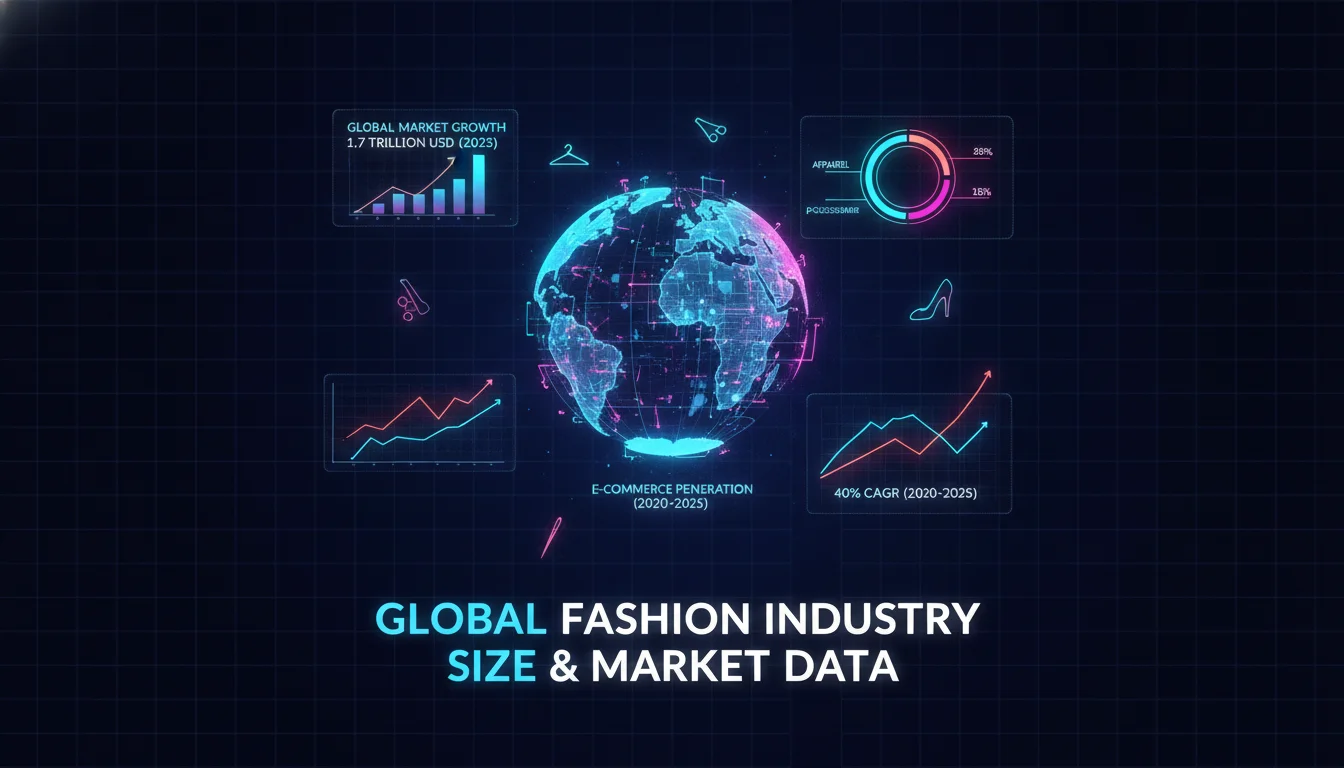
The fashion is one of the world’s largest economic forces, generating $1.7 trillion in revenue in 2021 and recovering sharply from pandemic-era losses.
Revenue and Economic Impact
According to FashionUnited and Euromonitor International, the total revenue of the global apparel and footwear market reached approximately $1.7 trillion in 2021. Before the COVID-19 pandemic, estimates ranged between $1.7 trillion and $2.5 trillion. In 2020, the industry contracted sharply, with revenues falling by roughly 20%, according to McKinsey’s State of Fashion 2022 report. It then rebounded with 18.1% growth in 2020-2021, returning to pre-pandemic levels. The market was forecast to reach $1.84 trillion in 2022 and $1.95 trillion in 2023, per Euromonitor International.
Key Apparel Markets by Country
China and the United States dominate global fashion retail. China’s apparel market benefits from a vast domestic manufacturing base and rising consumer spending. The US remains among the world’s largest importers of clothing, driven by high demand and a strong retail culture. Other major markets include the United Kingdom, Germany, and Japan. Together, these five countries account for the majority of global apparel sales, according to Euromonitor International’s 2021 data.
Consumer Spending Patterns
Womenswear consistently commands the largest share of fashion spending. In 2018, womenswear made up 53% of global fashion retail spending, menswear represented 31%, and childrenswear accounted for 16%, according to Euromonitor International data cited by Common Objective. The gap is narrowing as menswear and gender-neutral fashion gain traction. Spending is also shifting online, with e-commerce claiming a growing portion of all fashion sales and further transforming how the industry reaches its customers.
Pros and Cons of the Fashion Industry
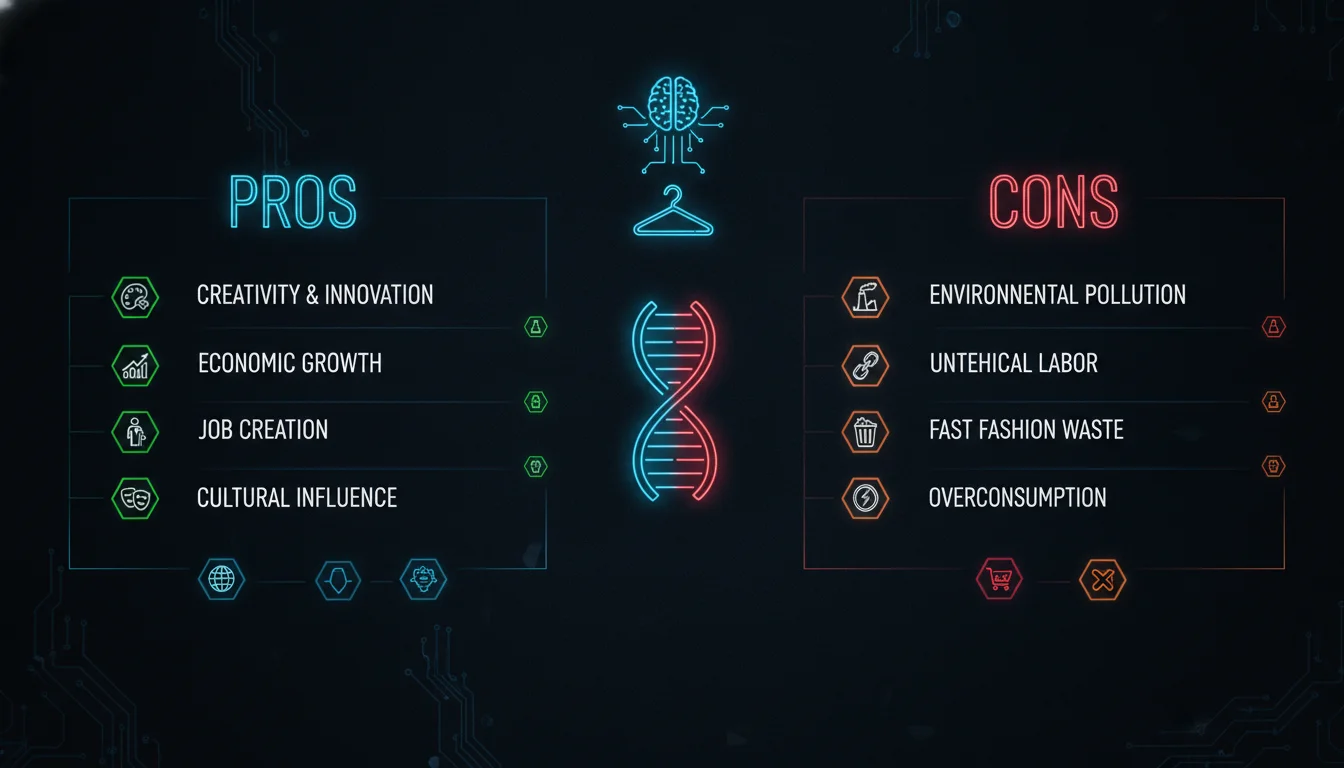
The this type of industry creates enormous cultural and economic value, but it carries real costs that are impossible to ignore.
Pros
- Massive economic engine: $1.7 trillion in global revenue, supporting millions of jobs across design, manufacturing, retail, and logistics.
- Cultural expression: Fashion gives people a language for identity, community, and self-expression, from haute couture to club-ready bodycon.
- Innovation driver: The industry pushes advances in materials science, AI-driven design, and sustainable production technology.
- Career diversity: Roles span creative, technical, business, and sustainability disciplines, offering entry points for a wide range of skill sets.
- Growing sustainability movement: Circular business models, secondhand platforms, and regulatory pressure are pushing the industry toward more responsible practices.
Cons
- Environmental damage: The fashion industry contributes 5-10% of global greenhouse gas emissions and is a major source of water pollution.
- Labor exploitation: Fast fashion’s low-cost model often depends on low-wage workers in unsafe conditions across global supply chains.
- Waste crisis: 100 billion garments produced annually, with the average piece worn only seven times before disposal.
- Overconsumption culture: Fast fashion brands releasing 52 micro-collections per year actively encourage impulse buying and rapid discard cycles.
- Intellectual property gaps: Fashion design receives weaker IP protection than other creative industries, making it difficult for independent designers to protect original work.
The Environmental Impact of Fashion
“A circular economy is based on the principles of designing out waste and pollution, keeping products and materials in use, and regenerating natural systems.” – Ellen MacArthur Foundation
The fashion industry’s environmental footprint is one of the most urgent issues facing the planet, with emissions, water pollution, and textile waste all reaching critical levels.
Carbon Emissions and Climate Change
The fashion industry accounts for between 5% and 10% of global greenhouse gas emissions, a figure cited by environmental groups and supported by industry research. The energy-intensive production of synthetic fibers like polyester, combined with the global transportation of goods, drives a significant portion of these emissions. If current trends continue, the industry’s carbon footprint could consume a substantial share of the world’s remaining carbon budget by mid-century.
Water Pollution and Waste
Textile production is brutally water-intensive. Producing a single cotton T-shirt can require up to 2,700 liters of water. In many manufacturing countries, untreated wastewater from dyeing and finishing processes is dumped directly into rivers, contaminating ecosystems with lead, mercury, and arsenic. SustainYourStyle reports that 100 billion garments are produced each year, and the average garment is worn only seven times before being discarded. In the EU alone, approximately 11 kilograms of textile waste per capita is generated annually, and at least half of all clothes in a typical wardrobe go unworn.
The Rise of Sustainable Fashion
In response to these pressures, sustainable fashion has emerged as a significant movement. Brands are adopting circular business models, using recycled materials, and offering repair services. Consumers are increasingly turning to secondhand clothing, with platforms like Depop and thredUP experiencing rapid growth. The United Nations’ Fashion Charter provides a framework for companies to commit to science-based emissions targets. These shifts signal a growing awareness that the fashion industry must align with planetary boundaries to survive long-term.
Fast Fashion vs. Sustainable Fashion
| Aspect | Fast Fashion | Sustainable Fashion |
|---|---|---|
| Production Speed | New collections weekly or monthly (52+ micro-seasons per year) | Two to four seasonal collections, emphasizing timeless design |
| Materials | Cheap synthetics (polyester, nylon) and conventional cotton | Organic cotton, recycled fibers, low-impact dyes |
| Labor Practices | Often relies on low-wage workers with poor conditions | Fair wages, safe conditions, certifications (e.g., Fair Trade) |
| Environmental Impact | High carbon footprint, wastewater pollution, microfiber shedding | Lower emissions, closed-loop water systems, biodegradable packaging |
| Price | Very cheap ($5-$50 per item) | Higher upfront cost but lower cost-per-wear |
| Longevity | Designed for short-term use; garments may last 5-10 wears | Built to last for years; often repairable and recyclable |
| Consumer Mindset | Impulse buying, trend-chasing | Intentional purchasing, wardrobe curation |
What Is Fast Fashion?
Fast fashion is a business model that prioritizes speed and low cost, bringing the latest runway trends to mass-market shoppers in a matter of weeks. Brands like Zara, H&M, and Shein release dozens of micro-collections each year, encouraging consumers to buy more and discard quickly. According to SustainYourStyle, some fast-fashion brands put out 52 micro-collections per year, far beyond the traditional two-season calendar. This model has made clothing cheaper, but it has also driven a 400% increase in production compared to just 20 years ago.
The Slow Fashion Movement
Slow fashion is the antithesis of fast. It champions quality over quantity, longer-lasting garments, transparent supply chains, and a deeper appreciation for the craft of making clothes. By investing in fewer, better-made pieces, consumers reduce their environmental footprint and develop a more personal style. The fashion industry is seeing a growing number of small, independent labels, including alternative and nightlife-focused brands like Pretty N Poison, that embody slow fashion principles through made-to-order production and deadstock fabrics.
Consumer Shifts Toward Sustainability
Awareness is driving real change. Among Gen Z and Millennials especially, fashion editors and trend forecasters report a growing willingness to pay more for sustainably made clothing. The secondhand market has flourished, with platforms like Vinted and The RealReal normalizing pre-owned fashion. France’s recent ban on advertising by certain fast-fashion companies, as documented by EBSCO, underscores rising regulatory pressure. These shifts confirm that the fashion industry’s environmental and social practices are no longer optional extras but central to its future.
Fashion and Political Activism
Fashion has always been political. What people wear signals allegiance, protest, and power. From suffragettes wearing white to designers sending political statements down the runway, clothing has served as a form of activism for centuries. As Wikipedia notes, fashion intersects with political activism in ways that are both deliberate and organic, with subcultures using dress to challenge dominant power structures. Today, brands are increasingly expected to take public positions on social issues, and consumers, particularly younger ones, hold them accountable when they don’t.
“There is no beauty in the finest cloth if it makes hunger and unhappiness.” – Mahatma Gandhi, as cited by SustainYourStyle
The 3-3-3 Rule in Fashion
The 3-3-3 rule in fashion is a wardrobe challenge where you select 3 items from your existing closet and style them into 3 different outfits for 3 weeks. It’s a practical tool for building a more intentional wardrobe, reducing overconsumption, and discovering how versatile your existing pieces actually are. Fashion editors and slow fashion advocates use it to push back against the constant pressure to buy new. For nightlife dressing, the rule works differently: three statement pieces, three occasions, infinite attitude.
Careers in the Fashion Industry
The fashion industry offers a wide spectrum of career opportunities, from creative roles to tech-driven positions. Here’s how to start building yours.
Step 1: Identify Your Niche
Decide whether you want to work in design, merchandising, marketing, journalism, sustainability, or technology. The fashion industry is diverse, so clarifying your interest early helps you target relevant education and experience.
Step 2: Gain Relevant Skills and Education
While not always required, a degree from a fashion school like FIT or Central Saint Martins can open doors. Many roles also benefit from skills in digital marketing, data analytics, or CAD software. Internships are critical for building a network and portfolio.
Step 3: Build a Portfolio or Resume
Creatives need a strong portfolio showcasing original designs. Business roles require proven marketing or sales results. Online portfolios and LinkedIn profiles are non-negotiable in a digital-first fashion industry.
Step 4: Network and Apply
Attend fashion events, join industry groups like the US Fashion Industry Association (USFIA), and use platforms like BoF Careers. Competition is fierce. Persistence is not optional.
Design and Creative Roles
Designers, patternmakers, and textile artists form the creative core of the fashion industry. They conceptualize collections, choose fabrics, and oversee production. Digital fashion designers creating virtual garments for the metaverse have also emerged as a distinct and growing career path.
Business and Marketing
Behind every successful label is a team of merchandisers, buyers, supply chain managers, and marketers. The fashion industry relies on data-driven decisions to forecast trends, price products, and drive sales. Roles in public relations and influencer marketing have grown sharply with the rise of social media.
Sustainability and Ethical Roles
As the fashion industry faces increasing scrutiny, roles like sustainability manager, circular economy strategist, and CSR director are in high demand. These professionals work to reduce environmental impact, ensure fair labor practices, and guide brands toward more ethical models.
The Future of Fashion
Technological Innovations
Technology is set to transform the fashion industry further. AI-driven design tools, 3D knitting, and blockchain for supply chain transparency are gaining traction. Digital fashion, clothing that exists only in virtual spaces, could become a major market as the metaverse expands. These innovations promise to make the industry more efficient and significantly less wasteful.
Regulatory Changes
Governments are beginning to hold the fashion industry accountable. The European Union is developing extended producer responsibility (EPR) schemes that require brands to pay for textile waste management. The New York Fashion Act, if passed, would mandate that large fashion companies disclose their environmental and social due diligence. Such regulations could reshape global supply chains and force a reckoning with decades of unchecked production.
The Role of Alternative and Nightlife Fashion
While mainstream fashion chases mass trends, alternative fashion, rooted in subcultures like punk, goth, rave, and club scenes, is gaining real visibility. Brands that cater to bold self-expression and nightlife are proving that sustainability and edgy design can coexist. Labels offering festival wear or party-ready corsets and bodycon dresses increasingly use eco-friendly materials and small-batch production. This niche doesn’t just challenge the homogeneity of the fashion industry. It champions individuality and ethical consumption at the same time. As consumers seek uniqueness and meaning in their clothing, alternative fashion may well steer the broader industry toward more authentic and responsible practices.
At Pretty N Poison, we live in that space. The Pretty Edit brings soft, romantic energy. The Poison Edit goes darker, sharper, more dangerous. The Duality collection holds both truths at once. And the Night Ritual is exactly what it sounds like: going-out essentials built for women who dress with intention. Explore the full range at prettynpoison.com and discover your duality.
Frequently Asked Questions
What is the fashion industry?
The fashion industry is the global business of designing, manufacturing, and selling clothing and accessories. It spans haute couture, ready-to-wear, and mass-market apparel, and generates trillions of dollars annually across design, production, retail, and digital channels.
How big is the fashion industry?
In 2021, the global fashion industry generated approximately $1.7 trillion in revenue, according to FashionUnited and Euromonitor International. McKinsey’s State of Fashion 2017 report noted that if the fashion industry were a country, its GDP would rank seventh worldwide.
What are the main environmental impacts of the fashion industry?
The fashion industry contributes 5-10% of global greenhouse gas emissions, pollutes waterways with toxic chemicals from dyeing processes, and produces over 100 billion garments per year, most of which end up in landfills or incinerators. The EU alone generates approximately 11 kilograms of textile waste per capita annually.
What is the difference between fast fashion and sustainable fashion?
Fast fashion emphasizes cheap, trend-driven clothing produced rapidly, often with poor labor and environmental records. Sustainable fashion prioritizes ethical production, durable materials, and circular models designed to minimize harm and extend garment life.
What is the 3-3-3 rule in fashion?
The 3-3-3 rule is a wardrobe challenge where you choose 3 existing pieces and create 3 different outfits to wear over 3 weeks. It encourages intentional dressing, reduces overconsumption, and helps you get more out of what you already own.
What are five careers in the fashion industry?
Five key careers in the fashion industry include fashion designer, merchandiser, sustainability manager, fashion marketer, and digital fashion designer. Each requires a different skill set, but all benefit from a strong understanding of trends, consumer behavior, and the industry’s evolving landscape.
What are fashion capitals?
Fashion capitals like Paris, New York, and Milan are cities that exert major influence over global trends and house leading design houses, fashion weeks, and industry headquarters. Tokyo, London, and Los Angeles are recognized as second-tier fashion centers with strong independent design scenes.
Key Takeaways
- A fashion show is where designers unveil their collections to an exclusive audience of buyers, media, and tastemakers.
- The Big 4 fashion weeks, New York, London, Milan, Paris, dictate global trends and set the industry’s rhythm.
- Fashion shows have transformed from intimate salon presentations to full-scale theatrical productions worth millions.
- Getting into a fashion show requires industry connections, press credentials, or scoring coveted public tickets.
- Digital fashion shows exploded post-2020, reaching millions while slashing production costs.
A fashion show isn’t just a presentation, it’s theater, commerce, and art colliding on a runway. These curated events serve as the industry’s most powerful marketing tool, where designers transform fabric into fantasy and buyers place million-dollar orders. From the front rows of Paris to livestreamed spectacles, fashion shows remain the beating heart of an industry built on desire and exclusivity.
What Is a Fashion Show?
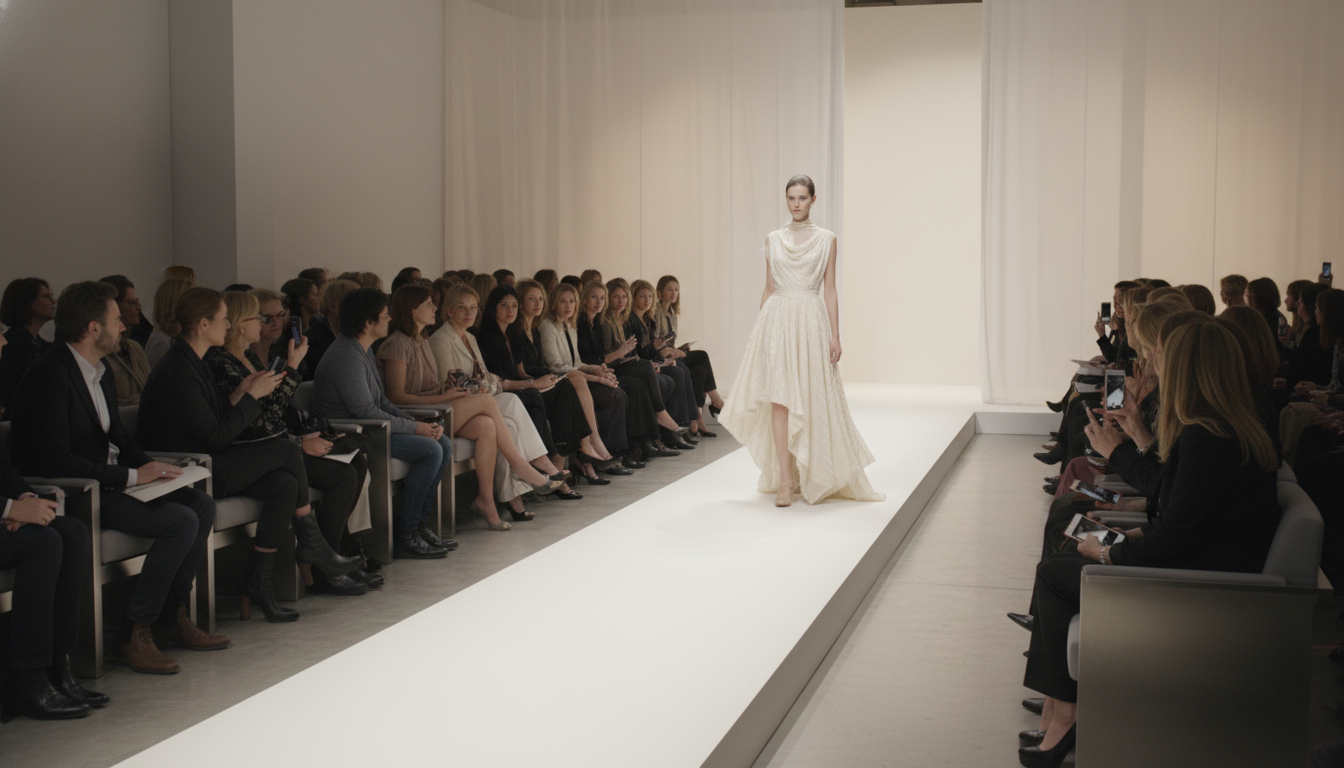
A fashion show is the fashion industry’s most exclusive sales pitch, where designers present their upcoming collections to carefully curated audiences of buyers, journalists, stylists, and influencers. These events follow the sacred seasonal calendar, spring/summer and fall/winter, showcasing everything from ready-to-wear pieces to haute couture masterpieces. According to Wikipedia, Charles Frederick Worth revolutionized the concept in the 19th century by using live models instead of static mannequins, creating the blueprint we still follow today.
The modern fashion show is equal parts business meeting and performance art. Designers don’t just display clothes, they craft narratives, set moods, and create moments that will live forever on Instagram. Every element serves a purpose: the lighting highlights key silhouettes, the music builds emotional connection, and the casting choices communicate brand values.
Key Elements of a Fashion Show
- Catwalk (Runway): The sacred stage where fashion dreams come to life, raised, lit, and designed to command attention.
- Models: Living mannequins who embody the designer’s vision, chosen for their ability to sell the fantasy.
- Lighting and Music: The invisible directors that guide emotion and focus throughout the presentation.
- Audience: The fashion elite, editors, buyers, celebrities, and influencers who can make or break a collection.
- Set Design: Theatrical backdrops that transport viewers into the designer’s world.
Types of Fashion Shows
- Runway Shows: The classic format where models strut down a linear or circular catwalk in choreographed sequences.
- Presentation Shows: Intimate displays where guests move freely, examining garments up close like art in a gallery.
- Digital Shows: Virtual experiences that broke barriers during the pandemic and never looked back.
- Trunk Shows: Exclusive shopping events where buyers can place orders directly from the collection.
- Haute Couture Shows: The fashion world’s most exclusive presentations, showcasing custom-made pieces for the ultra-elite.
History of Fashion Shows
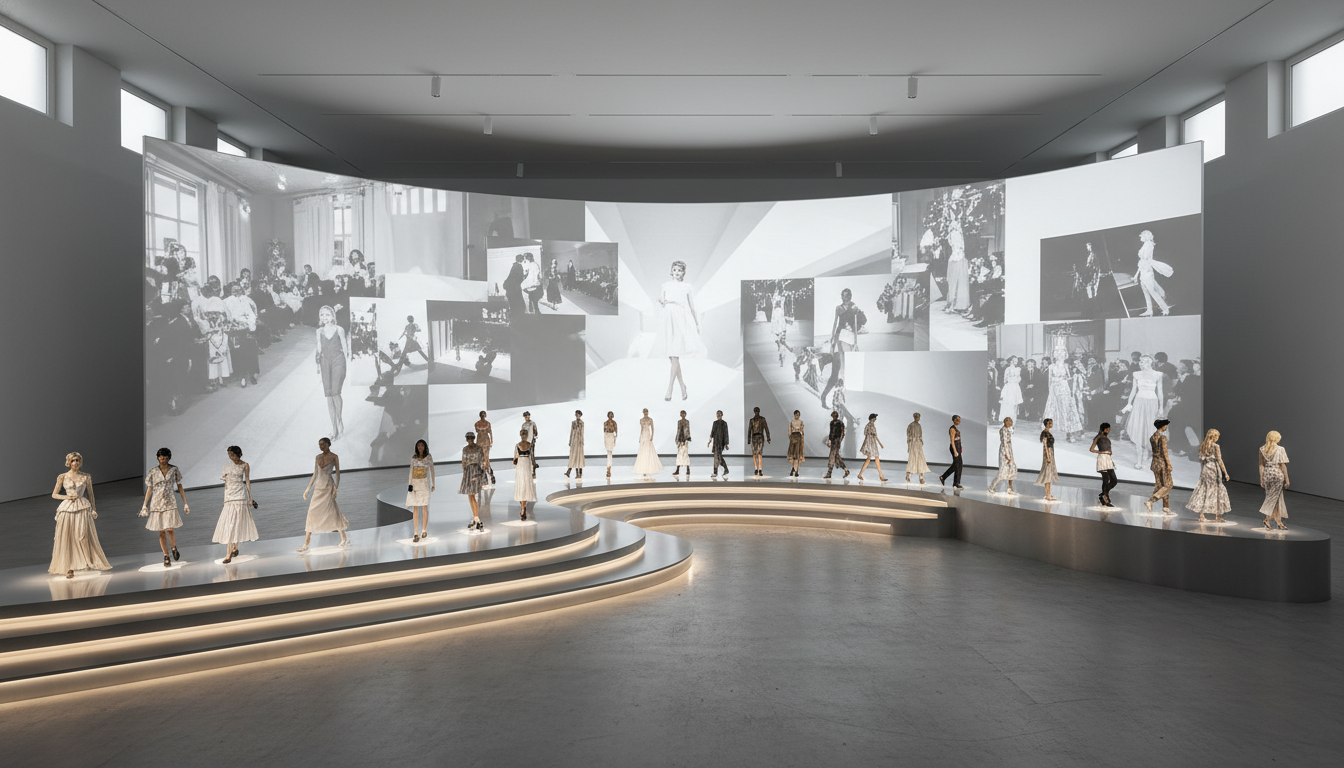
The fashion show has evolved from exclusive salon gatherings to global media spectacles that generate billions in coverage and sales.
19th and 20th Centuries
Charles Frederick Worth changed everything in the 1850s when he decided live models could sell fashion better than wooden forms. His Parisian salon became the template for luxury presentation. By the early 1900s, “fashion parades” were standard practice in couture houses, with clients sipping champagne while models displayed the latest creations.
The first organized fashion week launched in New York in 1943, born from wartime necessity when American designers couldn’t travel to Paris. London, Milan, and Paris followed suit, creating the seasonal rhythm that still governs the industry. These events transformed fashion from craft to global business.
21st Century Innovations
The 2000s brought theatrical revolution. Alexander McQueen turned runways into art installations. John Galliano created historical fantasies. Fashion shows became entertainment spectacles that rivaled Broadway productions. Social media democratized access, suddenly, anyone with WiFi could watch Chanel from their couch.
According to Business of Fashion, digital fashion shows reduced production costs by 30-50% while reaching audiences 10 times larger than traditional shows. The pandemic accelerated this shift, proving that fashion could be just as seductive through a screen.
What to Look For When Choosing Fashion Shows to Attend
Not all fashion shows are created equal. Here’s your insider guide to identifying the events worth your time and energy.
Designer Reputation and Industry Standing
Established names like Chanel, Dior, and Gucci guarantee production value and industry buzz. Emerging designers offer discovery potential, you might witness the next big thing before anyone else. Research the designer’s previous shows, press coverage, and celebrity endorsements.
Venue and Production Quality
Location tells you everything about a show’s ambition. Grand Palais in Paris? Expect spectacle. A warehouse in Brooklyn? Prepare for raw creativity. Check if the brand has a history of memorable presentations or if they’re known for playing it safe.
Guest List and Industry Presence
The front row reveals a show’s importance. Anna Wintour’s presence signals industry significance. Celebrity attendance means mainstream media coverage. Influencer heavy guest lists suggest the brand is chasing social media buzz over traditional fashion credibility.
Collection Significance
Debut collections, anniversary shows, and designer farewells carry extra weight. Collaborative collections with major retailers or artists generate unique energy. Seasonal importance matters too, spring/summer shows in September set trends for the following year.
Access Level and Exclusivity
Invitation-only shows offer networking opportunities but limited availability. Public ticket events provide easier access but less industry interaction. Digital shows maximize reach but minimize personal connection. Choose based on your goals.
How to Attend a Fashion Show
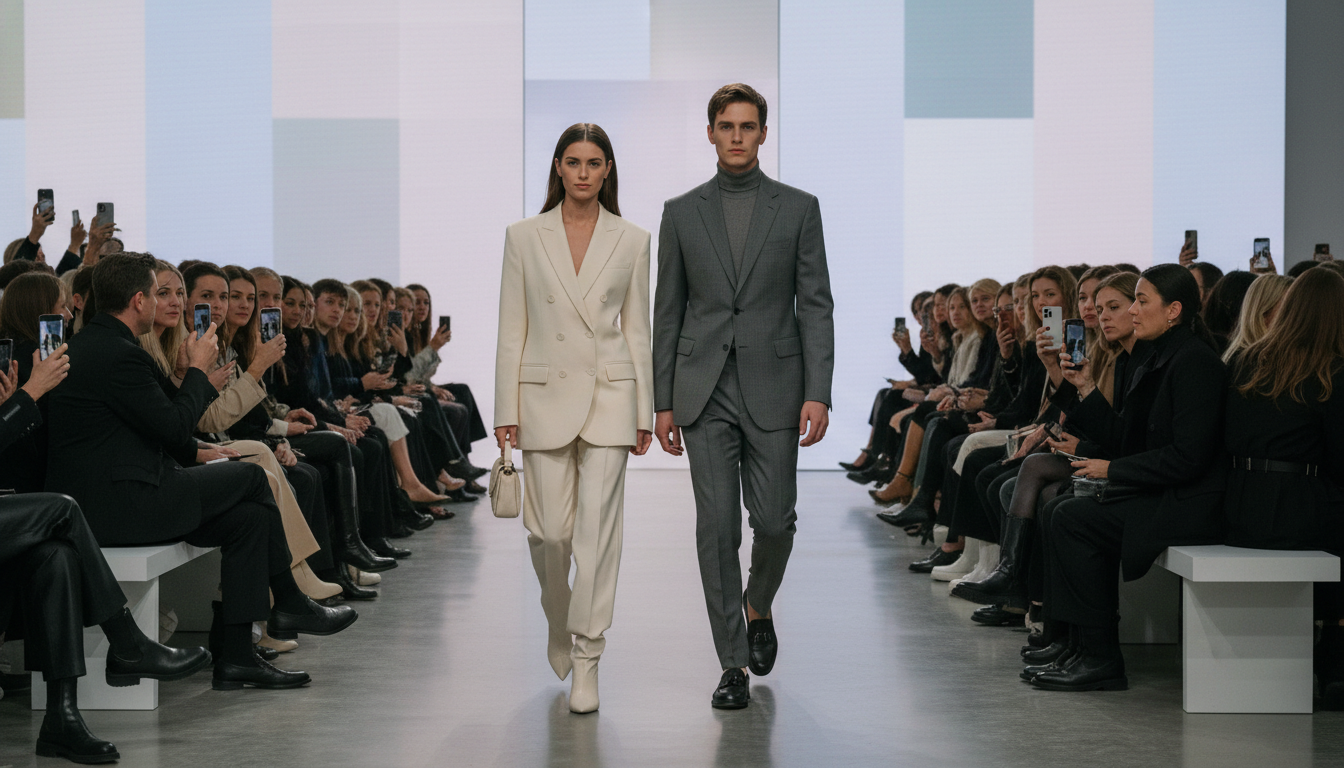
Getting into a fashion show requires strategy, persistence, and sometimes pure luck. Here’s your step-by-step battle plan for scoring that coveted seat.
Step 1: Identify Target Shows
Start with the Big 4, New York, London, Milan, and Paris Fashion Weeks dominate the calendar. But don’t sleep on emerging markets like Berlin, Tokyo, São Paulo, and Lagos, where fresh talent often debuts. Research show schedules 3-6 months in advance and prioritize based on your interests and industry connections.
Step 2: Build Your Fashion Credentials
The fashion world runs on credibility. Start a fashion blog or Instagram account with consistent, quality content. Apply for press accreditation through official fashion week organizations. Register as a buyer if you have retail connections. Volunteer at fashion events to build relationships and prove your dedication.
Step 3: Secure an Invitation
Invitations flow through specific channels. Connect with PR agencies representing your target designers, they control guest lists. Network at industry events, fashion parties, and showroom visits. Apply for public tickets when available (NYFW: The Shows offers limited consumer access). Enter brand contests and social media giveaways.
Step 4: Master the Follow-Up
Send polite follow-up emails 2-3 weeks before fashion week. Reference previous interactions or mutual connections. Offer value, exclusive coverage, social media promotion, or buyer potential. Be persistent but not annoying. One email per week maximum.
Step 5: Prepare for the Experience
Confirm attendance immediately when invited. Study the designer’s aesthetic and previous collections. Plan your outfit carefully, you’re part of the show’s visual story. Arrive 30 minutes early, bring business cards, and silence your phone. No flash photography unless explicitly permitted.
How to Style Yourself for Fashion Show Attendance
Your fashion show outfit isn’t just clothing, it’s your industry calling card and networking tool rolled into one killer look.
Understanding Fashion Week Dress Codes
Each fashion week has its own energy. New York favors sleek minimalism with statement accessories. London embraces creative risk-taking and vintage mixing. Milan demands polished luxury and impeccable tailoring. Paris expects effortless chic with unexpected details.
Building Your Fashion Week Wardrobe
Invest in versatile statement pieces that photograph well. A structured blazer works for morning presentations and evening parties. Designer accessories signal industry knowledge, carry that Bottega bag or wear those Gianvito Rossi boots. Comfortable shoes are non-negotiable; you’ll walk miles on concrete floors.
Outfit Ideas by Show Type
Runway Shows: Elevated basics with one standout piece. Think tailored trousers, silk blouse, and a conversation-starting coat. Avoid busy patterns that compete with the collection.
Presentation Shows: Comfortable chic for standing and mingling. Midi dresses with comfortable heels, or wide-leg pants with fitted tops. Bring a structured bag for business cards and phone charging.
Evening Shows: Cocktail-appropriate with fashion edge. Slip dresses with statement jewelry, or sleek separates in luxe fabrics. This is your moment to reference current trends subtly.
Digital Show Viewing Parties: Instagram-ready looks that translate well on camera. Bold colors, interesting textures, and pieces that spark conversation work best.
Seasonal Styling Considerations
February/March shows happen during unpredictable weather. Layer strategically with removable pieces. September/October shows offer more styling freedom but require transitional pieces that work indoors and out. Always check venue information, outdoor shows need weather backup plans.
Fashion Show Production: Behind the Scenes
Creating a fashion show is like directing a movie with a 15-minute runtime and a million-dollar budget. Every second counts, every detail matters, and there’s no room for error.
Pre-Production Phase
The magic starts 4-6 months before showtime. Designers finalize collections while simultaneously planning the presentation. Model castings happen 6-8 weeks out, with top shows seeing 200+ hopefuls for 20-30 spots. Set designers create mood boards and technical drawings. Music supervisors craft soundtracks that enhance each look’s impact.
Fittings begin 2 weeks before the show. Each model needs multiple outfit changes, with backup pieces for every look. Hair and makeup teams develop concepts that complement the collection’s aesthetic. Choreographers plan model routes and timing, a typical show features 40-60 looks in 12-15 minutes.
Production Timeline
Show day operates on military precision:
- 6 AM: Venue setup begins, lighting, sound, seating arrangements.
- 10 AM: Hair and makeup teams start on models, working in assembly-line efficiency.
- 2 PM: Dress rehearsal with full looks, music, and lighting cues.
- 4 PM: Final fittings and last-minute alterations.
- 6 PM: Models in position, final sound and lighting checks.
- 7 PM: Showtime, 15 minutes that represent months of planning.
- 7:30 PM: Backstage interviews, buyer appointments, and celebration (or crisis management).
Budget Breakdown
According to Forbes Business Council, fashion show budgets range from $50,000 for emerging designers to over $1 million for luxury houses. Here’s where the money goes:
- Venue and Production (30-40%): Runway construction, lighting, sound, security
- Models and Casting (20-25%): Model fees, casting director, hair/makeup teams
- Marketing and PR (15-20%): Invitations, press kits, photographer, videographer
- Catering and Hospitality (10-15%): Guest refreshments, after-party, VIP services
- Miscellaneous (5-10%): Transportation, insurance, emergency fund
Fashion Show Etiquette and Insider Tips
Fashion shows operate by unwritten rules that separate industry insiders from tourists. Master these protocols to navigate like a pro.
Arrival and Seating Protocol
Arrive fashionably on time, not early, not late. Check-in happens at designated areas; have your invitation ready on your phone or printed. Seating is hierarchical and non-negotiable. Front row belongs to major editors, buyers, and celebrities. Second row houses important press and influencers. Standing room means you’re new or uninvited, embrace it gracefully.
During the Show
Phones on silent, flash photography forbidden unless specified. Take notes discretely, buyers and editors are working, not just watching. Applaud at the end, not during. The designer’s finale walk signals the show’s conclusion. Stay seated until the designer exits unless it’s clearly over.
Post-Show Networking
The real business happens after the lights come up. Exchange contacts with fellow attendees, but read the room, some people need to rush to the next show. Backstage access is invitation-only; don’t push boundaries. Social media posts should tag appropriately and avoid unflattering behind-the-scenes shots.
Digital Show Etiquette
Live-streaming shows deserve the same respect as in-person events. Engage thoughtfully in chat features. Share content responsibly, some brands restrict screenshots or recordings. Participate in virtual networking when offered.
Comparison: Traditional vs. Digital Fashion Shows
| Aspect | Traditional Runway Show | Digital/Virtual Show |
|---|---|---|
| Audience Reach | 100-500 in-person guests | Millions via live stream |
| Production Cost | $100,000 – $1M+ | $20,000 – $200,000 |
| Lead Time | 4-6 months | 2-3 months |
| Environmental Impact | High (travel, materials) | Low (no physical venue) |
| Engagement | Immediate, sensory | Interactive, shareable |
| Networking Opportunities | High-value face-to-face | Limited to virtual platforms |
| Content Longevity | Relies on media coverage | Permanent, rewatchable |
| Examples | Chanel, Dior, Gucci | Balenciaga, Prada, Tommy Hilfiger |
Fashion Show Trends and Innovations in 2026
The fashion show landscape continues evolving at breakneck speed, driven by technology, sustainability demands, and changing consumer expectations.
Sustainability and Ethical Practices
Eco-consciousness is reshaping how shows get produced. Brands use recycled materials for set construction and digital lookbooks instead of printed programs. According to Common Objective, 60% of fashion executives plan carbon-neutral shows by 2027. Stella McCartney leads with zero-waste productions, while Gabriela Hearst offsets all show emissions through verified programs.
Local sourcing reduces transportation impact. Designers hire regional models, source flowers from nearby farms, and partner with local caterers. Some brands skip traditional fashion weeks entirely, hosting intimate presentations in their home cities.
Inclusivity Revolution
Diversity isn’t just trending, it’s becoming standard practice. Runway casting now reflects real-world demographics, with 45% of models being people of color and 30% representing size-inclusive ranges, per The Fashion Law. Age diversity is expanding too, with models over 50 walking for major brands.
Accessibility improvements include sign language interpreters, audio descriptions for visually impaired attendees, and wheelchair-accessible venues. Some shows offer sensory-friendly viewing options for neurodivergent guests.
Technology Integration
Augmented reality transforms how audiences experience shows. Balenciaga’s 2024 VR presentation let remote attendees feel like front-row guests. AI-generated designs are appearing in experimental presentations, blurring lines between human creativity and machine learning.
Interactive elements engage digital audiences through shoppable livestreams, 360-degree cameras, and real-time styling advice. Some brands offer virtual try-on experiences during shows, letting viewers see how pieces look on their body type.
Hybrid Show Formats
The future combines physical and digital elements. Brands host intimate in-person shows while simultaneously streaming to global audiences. Some create multiple viewing experiences, VIP guests see the live show while online viewers get exclusive behind-the-scenes content and designer interviews.
Fashion Show Investment Guide: Budget Planning
Understanding fashion show economics helps whether you’re planning to attend, invest in fashion stocks, or launch your own brand.
Budget Tiers for Attendees
Budget Approach ($500-1,500): Focus on digital shows and public ticket events. Invest in one quality outfit that photographs well. Stay in budget accommodations outside city centers. Use public transportation and pack lunches.
Mid-Range Investment ($2,000-5,000): Attend 2-3 major shows per season. Book hotels within walking distance of venues. Budget for networking dinners and after-parties. Invest in versatile designer accessories that elevate multiple outfits.
Premium Experience ($5,000+): Full fashion week access with VIP treatment. Stay at fashion week headquarters hotels. Hire stylists for optimal looks. Attend exclusive parties and private showroom appointments.
ROI Considerations for Industry Professionals
Fashion week attendance pays dividends for the right professionals. Buyers place orders worth millions. Editors secure exclusive interviews and content. Influencers land brand partnerships. Calculate potential returns against investment costs.
Track metrics like new contacts made, social media engagement, and business opportunities generated. Many professionals consider fashion week attendance essential marketing spend rather than optional luxury.
Care and Maintenance: Preserving Your Fashion Week Wardrobe
Your fashion show outfits work harder than regular clothes, facing photographers, crowds, and multiple wears per day. Proper care extends their lifespan and maintains their impact.
Pre-Show Preparation
Professional cleaning before fashion week ensures everything looks pristine. Steam or press garments the night before each show. Pack a emergency kit with stain removal pens, safety pins, and fashion tape. Waterproof sprays protect shoes and bags from unpredictable weather.
During Fashion Week
Rotate outfits to avoid over-wearing pieces. Hang garments immediately after each show to prevent wrinkles. Use garment bags for transportation between venues. Keep shoes in dust bags and stuff with tissue paper to maintain shape.
Post-Show Recovery
Professional cleaning removes accumulated dirt, sweat, and makeup stains. Store pieces properly, hanging for structured items, folded for knits. Document outfit photos for future reference and social media content. Some pieces become investment pieces worth preserving for years.
Investment Piece Maintenance
Designer items require specialized care. Research recommended cleaning methods for luxury fabrics. Store leather goods with proper conditioning. Keep original packaging and authenticity cards for resale value. Consider professional storage for pieces worn only during fashion weeks.
What to Expect: Your First Fashion Show Experience
First-time fashion show attendance can feel overwhelming. Here’s what really happens behind the glamorous facade.
The Reality Check
Fashion shows involve lots of waiting. Guests arrive early for good positioning, then wait for the show to start (often 30+ minutes late). The actual presentation lasts 10-15 minutes. Most of your time gets spent networking, people-watching, and navigating between venues.
Venues can be uncomfortable, concrete floors, minimal seating, extreme temperatures. Bring comfortable shoes for walking between shows and standing in lines. Pack snacks and water; catering is often limited to champagne and canapés.
Social Dynamics
Fashion shows are working environments disguised as parties. Editors take notes, buyers place orders, and influencers create content. Don’t expect constant socializing, many attendees are focused on business objectives.
Networking happens naturally through shared experiences. Comment on collections, compliment others’ outfits, and exchange contacts with people whose work you genuinely admire. Quality connections matter more than quantity.
Managing Expectations
Not every show will be memorable. Some presentations feel more like business meetings than artistic experiences. Others will leave you breathless with their creativity and execution. Approach each show with curiosity rather than specific expectations.
Photography restrictions vary by show. Some welcome social media sharing; others prohibit all devices. Respect the rules and focus on experiencing the moment rather than documenting everything.
Frequently Asked Questions
What is the purpose of a fashion show?
A fashion show serves multiple purposes: presenting new collections to buyers who place wholesale orders, generating media coverage and brand awareness, and creating content for marketing campaigns. It’s essentially a live commercial that combines art, commerce, and entertainment to sell fashion.
How long does a typical fashion show last?
The actual runway presentation lasts 10-20 minutes, but the entire experience spans 2-3 hours including arrival, seating, the show itself, and post-show networking. Factor in travel time between venues during fashion week.
Can anyone attend a fashion show?
Most shows are invitation-only for industry professionals, but some fashion weeks offer public tickets for select shows. Digital presentations are often free to watch online. Building industry credentials through blogging, social media, or fashion education increases invitation chances.
What are the Big 4 fashion weeks and when do they happen?
New York, London, Milan, and Paris Fashion Weeks are the industry’s most important events. They occur twice yearly: February/March for fall/winter collections and September/October for spring/summer collections. Each city hosts shows for about one week.
How much does it cost to produce a fashion show?
Production costs range from $50,000 for emerging designer presentations to over $1 million for major luxury brands. Factors include venue rental, model fees, production elements, catering, and marketing. Digital shows typically cost 30-50% less than traditional runway presentations.
What should I wear to a fashion show?
Dress to respect the designer’s aesthetic while expressing your personal style. Avoid overly casual clothing or anything that might upstage the collection. Comfortable shoes are essential since you’ll do lots of walking and standing. Research the specific show’s vibe and dress accordingly.