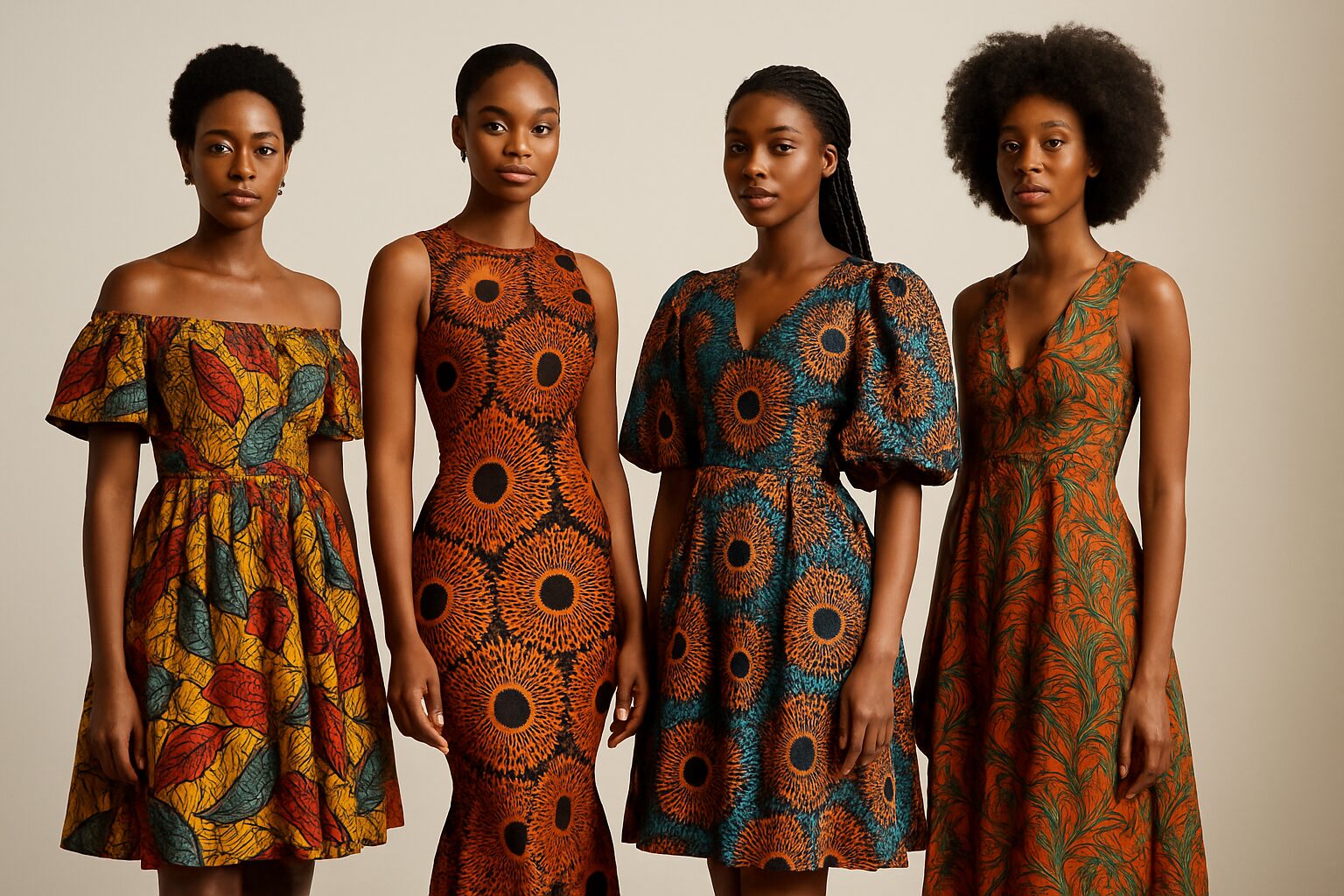
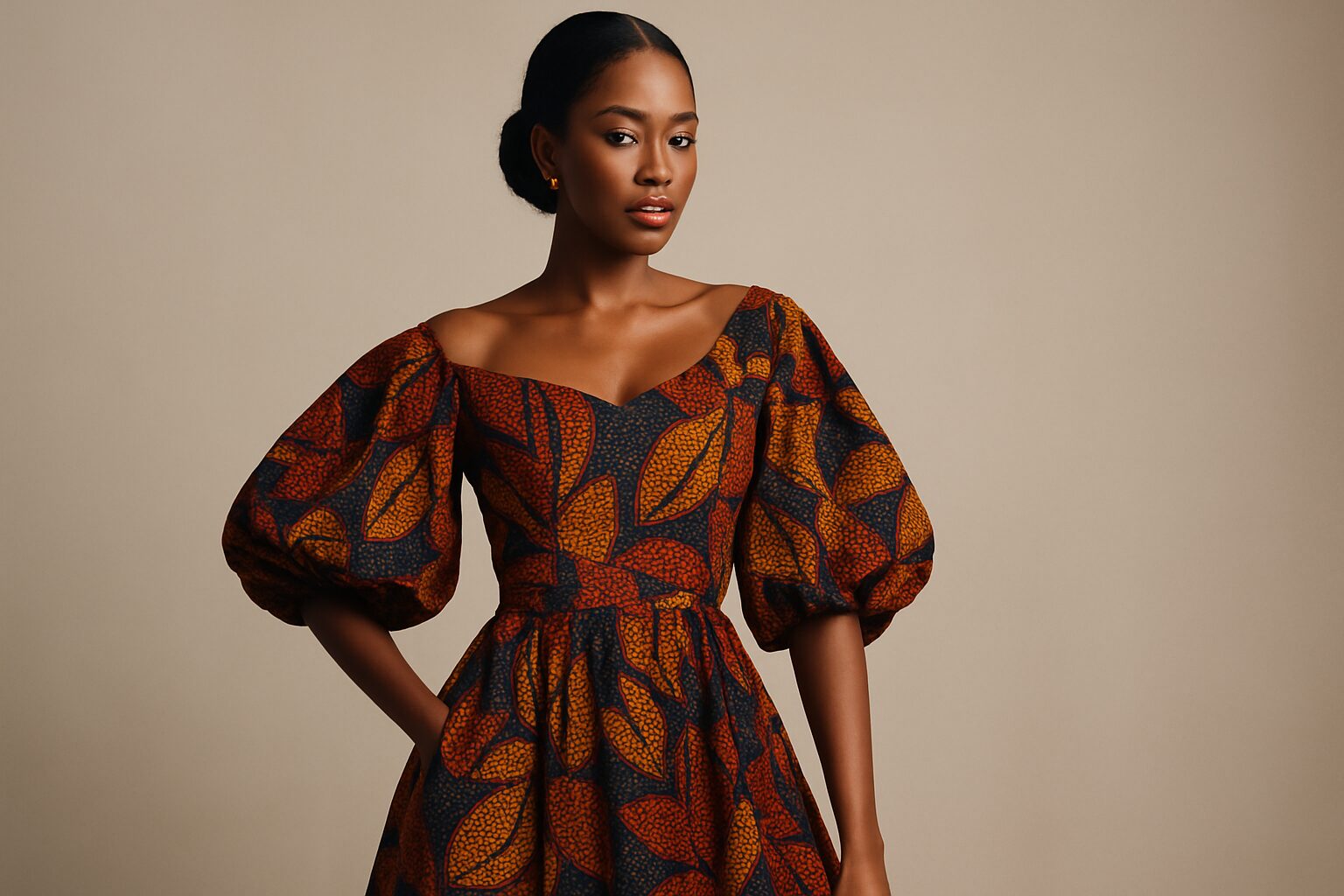
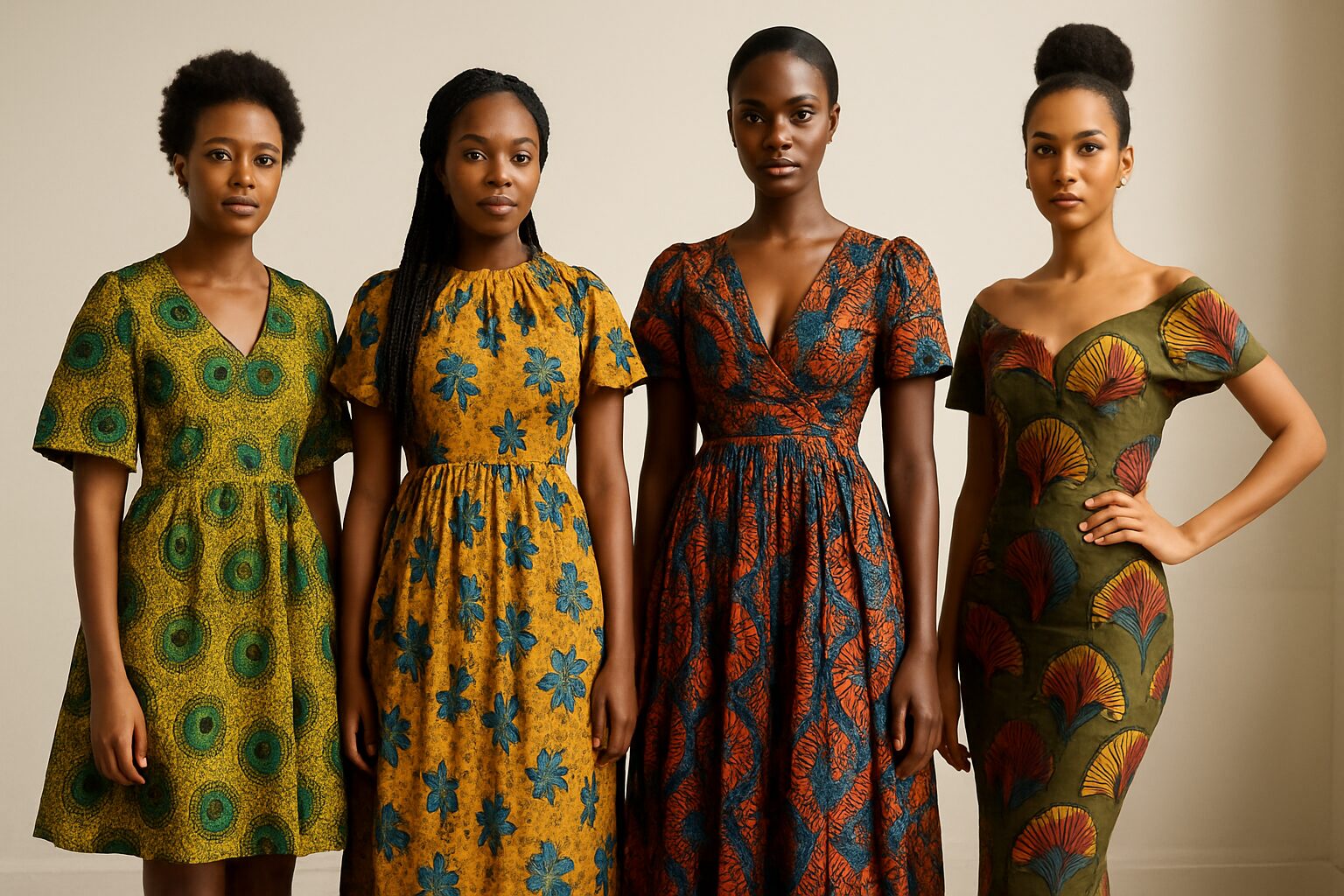
A fashion blog is a digital editorial platform for personal style, trend analysis, outfit documentation, and shopping guidance.
Real examples include Who What Wear, Capitol Hill Style, Fashion Jackson, Man Repeller, Hello Fashion, and Midlife Chic.
Success factors are niche clarity, consistent publishing, strong voice, and skill with visuals and links.
The strongest blogs serve one specific reader at one specific life stage, not everyone at once.
Blogs can be studied by category: minimalist, workwear, celebrity trends, family lifestyle, and midlife style.
What Is a Fashion Blog?
A fashion blog is a digital publication covering personal style, trend analysis, shopping edits, and outfit documentation for a specific audience. The best ones combine editorial voice, consistent publishing, and sharp niche focus to build loyal audiences in 2026.
Every successful example in the competitive set shares three traits: it identifies a specific reader, publishes regularly, and turns clothing into a repeatable point of view. A fashion blog is not simply an online store or a static lookbook. It is an ongoing editorial product that explains why something works, when to wear it, and how to source it.
Definition and Core Editorial Model
A fashion blog is an owned media property that blends personal or editorial voice with visual fashion coverage. It can be run by one writer, a multi-author team, or a brand. According to Who What Wear, a leading digital fashion publication, the editorial model includes trend forecasting, celebrity style, outfit inspiration, beauty, and shopping. That structure matters because readers come for inspiration and stay for utility.
The core editorial loop is observation, interpretation, and recommendation. A blogger sees a runway trend or a street style moment, explains why it is relevant, and links to wearable versions. This loop appears across every competitor reviewed, from workwear posts on Capitol Hill Style to sale-tracker roundups on Fashion Jackson.
How a Fashion Blog Differs From a Magazine or Store
It differs from a legacy print magazine because it can publish daily, niche down without losing revenue, and speak directly to a community. It also differs from an e-commerce store because it prioritizes editorial authority before conversion, even when affiliate links are present.
The evidence shows this clearly. Who What Wear runs a podcast and a living vertical. Capitol Hill Style includes a Substack and a community page. These extensions are editorial, not purely transactional. Commerce is embedded, but the editorial angle still leads.
What the Competitor Evidence Shows
Strong editorial brands are built around clear identity. Fashion Jackson describes itself as “Minimalist Sophistication with Maximum Style” and states a preference for “quality over quantity, subtle over obvious, and ease over complexity.” Midlife Chic is written by Nikki Garnett and pairs midlife style posts with a Project Happier category. Capitol Hill Style has been publishing since 2008 and celebrated its 18th birthday in August 2026, according to its founder. Those identities are not interchangeable. That is the point.
“Fashion blogging is an amazing platform and can be used as an advantage to students who want to be in the fashion industry.”
– Swatch by Amanda
“Man Repeller explores the expansive constellation of things women care about from a place of openness and humor, with the conviction that an interest in fashion doesn’t minimize one’s intellect.”
– Man Repeller, via Swatch by Amanda
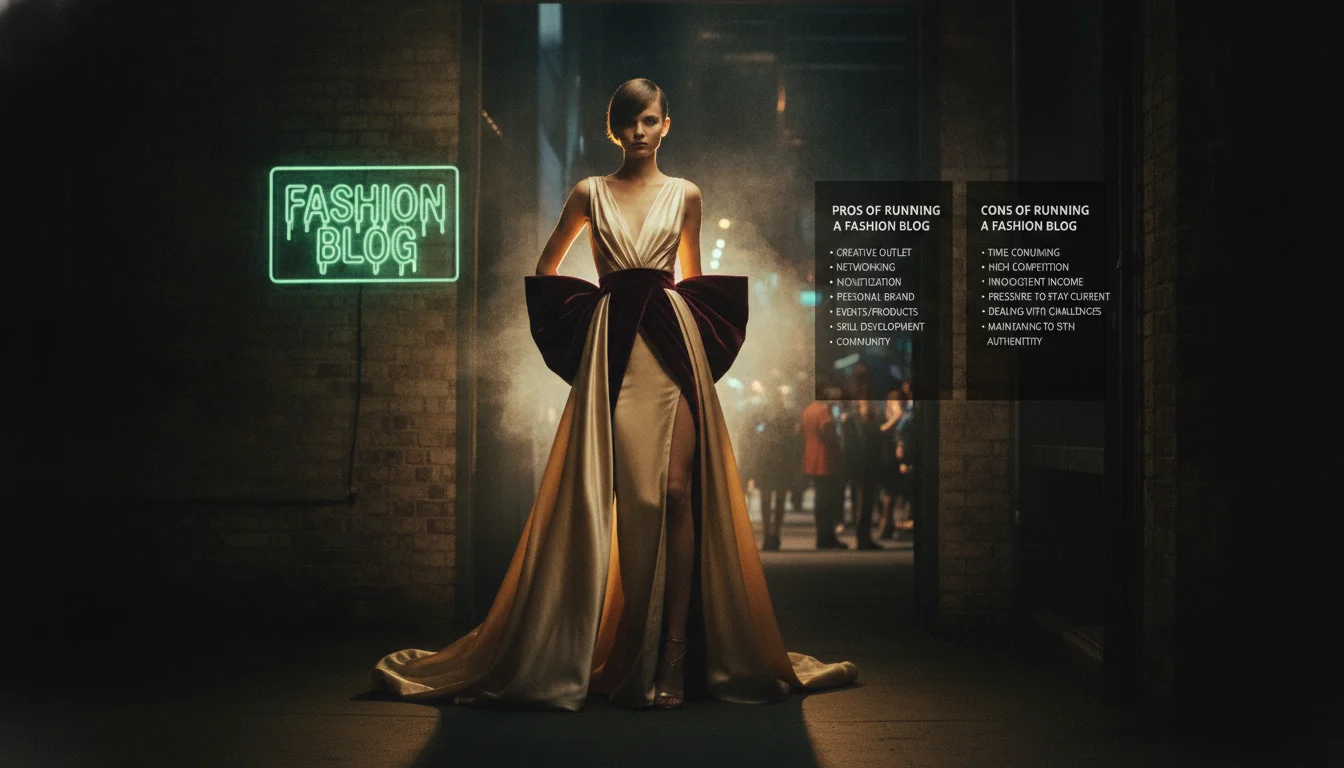
Pros and Cons of Running a Fashion Blog
Pros
Creative ownership. You control the voice, the niche, and the visual identity. No editor telling you to play it safe.
Multiple revenue streams. Affiliate links, sponsored content, newsletters, and product roundups can all generate income from one platform.
Long-term authority. Capitol Hill Style has published consistently since 2008. Longevity compounds. A blog that survives five years becomes a reference point in its niche.
Community building. Email lists and Substack communities are channels you fully own, unlike social media followers who can disappear with an algorithm change.
Low barrier to entry. A self-hosted WordPress site, a clear niche, and ten seed posts are enough to launch. The cost is time, not capital.
Cons
Slow growth curve. Most editorial sites take months to gain search traction. Consistency without early reward tests every blogger’s resolve.
Visual production demands. Fashion content is inherently visual. Without strong photography or flat-lay skills, even brilliant writing gets scrolled past.
Algorithm dependency. Search and social platforms change their rules. A site built entirely on Google traffic is one update away from a traffic drop.
Niche saturation at the broad level. Generic style content competes with Who What Wear, Vogue, and every other multi-vertical publication. Without a sharp sub-niche, a new blog is invisible.
Monetization takes time. Affiliate income requires traffic. Sponsored content requires an audience. The revenue rarely arrives before the work does.
Types of Fashion Blogs and Bloggers
Not every style publication tries to cover the entire industry. The most sustainable examples choose one lane and mine it deeply. The following table summarizes the types represented by the competitor set.
Blog Type
Core Editorial Focus
Evidence-Backed Example
Minimalist / capsule wardrobe
Capsule wardrobes, quality over quantity, travel style
Fashion Jackson
Professional women’s workwear
Office outfits, scarf styling, workwear sale edits
Fashion student resources, blog lists, industry entry
Swatch by Amanda
Minimalist and Capsule Wardrobe Blogs
Minimalist style blogs focus on closets with fewer pieces, repeatable outfits, and buying less. The value proposition is wardrobe clarity. Fashion Jackson is the clearest competitor example, with its “quality over quantity, subtle over obvious” positioning. Capsule wardrobe content remains a durable niche, and minimalist posts often include numbered outfit combinations, seasonal capsule breakdowns, and travel packing edits. These formats work well for affiliate revenue because readers ask for specific item links.
Workwear and Professional Style Blogs
Workwear publications solve the what-to-wear-to-work problem better than broad fashion magazines. Capitol Hill Style is the strongest evidence. Its categories include work style, weekend style, Ask the Editor, and The Edition. Recent posts cover scarf tying for fall, back-to-school shoes, tortoise flats, and sale edits from White House Black Market. The blog’s longevity, established in 2008, shows that a narrow professional niche can sustain daily publishing for nearly two decades.
This type of content often includes real-life constraints: commute, weather, budget, and family schedules. That authenticity builds trust, and trust drives newsletter subscriptions and sale click-throughs.
Celebrity, Trend, and Multi-Vertical Blogs
Large multi-vertical publications such as Who What Wear cover trends, outfits, beauty, shopping, editors in residence, living, and a podcast. Their advantage is volume and authority. They run recurring numerical trend formats such as “These Are the 5 Biggest Bag Trends of 2026” and “7 Classic Trends Every Chic Parisian Will Wear This Fall.” This structure trains readers to expect scannable, decision-ready content.
Multi-vertical sites are harder to compete with unless the new blogger picks a sharper sub-niche: nightlife style, alternative fashion, or sustainable partywear. Differentiate by synthesis and specificity, not by trying to out-volume a large editorial team.
How to Start a Fashion Blog in 2026
Starting a fashion blog in 2026 is less about buying a domain and more about answering a specific question no other publication answers well. A site that launches without a reader in mind will fail. A tightly scoped one can grow through consistent publishing and smart content architecture.
Step-by-Step Launch Process
Step 1: Choose a niche perspective. Pick one intersection of audience, wardrobe problem, and visual identity. Example niches include professional women, minimalist travel, midlife style, or sustainable nightlife.
Step 2: Select a platform. Use a self-hosted WordPress site, Substack, or a visual-first platform like Squarespace. The platform should support email capture and affiliate links.
Step 3: Define visual identity. Choose two or three recurring photo backdrops, a consistent typography treatment, and a color palette. Visual consistency signals credibility.
Step 4: Create a content calendar. Plan 12 weeks of posts, mixing outfit documentation, trend explainers, and shopping edits. Consistency matters more than frequency.
Step 5: Publish the first 10 posts before launch. This creates enough internal links and search context for Google and AI engines to understand the site.
Step 6: Build email and community. Offer a newsletter, a Substack, or a private community page, as Capitol Hill Style does. Email is the only channel you fully own.
Step 7: Iterate based on reader answers. Track which posts generate replies and questions. Expand the formats that work and retire the ones that do not.
Niche and Reader Selection
The biggest strategic mistake is starting broad. The competitor evidence supports the opposite. Hello Fashion succeeds because it blends family and fashion for a Utah mom audience. Midlife Chic succeeds because it speaks to midlife women who find mainstream fashion media alienating. Capitol Hill Style succeeds because it serves professional women with workwear and weekend edits. Choose the reader before the logo.
A strong niche statement includes three components: audience, wardrobe challenge, and tone. “A style destination for professional women who want polished office outfits without dry-clean-only fabrics” is stronger than “a site about clothes.”
Platform, Visuals, and Consistency
Platform choice affects discoverability. Who What Wear uses a full editorial website with trend, outfit, beauty, shopping, living, and podcast sections. Capitol Hill Style uses a WordPress-style archive plus a Substack. Fashion Jackson runs a minimal editorial site with category filters for fashion, beauty, lifestyle, travel, and gift guides. All three prioritize visual hierarchy and clear navigation.
Consistency does not mean daily posting if quality drops. It means showing up on a predictable cadence. Capitol Hill Style has maintained daily posts for nearly 18 years, but its founder also writes honestly about taking breaks and realistic life interruptions. The sustainable cadence is the one you can maintain for years, not weeks.
Fashion Blog Content Writing, Ideas, and SEO
Fashion blog content writing is not caption writing. It is service journalism with a point of view. Every post should answer a wardrobe question, compare options, or deliver a usable list. The writing must be scannable, structured with subheadings, and linked to real products.
Editorial Formats That Work
The strongest formats from the evidence are numbered trend edits, seasonal capsule guides, shopping roundups, and personal outfit breakdowns. Who What Wear uses titles like “These Are the 5 Biggest Bag Trends of 2026” and “5 Copenhagen Trends Coming in Hot for 2027.” Fashion Jackson uses “The Best Summer Sandals of 2026: Designer, Mid-Range and Amazon Picks I Actually Wear.” These formats repeat because they work in search and social.
Outfit documentation is another durable format. Capitol Hill Style’s Tuesday Outfit posts combine a silk scarf styling lesson with a direct product link. Readers get both inspiration and a purchase path. The writing matters because it explains the why, not just the what.
Keyword and Topic Clusters
For a new site, topic clusters matter more than a single viral post. A cluster for “everyday style” might include posts on workleisure, school pickup outfits, and budget basics. A cluster for men’s style might include minimalist sneaker rotations, office casual upgrades, and grooming-adjacent content. Each cluster should link internally to a pillar page.
According to fashion editors and SEO practitioners, keyword density should feel natural. Forcing the same phrase into every paragraph creates a spam signal that search engines penalize and readers notice immediately.
Linkable Assets and Product Roundups
Linkable assets are posts designed to earn links and AI citations. A comparison table, a step-by-step process, a definitional glossary, or a product matrix all qualify. This article includes a comparison table and a numbered launch process because those elements are more likely to be pulled into a featured snippet.
Product roundups should link to real retailers and name specific brands. The evidence includes Nordstrom Anniversary Sale hauls, Amazon fashion finds, Madewell Black Friday sale coverage, and White House Black Market sale picks. Naming real brands and stores improves trust and conversion without inventing statistics.
Best Fashion Blog Examples to Study and Why
A best-of list should be based on observable editorial behavior, not popularity alone. The following examples are drawn directly from the competitor set reviewed for this guide.
Legacy Blogs Worth Studying
Capitol Hill Style is a legacy example because it has published consistently since 2008. Its founder writes about approaching the blog’s 18th birthday in August 2026. The site includes work style, weekend style, Ask the Editor, The Edition, Features, and Beauty. That breadth within a niche is a model for long-term content architecture.
Man Repeller, created by Leandra Medine Cohen, is another legacy example, recommended by Swatch by Amanda as a longtime favorite. Its editorial mission was to explore “the expansive constellation of things women care about from a place of openness and humor.” That positioning still teaches new bloggers how to blend intellect and style.
Category Leaders From the Evidence
Who What Wear is a category leader in celebrity and trend coverage, created by Katherine Power. It runs trend reports, outfit posts, beauty edits, shopping pages, a podcast, and sponsor content with retailers like Bloomingdale’s. Its reach makes it a reference for multi-vertical ambition.
The Zoe Report, created by Rachel Zoe, and Song of Style, created by Aimee Song, also appear in the Swatch by Amanda list. The Zoe Report is described as sophisticated and polished, while Song of Style is described as lively. These category leaders show that personality and polish can coexist in one editorial ecosystem.
What to Copy Without Copying
Copy the structure, not the content. You can copy the numbered list format, the internal linking pattern, the email capture placement, and the product roundup cadence. Do not copy headlines, phrases, or photos. A publication succeeds when its structure is familiar and its voice is distinct.
Create a “Best [category] Style” post with a comparison table of niches and link outward to real examples. That structure wins featured snippets. The same logic applies across every content type you publish.
Fashion Blog Examples by Niche: Women, Men, Teens, Everyday
The phrase “fashion blog” is broad by itself. Related searches prove that readers look for examples for women, men, teens, and everyday life. Each niche has distinct content expectations.
Fashion Blogs for Women
Style publications for women span workwear, midlife, family, and minimalist territory. Capitol Hill Style targets professional women. Midlife Chic targets midlife women. Hello Fashion targets moms. Fashion Jackson targets women who prefer quality over quantity. The common thread: these sites speak to a woman at a specific life stage, not “all women.”
A new site for women should choose a life stage and wardrobe problem. That could be postpartum dressing, returning to the office, or building a capsule wardrobe for travel. Specificity outperforms generality every time.
Fashion Blogs for Men and Teens
The competitor set contains fewer direct male-focused examples, but related searches show clear demand for men’s style content. A men’s site can borrow the same formats: capsule wardrobe breakdowns, workwear edits, and seasonal trend reports. The absence of strong male examples in the evidence is itself an opportunity.
Teen-focused content requires a different tone and safety level. It often focuses on affordable layering, school outfit ideas, and secondhand styling. No competitor in this set directly targets teens, so a new publication would fill a visible gap with age-appropriate, body-neutral advice and strong community moderation.
Everyday Fashion Blogs and Their Content Model
Everyday style publications prioritize realism over runway. They show outfits worn for school runs, errands, and casual offices. Hello Fashion and Midlife Chic are the closest evidence examples. Hello Fashion shares Amazon purchases and Madewell sale picks. Midlife Chic shares supermarket finds and last-of-the-sales edits.
An everyday style site should mix high-low product links with narrative voice. The writer’s life is the context, not the content. Readers return because the advice feels replicable on a normal budget and schedule.
Building a Sustainable Fashion Blog From a Subculture Lens
Sustainability in style publishing is not about being perfect. It is about making rewear, repair, and secondhand style visible. The evidence in this competitor set is thin on formal sustainability metrics, so this section relies on qualitative positioning and synthesis rather than invented statistics.
Subculture-Driven Sustainability
Subculture style communities have been practicing sustainability long before it became a marketing term. Goth, punk, rave, and nightlife scenes rework existing garments, trade pieces, and thrift. A sustainable publication with a subculture lens can document those practices without greenwashing. The angle is durability, reinvention, and identity.
No competitor in this set covers this territory. Who What Wear covers mainstream trends. Fashion Jackson covers minimalist luxury. Midlife Chic covers slower midlife style. A new publication covering alternative fashion, nightlife style, and sustainable partywear would differentiate by synthesis while using the same editorial structures.
Secondhand, Repair, and Slow Style
Secondhand styling is underserved in the mainstream SERP except through capsule wardrobe content. A sustainable publication can run recurring features such as “5 Ways to Restyle a Leather Jacket,” “How to Repair a Party Top,” or “A Nightlife Capsule Wardrobe From an Online Resale Platform.” These are service posts with affiliate and editorial value.
Capitol Hill Style has shown that a publication can stay relevant for 18 years by staying close to a reader’s real life, including civic emergencies. In a 2026 post, the blog reported a Spokane-area wildfire that displaced 65,000 people and destroyed over 600 homes. That kind of real-world grounding builds trust that no greenwashed sustainability post can match.
Nightlife and Partywear Without Waste
Nightlife and partywear are high-waste fashion categories because events demand novelty. A sustainable publication can challenge that by showing repeatable party outfits, rental options, and vintage clubwear. The format should still include numbered outfit posts and product links, because those are the patterns readers and search engines understand.
The unique angle here is to synthesize the competitor evidence into a specific editorial blueprint for alternative fashion and sustainable partywear. Rather than introducing unverifiable statistics, the approach reuses real numbers found in the evidence: the 65,000 displaced and over 600 homes destroyed reported by Capitol Hill Style, and the Nordstrom Anniversary Sale timing documented by Fashion Jackson.
Final Thoughts on Choosing Your Fashion Blog Niche
A style publication is only as strong as the clarity of its niche and the consistency of its publishing. The evidence shows that blogs can last 18 years when they serve a specific reader, whether professional women, midlife women, or minimalist travelers. No single format wins either. Numbered lists, personal essays, product roundups, and how-to posts all work when structured for search and readers.
As of 2026, the opportunity is not in broad trend coverage. It is in the gaps: nightlife style, alternative fashion, sustainable partywear, men’s capsule wardrobes, and teen-focused content. Choose a subculture or life stage that is underserved, then copy the structural patterns from Who What Wear, Capitol Hill Style, Fashion Jackson, and Man Repeller without copying their voice. Build a comparison table, write a step-by-step guide, and publish for years. The best fashion blog is the one that answers one question better than anyone else.
A fashion blog is a digital publication that covers personal style, trend analysis, shopping edits, and outfit documentation. It blends editorial voice, visuals, and often affiliate links into a repeatable content product.
What are some examples of a fashion blog?
Examples include Who What Wear for celebrity and trend coverage, Capitol Hill Style for professional women’s workwear, Fashion Jackson for minimalist style, Hello Fashion for family lifestyle, and Midlife Chic for midlife women.
How do I start a fashion blog?
Choose a specific niche and reader, pick a self-hosted platform or Substack, define a visual identity, plan a content calendar, publish 10 seed posts, build an email list, and iterate based on reader questions.
What makes a fashion blog successful?
Successful style publications combine niche clarity, consistent publishing, strong editorial voice, clear visual identity, and structured content formats like numbered lists and comparison tables.
Can a fashion blog be sustainable?
Yes. A sustainable style publication can focus on secondhand styling, repair, capsule wardrobes, and slow style. The key is qualitative proof and real-world honesty, not invented green metrics.
Do I need to show my face to run a fashion blog?
No. Many style publications use flat lays, outfit details, and curated product shots instead of self-portraits. Voice and consistency matter more than personal visibility.
Key Takeaways
A Hawaiian dress for women is a tropical-print garment ideal for luaus, beach weddings, and resort wear, available in countless prints and silhouettes.
Look for breathable fabrics like rayon or cotton, and consider the dress length and style for your occasion.
Authentic Hawaiian dresses are often made in Hawaii by brands like Hilo Hattie, Lava Hut, and Aloha FunWear, with prices ranging from $65 to $180.
Proper care, including cold washing and air drying, extends the life of your dress’s vibrant colors.
Size up if you’re between sizes – most Hawaiian dresses are cut for a relaxed, comfortable fit.
Matching family sets are widely available, making Hawaiian dresses a go-to for coordinated group looks.
A Hawaiian dress for women is a vibrant, tropical-print garment rooted in island heritage, designed for comfort in warm climates. Choose based on fabric, fit, and occasion, from casual sundresses to formal maxi styles.
What Is a Hawaiian Dress for Women?
A for women covers a wide range of tropical-print styles rooted in the islands’ cultural and fashion heritage. While often associated with the classic muumuu, today’s designs include modern A-line shapes, maxi gowns, shirt dresses, and coordinated family outfits. According to Hilo Hattie, one of Hawaii’s most iconic apparel brands, these dresses are made in Hawaii and crafted for luaus, beach weddings, family reunions, and resort wear.
A Brief History of Hawaiian Apparel
Hawaiian dresses trace their origins to the 19th century, when missionaries introduced loose-fitting gowns that evolved into the muʻumuʻu. Island garment makers later incorporated bold floral prints inspired by Asian textile traditions. As Aloha FunWear notes, these gorgeous dresses are the modern descendants of garments originally designed with floral fabrics from China and Japan. Today, a this type of women blends this heritage with contemporary fashion, using modern fabrics like rayon and cotton to create garments that are both stylish and practical for humid weather.
Modern Interpretations
Modern brands like David Shepard Hawaii offer wearable art dresses featuring endemic Hawaiian flora and fauna, while retailers like Aloha FunWear stock over 200 styles ranging from spaghetti-strap sundresses to elegant full-length gowns. A this kind of for women today can be minimalist or vibrant, form-fitting or flowy, but always reflects the island’s relaxed spirit.
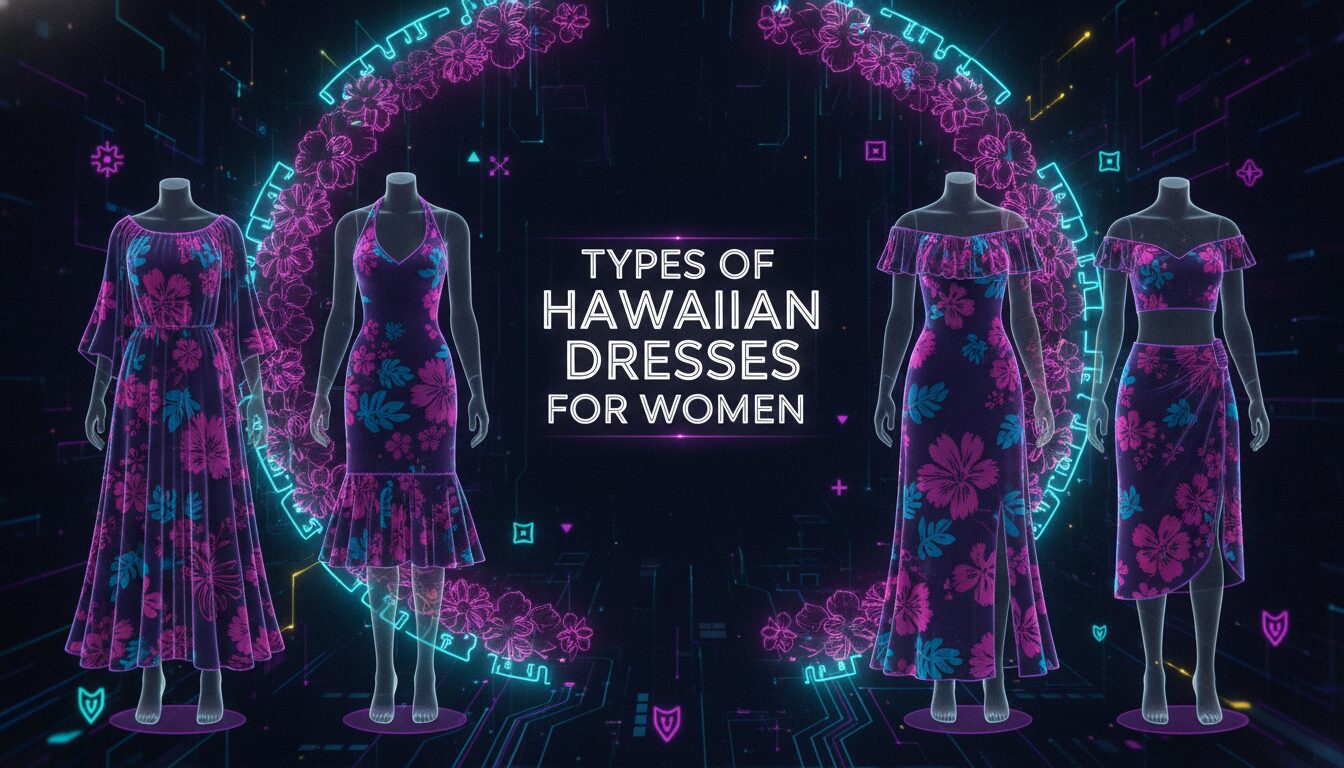
Types of Hawaiian Dresses for Women
With hundreds of options, choosing the right the dress for women can feel overwhelming. Understanding the most popular styles will help narrow your search fast.
The Classic Muumuu
A muumuu is a loose, straight-cut dress that falls from the shoulders without a defined waist. Originally worn as undergarments, muumuus became a staple of Hawaiian fashion for their comfort and ease. Brands like Shaka Time and Aloha Shirts Club offer muumuus in lengths from knee to floor, often with ruffled necklines or side slits. Expect to pay $70–$140 for an authentic made-in-Hawaii muumuu.
Maxi Dresses for Elegance
Maxi Hawaiian dresses for women are floor-length and often feature V-necks, spaghetti straps, or adjustable ties. They are ideal for beach weddings and formal resort dinners. Prices range from $69 (Lava Hut) to $160 (David Shepard Hawaii). Look for rayon blends that drape beautifully and resist wrinkles.
Midi and Tea-Length Dresses
Midi and tea-length dresses hit between the knee and mid-calf, striking a balance between casual and formal. The Nalani Hawaiian Dress from Lava Hut is a prime example, available in multiple prints at $79. These versatile dresses work for brunches, shopping, and daytime events.
Short and Mini Dresses
Short Hawaiian dresses for women, including mini lengths, are playful and perfect for pool parties or summer outings. Hilo Hattie’s Bold Serenity Short Dress starts at $73.99, while Shaka Time’s Viva Pineapples Scarf Hem Short Hawaiian Dress is $59.95. Look for A-line cuts or smock designs for a flattering fit.
Shirt Dress Styles
Aloha shirt dresses combine the button-down styling of a classic Hawaiian shirt with a dress silhouette. Hilo Hattie’s Lehua Quilt Aloha Shirt Dress ($129.99) and David Shepard Hawaii’s Maidenhair Fern Aloha Shirt Dress ($160.00) exemplify this trend. They work well for office-adjacent settings or as a polished cover-up.
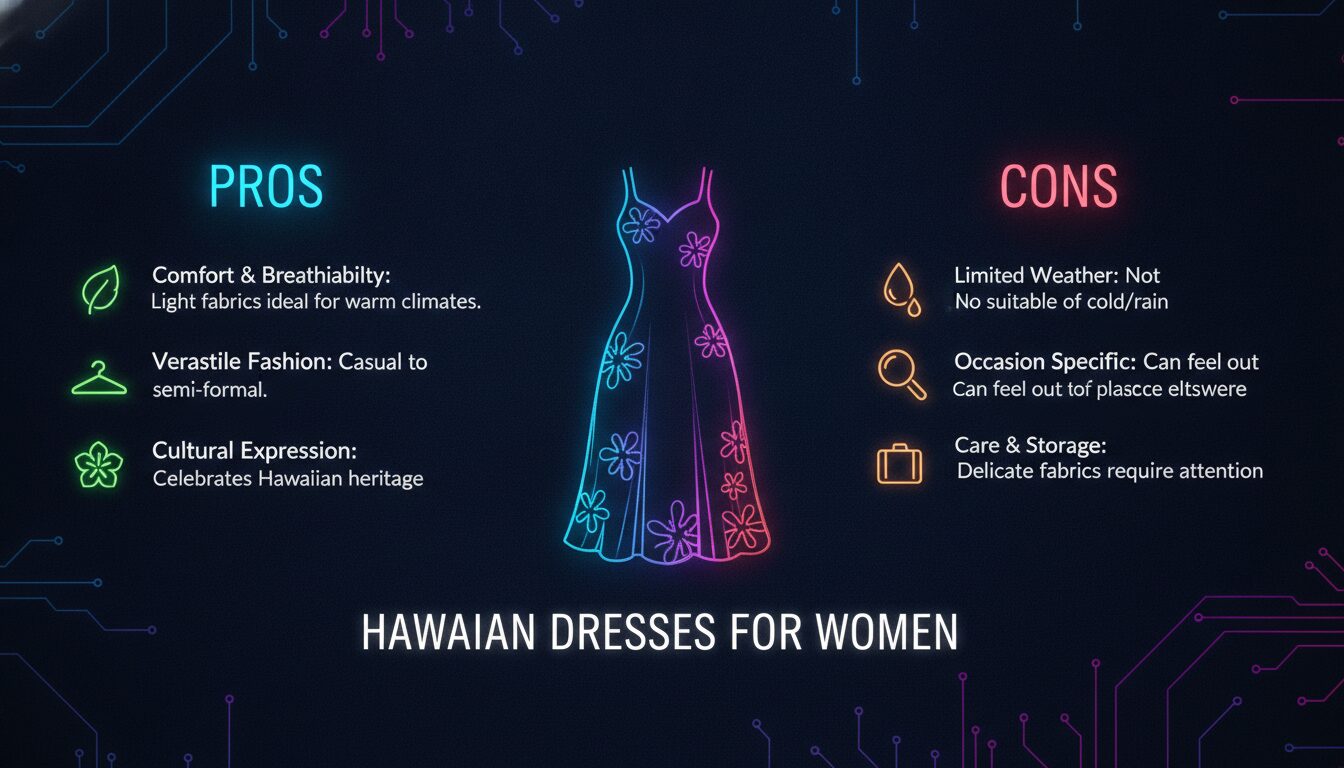
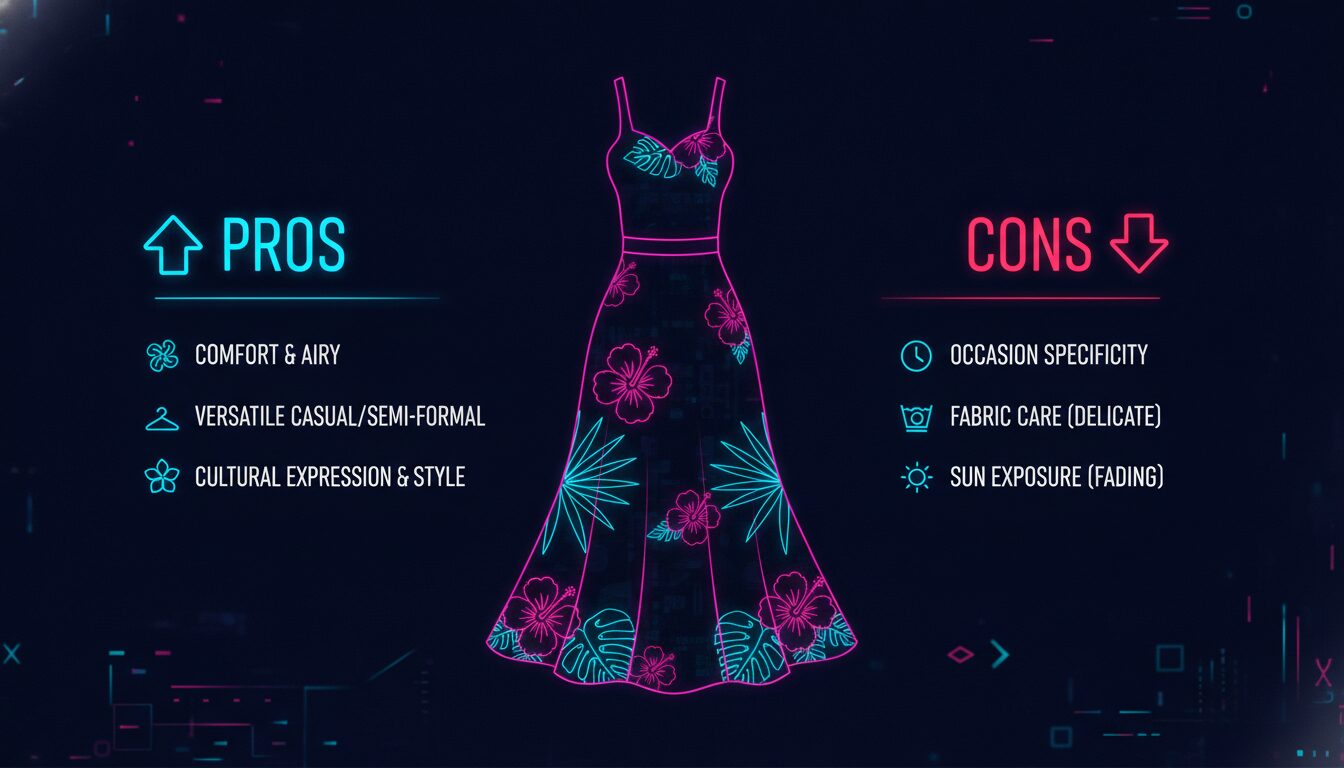
Pros and Cons of Hawaiian Dresses for Women
Pros
Breathable, warm-weather fabrics like rayon and cotton keep you cool all day.
Wide range of silhouettes suits every body type and occasion.
Authentic made-in-Hawaii options support local island artisans and makers.
Matching family sets are widely available for coordinated group looks.
Bold tropical prints make a statement without requiring additional accessories.
Cons
Rayon requires careful hand-washing and air drying to prevent shrinkage.
Authentic made-in-Hawaii pieces carry a higher price point than mass-produced imports.
Loose muumuu silhouettes can appear shapeless on smaller frames without the right styling.
Bold prints may feel too casual for very formal events outside of island settings.
Less coverage, may feel too casual for formal events
Shirt Dress
Structured yet breezy, can be dressed up or down
Buttons may gap, limited stretch
What to Look For When Buying a Hawaiian Dress for Women
To find the right women, evaluate fabric, fit, occasion, and price before you click buy.
Fabric: Rayon, Cotton, and More
The majority of authentic Hawaiian dresses for women use rayon or cotton. Rayon is a semi-synthetic fiber known for its silk-like feel and breathability, making it ideal for tropical climates. Jams World, for example, crafts their entire dress collection from 100% spun-crushed rayon for a distinctive drape and texture. Cotton offers crispness and is often easier to care for. Lava Hut notes their dresses are cut from breezy cotton and rayon fabrics. Avoid polyester if you want maximum airflow in hot weather.
Fit and Sizing Considerations
Hawaiian dresses for women generally run true to size, but many shoppers prefer a relaxed fit. If you are between sizes, consider sizing up. Most brands offer extended sizing: Hilo Hattie goes up to 5XL, Shaka Time up to 4XL, and Aloha FunWear stocks plus-size options. Always check the brand’s specific size chart before purchasing, as measurements vary by manufacturer and silhouette.
Size Measurement Guidance
Before ordering, measure your bust, waist, and hips with a soft tape measure. Compare those numbers directly against the brand’s size chart rather than relying on your usual clothing size. Relaxed-fit styles like muumuus have more tolerance, but fitted silhouettes like bodycon or hourglass cuts from David Shepard Hawaii require precise measurements. When in doubt, brands like David Shepard Hawaii offer free size exchanges, so you can order your closest size with confidence.
Occasion and Style Versatility
Think about where you’ll wear the dress. For a luau, a short muumuu or midi dress with a bold floral print works perfectly. Beach weddings call for maxi lengths in elegant plumeria or hibiscus patterns. Everyday resort wear might mean a simple tank dress or a sarong-style wrap. Many dresses also pair with men’s and kids’ matching outfits, as seen at Lava Hut, making them a natural choice for family photos and group events.
Price Ranges: What to Expect
Price points for a hawaiian dress reflect fabric, craftsmanship, and brand. Budget-friendly options start around $59–$70 (Shaka Time’s short dresses, Lava Hut’s entry-level maxis). Mid-range pieces hover at $74–$119 (Aloha FunWear, Aloha Shirts Club). Premium brands such as David Shepard Hawaii charge $130–$180 for limited-edition prints and made-in-Hawaii exclusivity. Group discounts are occasionally available through retailers like Aloha FunWear.
How to Style a Hawaiian Dress for Women
A for women can anchor a complete look for any occasion. Here’s how to dress it up or keep it easy depending on where the night takes you.
Beach Wedding Guest
Pair a long maxi dress with metallic sandals, a delicate lei, and statement earrings. Opt for softer prints like orchids or white ginger. Shaka Time’s White Ginger Maxi Long Cocktail Hawaiian Dress ($129.95) is a popular choice for exactly this occasion. Keep makeup natural and add a woven clutch to finish the look.
Luaus and Themed Parties
Go bold with a short or knee-length dress featuring bright hibiscus or pineapple prints. Add a flower crown, sandals, and wooden bangles. Hilo Hattie’s Pineapple Panel Long Dress ($103.99) makes a statement without trying too hard. For a modern twist, wear a fitted halter dress like Lava Hut’s Volcanic Red Napali Hawaiian Halter Dress ($69).
Everyday Resort Wear
A cotton or rayon sundress pairs effortlessly with flat sandals and a straw hat. Throw on a denim jacket for cooler evenings. Many women choose a this type of women as a cover-up over swimwear. Look for pullover styles without zippers for the easiest on-and-off.
Matching Family Outfit Coordination
Coordinating your look with your family is one of the most fun things you can do with Hawaiian dresses. Lava Hut and Aloha FunWear both offer matching men’s shirts and kids’ outfits designed to pair with their women’s dress prints. Choose a shared print in a bold floral or classic tropical motif, then let each person pick their own silhouette. The result is a cohesive group look that photographs beautifully without feeling too matchy-matchy.
“Find your favorite Hawaiian dress in styles sewn right here in Hawaii. This collection brings together short, midi and maxi dresses in breezy cotton and rayon fabrics, all cut to move with you from sunrise coffee runs to sunset dinners.” – Lava Hut
Care and Maintenance for Long-Lasting Wear
To keep your Hawaiian dress for women looking vibrant, proper care is essential, especially for rayon.
Washing and Drying Tips
Always check the care label first. Most cotton Hawaiian dresses can be machine-washed in cold water on a gentle cycle. Rayon dresses often require hand-washing in cold water to prevent shrinking or color bleeding. As Aloha Shirts Club advises, cold hand-washing and air drying are the best approach for rayon blends. Never wring rayon. Instead, roll the dress in a towel to remove excess water, then lay flat or hang to dry away from direct sunlight.
Cotton vs. Rayon Care: Key Differences
Cotton is the more forgiving fabric. It tolerates a gentle machine cycle, dries faster, and is less prone to shrinking when washed correctly. Rayon, by contrast, is more delicate. Heat is its enemy: hot water causes it to shrink, and a dryer can permanently distort the fabric’s shape. If your rayon dress needs a light press, use a low iron setting with a pressing cloth between the iron and the fabric. Knowing these differences before you wash saves you from an expensive mistake.
Storing Your Hawaiian Dresses
Store dresses on padded hangers to maintain their shape. For long-term storage, avoid plastic bags, which can trap moisture. Fold knits and heavy rayon dresses to prevent stretching on the hanger. Keep them away from direct light to preserve the print colors over time.
Where to Buy Authentic Hawaiian Dresses for Women
Authentic Hawaiian dresses for women are often made in Hawaii and reflect genuine island artistry. Below is a comparison of top online stores as of 2026.
Retailer
Price Range
Made in Hawaii?
Standout Styles
Size Range
Hilo Hattie
$73.99–$153.99
Yes
Classic muumuus, shirt dresses
XS–5XL
Lava Hut
$65–$118
Yes
Maxi, midi, matching sets
S–3XL
Aloha FunWear
$74–$119
Yes (Paradise Found, etc.)
A-line cap sleeves, button-front tanks
XS–3XL (plus sizes)
Shaka Time
$59.95–$139.95
Yes (since 1991)
Smock dresses, caftans, muumuus
XS–4XL
David Shepard Hawaii
$130–$180
Yes
Artistic placement prints, limited editions
XS–4XL
Aloha Shirts Club
$69.99–$174
Yes
Midi, muumuu, smock, wedding styles
XS–4XL
Jams World
Varies
Yes (designed in Hawaii)
100% spun-crushed rayon, limited-edition prints
Varies
Prices and availability as of 2026; check individual sites for current details.
“Shop David Shepard Hawaiʻi modern women’s aloha wear benefiting native plant conservation. Find your fit for business casual or special events. Limited stock available. Free size exchange offered.” – David Shepard Hawaii
Choosing a Hawaiian dress for women from these brands ensures you get a piece of genuine island fashion that supports local makers and reflects real aloha spirit.
Frequently Asked Questions
What is a Hawaiian dress for women called?
The traditional Hawaiian dress for women is called the muʻumuʻu, a loose, full-length garment that became popular in the 19th century. Today, the term Hawaiian dress also refers to a variety of tropical-print styles including maxi gowns, midi dresses, shirt dresses, and halter styles inspired by island fashion.
What should I wear to a Hawaiian themed party?
A Hawaiian dress for women in a bold hibiscus, pineapple, or tropical floral print is the ideal choice for a Hawaiian themed party. Short or knee-length styles work best for casual luaus, while midi and maxi lengths suit more formal themed events. Add a flower crown, wooden bangles, and sandals to complete the look.
How do I choose the right size for a Hawaiian dress?
Most Hawaiian dresses run true to size, but if you prefer a looser fit or are between sizes, order one size up. Always measure your bust, waist, and hips and compare against the brand’s specific size chart, as cuts vary significantly between relaxed muumuu silhouettes and more fitted styles.
What fabric is best for hot, humid weather?
Rayon and cotton are the top choices for a Hawaiian dress for women in warm climates. Rayon is lightweight and breathable with a silk-like drape, while cotton offers crispness and easy care. Avoid synthetic blends that trap heat and reduce airflow.
Are all Hawaiian dresses made in Hawaii?
Not all Hawaiian dresses are made in Hawaii. Many mass-produced options are imported. For an authentic piece, look for a made-in-Hawaii label from brands like Hilo Hattie, Lava Hut, Shaka Time, and Aloha Shirts Club, all of which design and produce their dresses on the islands.
How do I care for a rayon Hawaiian dress?
Hand-wash rayon dresses in cold water or use a delicate cycle with a mesh laundry bag. Never wring the fabric. Instead, roll the dress in a towel to remove excess water, then air-dry flat away from direct sunlight. If ironing is needed, use a low heat setting with a pressing cloth.
As of 2026, finding the perfect Hawaiian dress for women is easier than ever, with a wide array of styles and trusted retailers to choose from. Whether you need a casual sundress or a stunning maxi for a beach wedding, prioritize breathable fabrics, the right fit, and authentic craftsmanship to bring genuine aloha spirit into your wardrobe. Discover your duality at prettynpoison.com.
Store dresses for women are retail-ready styles spanning every silhouette, from bodycon club cuts to floor-length gowns, available at price points from $5.99 to nearly $500. We’ve mapped the best retailers, the boldest trends, and the styling moves that separate a dress from a look.
Key Takeaways
Budget to luxury: Rainbow offers for women from $5.99 while Dressbarn stocks gowns up to $469.95.
Size inclusivity matters: Walmart carries sizes 0–26W; Dressbarn offers Missy, Petite, and Plus lines.
Sustainable materials are rising: Look for Tencel, organic cotton, or recycled polyester at boutiques like The Mint and Red Dress.
Nightlife styling is everything: Bodycon for clubs, maxi for drama, layering for edge.
Care extends garment life: Machine wash cold, line dry, and store on padded hangers.
Dillard’s runs sales up to 65% off select styles, making premium brands accessible.
“The key to nailing store-bought evening wear is customization. Adding a harness, a chunky chain, or a corset belt transforms a basic dress into a statement piece,” says Rei Nakamura, stylist for alternative runway shows.
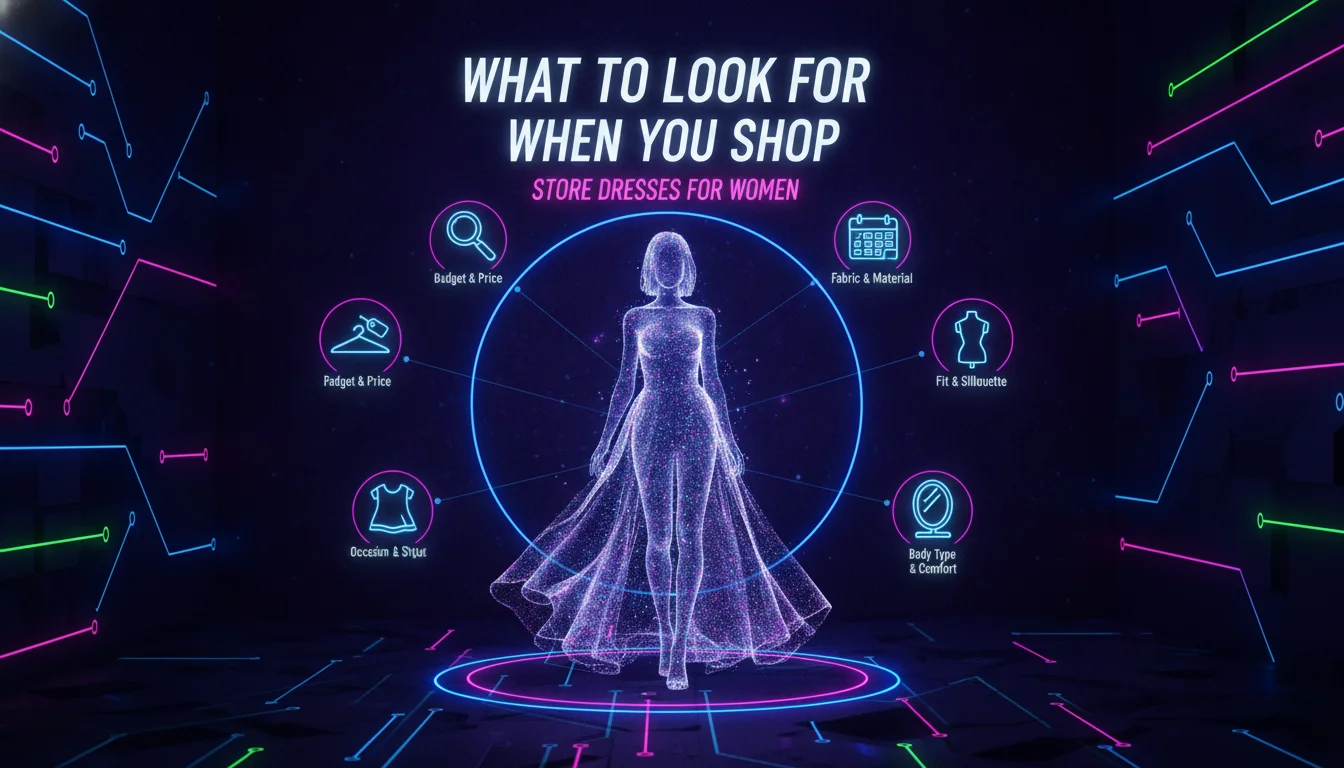
What to Look For When You Shop Store Dresses for Women
The best this type of women balance fabric quality, silhouette, and occasion versatility. Knowing what to prioritize before you click “add to cart” saves you from a closet full of regret and a bank account full of returns.
Fabric and Sustainability
A dress’s fabric decides its drape, comfort, and eco-footprint. Sustainable partywear refers to garments made from eco-friendly materials like Tencel, organic cotton, or recycled polyester, designed to reduce environmental impact. At mass retailers, polyester dominates. Dressbarn relies heavily on it, while Rainbow mixes blends for affordability. Boutiques like The Mint and Red Dress increasingly stock Tencel, a lyocell fiber derived from wood pulp, known for its silky drape and closed-loop production process. Check product descriptions for certifications like OEKO-TEX or GOTS, even in fast fashion. Walmart now lists some organic cotton options among its 1,000+ dress styles, flagged with “Sustainable” tags. According to the Fashion Revolution movement, supply chain transparency is the foundation of ethical consumption.
Fit and Silhouette
Silhouette is everything. A bodycon dress hugs the body like a second skin, typically constructed with spandex for stretch. A shift dress hangs straight from the shoulders, a vintage-inspired staple for cocktail hours. Maxi dresses are floor-length styles that elongate the silhouette and work for both boho beach days and red-carpet moments. Sizing ranges widely across retailers: Walmart stocks sizes 0–26W, ensuring plus-size shoppers find clubwear that actually fits, while Dressbarn offers Missy, Petite, and Plus lines across its $49–$470 range. Rainbow’s junior cuts run smaller, so review their size chart before adding to cart.
Occasion and Versatility
One dress, multiple nights. Rainbow’s sleeveless smocked midi dress (originally $24.97, on sale for $18.72) transitions from a patio party to a neon-lit dance floor with the right accessories. Dressbarn’s Vienna Maxi Dress ($139.95) doubles as a wedding-guest option or an avant-garde layering piece. For day-to-night agility, choose midi lengths with interesting details like cutouts (Rainbow’s Cutout Tie Front Puff Sleeve Mini Dress at $5.99) or hardware (Dressbarn’s Jersey Side Draped Dress with Hardware, $79.95).
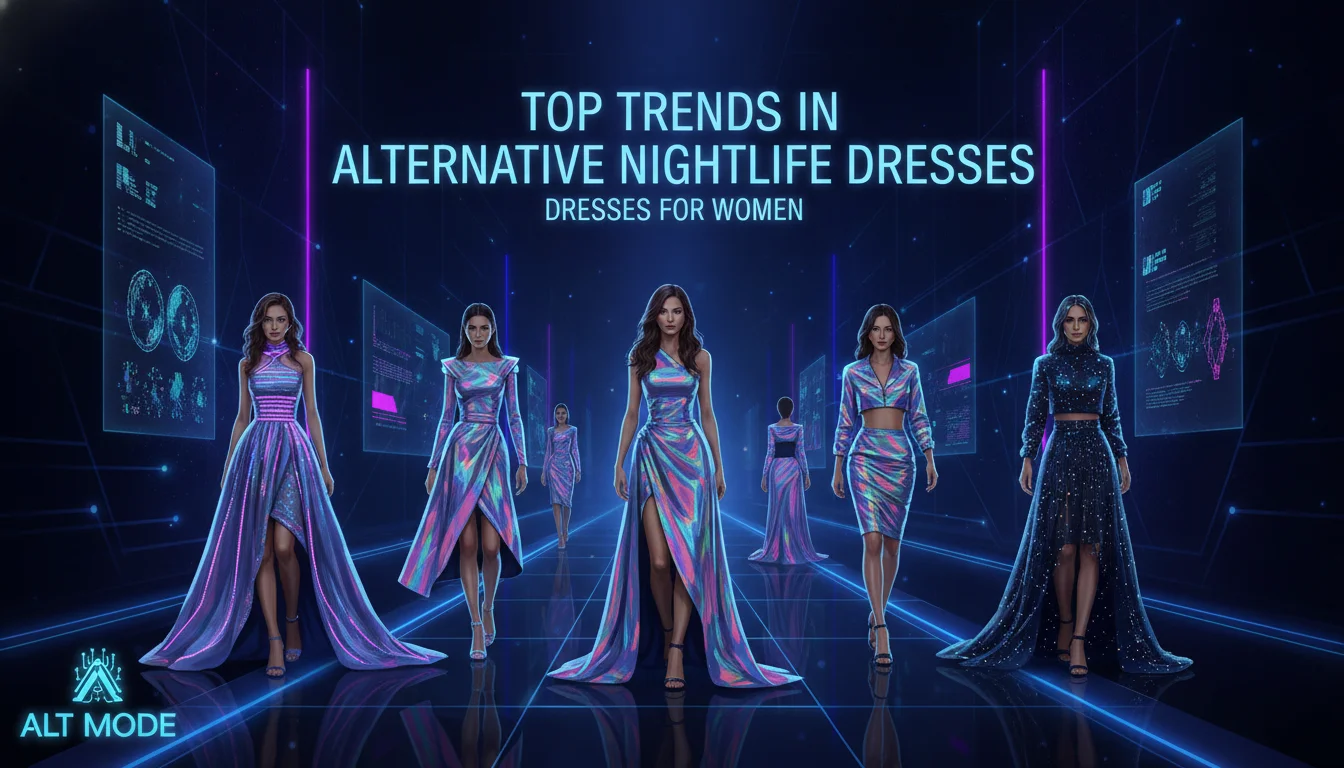
Top Trends in Alternative Nightlife Dresses
Alternative nightlife dresses in 2026 are defined by texture contrast, hardware details, and silhouettes that refuse to apologize. According to fashion editors at Vogue and ELLE, the current cycle rewards boldness over minimalism, especially after dark.
Bodycon with Edge
Bodycon isn’t just basic. Look for asymmetrical cutouts, mesh panels, or faux-leather accents. Rainbow’s Mixed Media Faux Leather Midi Dress ($28.97) merges soft fabric with aggressive texture. Pair with chunky platform boots and a harness belt to own the crowded floor. The Almost Famous Textured Knit O Ring Detail Halter Mini Dress ($12.72) adds bondage-inspired hardware, a staple in alt-fashion circles. TikTok trend reports from 2025–2026 consistently show faux-leather and O-ring details among the top-performing nightlife aesthetics.
Maxi Drama
Maxi dresses demand attention. Dressbarn’s Blossoming Beauty Mesh Evening Gown ($469.95) drips with gothic romance, while Rainbow’s Zebra Print Mesh Cowl Halter Neck Maxi Dress (under $15) brings animal magnetism at a fraction of the price. Sustainable twist: Look for lyocell-blend maxis at boutiques to reduce your nightlife footprint. Maxi length pairs with stacked platform sandals or combat boots for an anti-establishment edge that runway data from recent seasons confirms is still very much alive.
Mini and Midi Statements
Mini dresses from Rainbow (like the $8.48 Polka Dot Lace Trim Cami Mini Dress) channel pure ’90s rave energy. Midi lengths serve elevated versatility: The Mint’s Worth Noting Brown Striped Midi Dress ($72) shifts from brunch to basement rave with a graphic sock boot. Layering a mesh top underneath a midi slip dress adds a DIY punk spirit, a trick pulled straight from underground club scenes. This is where this kind of for women stop being “store-bought” and start being yours.
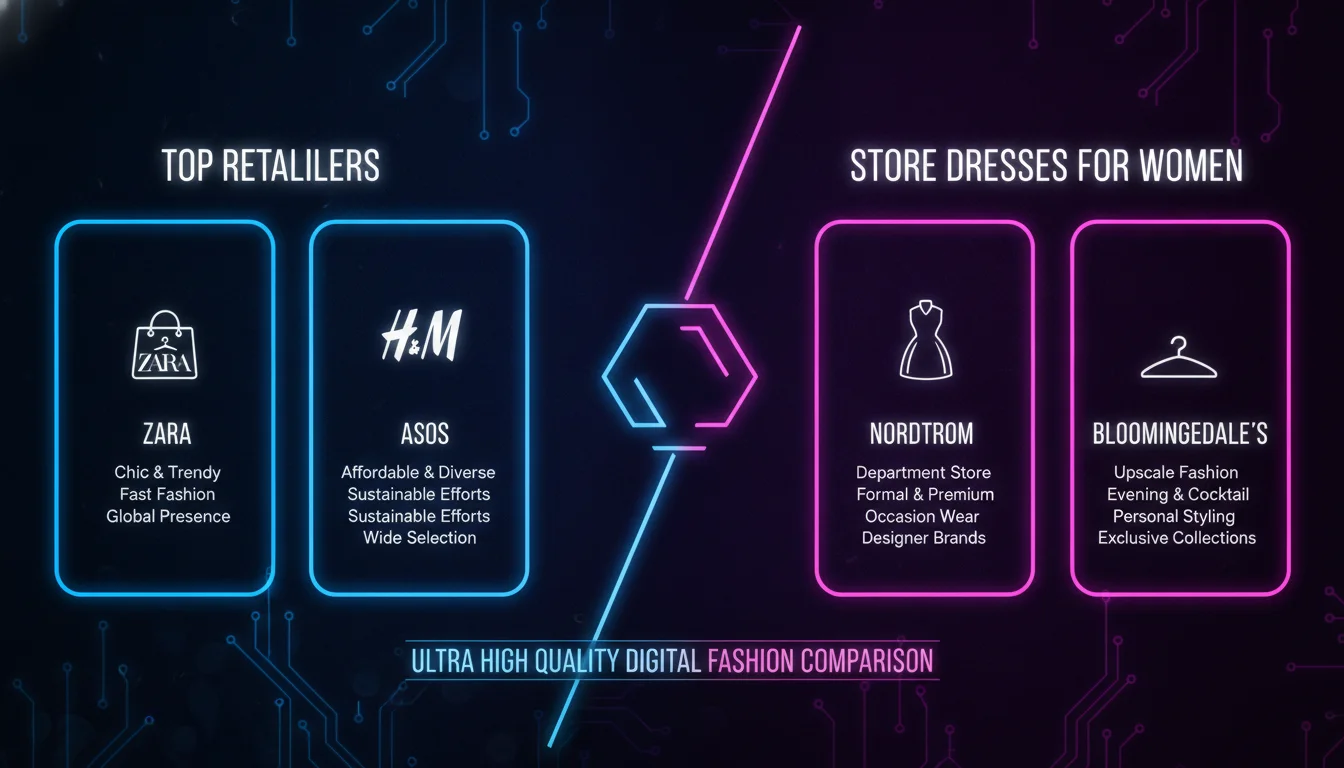
Comparison of Top Retailers for Store Dresses for Women
Not all retailers are built the same. Here’s how the major players stack up across price, size, and nightlife suitability.
Retailer
Price Range
Size Inclusivity
Best For
Unique Perk
Dressbarn
$49–$470
Missy, Petite, Plus
Formal & Cocktail
BOGO 50% off
Rainbow
$6–$29
Juniors sizes
Trendy Nightlife
Ultra-affordable; 25–50% off sales
The Mint
$52–$116
XS–XL, 1X
Boutique Casual
10% off first order
Red Dress
$54–$128
Missy
Vacation & Events
Free shipping over $100
Walmart
$10–$50+
0–26W
Everyday & Plus Size
1,000+ styles
Dillard’s
$50–$500
Standard, Plus, Petite
Premium Brands
Up to 65% off sale
Sources: Retailer websites accessed July 2025; prices and offers subject to change.
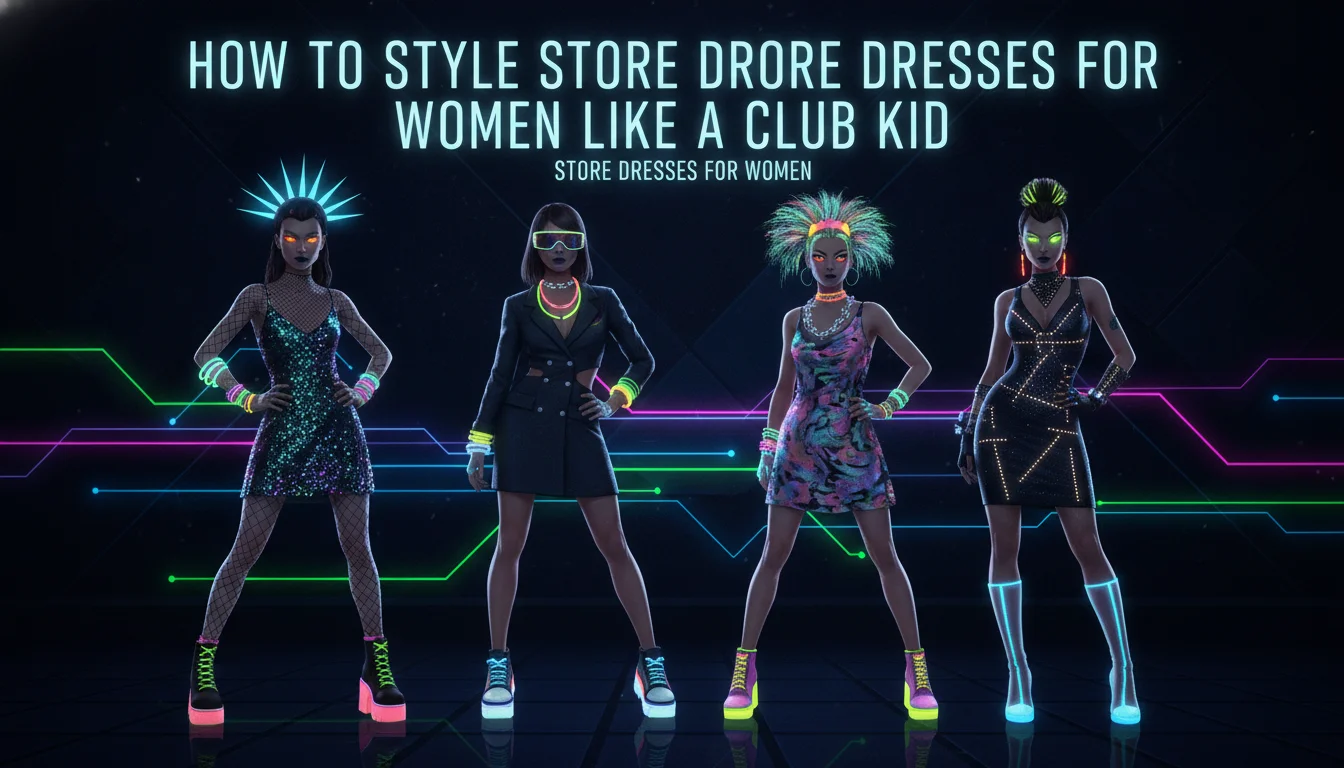
How to Style Store Dresses for Women Like a Club Kid
Styling the dresses for women into nightlife-ready looks is a four-step process that starts with silhouette and ends with accessories that make people stare. No basic advice here. Just moves that work.
Step 1: Choose Your Foundation
Start with a statement silhouette. A bodycon hugs curves for maximal impact. Rainbow’s Geometric Print Side Ruched Tube Dress ($16.99) has built-in drama. For a looser canvas, try a shift or babydoll mini and build the edge through layers and hardware instead.
Step 2: Add Cultural Layers
Layering is the soul of subculture style. Throw an oversized fishnet top under a tank dress, or a distressed denim jacket over a floral maxi. The Mint’s Feeling Your Best Cream Tiger Babydoll Dress ($60) becomes club-ready with a black leather corset belt and studded choker. This is the move that separates a dressed-up woman from a woman with a point of view.
Step 3: Accessorize with Abandon
Chunky hardware changes everything. Chain belts, platform goth boots, and oversized safety-pin earrings push a dress from mall to mosh pit. Red Dress’ Makes Sense To Me Gold Curved Sculptural Drop Earrings ($24) add a futuristic gleam to even the most minimalist silhouette. Don’t underdress the accessories.
Step 4: Weather-Proof the Look
For cooler nights, layer a vinyl trench or a cropped faux-fur jacket over your dress. Dressbarn’s 2Pc Jacket Dress with Detachable Necklace ($69.97, originally $99.95) does double duty as a mod set that handles both the venue and the walk from the cab. Practical and poisonous.
Sustainable Partywear: A New Wave in Dress Shopping
Alternative fashion and sustainability are colliding in real time. Shoppers increasingly demand eco-conscious rave wear, and the market is finally responding. Boutiques like The Mint and Red Dress curate cotton and linen blends, while big-box stores expand organic collections. The Ellen MacArthur Foundation advocates for circular fashion systems, pushing brands to design for recyclability from the first sketch.
What to Look For
Seek certifications: OEKO-TEX guarantees no harmful chemicals in the finished fabric, and GOTS ensures organic fiber status throughout the supply chain. Fabric content matters beyond the label. Tencel uses significantly less water than conventional cotton, while recycled polyester repurposes plastic bottles that would otherwise sit in landfill. Read product descriptions carefully. Walmart flags eco-items with “Sustainable” tags, making it easier to filter 1,000+ styles down to conscious choices.
Styling Sustainably
Secondhand is the ultimate green move. Pair a new organic cotton dress from The Mint (priced $52–$116) with vintage finds: a ’90s leather jacket from a thrift shop or pre-loved platform boots. Rent for one-offs: Dress rental platforms let you borrow a $400+ sequined gown for roughly $50–$80, cutting closet waste without cutting the drama. As of 2026, rental fashion has moved from niche to mainstream, with Who What Wear citing it as one of the fastest-growing segments in women’s occasion wear.
Dress Codes Decoded: What to Wear and When
women cover every dress code on the spectrum, but knowing which silhouette fits which occasion keeps you from showing up overdressed to a dive bar or underdressed to a rooftop cocktail party.
Black-Tie and Formal Events
Black-tie calls for floor-length or tea-length gowns. Dressbarn’s Luminous Sequin Lace Evening Gown ($249.95) and Blossoming Beauty Mesh Evening Gown ($469.95) both clear the bar. Dillard’s premium brand selection, often discounted up to 65% off during sale events, is worth checking for designer-adjacent options at accessible prices. The rule: structured, polished, and intentional.
Cocktail and Semi-Formal
Cocktail dress code sits between formal and casual, typically landing at knee to midi length. Dressbarn’s Vienna Maxi Dress ($139.95) works here, as does anything from Red Dress in the $54–$128 range with clean lines and elevated fabric. This is where the Poison Edit lives: pretty enough for the venue, dangerous enough to be remembered.
Club, Rave, and Nightlife
No rules. Maximum impact. Rainbow’s $6–$29 range delivers bodycon, mesh, and faux-leather options that survive a full night on the floor. Pair with hardware accessories and platform boots. The only dress code here is: make them look twice.
Care and Maintenance for Your Store Dresses for Women
store dresses last longer when you treat the fabric right. A $12 Rainbow mini and a $250 Dressbarn gown both deserve proper care, just different versions of it.
Washing and Drying
Machine wash cold is the standard care instruction for polyester blends, preventing shrinkage and color fade. Turn dresses inside out to protect surface embellishments like sequins or lace trim. Line dry whenever possible. Heat damages elastic fibers, shortening the life of bodycon fits. For silk-lined cocktail dresses from Dillard’s, dry clean only to preserve the sheen and structure.
Storage and Organization
Use padded hangers for structured shoulders and velvet hangers to prevent slinky slips from sliding off. Fold knits and jersey dresses to avoid stretching at the shoulders. Store leather and faux-leather accents away from direct sunlight to prevent cracking. A garment bag shields statement pieces like Dressbarn’s Luminous Sequin Lace Evening Gown ($249.95) from dust and snags between wears.
“Proper storage is where most women lose money on fashion. A $30 dress stored correctly outlasts a $200 dress thrown on the floor,” notes fashion care specialist and wardrobe consultant Dana Voss, whose clients include touring musicians and nightlife performers.
Pros and Cons
Shopping for women comes with real advantages and real trade-offs. Know both before you buy.
Pros
Wide price range: Options from $5.99 (Rainbow) to $469.95 (Dressbarn) mean every budget is covered.
Size inclusivity: Retailers like Walmart (0–26W) and Dressbarn (Missy, Petite, Plus) serve a broad range of bodies.
Trend speed: Fast-fashion retailers refresh this type of women weekly, keeping nightlife looks current.
Accessibility: Physical stores plus online shopping means you can try before you buy or get next-day delivery.
Styling versatility: One dress, styled three ways, covers club night, cocktail party, and brunch.
Cons
Fabric quality varies wildly: Budget retailers often use lower-grade polyester blends that pill or fade after a few washes.
Sizing inconsistency: Junior sizing at Rainbow versus Missy sizing at Dressbarn means you can’t trust a single size number across retailers.
Environmental cost: Fast-fashion this kind of for women contribute to textile waste unless you actively seek sustainable options.
Limited alteration support: Off-the-rack fits aren’t tailored to your body. Budget for minor alterations on anything above $100.
From $5.99 Rainbow minis to $469.95 Dressbarn gowns, the world of the dresses for women holds something for every body, budget, and subculture. Prioritize fit, fabric, and versatility. Then infuse the styling moves above to stand out. Whether you’re at a warehouse rave or a darkwave concert, your dress is a canvas. Make it say something worth hearing.
Where can I find the cheapest store dresses for women?
Rainbow offers store dresses for women as low as $5.99, with regular sales running 25–50% off. Walmart also carries many styles under $15, with over 1,000 options available online.
How do I know my size when shopping for store dresses for women online?
Check each retailer’s size chart before ordering, since sizing varies significantly. Rainbow runs junior cuts, Dressbarn offers Missy and Plus, and Walmart covers sizes 0–26W. Measure your bust, waist, and hips and compare against the specific chart.
Are sustainable party dresses worth the higher price?
Yes. Sustainable store dresses for women made from Tencel or organic cotton typically last longer and hold their shape better than fast-fashion blends. The cost-per-wear math usually favors the higher upfront price over time.
Can I return store dresses for women if they don’t fit?
Most retailers accept returns within 30 days. Rainbow requires tags attached; Dressbarn allows returns by mail. Always review individual return policies before purchasing, especially during sale events.
What’s the best dress style for a club night?
Bodycon or mini dresses with bold details like cutouts, mesh panels, or faux-leather accents work best for club nights. Pair with chunky platform boots and metallic hardware accessories to complete the look.
How do I care for sequined or lace store dresses for women?
Hand wash or use a delicate machine cycle inside a mesh laundry bag. Air dry flat and never iron directly over sequins. Store in a garment bag to protect embellishments between wears.
Australian fashion brands are a global force in 2026, known for bold design, ethical production, and a sun-drenched aesthetic that translates from beach to runway. This guide covers the top labels, styling tips, and how to shop them.
Key Takeaways
Australian fashion brands lead on sustainability, with labels like Bassike and St. Agni using organic cotton and Tencel as standard.
Price points range from budget-friendly (Cotton On, Dissh) to premium luxury (Camilla and Marc, Aje).
Australian Fashion Week, held annually in Sydney, is now a fixture on the global fashion calendar.
Online retailers like The Iconic and ASOS make these labels accessible to international shoppers worldwide.
The aesthetic spans minimalist basics, romantic prints, and dark-edged eveningwear, so there is a label for every night-out mood.
Founder-led brands dominate the scene, with strong creative visions that translate into consistent, covetable collections.
Why Australian Fashion Brands Are Having a Moment
Australian fashion brands are having a genuine cultural moment because they combine relaxed confidence with serious craft. This is not accidental. According to Vogue Australia, the local industry has spent two decades building infrastructure, from ethical supply chains to world-class pattern-making schools, that now supports export-ready collections. The result is a roster of labels that feel both globally fluent and distinctly themselves.
As of 2026, Australian designers are stocked in over 40 countries. The shift happened fast. A decade ago, most labels sold exclusively at home. Today, international press covers Australian Fashion Week with the same intensity as Copenhagen or Milan. That visibility has created a feedback loop: global demand funds better production, which attracts more international buyers, which raises the profile further.
For women who dress for the night, for the room, for themselves, this matters. Australian labels understand that dressing boldly is not vanity. It is identity. That philosophy sits at the core of what makes these brands worth knowing.
The Evolution of Australian Fashion
Australian fashion evolved from a surf-and-sand uniform into one of the most respected design cultures in the Southern Hemisphere, and the transformation took less than 30 years.
Historical Context
Australia’s fashion scene began to flourish in the late 20th century, shaped by its unique geography and a culture that prizes outdoor living, practicality, and irreverence. Early designers drew on the landscape: the red dust of the outback, the electric blue of the Pacific, the lush greens of Queensland rainforests. These visual references gave Australian fashion a palette and a mood that no European house could replicate. By the early 2000s, designers were gaining international attention, and a genuine industry infrastructure started to form around them.
Current Trends in 2026
Today, the labels that define Australian fashion share three qualities: restraint in silhouette, boldness in fabric choice, and an almost obsessive commitment to wearability. Minimalist aesthetics remain dominant, but 2026 has introduced a harder edge. According to trend forecasting from WGSN, sheer layering, sculptural shoulders, and dark botanical prints are all surging across Australian resort and eveningwear collections this year. Social media, particularly TikTok and Instagram, has accelerated the global reach of these trends, with Australian labels regularly going viral through organic creator content rather than paid campaigns.
Top Australian Fashion Brands to Watch
Here are the most notable labels making waves right now, spanning luxury, mid-range, and emerging categories.
1. Camilla and Marc
Founded by siblings Camilla Freeman-Topper and Marc Freeman, this brand is synonymous with luxury and sophistication. Known for their tailored pieces and chic designs, Camilla and Marc is a first choice for formal occasions, cocktail parties, and any event where showing up underdressed is simply not an option. Their suiting is architectural. Their eveningwear is precise. Price points sit in the premium tier, with dresses typically ranging from AU$400 to AU$900, reflecting the quality of construction and fabric sourcing.
2. Bassike
Established in 2006, Bassike built its reputation on a deceptively simple idea: make the basics so well that they become the most-reached-for pieces in your wardrobe. Their commitment to organic cotton and sustainable production is not a marketing add-on. It is the foundation of every collection. Pieces are designed for longevity, not trend cycles. Mid-range pricing, with core pieces typically between AU$150 and AU$350, makes Bassike accessible without feeling mass-market.
3. Aje
Aje is the brand you reach for when you want to feel both powerful and feminine. Celebrated for bold prints, textural fabrics, and silhouettes that move, Aje focuses on ethical production methods across its supply chain. The brand has expanded internationally, with stockists across the US, UK, and Europe. Their eveningwear translates effortlessly from a Sydney rooftop to a London cocktail party. Expect to invest AU$300 to AU$700 for a signature Aje piece.
4. Zimmermann
No list of Australian fashion brands is complete without Zimmermann. Founded in Sydney in 1991 by sisters Nicky and Simone Zimmermann, the brand has become one of Australia’s most successful luxury exports. Their signature: intricate lacework, romantic ruffles, and prints that feel like wearable art. Zimmermann now operates boutiques in New York, London, Paris, and Los Angeles, with pieces ranging from AU$500 into the thousands. According to WWD, Zimmermann is consistently among the top-performing Australian labels in international wholesale.
5. Ksubi
For the woman who dresses with an edge, Ksubi is the answer. Born in Sydney in 1999, Ksubi built its identity around denim, rebellion, and a refusal to play it safe. Their jeans have cult status globally, worn by everyone from off-duty models to musicians. The brand sits in the mid-to-premium tier, with denim typically priced between AU$250 and AU$450. Ksubi is the label that proves Australian fashion is not just about sun and ease. It has teeth.
Affordable Australian Fashion Brands
Stylish does not have to mean expensive. Several labels deliver trend-forward pieces at prices that do not require a second mortgage.
1. Dissh
Dissh is known for its relaxed, resort-inspired clothing that captures the Australian lifestyle without trying too hard. Their minimalist designs work for casual outings, beach days, and low-key date nights. Most pieces fall between AU$60 and AU$150, making Dissh one of the most accessible labels on this list.
2. Assembly Label
Assembly Label focuses on timeless essentials that are both stylish and functional. Think elevated basics: linen trousers, clean-cut shirts, and dresses that work across multiple occasions. Their commitment to sustainable fabrics keeps the quality high without inflating the price. Core pieces typically range from AU$80 to AU$200.
3. Cotton On
Cotton On is a well-known retail chain offering a wide range of affordable clothing options. Their trend-responsive pieces cater to a younger audience, making them a popular choice among students and young professionals. With items often priced under AU$60, Cotton On is the entry point for anyone building a wardrobe on a budget.
4. Princess Polly
Princess Polly has become a TikTok favourite, and for good reason. The Gold Coast-based brand drops new styles constantly, keeping pace with fast-moving social trends. Their party dresses, co-ords, and going-out tops sit in the AU$50 to AU$120 range. If you want to look like you just stepped off an Australian influencer’s feed, this is where you start.
5. Peppermayo
Peppermayo occupies the sweet spot between affordable and aspirational. Known for feminine silhouettes, floral prints, and occasion-ready dresses, the brand has built a loyal following among women who want to dress up without spending a fortune. Prices typically fall between AU$70 and AU$180.
What to Look For: A Buying Guide for Australian Fashion Brands
Choosing the right label comes down to understanding what you actually need from your wardrobe, not just what looks good on a screen.
Fabric Quality
The best Australian labels are transparent about their materials. Look for organic cotton certifications (GOTS-certified is the gold standard), Tencel or lyocell for drape and breathability, and deadstock or recycled fabrics as a sign of genuine sustainability commitment. Avoid labels that list “polyester blend” without further detail. That is usually a sign that longevity was not a priority.
Sizing and Fit
Australian sizing can differ from US and UK standards. Most labels run true to Australian sizing, which typically runs one size smaller than US sizing. Always check the brand’s specific size guide before ordering internationally. Labels like Bassike and Aje provide detailed measurements, which makes online shopping significantly less stressful.
Sustainability Credentials
Look beyond the marketing language. Genuine sustainability credentials include named certifications (GOTS, OEKO-TEX, B Corp), published supplier lists, and clear information about production locations. According to fashion editors at ELLE Australia, the most credible brands are those that acknowledge they are still improving rather than claiming perfection.
Price vs. Cost-Per-Wear
A AU$400 Camilla and Marc blazer worn 50 times costs AU$8 per wear. A AU$60 fast-fashion equivalent worn 5 times costs AU$12 per wear. The math is not complicated. Invest in pieces from mid-range and premium labels for anything you plan to wear repeatedly. Reserve budget options for trend-driven pieces you know will cycle out of your rotation within a season.
Return and Exchange Policies
International shoppers should check return windows carefully. Most Australian labels offer 14 to 30-day return periods, but some exclude sale items. The Iconic offers free returns within Australia and competitive international return rates, making it a lower-risk entry point for first-time buyers.
How to Style Australian Fashion Brands: Outfit Ideas by Occasion
Knowing the label is only half the equation. Here is how to actually wear these pieces for the nights that matter.
Club Night: Ksubi Denim + Aje Corset Top
Pair Ksubi’s Van Winkle jeans in a dark wash with an Aje structured corset top in a bold print. Add a barely-there heel and a micro bag. The contrast between the raw denim and the feminine top is exactly the kind of duality that makes an outfit memorable. This is the Pretty N Poison approach: soft and dangerous in the same breath.
Rooftop Party: Zimmermann Mini Dress
A Zimmermann lace or printed mini dress needs almost nothing added. Let the dress do the work. Keep accessories minimal: a thin gold chain, small hoops, a strappy sandal. The dress is already the statement. Fighting it with too much jewellery kills the effect.
Date Night: Peppermayo Slip Dress + Assembly Label Blazer
Layer a Peppermayo satin slip dress under an Assembly Label oversized blazer for a look that reads effortless but took thought. The slip dress brings the softness. The blazer brings the structure. Together, they hit the tension between dressed-up and dressed-down that makes date-night dressing interesting.
Cocktail Party: Camilla and Marc Tailored Set
A Camilla and Marc wide-leg trouser and matching blazer in a neutral or deep jewel tone is the cocktail party outfit for women who are done with dresses. It signals confidence, taste, and a refusal to follow the obvious path. Wear it with a pointed-toe heel and a bold lip. Nothing else required.
Festival or Outdoor Event: Dissh Co-ord + Princess Polly Accessories
Dissh’s linen co-ords are built for heat and movement. Pair with Princess Polly’s trend-driven accessories: a crochet bag, layered necklaces, platform sandals. The combination keeps the base relaxed while the accessories do the personality work.
Sustainable Practices in Australian Fashion
Australian fashion brands are among the most sustainability-focused in the world, and the commitment runs deeper than most markets.
Eco-Friendly Materials
Brands like St. Agni and Deiji Studios are known for using sustainable fabrics including organic cotton, Tencel, and recycled materials. St. Agni, in particular, has built its entire identity around slow fashion principles: small-batch production, natural dyes, and supply chains short enough to audit properly. These choices reduce environmental impact and signal a longer-term view of what fashion should be.
Ethical Production
Several labels are committed to ethical labor practices, ensuring fair wages and safe working conditions throughout their supply chains. Brands like Outland Denim go further, actively employing women from vulnerable communities in Cambodia and paying above living-wage rates. This is fashion as a force for something beyond aesthetics, and it is a distinctly Australian approach to the question of what a brand owes the world.
Circular Fashion Initiatives
As of 2026, a growing number of Australian labels have introduced take-back or resale programs. Bassike and several other mid-range brands now partner with resale platforms to extend the life of their garments. According to Who What Wear, circular fashion initiatives are among the fastest-growing segments of the Australian fashion market this year, driven by consumer demand rather than regulatory pressure.
The Impact of Australian Fashion Week
Australian Fashion Week, held annually in Sydney, is now a genuine fixture on the global fashion calendar, drawing international press, buyers, and influencers from across the industry.
Emerging Designers
The event provides a platform for new talent to present collections to an audience that can actually move the needle. Many designers use Australian Fashion Week as their international launch pad, and the results are visible: labels that debuted at the event in recent years now stock in boutiques across Europe and North America. The 2025 edition featured over 60 designers across 5 days of shows, a scale that reflects the industry’s growth.
Global Influence
As Australian Fashion Week gains prominence, it attracts international buyers and media, further enhancing the visibility of local labels on a global scale. Coverage from Vogue, Harper’s Bazaar, and WWD has become standard, not exceptional. That shift in media attention has been one of the most significant drivers of export growth for Australian designers over the past 5 years.
“Australian designers have a confidence now that was not there a decade ago. They are not trying to be European. They are not trying to be American. They are entirely themselves, and that is exactly why the world is paying attention.” – Fashion editor, Vogue Australia
Shopping for Australian Fashion Brands Online
Shopping for these labels online has never been more straightforward, with multiple platforms offering curated access to the full range of Australian design.
Popular Online Retailers
The Iconic is Australia’s largest fashion e-commerce platform, stocking over 1,000 brands including the majority of labels on this list. ASOS features a curated selection of Australian brands for international shoppers, with competitive shipping rates to the US, UK, and Europe. Many brands also operate their own direct-to-consumer stores, which often offer exclusive colourways and early access to new drops.
Shipping and Returns
Most online retailers provide international shipping options, and many offer free returns, ensuring a low-friction shopping experience. Delivery times from Australian brands to the US and UK typically range from 5 to 14 business days, depending on the retailer and shipping tier selected. Express options are available from most major labels for an additional fee, usually between AU$15 and AU$35.
“The growth of Australian fashion e-commerce over the past 5 years has fundamentally changed who can access these labels. Geography is no longer a barrier.” – Industry analyst, Australian Fashion Council
Comparison of Notable Australian Fashion Brands
Brand
Price Range (AUD)
Sustainability Focus
Style
Best For
Camilla and Marc
AU$400–AU$900
Recycled materials
Luxury, tailored
Cocktail parties, formal events
Zimmermann
AU$500–AU$1,500+
Ethical sourcing
Romantic, luxe
Special occasions, rooftop events
Aje
AU$300–AU$700
Ethical production
Feminine, bold prints
Date nights, evening events
Ksubi
AU$250–AU$450
Responsible denim
Edgy, denim-forward
Club nights, casual-cool looks
Bassike
AU$150–AU$350
Organic cotton, GOTS
Minimalist basics
Everyday wear, layering
Assembly Label
AU$80–AU$200
Sustainable fabrics
Timeless essentials
Work-to-weekend dressing
Peppermayo
AU$70–AU$180
Moderate focus
Feminine, occasion-ready
Parties, going-out looks
Princess Polly
AU$50–AU$120
Some sustainable lines
Trend-driven, youthful
Festival, casual nights out
Dissh
AU$60–AU$150
Minimalist approach
Resort, relaxed
Beach days, casual outings
Cotton On
Under AU$60
Some eco lines
Casual, trend-responsive
Budget basics, everyday wear
Pros and Cons of Shopping Australian Fashion Brands
Pros
Strong sustainability credentials across most mid-range and premium labels, with certifications like GOTS and OEKO-TEX backing up the claims.
Distinctive aesthetic that stands apart from European and American design, offering something genuinely different in your wardrobe.
Wide price range from under AU$60 to over AU$1,500, meaning there is a label at every budget tier.
Increasing international accessibility through platforms like The Iconic, ASOS, and brand-direct e-commerce stores.
Strong founder-led creative vision at most labels, resulting in consistent and covetable collections season after season.
Cons
International shipping times can stretch to 14 business days, which is a real consideration for time-sensitive purchases.
Sizing can differ from US and UK standards, requiring careful attention to size guides before ordering.
Premium labels like Zimmermann and Camilla and Marc sit at price points that require genuine investment, which is not accessible for every budget.
Some budget-tier labels prioritise trend speed over sustainability, so not every Australian brand lives up to the industry’s ethical reputation.
Care and Maintenance: Making Your Investment Last
Buying quality Australian fashion brands is only half the equation. How you care for those pieces determines whether they last 2 seasons or 20 years.
Organic Cotton and Natural Fibres
Wash in cold water on a gentle cycle. Avoid tumble drying where possible. Natural fibres like organic cotton and linen respond well to air drying and actually improve in texture over multiple washes. Store folded rather than hung to prevent stretching at the shoulders.
Silk and Satin Pieces
Hand wash or use a delicate machine cycle with a mesh laundry bag. Use a silk-specific detergent and never wring the fabric. Lay flat to dry. Steam rather than iron directly. A well-cared-for silk slip dress from Peppermayo or a satin piece from Aje can last years beyond what the price tag might suggest.
Denim
Ksubi and similar denim-forward labels recommend washing jeans as infrequently as possible to preserve the dye and structure of the fabric. When you do wash, turn inside out, use cold water, and air dry. Spot-clean between washes where practical. Quality denim, properly maintained, improves with age.
Structured Tailoring
Camilla and Marc blazers and tailored sets should be dry-cleaned or professionally steamed rather than machine washed. Store on wide-shouldered hangers to maintain shape. Brush the fabric lightly after each wear to remove surface dust before it settles into the fibres.
General Storage Tips
Keep garments away from direct sunlight to prevent fading. Use cedar blocks rather than mothballs in storage. For delicate pieces, breathable garment bags protect without trapping moisture. Rotate your wardrobe seasonally so pieces are not compressed under the weight of other clothing for extended periods.
Frequently Asked Questions
What clothing brands are popular in Australia?
The most popular Australian fashion brands include Zimmermann, Camilla and Marc, Aje, Ksubi, Bassike, Princess Polly, and Cotton On. These labels span luxury, mid-range, and budget tiers, covering everything from eveningwear to everyday basics. Each has a distinct identity that reflects a different facet of Australian design culture.
What fashion brand is from Australia?
Many globally recognised brands are Australian in origin. Zimmermann was founded in Sydney in 1991. Ksubi launched in Sydney in 1999. Camilla and Marc, Aje, Bassike, Princess Polly, and Peppermayo are all Australian-founded labels with international reach. The Australian fashion industry is significantly larger and more export-oriented than most people outside the country realise.
What are the best Australian luxury clothing brands?
The leading luxury labels from Australia are Zimmermann, Camilla and Marc, and Aje. Zimmermann is the most internationally recognised, with boutiques in New York, London, and Paris. Camilla and Marc is the go-to for precision tailoring and sophisticated eveningwear. Aje sits at the intersection of luxury and wearability, with bold prints and ethical production credentials.
Are there affordable Australian clothing brands?
Yes. Dissh, Assembly Label, Princess Polly, Peppermayo, and Cotton On all offer stylish pieces at accessible prices, with most items falling between AU$50 and AU$180. These labels make Australian design accessible without requiring a premium budget. Princess Polly and Cotton On in particular have strong international shipping programs that make them easy to shop from outside Australia.
What makes Australian fashion brands unique?
Australian fashion brands combine a relaxed, sun-influenced aesthetic with serious craft and a genuine commitment to sustainability. The design culture values wearability and longevity over disposability, which produces pieces that feel considered rather than reactive. According to fashion editors at Vogue Australia, the distinctiveness of Australian design comes from its refusal to simply follow European or American trends.
How can I shop for Australian fashion brands online?
The easiest entry points are The Iconic, ASOS, and individual brand websites. The Iconic stocks over 1,000 brands and ships internationally. ASOS curates a strong selection of Australian labels for US and UK shoppers. Most premium labels like Zimmermann and Camilla and Marc also operate their own e-commerce stores with international shipping and clear size guides for non-Australian customers.
Discover your duality at prettynpoison.com and find the pieces that make your nights unforgettable.
Ethical fashion brands are companies that put fair labor, sustainable materials, and animal welfare at the center of everything they make. They reject exploitation. They reject waste. And in 2026, they’re proving that a conscience and a killer wardrobe aren’t mutually exclusive.
Key Takeaways
fashion brands ensure fair labor, sustainable materials, and animal welfare across their supply chain.
Certifications like Fair Trade, B Corp, and GOTS separate the sincere from the greenwashed.
Rating platforms like Good On You let you fact-check any brand’s claims before you buy.
Affordable options exist. Pact and Known Supply deliver ethical basics under $50.
Edgy, nightlife-ready style is absolutely possible with vegan leather, deadstock fabric, and recycled metallics.
Thrifting and cost-per-wear math make ethical fashion accessible on any budget.
We’re not here to lecture you into wearing beige linen for the rest of your life. This guide breaks down what actually makes a brand ethical, which labels deserve your money in 2026, and how to build a wardrobe that’s dangerous in the best way, without the exploitation baked in.
What Are Ethical Fashion Brands?
this type of brands are companies that place social and environmental responsibility at the core of how they design, source, and produce clothing. Unlike conventional fashion, which often leans on exploitative labor and resource-heavy processes, these brands work to minimize harm across the entire supply chain, from farm to factory to your closet. That means living wages, safe factories, and materials sourced with the planet in mind. The concept stretches to animal welfare too, with many labels going cruelty-free or fully vegan.
According to Good On You, a leading fashion rating platform, a genuinely ethical brand has to perform across three pillars: people, planet, and animals. They evaluate over 100 key issues, everything from child labor and carbon emissions to water usage and animal-derived materials. This kind of rigor is exactly what separates the real deal from brands just slapping “conscious” on a label and calling it a day.
The Three Pillars of Ethical Fashion
The people pillar covers labor practices: fair wages, safe conditions, the right to unionize. The planet pillar is about environmental stewardship, cutting carbon footprints, managing chemical use, and choosing sustainable materials like organic cotton and recycled polyester. The animals pillar pushes for cruelty-free production, often favoring vegan alternatives over leather, wool, and silk.
“We rate brands on their policies and actions across three key sustainability pillars: people, planet, and animals.”, Good On You
Fast Fashion vs. Ethical Fashion
Fast fashion runs on rapid production cycles, rock-bottom prices, and built-in disposability, usually at the expense of workers and the planet. this kind of brands flip that script entirely, embracing slow fashion principles that favor quality over quantity. While fast fashion pieces get tossed after one season, ethical garments are built to last for years, cutting waste and rewarding mindful buying over impulse hauls.
Why Ethical Fashion Matters in 2026
Ethical fashion matters in 2026 because the industry’s environmental and labor footprint has become impossible to ignore. The fashion industry remains one of the world’s largest polluters, and as consumer awareness climbs, demand for ethical fashion has surged right alongside it. A Fair Trade USA report found that 39% of consumers considered sustainability at least slightly important when buying clothing, while only 3% said it didn’t matter to them at all. Fair Trade USA also notes the sustainable clothing market share is projected to exceed 6% by 2026, a real signal that shopping habits are shifting for good.
Environmental Benefits
Ethical fashion cuts pollution, conserves water, and protects biodiversity. Brands like Toad&Co lean on organic cotton and hemp, both of which require far less water than conventional cotton and skip the harsh pesticides entirely. By choosing materials like these, fashion brands are directly fighting the environmental damage fast fashion leaves behind.
Social Impact
Supporting these labels means supporting the people who actually make your clothes. Many this type of brands partner with artisan groups and fair-trade cooperatives, providing stable income and preserving traditional craft skills that would otherwise disappear. Fair Trade Certified factory production, for example, includes premiums that fund community projects like healthcare and education.
How to Spot Truly Ethical Fashion Brands
You can spot a truly ethical fashion brand by checking for third-party certifications, supply chain transparency, and independent ratings. Greenwashing is everywhere right now, so identifying the real ones takes a sharper eye than it used to.
Step 1: Check for Certifications
Legitimate third-party certifications are your fastest shortcut. Fair Trade Certified, B Corp, GOTS (Global Organic Textile Standard), and OEKO-TEX all signal a brand has met rigorous, independently verified standards. Be suspicious of vague buzzwords like “eco-friendly” or “conscious” with zero evidence behind them.
Step 2: Investigate the Supply Chain
Transparent brands openly publish info about their factories, sourcing, and labor conditions. Check the brand’s site for sustainability reports or supply chain maps. A brand that hides this information probably has something to hide, period.
Step 3: Use Independent Rating Platforms
Directories like Good On You and Ethical Clothing have already done the digging for you. They aggregate data and assign ratings so you can compare brands in seconds. The Ethical Clothing platform even lets you search by material, category, and style, so finding this kind of brands that actually match your aesthetic doesn’t take hours.
Top Ethical Fashion Brands to Know
The top ethical fashion to know in 2026 span outdoor gear, minimalist basics, and edgy statement pieces. The category is far more diverse than most people assume. Below, we’ve pulled together standout performers across price points and aesthetics, plus a comparison table so you can shop with intention.
Sustainable Fashion Directories
Before you dive into individual labels, know that platforms like Good On You’s brand directory and Ethical Clothing offer searchable databases with thousands of products. Good On You recently highlighted 62 clothing brands from the USA making a real impact, and the Ethical Clothing search engine curates thousands of products from some of North America’s most sustainable labels.
Our Top Brand Picks
Brand
Price Range
Key Materials
Certifications
Style
Patagonia
$$$
Recycled polyester, organic cotton
Fair Trade, B Corp
Outdoor, casual
Toad&Co
$$
Organic cotton, hemp, TENCEL
B Corp, Fair Trade
Laid-back, boho
Pact
$
Organic cotton
Fair Trade, GOTS
Basics, loungewear
Eileen Fisher
$$$
Organic linen, TENCEL, recycled fibers
B Corp, Fair Trade
Minimalist, elegant
Cotopaxi
$$
Repurposed materials, recycled polyester
B Corp
Colorful, active
ARMEDANGELS
$$
Organic cotton, TENCEL, recycled wool
GOTS, Fair Trade, PETA-Approved Vegan
Modern, edgy
Price key: $ = under $50, $$ = $50 to $150, $$$ = $150+
Ethical Fashion for Bold, Alternative Styles
Forget the stereotype that ethical fashion means neutral basics and nothing else. A growing wave of ethical fashion brands now cater directly to alternative and nightlife aesthetics. Hunt for pieces made from vegan leather, deadstock fabric, or recycled metallics, the kind of materials that hold their own on a dance floor. The Ethical Clothing platform lets you search specifically for vegan footwear and statement pieces. Independent designers frequently work with deadstock, leftover fabric from larger manufacturers, to create one-of-a-kind looks perfect for festivals, raves, or goth-inspired wardrobes.
Fashion influencer Jaimi Stewart’s post on ethical brands using deadstock fabric has racked up over 10,200 views, proof that the appetite for unique, responsible fashion is real and growing. Brands like ARMEDANGELS prove ethical fashion can be daring and expressive, not just safe and sensible. That’s the whole point of duality: you don’t have to choose between conscience and drama. At Pretty N Poison, our Poison Edit pulls from that same energy, dark, sharp, and unapologetic, built for women who refuse to dress quietly.
Sustainable Materials Used by Ethical Fashion Brands
Ethical fashion brands rely on materials like organic cotton, hemp, recycled polyester, deadstock fabric, TENCEL, and Piñatex to cut environmental impact. Material choice is the foundation of the entire movement.
Organic Cotton and Hemp
Organic cotton grows without synthetic pesticides or fertilizers and uses significantly less water than the conventional stuff. Hemp is durable, fast-growing, and needs minimal water with zero herbicides. Brands like Toad&Co and Patagonia lean heavily on both for their low environmental footprint.
Recycled and Deadstock Fabrics
Recycled polyester, often made from plastic bottles, diverts waste from landfills and cuts demand for virgin petroleum. Deadstock fabric repurposes surplus material that would otherwise get tossed, giving it a second life on someone’s back instead of in a landfill. This approach anchors many indie ethical fashion brands, and it’s exactly why content like Jaimi Stewart’s deadstock guide resonates so strongly with conscious shoppers.
Innovative Materials: TENCEL™ and Piñatex
TENCEL™ is a lyocell fiber made from sustainably harvested wood pulp. It’s soft, breathable, and fully biodegradable. Piñatex is a leather alternative crafted from pineapple leaf fibers, giving you a cruelty-free option for bags and shoes. Innovations like these show exactly how ethical fashion brands are rewriting what materials can do.
Certifications That Validate Ethical Fashion
Certifications like Fair Trade, B Corp, and GOTS validate ethical fashion brands by providing independent, third-party verification of labor and environmental claims. Without them, you’re just taking a brand’s word for it.
Fair Trade Certified
The Fair Trade Certified seal means the product came from a factory where workers get safe conditions, fair pay, and community development funds. Patagonia and Pact are both strong proponents of this standard.
B Corporation
B Corp certification marks a company that meets high standards of social and environmental performance, public transparency, and legal accountability. Eileen Fisher and Cotopaxi are certified B Corps, reinforcing their commitment on paper and in practice.
GOTS (Global Organic Textile Standard)
GOTS is the leading standard for organic textiles, covering both ecological and social criteria across the entire supply chain. It bans toxic chemicals and enforces fair labor practices. Many ethical fashion brands rely on GOTS-certified cotton as their baseline.
How to Build an Ethical Wardrobe on a Budget
You can build an ethical wardrobe on a budget by thrifting, calculating cost-per-wear, and shopping affordable certified brands. Going ethical doesn’t require a luxury paycheck.
Thrifting and Second-Hand Shopping as a Real Strategy
Thrifting isn’t a backup plan, it’s arguably the most ethical fashion move you can make. Second-hand stores and platforms like Depop and Poshmark are goldmines for pieces with real character, and buying pre-loved extends a garment’s life while cutting demand for new production entirely. Whether you’re hunting a vintage leather jacket for the Poison Edit vibe or a slip dress that could pass for Pretty Edit, thrifting delivers low-impact style at a fraction of retail cost. Fashion editors increasingly treat resale as a core pillar of sustainable style, not a fallback.
Maximizing Cost-Per-Wear
Cost-per-wear divides an item’s price by how many times you actually wear it. A $150 ethical dress worn 100 times costs $1.50 per wear, cheaper in the long run than a $30 fast-fashion dress that falls apart after five wears. Ethical fashion brands design for longevity, and that math works in your favor every single time.
Affordable Ethical Brands List
You don’t need a designer budget to support ethical fashion brands. Pact offers organic cotton tees from $25, Known Supply has basics starting at $28, and Mightly covers children’s wear at accessible prices. Shopping seasonal sales and subscribing to newsletters from sustainable labels can stretch your budget even further.
Ethical Options for Every Body and Every Life Stage
Ethical fashion isn’t one-size-fits-all, literally or otherwise. More brands now offer plus-size ranges alongside standard sizing, and labels like Mightly focus specifically on children’s and family wear built on the same fair-labor principles. If you’re shopping for maternity or plus-size ethical pieces, Good On You’s directory lets you filter by size range, saving you the guesswork.
Pros and Cons
Pros
Garments are built for durability, often lasting years longer than fast fashion equivalents.
Your money supports fair wages and safer working conditions for garment workers.
Sustainable materials like organic cotton, hemp, and TENCEL reduce water use and pollution.
Independent rating platforms make it easy to verify claims before you buy.
Cons
Price points at brands like Patagonia or Eileen Fisher can be significantly higher than fast fashion.
Greenwashing remains common, requiring extra research before trusting a brand’s claims.
Availability of edgy, nightlife-specific ethical pieces is still more limited than mainstream fast fashion options.
Certifications vary in rigor, so one seal doesn’t guarantee complete ethical practice across every issue.
“Sustainability isn’t a trend anymore, it’s the baseline consumers expect,” according to trend forecasting cited by Who What Wear on the shift in shopper priorities heading into 2026.
Frequently Asked Questions
Is Zara an ethical fashion brand?
Zara is not considered a fully ethical fashion brand. Good On You rates it “Not good enough” due to a lack of transparency and ongoing concerns about labor practices, despite some sustainable capsule lines.
Which designer brands are the most ethical?
Among high-end labels, Stella McCartney is a pioneer in sustainable luxury, avoiding leather since day one. Eileen Fisher and Mara Hoffman also rank highly for organic materials and circular design. Always cross-check independent ratings before you buy.
What are the best affordable ethical clothing brands?
Pact, Known Supply, Organic Basics, and Boody all offer quality essentials under $50, focused on underwear, tees, and loungewear. They prove ethical fashion doesn’t require a splurge.
How can I tell if a brand is truly ethical?
Look for third-party certifications like Fair Trade, B Corp, and GOTS, read the brand’s sustainability reports, and check rating platforms like Good On You. Transparency is the single biggest signal of the real thing.
Are sustainable and ethical fashion the same thing?
Not exactly. Sustainable fashion focuses primarily on environmental impact, while ethical fashion also covers labor rights and animal welfare. The strongest ethical fashion brands address both dimensions at once.
Own Your Ethical Edge
The shift toward ethical fashion brands isn’t a passing moment, it’s a necessary evolution the entire industry has to make. Choosing brands that respect workers, use sustainable materials, and protect animals means your closet becomes a force for something real. Whether your aesthetic leans minimalist, boho, or full nightlife danger, there’s an ethical option ready to dress you for it. As of 2026, the directories, certifications, and brands in this guide give you everything you need to start. Discover your duality at prettynpoison.com.
High end fashion brands are luxury labels defined by exceptional craftsmanship, premium materials, and enduring design. Louis Vuitton leads the pack at $40.7 billion in brand value, per FashionUnited’s 2025 index. These aren’t just clothes. They’re statements.
Key Takeaways
fashion brands are defined by participation in the four major fashion weeks and a commitment to artisanal quality.
Louis Vuitton ($40.7B), Chanel ($34.2B), and Hermès ($30.4B) top the 2025 brand value rankings, per FashionUnited.
True luxury is identified through premium natural fibers, hand-finished construction, and consistent design language.
Sustainable leaders like Stella McCartney and Gabriela Hearst are redefining what luxury responsibility looks like.
For nightlife, brands like Saint Laurent, Balenciaga, and Mugler deliver the edge and drama the night demands.
Luxury items often retain significant resale value, especially when properly maintained, making them smart long-term investments.
What Are High End Fashion Brands?
What Are High End Fashion Brands? – high end fashion brands | Pretty N Poison
this type of brands are luxury labels renowned for exceptional craftsmanship, premium materials, and enduring style. They include powerhouses like Louis Vuitton, valued at $40.7B, and Chanel at $34.2B, according to FashionUnited. These names don’t just sell clothes. They sell a world.
Definition and Core Characteristics
According to Wikipedia, high fashion clothing brands are those “currently showing at one of the world’s four major fashion weeks, in Paris, Milan, London, and New York.” That’s the industry gold standard. this kind of fashion brands are synonymous with prestige: they use the finest materials, employ expert artisans, and set the trends that eventually filter down to mass markets. A garment from a luxury house isn’t just clothing. It’s a document of artistry and heritage.
Core characteristics include limited production runs, meticulous attention to stitching and finishing, and a design philosophy that puts creativity before commercial convenience. These brands maintain strong ties to their founding ateliers, ensuring generations of knowledge inform every single collection.
The Role of Fashion Weeks and Heritage
Fashion weeks are the proving ground for luxury. Showing at Paris, Milan, London, or New York Fashion Week signals that a brand has earned its place at the top. Heritage compounds that authority: Hermès was founded in 1837, Burberry in 1856. That kind of legacy builds an intangible value fast fashion simply cannot manufacture. Consumers don’t just buy a product. They buy into a narrative of excellence polished over decades.
Examples of Top High End Fashion Brands
Some names consistently sit at the apex. Louis Vuitton and Chanel dominate the luxury landscape, while Hermès is revered for its handcrafted Birkin and Kelly bags. Gucci brings bold Italian glamour, Dior exemplifies French femininity, and Prada delivers intellectual cool. Other notables include Bottega Veneta for its intrecciato leather, Balenciaga for avant-garde silhouettes, and Tom Ford for razor-sharp tailoring. These labels consistently push creative boundaries while maintaining the quality their clientele demands.
The Most Valuable High End Fashion Brands in 2026
The Most Valuable High End Fashion Brands in 2026 – high end fashion brands | Pretty N Poison
Brand value reflects a label’s financial performance, consumer perception, and cultural pull. According to the FashionUnited Index, the most valuable fashion brands in 2025, projected into 2026, include some familiar titans and a few surprises.
Brand Value Rankings and What They Mean
FashionUnited’s 2025 data places Louis Vuitton at the top with a staggering $40.7 billion brand value, followed by Chanel at $34.2 billion and Nike at $31.6 billion. Hermès holds $30.4 billion, with Zara at $18.7 billion rounding out the top five. These numbers signal a brand’s ability to command premium pricing, maintain desirability, and weather economic shifts. Labels that rank highly have typically diversified into accessories, beauty, and fragrances, creating multiple revenue streams that protect them in downturns.
Other notable names include Rolex ($14.5B), Cartier ($13.5B), and Gucci ($11.5B). The strength of accessory-focused brands highlights how leather goods and fine jewelry can be more recession-resistant than ready-to-wear.
How Brand Value Reflects Quality and Status
High brand value isn’t just a marketing trophy. It correlates directly with product excellence. Hermès artisans train for years before crafting a single bag. Louis Vuitton subjects its leather goods to rigorous quality testing before anything reaches a boutique floor. That financial muscle allows these labels to invest in the best materials and after-sales service, reinforcing their status season after season. As of 2026, brand value is increasingly tied to sustainability and transparency, two areas where the smartest luxury houses are doubling down.
“The most enduring luxury brands are those that treat quality not as a marketing message but as an operational standard baked into every process, from sourcing to finishing.” – Fashion industry analysis, WWD
How to Spot True Luxury: Key Features of High End Fashion
How to Spot True Luxury: Key Features of High End Fashion – high end fashion brands | Pretty N Poison
Identifying genuine luxury requires a trained eye. Logos are the most obvious signal, but true quality lives in the details most people never notice until they’re holding the piece.
Premium Materials and Construction
The first tell is fabric. High end garments use natural fibers: cashmere, silk, merino wool, and organic cotton of the highest grade. Synthetics are rare unless they’re innovative technical fabrics with a specific performance purpose. Construction is precise: seams are straight, patterns are matched at the joins, and linings are often cupro or silk. The weight of the fabric, the smoothness of the zipper, and the quality of buttons, often natural materials like horn or mother-of-pearl, all signal that something real is happening here.
Design and Aesthetic Hallmarks
Aesthetic cohesion separates luxury from imitation. A high end brand has a distinct design language that evolves slowly, never chasing every trend cycle. For Bottega Veneta, it’s the woven leather. For Balmain, it’s sharp shoulders and metallics. The silhouette stays consistent, and the fit is engineered to flatter. Even labels that push boundaries, like Comme des Garçons with its deconstruction, make every choice with intention. You feel the thought behind the piece.
The Importance of Craftsmanship
Hand-finishing is a hallmark of real luxury. Many high end garments feature hand-stitched hems, hand-sewn buttons, and hand-painted edges. In a world of mass production, these labels preserve artisanal techniques that would otherwise disappear. Chanel employs over 30 specialized ateliers, including Lesage for embroidery and Lemarié for feathers, to create its haute couture and ready-to-wear collections. That level of labor doesn’t just ensure durability. It makes each piece a work of art you can actually wear.
Pros and Cons of Investing in High End Fashion Brands
Pros and Cons of Investing in High End Fashion Brands – high end fashion brands | Pretty N Poison
Luxury fashion is a serious commitment. Before you spend, know exactly what you’re getting into and what you’re giving up.
Pros
Exceptional longevity: Well-made luxury pieces can last decades, far outlasting fast fashion alternatives that fall apart after a season.
Resale value: Luxury items often retain significant value, especially iconic pieces from Hermès, Chanel, and Louis Vuitton.
Superior materials: Natural fibers, hand-finishing, and precision construction deliver a wearing experience that mass-market clothing simply cannot match.
Cultural and artistic value: Owning a piece from a storied house means owning a fragment of fashion history.
Sustainability potential: Buying fewer, better pieces reduces overall consumption and textile waste over time.
Cons
High entry cost: Entry-level luxury accessories typically start at $500 to $1,500, which is a significant barrier for most budgets.
Counterfeit risk: The luxury market is flooded with fakes. Buying from unauthorized resellers carries real financial risk.
Trend vulnerability: Even luxury labels can fall out of cultural favor, which can affect resale value for trend-driven pieces.
Maintenance demands: Premium materials require careful storage, professional cleaning, and ongoing attention to stay in top condition.
Sustainable High End Fashion Brands Redefining Luxury
The fashion industry faces real pressure to reduce its environmental footprint, and luxury labels are uniquely positioned to lead. With greater resources and slower production cycles, they can embrace sustainability without sacrificing quality.
Why Sustainability Matters in High End Fashion
Today’s luxury consumer wants more than a logo. They want a conscience. As He Spoke Style notes in their luxury menswear guide, “luxury clothing is associated with higher levels of prestige, authority, and wealth,” and that prestige now extends to ethical production. Labels that ignore sustainability risk alienating the next generation of buyers entirely. Beyond optics, long-lasting, well-made pieces are inherently more sustainable than disposable fashion by design.
Top Sustainable High End Fashion Brands to Know
Several labels are at the forefront of eco-conscious luxury. Stella McCartney has been a pioneer since 2001, using vegetarian leather and recycled fabrics across her collections. The Row focuses on timelessness and ethical sourcing. Patagonia, valued at $769 million by FashionUnited, proves sustainability and profitability can absolutely coexist. Gabriela Hearst became the first designer to stage a carbon-neutral runway show. Even heritage houses like Hermès are investing in mushroom leather and other bio-materials, signaling that the future of luxury is green.
“Sustainability in luxury is no longer a differentiator. It’s becoming the baseline expectation for any brand that wants to remain relevant with the next generation of high-spending consumers.” – ELLE, sustainability in fashion reporting
How to Verify a Brand’s Eco-Credentials
Look for third-party certifications like GOTS (Global Organic Textile Standard), B Corp status, or adherence to ISO 14001 environmental management standards. Transparent supply chains, published sustainability reports, and use of recycled or regenerative materials are all positive signals. Watch for greenwashing: a single “conscious” capsule collection doesn’t make a brand sustainable. True leaders integrate ethics into every part of their operation, not just the press release.
High End Fashion Brands for Nightlife and Edgy Style
When the sun goes down, luxury fashion becomes your most powerful weapon. Whether you’re hitting a warehouse rave or a VIP rooftop, the right pieces add an edge that no fast fashion label can fake.
Statement Pieces That Rule the Dance Floor
For nightlife, go bold or go home. Balenciaga boots with a chunky sole, a Saint Laurent leather jacket with a raw hem, a Versace printed silk shirt that catches every light in the room. These labels excel at pieces that move, shimmer, and command attention without trying. Sequins and metallics from Paco Rabanne or body-con dresses from Mugler are literally built for dancing. The goal is to choose items that feel both luxurious and slightly dangerous. That’s the duality. Pretty on the surface, poison underneath.
Style Tip: A Mugler body-con dress paired with Bottega Veneta’s Jodie bag is the nightlife formula that fashion editors reach for when they need to look effortless and devastating at the same time.
Mixing High End with Alternative Fashion
Alternative fashion thrives on contrast. Pair a Rick Owens asymmetrical tunic with combat boots. Layer a Comme des Garçons deconstructed blazer over a band tee. The best looks mix luxury pieces with vintage or indie finds, creating a nonchalant, deeply personal style that no stylist could replicate. Don’t fear clashing textures: a Prada nylon bag with ripped denim, or Maison Margiela Tabis with fishnets. The contrast is the point.
Accessories That Elevate Night Out Looks
Accessories are the easiest entry point into luxury. A Gucci GG Marmont belt, a Celine gold chain necklace, or a Bottega Veneta pouch bag instantly lifts an entire outfit. For footwear, Jimmy Choo stilettos or Alexander McQueen oversized sneakers strike exactly the right note. Statement eyewear from Gentle Monster or Chanel frames adds mystery. These pieces demonstrate that you understand quality without screaming for attention. That’s the real flex.
High End Fashion vs Fast Fashion: A Comparison
Understanding the divide between luxury and fast fashion helps you make choices you won’t regret. Fast fashion offers low prices and trend replication. Luxury offers longevity, ethics, and design that actually ages well.
Often lower due to slower cycles; many brands pushing sustainability
High water consumption, chemical use, textile waste
Longevity
Decades, can become heirloom
One season, often falls apart after a few washes
The initial cost of luxury is higher. The cost-per-wear, over years of use, often makes it more economical. Fast fashion’s real price is paid in environmental degradation and worker exploitation. Choosing luxury means investing in pieces that tell a story and respect the planet. That’s not just fashion. That’s a value system.
Step-by-Step Guide to Investing in High End Pieces
Entering the world of luxury fashion can feel overwhelming, but a strategic approach ensures satisfaction and real long-term value.
Step 1: Research and Set Your Budget
Start by exploring luxury labels through reputable retailers like 24S, Net-a-Porter, or brand boutiques directly. Read reviews, follow fashion forums, and understand what makes each brand distinct. Set a realistic budget: entry-level luxury accessories in the $500–$1,500 range are a smart starting point. High price doesn’t always equal high quality, so experience the product in person whenever possible before committing.
Step 2: Prioritize Timeless Over Trends
Invest in classic silhouettes that transcend seasons. A Burberry trench coat, a Prada nylon backpack, or a pair of Gucci loafers will never go out of style. Avoid logos that date quickly. Focus on labels known for permanence: Hermès, The Row, Brunello Cucinelli. A 2025 valuation from FashionUnited placed Brunello Cucinelli at $2.2 billion, proof that quiet luxury has serious staying power in the market.
Step 3: Care and Maintenance Tips
Extend the life of your investment by following care labels religiously. Store leather goods in dust bags, use shoe trees for boots, and dry-clean sparingly. Many luxury labels offer repair and restoration services. Take advantage of them. Proper maintenance ensures your pieces can be passed down or resold. Luxury items, especially iconic styles from Hermès and Chanel, often retain significant resale value when kept in excellent condition.
Frequently Asked Questions
What defines a high end fashion brand?
According to Wikipedia, high fashion brands are those showing at Paris, Milan, London, or New York Fashion Weeks. They combine exceptional materials, expert craftsmanship, and a powerful heritage that fast fashion cannot replicate.
Which are the most valuable high end fashion brands?
As of 2025, the top five by brand value are Louis Vuitton ($40.7B), Chanel ($34.2B), Nike ($31.6B), Hermès ($30.4B), and Zara ($18.7B), per FashionUnited. These rankings reflect financial performance, cultural influence, and consumer desirability combined.
How can I identify high quality in high end fashion?
Examine the fabric, seams, and hardware closely. Premium garments use natural fibers, have neat and consistent stitching, and feature solid metal or natural-material trims. The weight and drape of the fabric alone will tell you a great deal.
Are there sustainable high end fashion brands?
Yes. Stella McCartney, The Row, and Gabriela Hearst lead in eco-conscious luxury. Even legacy houses like Hermès are innovating with bio-materials like mushroom leather, signaling a broader industry shift toward responsible production.
Where can I find high end fashion brands for nightlife?
Look to Saint Laurent, Balenciaga, and Mugler for edgy statement pieces built for the night. Pair with accessories from Gucci or Celine to complete a look that’s luxurious and dangerous in equal measure.
Is it worth investing in high end fashion brands?
Yes, if you prioritize quality and longevity over impulse buying. Luxury items outlast fast fashion by years and can retain significant resale value, particularly iconic styles that remain culturally relevant across decades.
Dresses for women african fashion lovers are a bold universe of Ankara, Kente, and lace, ranging from $25 casual cotton midis to $250+ hand-embroidered Kente gowns, with top stores like Dupsies and Kejeo Designs offering inclusive sizing and easy returns.
Key Takeaways
High-quality women african styles start at $25 for cotton Ankara midi dresses and exceed $200 for hand-embroidered Kente maxi gowns.
Fabric determines occasion: Ankara cotton for daily wear, Kente for weddings, lace for formal events.
Top retailers Dupsies and Ray Darten offer sizes up to 4X, with Ray Darten running 25% sitewide flash sales.
Return policies vary from 14 to 30 days. Always keep tags attached.
Hand wash cold and air dry to prevent fading and shrinkage.
Sustainable African fashion supports artisan communities and reduces fashion waste.
Types of Dresses for Women African Prints Inspire
Types of Dresses for Women African Prints Inspire – dresses for women african | Pretty N Poison
The fabric and silhouette you choose is the foundation of any wardrobe built around this type of african heritage celebrates. Below are the main categories you will encounter online and in tailor shops, each with its own personality, price point, and occasion fit.
Ankara (Wax Print) Dresses
Ankara is a 100% cotton fabric treated with a wax-resist dyeing process that originated in Indonesia but was perfected in West Africa. These this kind of women african print lovers adore come in fitted sheaths, flared A-lines, and convertible wrap styles. The cotton breathes well, making it ideal for warm climates and long event nights. According to Ace Kouture, a Nigerian-founded brand launched in 2016, Ankara dresses range from $69 to $149 and feature modern twists like asymmetrical hems and kimono sleeves.
Kente Dresses
Kente is a handwoven silk and cotton cloth native to the Ashanti people of Ghana. Each color and pattern carries symbolic meaning: gold for royalty, green for growth. the for women african celebrations like weddings or graduations often use genuine handwoven Kente, while more affordable options use printed cotton blends. Dupsies sells a Kente-trimmed black cotton dress for $39.99, and their bestselling Regina African Print Kente Dress has earned 25 customer reviews, signaling strong repeat demand.
Lace and Embroidered Gowns
Lace in African fashion typically refers to Swiss or French lace: delicate, embroidered netting used for gowns and gomesis. These african formal events are often hand-beaded and can cost $150 to $400. Kejeo Designs offers lace mini dresses with puff sleeves from $70 to $95, and customers rate the store 4.7 out of 5 based on 617 reviews, indicating exceptional satisfaction with workmanship and finish.
The Versatile Boubou
A boubou is a flowing wide-sleeved robe worn across West Africa. Modern iterations in Ankara or brocade serve as elegant wedding guest attire that turns heads without trying too hard. This style often features side slits and matching headwraps. Ace Kouture’s Buky Bubu dress, priced at $69.99, sold out quickly after launch, proving the boubou’s staying power in contemporary African fashion.
Style
Price Range
Fabric
Best For
Example Retailer
Ankara Midi Sheath
$40–$90
Wax cotton
Work, brunch
Kejeo Designs
Kente Maxi Gown
$100–$250
Handwoven silk/cotton
Weddings, galas
Dupsies
Lace Corset Dress
$150–$400
Swiss lace, embroidery
Baptisms, formal parties
Ray Darten
Boubou
$60–$130
Ankara or brocade
Festivals, evening events
Ace Kouture
What to Look for When Buying Dresses for Women African Styles
What to Look for When Buying Dresses for Women African Styles – dresses for women african | Pretty N Poison
A great dress for women african events is not just about looks. Evaluate these five factors before you click buy, and you will never waste money on a dress that disappoints at the door.
Step 1: Identify Your Occasion. Casual Ankara midi dresses work for daytime, while Kente or lace is reserved for weddings and formal events. Do not wear white lace to a Nigerian wedding unless you are the bride’s mother. It reads as a rival color, and the room will notice.
Step 2: Check the Fabric Weight. Lightweight wax cotton is comfortable in heat but may require a lining to prevent sheerness. Heavier brocade or interwoven Kente holds shape better but can feel stiff. Ray Darten’s jacket-dresses use structured Ankara that holds a tailored silhouette through a full evening.
Step 3: Verify Sizing Charts. African dress sizing varies significantly across brands. Ray Darten offers sizes S to 4X with detailed bust, waist, and hip measurements on each product page. That level of transparency reduces returns and helps you shop with confidence.
Step 4: Read Return Policies. Some boutiques only offer store credit or charge restocking fees. Dupsies accepts returns within 14 days on unworn items, but final-sale clearance pieces are non-refundable. Know the rules before you order.
Step 5: Assess Workmanship. Look for even stitching, tight seams, and buttonholes that do not fray. Hand-embroidered details should be secure, not glued. Kejeo’s customer reviews consistently mention durable zippers and cleanly finished hems as standout qualities.
Price Ranges for African Dresses: Budget to Premium
Price Ranges for African Dresses: Budget to Premium – dresses for women african | Pretty N Poison
Understanding the cost breakdown helps you allocate your budget without regret. As of 2026, the market for dresses for women african styles spans three clear tiers.
Budget ($25–$45): Basic Ankara midi or knee-length dresses from Amazon or Dupsies’ clearance section. Expect machine-made prints and minimal detailing. Ideal for first-time buyers testing the aesthetic before committing to premium pieces.
Mid-Range ($45–$100): Most shoppers land here. You will get true wax cotton, lined bodices, puff sleeves, and convertible necklines. Both Kejeo Designs and Ace Kouture fall in this bracket, with the majority of their dresses priced between $59 and $99.
Premium ($100–$250+): Handwoven Kente, hand-beaded lace, custom tailoring, and designer collaborations. Ray Darten’s Aina maxi dress retails for $209 and features over 20 hours of embroidery. This tier often includes free US shipping and 25% off flash sales.
Pros and Cons of Shopping African Dresses Online
Pros and Cons of Shopping African Dresses Online – dresses for women african | Pretty N Poison
Pros
Wide selection of styles, from $25 budget Ankara to $250+ handwoven Kente gowns, all in one place.
Inclusive sizing: brands like Ray Darten and Dupsies stock up to 4X with detailed measurement guides.
Direct access to artisan-made pieces that support ethical labor and African craft communities.
Flash sales and free shipping thresholds (Dupsies: free over $99.99) make premium styles accessible.
Customer reviews with photos give you a realistic preview of fit, color, and fabric quality.
Cons
Sizing inconsistency across brands means you may need to size up and tailor locally.
Custom or hand-embroidered pieces can take 2 to 3 weeks to ship, so plan ahead for events.
Return policies vary widely. Some stores only offer store credit or have no listed return window.
Bold prints can look different on screen versus in person, especially under artificial lighting.
How to Style Dresses for Women African Roots Honor
“A bold Ankara print is the star. Let it shine by pairing with nude heels, wooden bead jewelry, and a structured handbag. Less is always more with such powerful patterns.” – Fashion Stylist, Lagos
Styling dresses for women african fashion is about balance, not restraint. Let the print lead, and build everything else around it.
Office Chic: Ankara pencil dress plus a beige blazer and pointed-toe flats. Choose a dress with three-quarter sleeves for a polished, boardroom-ready look.
Wedding Guest: Kente floor-length gown plus gold statement earrings and metallic heels. Add a gele (headwrap) if the couple requests traditional attire.
Date Night: Ankara wrap mini dress plus gladiator sandals and a crossbody bag. Lace-up heels add a sultry edge that reads confident, not trying too hard.
Festival Ready: Boubou dress plus flat leather sandals and a stack of bangles. A straw tote completes the look without competing with the fabric.
Club or Rooftop: Lace corset mini dress plus strappy heels and a sleek clutch. Keep accessories minimal. The lace does the talking.
“African fashion has moved from cultural ceremony to global runway. Editors at Vogue and ELLE have consistently highlighted Ankara and Kente as among the most visually powerful textiles in contemporary fashion, precisely because they carry history and attitude in equal measure.” – Fashion Authority, 2025
Styling African Dresses for Your Body Shape
Not every silhouette flatters every body, and the best dresses for women african styles are the ones that make you feel like the most dangerous version of yourself. Use these guidelines to shop with intention.
Apple Shape (fuller midsection): Empire-waist Ankara maxi dresses draw the eye upward. Avoid clingy jersey. Choose structured wax cotton instead. Ray Darten’s Kareema dress, with its cinched underbust seam, is a strong option.
Pear Shape (wider hips): A-line flared dresses balance proportions beautifully. Ankara skater dresses with defined waists and full skirts skim over hips without clinging. Dupsies’ purple African print high-low dress, priced at $79.99, enhances the vertical line.
Hourglass Shape: Belted wrap dresses highlight your curves. Ankara wrap styles with adjustable ties allow a custom fit that no off-the-rack Western brand can replicate. Ace Kouture’s convertible maxi/midi dresses work exceptionally well here.
Plus Size (US 16–26): Look for brands that design specifically for curves, not just size up standard patterns. Ray Darten’s 4X sizing incorporates longer torsos and wider sleeves, built from direct customer feedback.
Why Sustainable African Fashion Matters
The slow-fashion movement aligns perfectly with traditional African dressmaking, and the numbers back it up. Many Ankara textiles are produced in small batches by artisans, reducing overproduction at the source. Buying from brands that prioritize ethical labor practices ensures your purchase supports the community, not just a corporation. The Ellen MacArthur Foundation notes that circular fashion, designing out waste and keeping materials in use, can significantly cut fashion’s carbon footprint by 2030. Ray Darten’s handcrafted approach and Dupsies’ direct sourcing from Ghana tailors are concrete steps in that direction.
Consider these practices when shopping:
Choose natural fibers: 100% cotton Ankara decomposes faster than polyester blends and feels better against skin during long nights out.
Support artisans: Look for tags like “handwoven” or “hand-embroidered,” which indicate fair-wage labor and genuine craft.
Care for longevity: Proper washing extends garment life by years, reducing landfill waste and saving you money.
Buy secondhand: Platforms like Poshmark now list pre-loved African dresses for women at roughly 40 to 60% off retail, making premium styles accessible at any budget.
Custom Tailoring: The Ultimate Upgrade
Custom tailoring is the secret weapon serious African fashion lovers use to get a perfect fit every time. Many online boutiques, including Ray Darten and several Etsy-based ateliers, offer made-to-measure dresses for women african styles at prices competitive with off-the-rack premium options. You provide your bust, waist, hip, and height measurements, and the tailor cuts specifically for your body. Turnaround typically runs 2 to 3 weeks, so plan ahead for weddings or major events. The result: a dress that fits like it was born on you, because it was.
Top Online Stores for African Dresses
Based on customer reviews, return policies, and product range, these are our top picks for 2026. Each store brings something distinct to the table for shoppers seeking dresses for women african fashion at every price point.
Convertible styles, bold new arrivals, Nigerian-founded 2016
Always confirm shipping costs to your location. Some stores ship worldwide within 48 hours, while custom pieces may take 2 to 3 weeks. Factor that timeline into any event planning.
Frequently Asked Questions
What is the difference between Ankara and Kente?
Ankara is a wax-printed 100% cotton fabric with bold, colorful patterns, while Kente is a handwoven silk and cotton cloth from Ghana featuring symbolic geometric designs. Ankara is more affordable and widely available; genuine handwoven Kente is reserved for significant occasions and commands a higher price, typically $100 to $250 for a full dress.
How do I know my size in African dresses?
Measure your bust, waist, and hips in inches and compare with the store’s size chart directly. When in doubt, size up and tailor locally. Many dresses are cut with generous seam allowance specifically to allow for adjustments.
Can I wear African dresses to a Western wedding?
Absolutely. A Kente midi dress with minimal jewelry is a chic, culturally appreciative choice that will stand out in the best possible way. Just avoid white if the bride is wearing it, and you are dressed to impress.
How should I wash my Ankara dress?
Hand wash in cold water with mild detergent and air dry in the shade to prevent fading. Do not bleach, tumble dry, or wring the fabric. Proper care extends the life of your dress by years.
Where can I find plus-size African dresses?
Ray Darten offers sizes up to 4X with extended torso and sleeve measurements built from customer feedback. Many Etsy tailors also custom-make dresses for women african styles to your exact measurements, which is the most reliable route for a perfect fit above a US size 18.
Are African dresses appropriate for work?
Yes. A tailored Ankara sheath or a solid-color dress with Ankara trim reads as polished and intentional in most professional environments. Pair with a structured blazer and closed-toe shoes to keep the look office-ready.
Own the Night in African Fashion
From vibrant Ankara midi dresses at $25 to hand-stitched Kente gowns over $200, the world of dresses for women african inspiration draws from is as diverse and powerful as the continent itself. Know your fabrics. Check your sizing charts. Support ethical brands. Build a wardrobe that honors tradition while making a statement that is entirely your own. Whether you choose a budget-friendly Dupsies Kente-trim piece or a premium Ray Darten lace gown with 20 hours of hand embroidery, the right dress does not just fit your body. It fits your energy.
Luxury fashion retail is the sale of premium apparel, accessories, and footwear through exclusive channels that prioritize exceptional craft, scarcity, and personalized service. Read on to find out where to shop, what to look for, and how to build a wardrobe that lasts.
Key Takeaways
fashion retail offers exclusive collections, personalized services, and immersive store experiences that go far beyond ordinary shopping.
Quality indicators like material, craftsmanship, and brand heritage are non-negotiable when investing in high-end pieces.
The secondary luxury market is growing at roughly 9% annually through 2028, giving shoppers ethical and cost-effective options.
Proper care and maintenance can extend the life of luxury items for decades, protecting every dollar you spend.
Sustainability certifications like GOTS and Leather Working Group ratings are now standard signals of a credible luxury brand.
What Is Luxury Fashion Retail?
What Is Luxury Fashion Retail? – luxury fashion retail | Pretty N Poison
this type of retail is a distinct sector of the retail industry dedicated to premium clothing, footwear, handbags, jewelry, and personal goods that combine exceptional materials, expert craftsmanship, and powerful brand identities. Unlike mass-market fashion, this world emphasizes scarcity, white-glove customer service, and an elevated atmosphere that makes every visit feel like an event. According to Bain & Company, the personal luxury goods market is projected to grow 3-8% in 2026, fueled by consumers prioritizing quality over quantity. That shift is reshaping flagship stores worldwide, turning them into lifestyle destinations rather than simple points of sale.
“Many customers are now prioritizing quality over quantity, particularly in personal luxury goods, with Bain & Company predicting growth in the market of between 3-8%,” states a leading industry analysis, underscoring the resilience of high-end fashion commerce.
Top Luxury Fashion Retail Destinations in 2026
Top Luxury Fashion Retail Destinations in 2026 – luxury fashion retail | Pretty N Poison
Physical stores remain the beating heart of high-end fashion commerce. The most innovative boutiques now blend art, technology, and hospitality to attract a new generation of shoppers. Below are five standout destinations that exemplify the current state of the industry, each highlighted in a recent industry roundup.
Store
Location
Unique Feature
Experience Highlight
Bentley Cube
Seoul, South Korea
Lifestyle concept store with commissioned art
Batur Studio Suite for bespoke vehicle commissions; Sound Playground with Naim audio
Personal appointments for bespoke trunks; exclusive aluminium trolley by FPM Milano
Cartier
Paris, France
Marquetry panther motifs throughout the store
Cocktail bar; vintage watch department (1970s-2010s) verified by Cartier
Louis Vuitton Ginza Namiki
Tokyo, Japan
Glass-panelled façade mimicking rippling water
Aquarium-style interior with jellyfish installations; LV-monogrammed lattes at the café
Dolce & Gabbana
Seoul, South Korea
Transparent glass building between black pillars
Spiral staircase journey through all floors; rooftop terrace for private client conversations
These locations prove that the best boutiques now compete on experience as much as product. Shoppers travel across cities to visit them, and every visit deepens brand loyalty in ways no online cart can replicate.
How the Luxury Fashion Industry Actually Works
How the Luxury Fashion Industry Actually Works – luxury fashion retail | Pretty N Poison
Understanding how this industry functions helps you shop with confidence and spend with intention. At its core, luxury fashion operates on three pillars: controlled distribution, brand equity, and aspirational pricing.
Controlled distribution means heritage houses like Hermès and Chanel deliberately limit where their products are sold. You won’t find a Birkin on a third-party marketplace with full authenticity guarantees. This scarcity is engineered, not accidental. It keeps demand consistently above supply, which is exactly why iconic pieces appreciate over time.
Brand equity is built over decades through design consistency, celebrity association, and cultural storytelling. According to McKinsey & Company’s fashion industry reporting, the top luxury groups, including LVMH, Kering, and Richemont, collectively generate hundreds of billions in annual revenue by investing as heavily in brand narrative as in product development.
Aspirational pricing signals quality and exclusivity simultaneously. A price point that feels out of reach for most consumers is, by design, part of the product’s appeal for those who can access it. As of 2026, this model remains the dominant structure across the sector.
What to Look For When Buying Luxury Fashion
What to Look For When Buying Luxury Fashion – luxury fashion retail | Pretty N Poison
A sharp eye protects you from counterfeit goods and ensures you get genuine value from every purchase. Focus on these criteria before you commit.
Material & Craftsmanship
Examine fabric quality, stitching density, and hardware. Luxury garments typically use natural fibres like cashmere, silk, and fine leather, with double-stitched seams and precisely aligned patterns. Run your fingers along every seam. Check that buttons, zippers, and logos are robust, evenly finished, and impossible to dismiss as afterthoughts.
Fit & Comfort
High-end pieces are designed with precise sizing. Always try them on or consult detailed measurement charts before buying online. A well-cut jacket or a structured handbag should feel balanced and comfortable immediately, not after months of wear.
Brand Heritage & Exclusivity
Research the brand’s history and design philosophy before spending. Limited editions, artisan collaborations, and heritage houses often retain higher resale value. Exclusivity, in this context, can signal future collectability and long-term investment potential.
Price vs. Value
Premium price tags are a given. What matters is cost-per-wear and investment potential. An iconic handbag from Hermès or Chanel can appreciate over time, while trend-driven pieces may depreciate quickly. For context, IMARC Group forecasts the secondary luxury market growing at roughly 9% annually through 2028, reflecting strong demand for pre-owned value.
How to Style Luxury Pieces for Any Occasion
Integrating high-end fashion into everyday life is the hallmark of the modern luxury consumer. Use these outfit formulas to maximize versatility across every occasion on your calendar.
Daytime Chic
Pair a structured blazer from a premium brand with relaxed denim and ballet flats. Add a silk scarf or a quiet-logo tote for understated elegance. This mix signals confidence without appearing overdressed, which is exactly the point.
Evening Glamour
Let one statement piece dominate. A sequined skirt, an embellished clutch, or a floor-length coat. Keep everything else monochromatic and minimal. This approach, often showcased in high-fashion editorials, highlights the craftsmanship of the key item without visual noise competing for attention.
Sustainable Styling
Rent or buy pre-loved pieces for events, then mix them into your permanent collection. The rise of circular platforms is a direct response to shoppers demanding both ethics and style. Pre-owned luxury platforms like The RealReal and Vestiaire Collective now authenticate every item, making second-hand shopping as credible as buying new from a boutique.
Pros and Cons of Luxury Fashion Retail
this kind of retail delivers exceptional experiences and lasting value, but it comes with real trade-offs worth knowing before you invest.
Pros
Exceptional quality: Premium materials and expert craftsmanship mean pieces that last years, not seasons.
Investment potential: Iconic pieces from heritage houses like Hermès and Cartier frequently appreciate in value over time.
Personalized service: White-glove experiences, personal stylists, and after-sales care are standard at top boutiques.
Cultural cachet: Wearing a recognized luxury label carries social and professional weight in many circles.
Resale value: With the secondary market growing at roughly 9% annually through 2028, your investment holds its worth.
Cons
High entry cost: Premium pricing excludes most consumers and requires significant upfront investment.
Counterfeit risk: The more desirable the brand, the more sophisticated the fakes. Authentication is a constant concern.
Trend sensitivity: Not every luxury purchase holds value. Trend-driven pieces can depreciate as fast as fast fashion.
Maintenance demands: Luxury items require specialist care, storage, and periodic repair to retain their condition and provenance.
Luxury Fashion Retail Care & Maintenance
Proper upkeep preserves your investment and is a core expectation of any serious high-end wardrobe. Follow these steps to protect every piece you own.
Step 1: Read the care label carefully. Each luxury item comes with specific instructions. Follow them strictly, no exceptions.
Step 2: Store correctly. Use padded hangers for coats, acid-free tissue for bags, and dust bags for shoes. Keep leather away from direct sunlight and humidity at all times.
Step 3: Clean gently. Spot-treat stains immediately and take garments to a specialist cleaner that handles premium fabrics. Many top houses offer in-house cleaning services as part of their after-sales commitment.
Step 4: Maintain regularly. Polish hardware, condition leather every six months, and have repairs done only by authorized artisans. This retains the item’s provenance and resale credibility.
“Proper storage and specialist cleaning are the two most overlooked factors in preserving the long-term value of luxury garments,” according to textile conservation experts cited by the Victoria & Albert Museum. Neglecting either can dramatically shorten a piece’s wearable life.
The Future of Luxury Fashion Retail: Sustainability and Experience
Two forces are reshaping this industry for 2026 and beyond: sustainability and experiential retail. Both are now critical differentiators, not optional extras.
Sustainability now permeates every level of high-end fashion commerce. Brands like Stella McCartney and Gabriela Hearst have built their entire identity around eco-conscious design, using organic cotton, recycled polyester, and traceable supply chains. Heritage houses such as Gucci and Prada are launching carbon-neutral collections and offering repair programs. When shopping for premium pieces, look for certifications like the Global Organic Textile Standard (GOTS) or Leather Working Group (LWG) ratings as reliable quality signals.
Experiential retail transforms stores into cultural hubs. The destinations listed above, from Bentley Cube to Louis Vuitton Tokyo, prove that top boutiques now compete with museums and restaurants for consumer attention. Virtual try-ons, augmented reality mirrors, and exclusive in-store events make the shopping journey memorable and shareable. For a shopper, this means more than a transaction. It’s an afternoon out, a story to tell, and a deeper connection with the brand.
Together, sustainability and experience mark the new benchmark for the sector. Shoppers who prioritize these elements consistently report higher satisfaction and longer-lasting relationships with their favorite labels, according to McKinsey & Company’s ongoing fashion industry research.
Frequently Asked Questions
What is luxury fashion retail?
Luxury fashion retail is the sale of high-end apparel and accessories through exclusive channels that emphasize quality, craftsmanship, and personalized service. It typically includes immersive store experiences, after-sales care, and controlled distribution designed to maintain brand prestige.
What is an example of a luxury retailer?
Hermès, Chanel, Louis Vuitton, Cartier, and Gucci are among the most recognized examples globally. Each operates flagship boutiques that function as brand experiences, not just points of sale, and maintains strict control over where and how their products are distributed.
How do I spot a counterfeit in luxury fashion retail?
Check stitching consistency, material feel, logo engraving, and packaging details. Authentic pieces have flawless finishing; fakes often misalign patterns or use cheaper hardware. When in doubt, buy only from authorized retailers or the brand’s own website.
Is online luxury fashion retail reliable?
Yes, if you buy from authorized retailers or directly from the brand. Avoid third-party marketplaces that don’t authenticate products. Many top houses now ship worldwide with secure, branded packaging and full return policies.
What is the best luxury fashion retail investment piece?
Classic handbags, tailored coats, and high-end watches typically hold value best. Iconic designs like the Hermès Birkin or Cartier Tank watch are perennial favorites precisely because their demand consistently outpaces supply, keeping resale prices strong year after year.
How can I save money in luxury fashion retail?
Shop sample sales, pre-owned platforms like The RealReal or Vestiaire Collective, or during seasonal promotions at department stores. Outlet villages and brand loyalty programs also offer discounts without compromising authenticity.
Key Takeaways
Fashion styles are distinct aesthetic categories defined by specific clothing pieces, colors, and cultural roots.
Over 85 distinct aesthetics are cataloged on Wikipedia, with hundreds more recognized by fashion communities worldwide.
Popular looks include casual, classic, bohemian, streetwear, and minimalist, each with unique key pieces and cultural origins.
Understanding different aesthetics helps you refine your personal identity and build an intentional wardrobe.
2026 trends merge sustainability, wearable tech, and gender-fluid design, reshaping how we dress for the modern era.
Fashion styles are distinct aesthetic categories defined by specific garments, colors, and cultural influences, ranging from casual to avant-garde. These categories help you craft a personal look that aligns with your identity.
Expert Insight: According to The Style Thesaurus by Hannah Kane, “Fashion styles are not static; they evolve with cultural shifts and personal narratives, offering a vocabulary for self-expression.”
Industry Perspective: According to fashion editors at Vogue, personal style is less about following trends and more about building a visual language that speaks before you say a word. The most memorable looks are the ones that feel inevitable.
What Are Fashion Styles and Why Do They Matter?
What Are Fashion Styles and Why Do They Matter? – fashion styles | Pretty N Poison
Defining Fashion Styles in Today’s World
A fashion style is a cohesive set of clothing, accessories, colors, and silhouettes that express a particular aesthetic or cultural identity. The classic style, for instance, relies on timeless tailored garments in neutral tones, while bohemian style embraces flowing fabrics and earthy prints. These categories serve as shorthand to communicate personality, status, or belonging to a subculture. They’re not just clothes. They’re a declaration.
The Psychological and Social Role of Dressing with Intention
Adopting a defined aesthetic goes beyond trends. It shapes first impressions and builds confidence from the inside out. Research in social psychology shows that clothing choices influence how others perceive competence and approachability. By intentionally selecting a look, you take control of your public persona, whether you’re going for the authority of a business casual outfit or the creative energy of an artsy ensemble. You decide what the room thinks before you open your mouth.
How Fashion Styles Are Classified by Experts
Fashion professionals group styles by era, utility, or subculture. The ARLIS/NA Fashion Styles List identifies over 200 categories, while Hannah Kane’s The Style Thesaurus divides them into seven dimensions: time, utility, music and dance, play, conformists, subcultures and countercultures, statement, and sex and gender. This systematic approach helps both designers and consumers navigate the vast world of aesthetics with clarity.
The Most Popular Fashion Styles You Need to Know
The Most Popular Fashion Styles You Need to Know – fashion styles | Pretty N Poison
Below is a curated look at several core aesthetics, each with defining pieces, origins, and modern interpretations. These looks have stood the test of time and remain influential in 2026.
Structured blazer, straight-leg trousers, white sneakers
2010s (revival of 1960s)
Monochrome, gray, cream
Work, modern living
Casual and Classic: The Foundations of Everyday Dressing
Casual style emphasizes comfort without sacrificing personality. Born out of the post-war shift toward relaxed dress codes in the 1940s and 1950s, it now dominates weekend wardrobes globally. Key elements like denim, soft knits, and low-profile sneakers make it one of the most accessible looks around. Classic style, by contrast, is built around investment pieces: crisp shirts, trench coats, and quality leather goods that never go out of fashion. These are the pieces you buy once and wear for a decade.
Bohemian and Streetwear: Free Spirit Meets Urban Edge
Bohemian style, rooted in 1960s and 1970s counterculture, continues to allure with its mix of crochet, tie-dye, and layered jewelry. Streetwear emerged from 1980s hip-hop and skate scenes, then evolved into a luxury phenomenon. Brands like Supreme and Off-White helped push the category into a global market now worth well over $100 billion. Both aesthetics prioritize self-expression and draw heavily from music and art subcultures. They’re not just clothing categories. They’re cultural movements you wear.
Minimalist and Preppy: Polished Alternatives
Minimalism champions the “less is more” philosophy, using clean lines and neutral palettes to create an effortlessly chic look. Preppy, influenced by 1950s Ivy League campuses, layers polo shirts, cable-knit sweaters, and loafers for a collegiate air. Both of these aesthetics are especially favored in professional settings where a sharp, uncluttered appearance signals authority. As of 2026, minimalism has expanded beyond monochrome to include textural contrast, think ribbed knits against smooth leather.
How to Find Your Personal Fashion Style in 5 Steps
How to Find Your Personal Fashion Style in 5 Steps – fashion styles | Pretty N Poison
Discovering your signature look is a journey, not a destination. Follow this step-by-step process to identify which aesthetics resonate with who you actually are.
Step 1: Audit Your Current Wardrobe. Pull out your 10 most-worn items. Note repeating colors, fits, and fabrics. This reveals your unconscious preferences, and they’re usually more honest than your Pinterest board.
Step 2: Create a Style Inspiration Board. Save images from magazines, Pinterest, or street style blogs. Look for patterns. You might find yourself drawn to edgy hardware details or romantic draped silhouettes.
Step 3: Define Your Lifestyle Needs. List your weekly activities. A student may prioritize casual comfort, while someone in a corporate role needs polished business attire. The best looks serve your real life, not a fantasy version of it.
Step 4: Experiment with a Capsule Trial. Choose 15 to 20 pieces from one aesthetic and wear only those for two weeks. Note how you feel: confident or constrained. That reaction tells you everything.
Step 5: Refine and Blend. Most people aren’t pure to one aesthetic. Mix elements from two or three compatible styles to create a unique hybrid, like “minimalist streetwear” or “bohemian classic.” A 30-piece capsule built this way can generate well over 100 distinct outfit combinations.
Common Obstacles and How to Overcome Them
Fear of judgment and budget constraints often block style exploration. Start with thrifted pieces to test a look without financial commitment. Vintage shops and resale platforms like Depop and ThredUp carry pieces from every decade, making it easy to experiment with 1970s boho or 1990s grunge for under $30 per piece. Style is a tool for self-expression, not a set of rules you can break wrong.
The Role of Body Type and Confidence in Style Selection
Contrary to outdated beliefs, any body shape or age can wear any aesthetic. The key is fit and proportion. A waist-defining silhouette highlights a romantic style, while relaxed layering makes streetwear work on every frame. As of 2026, the conversation has shifted decisively from “dressing for your shape” to “dressing for your confidence.” That’s the only rule worth following.
The History and Cultural Roots of Iconic Fashion Styles
The History and Cultural Roots of Iconic Fashion Styles – fashion styles | Pretty N Poison
The Evolution of Streetwear: From Skate Parks to Runways
Streetwear’s journey from niche subculture to high-fashion staple is a testament to the power of community. Originating in 1980s New York and Los Angeles, it was shaped by graffiti artists, skateboarders, and hip-hop pioneers. By 2026, limited-edition pieces from Nike and Adidas collaborations regularly resell for 3 to 5 times their retail price on platforms like StockX, proving that streetwear has become one of the most financially significant aesthetics in fashion history.
Music’s Influence on Grunge, Punk, and Rockabilly
The 1990s grunge movement, fueled by bands like Nirvana, popularized distressed flannel, ripped jeans, and combat boots. The 1970s punk scene, with its leather, spikes, and safety pins, was a direct visual manifesto against the establishment. These aesthetics demonstrate how music genres can birth entire visual languages that still influence designers today. Vivienne Westwood built an entire luxury house on the back of punk’s raw energy.
The Global Fashion Capitals and Their Signature Styles
Paris is synonymous with chic elegance. Tokyo owns avant-garde street fashion, from Harajuku to Lolita substyles. Milan defines luxurious tailoring. Each city’s cultural landscape gives rise to distinct aesthetics that are then exported worldwide, fueling a global fashion industry valued at roughly $2.5 trillion. According to trend forecasting from WGSN, the cross-pollination between these cities is accelerating, with Tokyo’s micro-trends reaching European runways within a single season.
Fashion Styles for Every Body Type and Age
Dressing for Your Shape Without Limits
While any aesthetic is open to anyone, understanding proportions can sharpen your look. Pear-shaped bodies might favor A-line skirts in retro styles, while apple shapes shine in tailored classic cuts. The mantra for 2026 is “fit over size.” Well-tailored garments make every aesthetic work for your silhouette, regardless of the number on the tag.
Ageless Style: Defying Age Norms
Long gone are the days when certain aesthetics were reserved for the young. Women over 50 are rocking edgy leather trousers, and men in their 60s are embracing athleisure with premium sneakers. The rise of “grandmillennial” style, a blend of classic and nostalgic elements, proves that personal aesthetics evolve with us rather than expire. Age is not a dress code.
Breaking Stereotypes with Unconventional Pairings
Mixing stereotypically “masculine” and “feminine” pieces, like a tailored blazer over a lace dress, creates a modern look that transcends traditional categories. This fluidity reflects a broader cultural shift toward gender-neutral dressing that labels like Gucci and Palomo Spain have been championing on runways for several seasons now.
The Secret Influence of Subcultures on Fashion Styles
From Underground Movements to Mainstream Trends
Subcultures have always been the laboratories of new aesthetics. The 1970s punk scene birthed a look that still inspires luxury brands like Vivienne Westwood. Heavy metal fashion, with its band tees and leather, has been adopted by fast-fashion retailers worldwide. The pattern is consistent: a subculture creates something raw and real, and the mainstream eventually catches up, usually about 10 to 15 years later.
Japanese Street Fashion: A Universe of Creativity
Tokyo’s Harajuku district gave rise to iconic substyles like Lolita (Victorian-inspired silhouettes), Gyaru (glamorous and tanned), and Decora (colorful, accessory-heavy layering). According to Wikipedia’s fashion aesthetics category, over 85 distinct aesthetics are documented, many originating from Japanese youth culture. Beyond Harajuku, styles like Mori Girl (forest-inspired layering) and Techwear-influenced Cyberpunk variants continue to push the boundaries of what clothing can communicate.
Internet-Born Aesthetics: Cottagecore, Gorpcore, and Beyond
The 2020s saw online communities spawn new looks at lightning speed. Cottagecore romanticizes rural life with prairie dresses and puff sleeves. Gorpcore (from “good ol’ raisins and peanuts”) turns functional hiking gear into urban streetwear. Steampunk blends Victorian engineering aesthetics with industrial hardware for a look that’s equal parts history and fantasy. These micro-trends, amplified by TikTok, demonstrate how digital platforms have compressed the lifecycle of modern aesthetics from decades to months.
How to Mix Fashion Styles Like a Pro
Combining Contrasting Aesthetics
The most memorable outfits marry opposing looks. Pair a structured classic blazer with distressed grunge jeans, or layer a romantic lace top under a tough leather jacket. The trick is to let one aesthetic dominate: roughly 70% of one style, 30% of another. That ratio keeps the look intentional rather than chaotic. Contrast is the point. Contradiction is the art.
Building a Capsule Wardrobe Across Multiple Styles
A capsule wardrobe isn’t limited to one aesthetic. Start with a base of minimalist neutrals, then inject pieces from other categories: a bohemian printed scarf, a pair of sporty high-tops, a sharp blazer that works for both office and nightlife. This approach reduces waste and expands outfit options significantly. Fashion editors at Who What Wear consistently recommend the 30-piece capsule as a starting point for building a versatile, style-fluid wardrobe.
Accessories as the Unifier
Accessories bridge different aesthetics with precision. A classic watch elevates a casual ensemble. A bold chain belt infuses an otherwise preppy outfit with streetwear edge. Invest in versatile accessories to anchor your hybrid look. They’re the punctuation marks of an outfit, and the right ones change the entire sentence.
2026 Fashion Styles: Emerging Trends to Watch
Sustainability and Slow Fashion Enter the Mainstream
Eco-conscious design is no longer niche. According to trend forecasting from WGSN and reporting by ELLE, Gen Z shoppers are increasingly prioritizing brands with transparent supply chains, pushing aesthetics like “biomimicry-inspired” and “regenerative” into the mainstream conversation. Organic cotton, recycled polyester, and plant-based leathers are becoming standard materials across every aesthetic category, not just the ones that market themselves as sustainable.
Tech-Integrated Apparel: The Rise of Smart Fashion
From LED-embedded streetwear to temperature-regulating business attire, technology is merging with how we dress. In 2026, brands like Acronym and The North Face have released outerwear with built-in solar-powered charging capabilities, blending utility with futuristic design. This category, sometimes called “techwear,” is one of the fastest-growing aesthetics among the 18 to 35 demographic, according to fashion industry reporting from WWD.
Gender-Fluid and Unisex Collections
Blurred lines define the latest runway shows. Labels like Gucci and Palomo Spain champion unisex collections that dismantle the binary of “men’s” and “women’s” clothing. This inclusive approach is giving rise to entirely new aesthetics that celebrate individuality beyond gender. As of 2026, major retailers including ASOS and Zara have expanded their gender-neutral lines to include over 200 pieces each, a significant jump from just a few years ago.
Pros and Cons
Pros
Self-expression: Defining your aesthetic gives you a powerful, immediate way to communicate identity before you say a word.
Intentional shopping: Knowing your style categories reduces impulse purchases and builds a wardrobe that actually works together.
Confidence: Dressing with intention, rather than default, has documented psychological benefits, including increased perceived competence and social confidence.
Creative freedom: With over 200 documented categories and new micro-trends emerging constantly, there’s no ceiling on how you can express yourself.
Cons
Trend pressure: The speed of micro-trend cycles, accelerated by TikTok, can make it feel like your aesthetic is outdated within months.
Cost of entry: Some aesthetics, particularly classic tailoring or luxury streetwear, require significant upfront investment to execute well.
Overcategorization: With hundreds of named aesthetics, it’s easy to feel boxed in or pressured to label yourself rather than simply dressing how you feel.
Conclusion: Embrace Your Unique Fashion Style
Navigating the full spectrum of fashion styles can feel overwhelming. But the rules are meant to be bent. Whether you’re drawn to the timeless allure of classic tailoring, the rebellious spirit of grunge, or the innovative edge of techwear, your look should reflect who you actually are. The 2026 landscape offers more freedom than ever. Experiment, blend, and redefine what these categories mean to you. The only aesthetic that matters is the one that makes you feel dangerous in the best possible way.
Fashion styles are cohesive categories of dress defined by specific garments, colors, silhouettes, and cultural influences that express a particular aesthetic or identity. They function as a visual language, communicating personality and belonging before a single word is spoken. The ARLIS/NA list alone documents over 200 distinct categories.
How many fashion styles exist?
There is no fixed number. The ARLIS/NA list cites over 200 categories, Wikipedia’s fashion aesthetics category documents more than 85 distinct aesthetics, and new styles emerge constantly through subcultures and digital communities. The real number is likely in the hundreds and growing.
Can I wear multiple fashion styles at once?
Absolutely. Mixing aesthetics is one of the most creative ways to build a signature look. A practical starting point is combining roughly 70% of one style with 30% of another for a balanced, intentional hybrid rather than a chaotic clash.
Do fashion styles depend on body type?
No. Any aesthetic can work on any body shape by focusing on fit and proportion rather than size. The 2026 conversation in fashion has shifted firmly toward dressing for confidence, not conforming to prescriptive body-type rules.
What are the biggest fashion style trends for 2026?
Key movements include sustainable and regenerative materials, tech-integrated apparel like techwear and solar-charged outerwear, and gender-fluid collections from labels like Gucci and Palomo Spain. Internet-born aesthetics like gorpcore and cottagecore also continue to influence mainstream fashion significantly.
Luxury fashion brands are high-end labels defined by exceptional craftsmanship, exclusivity, and rich heritage. Louis Vuitton leads all valuations at $40.7 billion, setting the standard every other house chases.
Key Takeaways
Luxury fashion brands are defined by exclusivity, superior materials, and timeless design – not just a high price tag.
Louis Vuitton ($40.7B), Chanel ($34.2B), and Hermès ($30.4B) top the 2025 FashionUnited brand value index.
The FashionUnited index ranks 101 fashion labels, from Louis Vuitton down to Ted Baker at $100 million.
Authenticating a luxury purchase means scrutinizing stitching, hardware, serial numbers, and sourcing from authorized retailers.
Sustainability is reshaping the sector, with houses like Stella McCartney and Gucci leading the charge on ethical production.
Independent niche labels are diversifying the landscape, winning over consumers who want individuality over logo status.
What Are Luxury Fashion Brands?
What Are Luxury Fashion Brands? – luxury fashion brands | Pretty N Poison
Luxury fashion brands are labels that occupy the absolute top tier of the fashion hierarchy, distinguished by heritage, superior materials, and meticulous artisanal production. According to Wikipedia, high fashion labels are those that show at one of the world’s four major fashion weeks: Paris, Milan, London, and New York. True luxury goes further still, adding a storied history, dream-level pricing, and a cultural weight that no fast-fashion label can manufacture.
Defining Characteristics of Luxury
Several attributes separate these houses from everything else on the market. Exclusivity is non-negotiable: limited production runs and deliberately high price points keep the pieces aspirational. Craftsmanship is the other pillar – many ateliers still employ traditional techniques passed down through generations, with every stitch placed by hand. Materials are sourced at the highest grade, from ethically harvested exotic leathers to rare cashmere. And then there is storytelling: the logo, the monogram, the signature silhouette that instantly signals a legacy of elegance without a single word.
Luxury vs. Premium: The Fine Line
Not every expensive label qualifies. Premium brands offer elevated quality but lack the exclusivity and cultural cachet that define true luxury. The difference is intangible – call it the “dream factor.” It is the gap between a well-constructed handbag and an Hermès Birkin that appreciates in value year after year. One is a product. The other is a statement.
Regional Capitals of Luxury
Paris remains the undisputed heart of the industry, home to couture giants like Chanel and Dior. Milan is synonymous with artisanal leather goods and precision tailoring from Prada and Armani. London’s Savile Row tradition and New York’s modern minimalism each add their own chapter to the global story. As of 2026, emerging hubs like Seoul and Copenhagen are producing influential labels that are rewriting what luxury can look like.
The History and Heritage of These Houses
The History and Heritage of These Houses – luxury fashion brands | Pretty N Poison
The lineage of the great fashion houses traces back to the 19th and early 20th centuries, when Parisian couture ateliers set the standard for bespoke elegance. These brands began as small workshops catering to aristocracy and royalty, then evolved into global powerhouses worth tens of billions. The concept of luxury fashion as a cultural institution – not just a commercial one – was born in those early Parisian salons.
Pioneers of Opulence
Gabrielle “Coco” Chanel revolutionized women’s fashion by introducing relaxed silhouettes and the iconic little black dress. Christian Dior’s “New Look” in 1947 redefined femininity with voluminous skirts and nipped waists. Louis Vuitton began as a trunk maker in 1854, and its monogram canvas became one of the most recognized symbols in fashion history. Gucci, founded in Florence in 1921, built its reputation on leather goods and the distinctive double-G logo. These founders established the blend of artistry and commerce that still drives the industry today.
Heritage as a Marketing Tool
Many of these houses actively mine their archives to reinforce exclusivity. Limited-edition reissues, museum exhibitions, and founder retrospectives keep the legacy alive and commercially potent. Gucci and Burberry have both successfully revived archival codes to stay culturally relevant while honoring their roots. A 2025 exhibit at the Victoria and Albert Museum dedicated to haute couture drew record crowds, confirming the public’s enduring fascination with fashion history.
Most Valuable Luxury Fashion Brands
Most Valuable Luxury Fashion Brands – luxury fashion brands | Pretty N Poison
Brand valuations offer the clearest measure of influence and market power in this sector. According to FashionUnited‘s 2025 Most Valuable Fashion Brands index, the top players command staggering brand equities that dwarf most industries. The ranking confirms the dominance of heritage houses while revealing how sportswear giants have muscled into the luxury conversation.
“Louis Vuitton tops the 2025 FashionUnited Most Valuable Fashion Brands list with a brand value of $40.7 billion, underscoring the enduring dominance of heritage luxury fashion brands.”
Top 10 by Brand Value
Rank
Brand
2025 Brand Value (USD)
1
Louis Vuitton
$40.7 billion
2
Chanel
$34.2 billion
3
Nike
$31.6 billion
4
Hermès
$30.4 billion
5
Zara
$18.7 billion
6
Adidas
$17.9 billion
7
Rolex
$14.5 billion
8
Uniqlo
$13.9 billion
9
Cartier
$13.5 billion
10
Dior
$13.3 billion
The full FashionUnited index ranks 101 fashion labels, from Louis Vuitton’s $40.7 billion peak down to Ted Baker’s $100 million floor, with cumulative value exceeding $300 billion across the full list. The inclusion of Nike, Zara, and Adidas in the top 10 tells a story: the boundaries between luxury, sportswear, and accessible fashion are blurring fast. Traditional heritage houses still dominate the top four spots, but the competition is intensifying.
Factors Driving Brand Value
What keeps these valuations so high? Consistent global demand, strategic scarcity, and premium pricing discipline all play a role. Waitlists for Hermès Birkins are not accidental – they are engineered desire. Licensing deals, high-margin beauty lines, and accessories categories further diversify revenue. Despite economic headwinds, the top houses reported steady growth through 2025, proving that true luxury is largely recession-resistant.
Pros and Cons of Investing in Luxury Fashion
Pros and Cons of Investing in Luxury Fashion – luxury fashion brands | Pretty N Poison
Pros
Investment value: Pieces like the Hermès Birkin and Chanel Classic Flap have historically appreciated in value, outperforming many traditional asset classes over 10-year periods.
Superior longevity: Craftsmanship at this level means a single piece can last decades, making the cost-per-wear calculation far more favorable than it first appears.
Cultural cachet: Wearing a heritage house signals taste, knowledge, and access – a social currency that mass-market labels simply cannot replicate.
Resale market depth: Platforms like The RealReal and Vestiaire Collective have created liquid secondary markets, meaning you can recoup significant value if your tastes change.
Sustainability alignment: Buying fewer, better pieces is inherently more sustainable than cycling through fast fashion every season.
Cons
Entry price: Even entry-level pieces from top houses start in the hundreds of dollars, with iconic bags running $5,000 to $10,000 or more.
Counterfeit risk: The more desirable the label, the more sophisticated the fakes. Authentication requires real expertise or trusted platforms.
Trend sensitivity: Not every luxury purchase holds value. Seasonal or trend-driven pieces depreciate just like any other fashion item.
Exclusivity gatekeeping: Some houses deliberately restrict access, requiring purchase history or relationships with sales associates before you can buy the most coveted pieces.
How to Identify Authentic Luxury Fashion Brands
Counterfeit goods flood the market at every price point, so knowing how to authenticate a genuine luxury purchase is non-negotiable. Follow these steps before handing over your money.
Step 1: Examine the Craftsmanship
Authentic pieces feature flawless stitching, even seam allowances, and zero loose threads. Materials should feel substantial and premium. Genuine leather smells natural, not chemical. If something feels off, trust that instinct.
Step 2: Check Logos and Hardware
On genuine pieces, logos are perfectly aligned, never smudged or uneven. Metal hardware is heavy and engraved, not hollow or printed. Lightweight hardware is one of the fastest tells on a fake.
Step 3: Verify Serial Numbers and Date Codes
Most houses include serial numbers, authenticity cards, or hologram stickers. Cross-reference these with the brand’s official database where possible. Chanel handbags, for example, carry a serial number sticker that matches a corresponding authenticity card – both must be present and consistent.
Step 4: Source from Authorized Retailers
Purchase only from brand boutiques, department stores like Neiman Marcus or Nordstrom, or trusted online platforms such as 24S and Farfetch. These retailers guarantee authenticity and provide recourse if something is wrong.
Sustainability in Luxury Fashion
A profound shift is underway as the industry’s biggest names embrace sustainability, driven by consumer pressure and genuine ethical reckoning. Unlike fast fashion, luxury’s inherent focus on quality and longevity already aligns with sustainable values. A garment built to last 20 years is, by definition, less wasteful than one designed to survive two seasons.
Eco-Friendly Materials and Practices
Many houses now source organic cotton, recycled polyester, and ethically harvested leather. Stella McCartney has been a pioneer since her label’s founding, avoiding leather and fur entirely. Gucci’s “Off the Grid” collection uses recycled nylon, and Burberry has committed to carbon neutrality by 2040. These moves prove that bold style and responsible production are not mutually exclusive.
Transparency and Traceability
Consumers increasingly expect the brands they invest in to reveal their supply chains. Blockchain technology is being tested across the industry to provide immutable records of a product’s journey from raw material to finished piece. This level of transparency was once unimaginable in a sector built on mystique – now it is becoming a competitive advantage.
The Pre-Loved Market
The pre-owned luxury market is booming, fueled by platforms like The RealReal and Vestiaire Collective. This circular economy extends the life of investment pieces and makes the category accessible to a wider audience. Vintage finds from decades past often demonstrate superior durability compared to modern counterparts, making them both a style and a sustainability win.
The Rise of Independent and Niche Labels
While legacy houses dominate headlines, a new wave of independent labels is capturing the attention of fashion insiders and serious collectors. Labels like Ann Demeulemeester, Alanui, and Thom Browne offer distinct aesthetics that challenge the traditional luxury mold. These niche players often emphasize artisanal production and a strong creative point of view, appealing to consumers who want individuality over logo recognition.
Breaking the Conventional Mold
Designers like Jacquemus have built cult followings by rejecting flashy logos in favor of intellectual, concept-driven design. Their success proves that in this industry, creativity can still triumph over sheer scale. You do not need a 170-year history to command desire – you need a vision sharp enough to cut through the noise.
Digital-First Strategies
Many emerging labels build their communities through social media and direct-to-consumer models. Without the overhead of global retail networks, they can maintain exclusivity through limited drops while keeping pricing more accessible than the heritage giants. This approach is forcing established houses to rethink their own digital strategies – fast.
The Digital Evolution of Luxury Fashion
Technology is reshaping how the industry’s top names connect with consumers. From immersive online experiences to blockchain authentication, digital tools are no longer optional for any house that wants to stay relevant in a hyperconnected world.
E-Commerce and Personalization
Online sales have surged across the sector, with platforms like 24S (part of LVMH) offering curated selections and same-day delivery in select cities. Personalization algorithms now help customers discover pieces aligned with their taste, replicating the intimacy of an in-store experience at scale.
Virtual Reality and Try-Ons
Some houses are experimenting with augmented reality to let customers virtually try on watches, sunglasses, and shoes before buying. Gucci’s app includes an AR shoe try-on feature that has reduced return rates and deepened customer engagement. Expect this technology to become standard across the sector within the next 2-3 years.
NFTs and Digital Collectibles
A handful of forward-thinking labels have ventured into non-fungible tokens, offering digital versions of iconic pieces. While still early-stage, this trend signals a future where digital ownership carries genuine cultural and financial value alongside physical garments.
How to Shop for Luxury Fashion Smartly
Investing in these labels requires strategy to maximize both enjoyment and long-term value. Whether you are a seasoned collector or buying your first serious piece, these principles apply.
Prioritize Timeless Pieces
Opt for classics: a trench coat, a little black dress, a quality leather bag in a neutral colorway. These pieces from heritage houses retain value and remain stylish across seasons and decades. Trend-driven luxury purchases depreciate. Timeless ones appreciate.
Explore Pre-Owned and Vintage
Platforms like The RealReal and Vestiaire Collective authenticate pre-owned pieces and offer significant savings over retail. Vintage finds often carry superior craftsmanship and unique details no longer in production – and they come with a story built in.
Wait for Sales and Outlets
Full-price boutiques preserve the aura of exclusivity, but seasonal sales do exist. Outlet villages like La Vallée Village near Paris offer year-round discounts on past-season collections from over 120 designer fashion brands. Signing up for brand newsletters can unlock private sale access and early notification windows before the general public.
“The most sophisticated luxury consumers are not necessarily the ones spending the most – they are the ones spending the most strategically. Knowing when to buy full price, when to wait, and when to go vintage is the real flex.” – Fashion industry insight, as reported by Vogue Business
Men’s vs. Women’s Luxury Fashion: Key Differences
The luxury market serves both men and women, but the two segments operate with distinct dynamics. Women’s luxury fashion commands the larger share of revenue, driven by ready-to-wear, handbags, and shoes. Men’s luxury has grown significantly in recent years, with tailoring, sneakers, and accessories leading the charge. Houses like Brioni and Kiton have built entire identities around men’s suiting at the highest level, while labels like Loewe and Bottega Veneta now compete fiercely for male consumers across both ready-to-wear and leather goods. As of 2026, menswear is one of the fastest-growing segments within the broader luxury category, according to trend reporting from Business of Fashion.
Conclusion
These labels represent far more than expensive clothing. They embody art, history, and identity – a way of moving through the world that signals exactly who you are and what you value. From the heritage houses of Paris to emerging niche labels rewriting the rules, the landscape is rich and constantly shifting. Understanding brand value, authenticating purchases, and embracing sustainability are now integral to engaging with this world seriously. As the industry moves toward greater transparency and digital innovation, the most iconic names will continue to captivate and inspire. True luxury, as always, is timeless.
Discover your duality at prettynpoison.com – where bold style meets the kind of quality that lasts.
Frequently Asked Questions
What makes a brand a luxury fashion brand?
A luxury fashion brand is defined by superior craftsmanship, exclusivity, heritage, and high-quality materials. It typically shows at one of the four major fashion weeks and commands premium pricing that reflects genuine artisanal value, not just marketing spend.
Which are the most valuable luxury fashion brands?
As of 2025, Louis Vuitton ($40.7B), Chanel ($34.2B), and Hermès ($30.4B) top the FashionUnited Most Valuable Fashion Brands index. The full list ranks 101 labels with a cumulative value exceeding $300 billion.
How can I tell if a luxury item is authentic?
Examine stitching quality, hardware weight, logo alignment, and serial numbers carefully. Purchase only from authorized retailers or trusted resale platforms like The RealReal or Vestiaire Collective, which provide authentication guarantees.
Are luxury fashion brands becoming more sustainable?
Yes. Houses like Stella McCartney, Gucci, and Burberry are leading on eco-friendly materials and supply chain transparency. The pre-owned luxury market, driven by platforms like The RealReal, is also expanding rapidly and promoting circular fashion at scale.
Why are some luxury fashion brands so expensive?
High prices reflect meticulous handcraftsmanship, rare materials, decades of brand-building, and deliberately limited production. The cost is not just for the object – it is for the heritage, the story, and the cultural weight behind it.
What is the difference between luxury and premium brands?
Luxury brands offer exclusivity, deep storytelling, and often genuine investment value, while premium brands provide higher quality than mass-market but lack the same cultural cachet and engineered scarcity that define true luxury.
Key Takeaways
Shade and fabric matter: Gold dresses for women range from pale champagne to deep bronze, with sequins, satin, and lamé creating different vibes.
Length determines formality: Mini and cocktail lengths own semi-formal events, while floor-length gowns command black-tie respect.
Fit is non-negotiable: Always measure yourself and consult brand-specific size charts; alterations transform off-the-rack into custom perfection.
Budget-friendly options abound: Stylish gold dresses for women start at $25, with premium designer pieces reaching over $1,000.
Proper care extends life: Hand washing or dry cleaning maintains sparkle and prevents damage to delicate embellishments.
Expert Insight: “When selecting a gold dress, consider the event’s lighting and your skin’s undertone. Warm golds suit yellow undertones, while cooler champagne golds flatter pink undertones.” , Sarah Jones, Fashion Stylist
Gold dresses for women are the ultimate power move for nights when ordinary won’t cut it. This metallic magic transforms you into the main character of any room you enter.
Why Gold Dresses for Women Are a Wardrobe Essential
Why Gold Dresses for Women Are a Wardrobe Essential – gold dresses for women | Pretty N Poison
Gold screams luxury without saying a word. This metallic masterpiece instantly elevates your presence, making it your secret weapon for events where blending in isn’t an option. According to Simply Dresses, gold symbolizes wealth and grandeur, and their collection proves how this color commands attention while staying sophisticated. The versatility of gold lets it transition from holiday parties to summer weddings, depending on the shade and fabric you choose. You’re not just wearing a dress , you’re wearing confidence.
Exploring the Shades and Fabrics of Gold Dresses
Exploring the Shades and Fabrics of Gold Dresses – gold dresses for women | Pretty N Poison
Not all gold hits the same. This spectrum runs from whisper-soft champagne to bold antique bronze, each serving a different energy. **Champagne gold** whispers elegance , perfect for daytime events and bridesmaid duties. **True metallic gold** shouts main character energy for evening dominance. **Antique or muted gold** channels vintage glamour for formal occasions. Fabrics tell their own story: **sequin fabric** catches light with every move, **satin** delivers smooth luxury, and **lamé** weaves metallic threads into pure magic. H&M’s current collection features these textures in sequins and satin, while Simply Dresses stocks beaded and glitter-print options that make you unforgettable.
Gold Dresses for Women: A Style for Every Occasion
Gold Dresses for Women: A Style for Every Occasion – gold dresses for women | Pretty N Poison
The right gold dress works for any event if you match the length and sparkle level to the vibe. Floor-length gowns own black-tie events , this is your moment to be untouchable. Cocktail parties call for knee-length pieces with just enough shimmer to catch the light. Prom and galas demand full-length drama that makes everyone else look underdressed. Homecoming and semi-formal events pair perfectly with short sequin numbers that let you move and groove. Even casual outings can incorporate gold through subtle accents or simple sun dresses. At H&M, you’ll find options starting at $24.99, proving that gold isn’t just for trust fund babies.
What to Look For When Buying Gold Dresses for Women
What to Look For When Buying Gold Dresses for Women – gold dresses for women | Pretty N Poison
Smart shopping means focusing on four non-negotiables: material quality, perfect fit, occasion appropriateness, and care requirements. These pieces often feature delicate materials that demand respect. Check garment labels , many are 100% polyester, which means durability and wrinkle resistance. Sequins and beads should feel secure, not like they’re planning their escape. Quality linings prevent itching and ensure comfort all night. For fit, take your measurements and compare them against brand size charts religiously. These pieces often run small, so size up if you’re between measurements. Consider the event: heavily beaded gowns might overwhelm a cocktail hour, while simple slip dresses could underwhelm at a gala.
How to Style a Gold Dress for Maximum Impact
Gold commands attention, so accessories should enhance, not compete. Follow these steps for a look that stops conversations:
Step 1: Choose neutral shoes , nude, black, or metallic heels elongate your silhouette. Skip competing colors like bright red.
Step 2: Keep jewelry minimal. Your dress already sparkles, so stick to simple studs and delicate bracelets.
Step 3: Select a solid-colored clutch, preferably black or beige. Bright bags create chaos.
Step 4: For makeup, embrace warm tones: bronze eyeshadow, peachy blush, and nude lips enhance without overpowering.
Step 5: Layer with tailored blazers or faux-fur stoles for cooler evenings, ensuring they don’t hide your dress’s best features.
For daytime, pair a gold mini with white sneakers and denim for trendy casual vibes. Investing in versatile pieces reduces the need for single-event outfits, making it a sustainable fashion choice that works harder for you.
Caring for Your Gold Dress: Maintenance Tips
Proper care keeps your investment shining for years. Most require dry cleaning, which uses chemical solvents instead of water to protect delicate fabrics. Some polyester sequin pieces can be hand-washed in cold water with mild detergent. Always turn inside out to protect the surface. Never wring , lay flat to dry. Store in breathable garment bags to prevent tarnishing and snagging. If beads or sequins escape, reattach them immediately using matching thread. For wrinkles, use steamers rather than irons, as direct heat can melt metallic prints and ruin your investment.
Comparing Top Gold Dress Styles and Price Points
Here’s your breakdown of common styles to help you decide based on occasion, budget, and personal energy.
Style
Best For
Typical Price Range
Materials
Pros
Cons
Mini/Cocktail
Parties, club nights, semi-formal
$25 – $200
Sequins, satin, metallic knit
Fun, easy movement, affordable
Less coverage, may not suit conservative events
Midi
Weddings, garden parties, day events
$40 – $250
Lamé, velvet, brocade
Elegant, comfortable, transitions day to night
Can look dated if not styled carefully
Maxi/Formal Gown
Black-tie, prom, galas
$80 – $1,300+
Beaded mesh, silk, organza
Dramatic, luxurious, full-length glamour
Heavy, expensive, requires tailoring
Slip Dress
Casual, layering, summer
$30 – $150
Satin, charmeuse
Minimalist, versatile, comfortable
Fewer embellishments, may need underline
Prices reflect offerings from retailers like H&M, Simply Dresses, and mainstream department stores. Mid-range options from Simply Dresses typically fall between $150 and $300, with their cheapest party dress at $39 and premium Jovani gowns reaching $1,320.
Plus-Size Gold Dresses for Women: Inclusive Glamour
Every body deserves to shine in gold. Plus-size options have exploded in recent years, with brands finally understanding that glamour has no size limit. Look for A-line silhouettes that flatter curves, wrap styles that cinch at the waist, and empire waistlines that elongate your torso. Many retailers now offer extended sizing in their metallic collections, ensuring everyone can access that golden goddess energy.
Gold Bridesmaid Dresses: Wedding Party Perfection
Gold bridesmaid dresses create stunning wedding party cohesion while letting each person shine. Champagne and rose gold work beautifully for outdoor ceremonies, while deeper golds complement evening receptions. Mix different textures , some in satin, others in chiffon , for visual interest while maintaining color harmony. Always coordinate with the bride to ensure your metallic moment enhances rather than competes with her vision.
Frequently Asked Questions
Can I wear a gold dress to a wedding?
Yes, if the dress code allows. Avoid overly sparkly or white-gold hues that might upstage the bride. A muted gold midi or cocktail dress usually works perfectly for wedding celebrations.
How do I choose the right gold shade for my skin tone?
Fair skin glows in champagne and pale gold; olive and medium tones shine in true metallic gold; deeper skin tones are stunning in antique gold or bronze. Test colors near your face in natural light.
Are gold dresses only for evening events?
Absolutely not. Daytime pieces in cotton blends or subtle prints work beautifully for lunches and outdoor events. Keep shimmer minimal and pair with flat sandals for effortless day glamour.
What shoes go with a gold dress?
Nude, black, or metallic heels are your safest bets. For bold moves, try silver or clear PVC shoes. Avoid loud colors that create visual chaos with your metallic masterpiece.
How do I care for delicate sequin gold dresses?
Hand wash in cold water or dry clean for best results. Turn inside out, use gentle cycles if machine washing, and lay flat to dry. Never use bleach on metallic fabrics.
Final Thoughts on Gold Dresses for Women
Gold dresses for women are timeless investments that radiate pure confidence. Whether you choose a budget-friendly mini or a lavish designer gown, the right piece makes you feel unstoppable. Focus on fit, fabric, and occasion appropriateness to find something that shines exactly as boldly as you do. Discover your duality at prettynpoison.com.
Key Takeaways
Your evening look should reflect your duality , pretty on the surface, poison underneath
Silhouette choice matters more than price point for creating impact
The right dress transforms you from attendee to main character
Confidence is your best accessory, but the right gown doesn’t hurt
The Problem with Pretty: Why Most Evening Wear Misses the Mark
The Problem with Pretty: Why Most Evening Wear Misses the Mark – dresses and evening gowns | Pretty N Poison
Walk into any formal wear section and you’ll see the same tired formula. Pastel tulle. Safe necklines. Dresses that whisper when they should scream.
Here’s what nobody tells you about dresses and evening gowns: most are designed to make you forgettable. They’re created by committees who’ve never felt the rush of walking into a room and watching heads turn. They prioritize comfort over conquest, safe over stunning.
The Vanilla Trap
You know the type. Beige everything. Modest hemlines that hit at the most unflattering spot on your calf. Sleeves that cover everything interesting about your arms. These dresses exist to help you blend in, not stand out.
But you didn’t get dressed up to disappear into the wallpaper.
Breaking the Rules
The fashion industry wants you to believe there’s a right way and wrong way to dress for evening events. Bullshit. The only wrong way is boring.
Your evening gown should make people wonder about you. It should hint at stories they’ll never hear and secrets they’ll never know. That’s the difference between wearing a dress and becoming the dress.
The Confidence Factor
We’ve seen it happen countless times. A woman tries on the safe choice , the dress her mother would approve of, the one that follows all the rules. She looks fine. Acceptable. Forgettable.
Then she tries on something with edge. Something that makes her stand a little taller, smile a little wider. That’s when the magic happens. That’s when pretty becomes poisonous.
Decoding Your Duality: Finding Your Evening Persona
Decoding Your Duality: Finding Your Evening Persona – dresses and evening gowns | Pretty N Poison
Your closet should tell two stories. The pretty story everyone sees on the surface. And the poison story that lives underneath, waiting for the right moment to emerge.
Most women get stuck playing one character. Either they’re always the sweet girl in florals, or they’re locked into the dark aesthetic 24/7. But real power comes from the ability to shift between both.
The Pretty Edit Mindset
Pretty doesn’t mean weak. It means strategic. When you choose a flowing chiffon gown in blush pink, you’re not surrendering your edge , you’re weaponizing softness.
Think about it. Everyone expects the girl in black leather to be dangerous. But the one in the romantic slip dress? She catches them off guard. That’s where the real power lies.
Our Pretty Edit pieces work because they lull people into underestimating you. The delicate lace that reveals just enough skin. The ethereal fabrics that move like water when you walk. The colors that make you look like you stepped out of a dream.
The Poison Edit Philosophy
Then there are nights when subtlety isn’t the goal. When you want to walk into a room and own it immediately. That’s Poison Edit territory.
We’re talking about the dress that makes conversations stop mid-sentence. The one with cutouts in unexpected places, or a neckline that dares people to look away. These aren’t dresses , they’re statements.
Black isn’t your only option here, though it’s certainly effective. Deep emerald that brings out your eyes. Burgundy that looks like spilled wine. Metallics that catch every light in the room.
The Art of Contrast
The most interesting women understand contrast. They pair delicate jewelry with bold silhouettes. Soft makeup with dramatic dresses. Sweet smiles with dangerous shoes.
Your evening look should keep people guessing. Are you the innocent girl next door or the femme fatale? The answer should be both, depending on the angle and the lighting.
Silhouettes That Seduce: Choosing Your Power Shape
Silhouettes That Seduce: Choosing Your Power Shape – dresses and evening gowns | Pretty N Poison
Every body tells a different story, and every silhouette emphasizes different chapters. The key isn’t finding what’s “flattering” , it’s finding what makes you feel like the main character in your own life.
Forget everything you’ve been told about dressing for your body type. Those rules were written by people who wanted to keep you small and safe. We’re here to help you take up space.
The Slip Dress Revolution
Never underestimate the power of a perfectly cut slip dress. It’s the ultimate duality piece , innocent enough for dinner with your parents, seductive enough for whatever comes after.
The magic is in the details. Silk that skims your body without clinging. A hemline that hits at the perfect spot on your thigh. Straps thin enough to suggest fragility, strong enough to support confidence.
Layer it with a leather jacket for edge, or let it stand alone for pure elegance. Add chunky gold jewelry to make it feel expensive, or keep accessories minimal to let the dress speak for itself.
Mermaid Gowns for Maximum Impact
When you want to make an entrance that stops traffic, nothing beats a well-fitted mermaid gown. It’s architecture for your body , structured, dramatic, impossible to ignore.
The key is finding one that fits like it was made for you. Too loose and you lose the impact. Too tight and you can’t move with confidence. When it’s right, you’ll know. You’ll walk differently. Stand differently. Own the room differently.
Choose fabrics that catch light , sequins, beading, metallic threads. The goal is to shimmer with every step, to be a moving piece of art that demands attention.
A-Line Elegance with an Edge
Don’t sleep on the A-line silhouette. Yes, it’s classic, but classic doesn’t have to mean boring. It’s all about the details that make it yours.
Look for unexpected elements. Cutout details at the waist. Sheer panels that reveal glimpses of skin. Dramatic trains that make every exit memorable. The A-line gives you the foundation , you bring the personality.
“The most powerful thing you can wear is confidence. But the right dress doesn’t hurt.” , Every woman who’s ever owned a room
Fabric Psychology: Materials That Move Minds
Fabric Psychology: Materials That Move Minds – dresses and evening gowns | Pretty N Poison
Fabric choice is everything. It’s the difference between looking expensive and looking like you tried too hard. Between moving like liquid and fighting your dress all night.
Most people think about color first, silhouette second, and fabric as an afterthought. We flip that script. The material sets the mood for everything else.
Silk: The Ultimate Power Play
Silk doesn’t just look expensive , it feels expensive. Against your skin, under lights, in photographs. It moves with you instead of against you, draping and flowing in ways that synthetic fabrics can’t replicate.
Real silk has weight to it. It falls differently, catches light differently, photographs differently. When you invest in silk, you’re investing in how you feel wearing it. Confident. Luxurious. Untouchable.
For evening wear, look for silk crepe, silk charmeuse, or silk chiffon. Each has its own personality. Crepe is structured and sophisticated. Charmeuse is liquid and seductive. Chiffon is ethereal and romantic.
Velvet: Texture That Demands Touch
Velvet is having a moment, and for good reason. It’s tactile in a way that makes people want to reach out and touch it. It’s rich, luxurious, and impossible to ignore.
The key with velvet is choosing the right weight. Too heavy and you’ll look like furniture. Too light and it loses its impact. Look for silk velvet or cotton velvet with enough body to hold its shape but enough drape to move beautifully.
Velvet works especially well in jewel tones , emerald, sapphire, ruby. These colors have depth and richness that complement the texture perfectly.
Sequins and Metallics: Light-Catching Magic
When you want to be the brightest thing in the room, nothing beats sequins or metallic fabrics. But there’s an art to wearing them without looking like a disco ball.
The secret is choosing pieces where the embellishment serves the silhouette, not overwhelms it. Look for strategic placement , sequins that follow the lines of your body, metallics that enhance your natural curves.
And remember: when you’re wearing sequins, you ARE the accessory. Keep everything else simple and let the dress do the talking.
Color Theory for Night Owls: Shades That Speak Volumes
Color is your first language. Before anyone hears your voice or learns your name, they see your color choice. Make sure it’s saying what you want it to say.
The old rules about seasonal colors and skin tone matching? Throw them out. The only rule that matters is this: wear colors that make you feel powerful.
The Power of Black
Black isn’t basic when it’s done right. It’s the ultimate power color , sophisticated, mysterious, impossible to get wrong. But the key is choosing black pieces with interesting details.
Look for textures that add dimension. Lace that creates patterns against skin. Velvet that catches light differently than matte fabrics. Sequins that add sparkle without sacrificing sophistication.
Black also serves as the perfect backdrop for statement accessories. Bold jewelry, dramatic shoes, a pop of color in your lipstick. When your dress is black, everything else becomes more impactful.
Jewel Tones for Maximum Drama
Emerald green. Sapphire blue. Ruby red. These aren’t just colors , they’re statements. They’re rich, luxurious, and impossible to ignore.
Jewel tones work because they have depth. They look different under different lights, revealing new facets throughout the night. They photograph beautifully and complement most skin tones.
The key is choosing one jewel tone and committing to it completely. Don’t try to mix emerald with sapphire , let one color own the spotlight.
Metallics That Mesmerize
Gold, silver, bronze, copper , metallics are having a major moment in evening wear. They’re modern, eye-catching, and photograph beautifully under artificial light.
The trick with metallics is choosing the right undertone for your skin. Warm undertones look amazing in gold and bronze. Cool undertones shine in silver and platinum. When in doubt, rose gold works on almost everyone.
Metallics also work beautifully for daytime events that transition into evening. They’re formal enough for cocktail parties but interesting enough for dinner dates.
Occasion Mastery: Dressing for Your Destination
Not all nights are created equal. The dress that kills it at a rooftop party might be completely wrong for a gallery opening. Understanding the unspoken dress codes of different venues is important for making the right impression.
But about dress codes , they’re guidelines, not laws. The goal is to understand the expectations so you can either meet them perfectly or break them intentionally.
Club and Rooftop Ready
Club dressing is an art form. You need to look amazing, but you also need to be able to move, dance, and navigate crowded spaces without your dress becoming a liability.
Think shorter hemlines that won’t get caught in chairs. Fabrics that won’t wrinkle when you sit. Necklines that stay put when you’re dancing. And always, always consider your shoes , you’ll be on your feet for hours.
This is where our Night Ritual collection shines. Pieces designed specifically for the realities of nightlife. Dresses that look incredible in dim lighting and photograph beautifully in bathroom mirrors.
Bodycon silhouettes work well here, as do slip dresses with interesting details. Avoid anything too precious or delicate , clubs are not gentle environments.
Cocktail Party Sophistication
Cocktail parties require a different energy. You’re there to see and be seen, to have conversations and make connections. Your dress should facilitate that, not hinder it.
Look for pieces that photograph well , you’ll be taking pictures all night. Consider how your dress looks from all angles, not just the front. Think about how it moves when you gesture, how it looks when you’re holding a drink.
Midi lengths work beautifully for cocktail events. They’re sophisticated without being overly formal, elegant without being stuffy. Pair with heels that you can actually walk in and jewelry that catches the light.
Date Night Seduction
Date night dressing is about creating intrigue. You want to look stunning, but you also want to leave something to the imagination. It’s about suggestion rather than revelation.
Think about textures that invite touch , silk, velvet, soft knits. Consider silhouettes that hint at your shape without revealing everything. Look for details that create visual interest , interesting necklines, unexpected cutouts, beautiful draping.
The goal is to look like the most interesting person in the restaurant. Like someone with stories to tell and secrets to keep. Your dress should make your date feel lucky to be sitting across from you.
Styling Secrets: Accessories That Amplify
Your dress is the foundation, but accessories are what make the look memorable. They’re your opportunity to add personality, create contrast, and show your styling skills.
The key is understanding when to add and when to subtract. A simple dress can handle bold accessories. A dramatic dress might need minimal styling to let it shine.
Jewelry That Makes Statements
Forget dainty, delicate pieces that disappear under evening lighting. Night calls for jewelry with presence , pieces that catch light and draw attention.
Chunky gold chains that layer beautifully. Statement earrings that frame your face. Rings that catch the light when you gesture. The goal is to create points of interest that complement your dress without competing with it.
Consider the neckline of your dress when choosing jewelry. High necklines call for dramatic earrings. Low necklines can handle statement necklaces. Strapless dresses are perfect for showcasing beautiful shoulders with the right earrings.
Shoes That Seduce
Your shoes should be the exclamation point on your outfit. They’re often the last thing people notice but the first thing they remember.
Strappy heels that elongate your legs. Pointed toes that add sophistication. Metallic finishes that tie into your jewelry. The key is choosing shoes that enhance your dress rather than fight with it.
And please, for the love of all that’s holy, make sure you can walk in them. Confidence is sexy. Wobbling is not.
The Power of a Perfect Clutch
Your bag should be functional enough to hold your essentials but small enough not to interfere with your silhouette. Think of it as jewelry that happens to be useful.
Metallic clutches that complement your jewelry. Beaded bags that add texture. Sleek leather pieces that provide contrast to flowing fabrics. The goal is to find something that feels like a natural extension of your outfit.
Confidence Cultivation: Owning Your Look
Here’s the truth nobody talks about: the most beautiful dress in the world won’t save you if you don’t feel beautiful wearing it. Confidence isn’t something you put on with your jewelry , it’s something you cultivate from the inside out.
But the right dress can certainly help. When you find a piece that makes you stand taller, smile wider, and move with more purpose, that’s not vanity , that’s power.
The Mirror Test
Before you leave the house, do the mirror test. Look at yourself from every angle. How do you feel? Do you look like yourself, just refined? Or do you look like you’re wearing a costume?
The right dress should feel like an extension of your personality, not a departure from it. It should make you feel like the best version of yourself, not like someone else entirely.
If something feels off , if you’re constantly adjusting, if you feel self-conscious, if you can’t move naturally , change it. Life’s too short to spend an evening fighting with your clothes.
The Posture of Power
Your posture tells a story before you say a word. Shoulders back, chin up, spine straight , these aren’t just physical adjustments, they’re attitude adjustments.
Practice walking in your complete outfit before you go out. Get used to how the fabric moves, how the shoes feel, how the jewelry sits. The more comfortable you are with your look, the more confident you’ll appear.
Embracing Your Duality
Remember, you don’t have to choose between pretty and dangerous. The most interesting women embody both. They can be soft and sharp, sweet and seductive, innocent and knowing.
Your evening look should reflect that complexity. Let people wonder about you. Give them glimpses of different sides of your personality. Keep them guessing.
That’s the real power of great evening wear , it doesn’t just make you look beautiful, it makes you feel mysterious. And mystery, darling, is the ultimate accessory.
Ready to discover your duality? Discover your duality at prettynpoison.com