Sustainable fashion news is the ongoing coverage of eco-conscious apparel developments, from material breakthroughs to policy shifts reshaping how clothes are made and worn. Read on to shop smarter, spot greenwashing, and dress with real intention.
Key Takeaways
- Sustainable fashion reduces environmental impact through eco-friendly materials and ethical labor practices.
- Following fashion news is your sharpest tool against greenwashing and empty brand promises.
- Certifications like GOTS, Fair Trade, and B Corp are the real markers of a responsible garment.
- Next-gen materials, resale platforms, and on-demand manufacturing are the biggest stories of 2026.
- Extending clothing use by just nine months can lower carbon, water, and waste footprints by 20-30%, per the Ellen MacArthur Foundation.
- Invest in versatile, high-quality pieces built to last, and back them up with proper care.
The fashion industry is at a crossroads. According to the Ellen MacArthur Foundation, clothing production doubled between 2000 and 2015, while the average garment is worn only seven times before disposal. This linear model wastes 85% of textiles annually, per the UNECE. The good news? A wave of innovation, from regenerative cotton to resale platforms, is rewriting the rules. This piece merges the latest developments with actionable buying advice so you can show up looking sharp and feeling clean about it.
“The equivalent of one garbage truck full of clothes is burned or dumped in a landfill every second.” – Ellen MacArthur Foundation
What Is Sustainable Fashion?

Sustainable fashion is an approach to designing, manufacturing, and consuming clothing that prioritizes ecological integrity and social equity. It stands in sharp contrast to fast fashion, which relies on cheap synthetic materials and exploitative labor. Key pillars include:
- Eco-friendly materials: Organic cotton, hemp, Tencel, and recycled fibers lower water and pesticide use significantly.
- Ethical production: Fair wages, safe conditions, and zero tolerance for forced or child labor.
- Circularity: Clothes designed for longevity, repair, and eventual recycling rather than the bin.
A defining report from Textile Exchange showed global fiber production has nearly doubled since 2000, reaching 116 million tonnes in 2022. About 60% of those fibers are synthetic plastics like polyester, per UNEP. True sustainable fashion aims to uncouple growth from resource depletion. That’s the mission. That’s the standard every brand should be held to.
Why Sustainable Fashion News Matters for Shoppers

Following this type of news is not just for industry insiders. It’s a consumer’s best defense against greenwashing. When Vogue Business revealed that Shein was fined $1.16 million for deceptive eco-claims, it gave shoppers the receipts to question marketing hype. Staying current on legislation, like the EU’s upcoming digital product passports, helps you recognize which brands are genuinely transparent and which are performing sustainability for clout.
Recent headlines show exactly how much power awareness carries. In May 2026, Milan Fashion Week issued guidelines discouraging fur, a move celebrated across animal rights communities. Meanwhile, a KPMG study covered by WWD predicts Europe’s circular fashion market could reach €104 billion by 2030, a clear signal that resale and rental are moving from niche to norm. By staying current with this kind of news, you learn to distinguish between brands slapping a “green” tag on polyester and those reengineering their entire supply chain from the ground up.
“Transparency is no longer optional. Brands that cannot trace their supply chain will face regulatory consequences within this decade.” – WWD Sustainability Desk, 2025
2026 Sustainable Fashion News: Top Trends to Watch
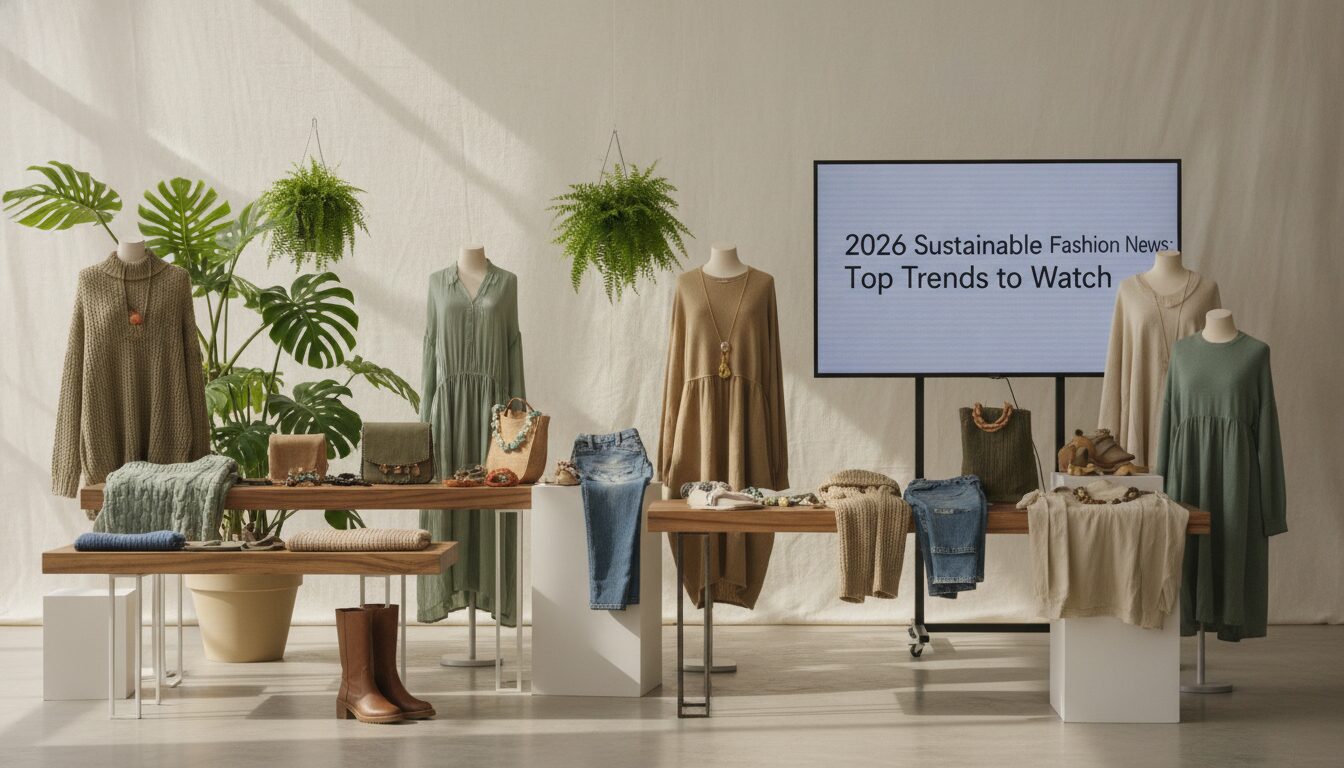
The following trends dominate sustainable fashion this year. Knowing them can sharpen your next purchase decision and keep your wardrobe ahead of the curve.
1. Next-Gen Materials Go Mainstream
Lab-grown alternatives are no longer niche. Spora, a biotech company profiled by WWD, turns wild fungal DNA into leather accessories. Bottega Veneta now offers a mushroom-based bag, and Stella McCartney used plant-based sequins at Paris Fashion Week. These innovations reduce reliance on petroleum-based synthetics and animal hides. Algae-based dyes, showcased at the Future Fabrics Expo in Brussels, are also gaining traction, offering vibrant color without the toxic chemical runoff of conventional dyeing processes.
2. Resale and Care Services Expand Luxury
Secondhand is becoming status. ReSee’s pivot into luxurious garment care signals a broader shift: maintaining and reselling high-end pieces is the new symbol of taste. The global secondhand apparel market is projected to reach roughly $350 billion by 2027, according to ThredUp’s annual resale report. For you, this means investing in durable items built to retain resale value, not disposable trend pieces that collapse after three washes.
3. Regenerative Agriculture Hits the Supply Chain
Brands are moving beyond organic to “regenerative,” farming practices that actively restore soil health rather than simply avoiding harm. At the Future Fabrics Expo in Brussels, farm-linked leather and algae dyes took center stage. Theory collaborates directly with cotton growers to implement regenerative methods. This is the next frontier of sustainable fashion news, and it’s moving fast.
4. On-Demand Manufacturing Cuts Waste
Unspun’s 3D weaving machines produce jeans on-demand, eliminating the massive inventory waste that plagues traditional retail. Digital product passports, expected to roll out across EU markets within the next 2-3 years, may soon let you scan a garment’s entire lifecycle. According to Bain and Company, this kind of traceability can roughly double a garment’s long-term value through repair and resale. Less waste. More worth. That’s the math.
5. Legislative Pressure Accelerates Change
Policy is no longer a background story in sustainable fashion news. The EU’s textile waste regulations are pushing brands toward extended producer responsibility, meaning companies bear financial accountability for what happens to their products after purchase. Carbon tax proposals in several European markets are also forcing supply chain audits that were previously voluntary. For shoppers, this legislative pressure is good news: it means more brands will be legally required to back up their green claims with real data.
Pros and Cons of Following Sustainable Fashion News

Pros
- Keeps you informed about which brands are genuinely responsible versus those greenwashing their image.
- Exposes you to new materials, certifications, and shopping models like resale and rental before they go mainstream.
- Helps you make purchase decisions that align with your values without sacrificing style.
- Connects you to a broader cultural shift toward conscious consumption and circular fashion.
- Gives you the language to hold brands accountable and ask the right questions.
Cons
- The volume of sustainable fashion news can be overwhelming, with conflicting claims and shifting standards.
- Not all coverage is equally rigorous. Some outlets amplify brand PR rather than independent reporting.
- Staying informed can create decision fatigue, especially when even “sustainable” brands have documented shortcomings.
- Trend cycles in eco-fashion can still encourage overconsumption if framed as “buy this new green thing” rather than “buy less.”
What to Look For When Buying Sustainable Clothing
Reading sustainable fashion news primes you to ask the right questions. When you’re actually browsing, use this step-by-step checklist to cut through the noise.
- Check the Fibers: Prioritize natural or recycled inputs: organic cotton, linen, hemp, Tencel, recycled polyester. Avoid virgin synthetics unless necessary for function, such as waterproof gear.
- Verify Certifications: Look for third-party logos. GOTS (Global Organic Textile Standard) covers organic fibers. Fair Trade Certified covers ethical labor. OEKO-TEX covers chemical safety. B Corp covers overall social and environmental performance.
- Examine Construction: Well-made garments have reinforced seams, quality zippers, and linings that won’t pill after a season. Shoddy construction leads to early disposal, exactly what sustainable fashion fights against.
- Research the Brand: Browse the company’s sustainability page. Do they disclose factory locations and publish annual impact reports? Transparency is the hallmark championed by every credible watchdog in the industry.
- Price Point Reality Check: Sustainable fashion typically costs more because true costs aren’t externalized onto workers or ecosystems. That said, options exist across budgets. See the comparison table below. Avoid suspiciously cheap “green” items. They are almost always greenwashing.
How to Style Sustainable Fashion for Any Occasion
Sustainable does not mean sacrificing style. Here are three outfit formulas built around key pieces that prove eco-conscious dressing can be bold, intentional, and unforgettable.
Office-Ready Minimalism
Start with a well-tailored organic cotton blazer from Eileen Fisher. Pair with wide-leg Tencel trousers and a silk-blend shell. Add block-heel boots made from chrome-free leather. Finish with a vintage scarf and a Spora mycelium crossbody bag that doubles as a conversation piece. Clean, sharp, and carrying zero apology.
Weekend Casual Cool
Choose high-rise organic denim from Everlane, a boxy hemp tee, and a cozy recycled cashmere cardigan. Slip on clean white sneakers made from recycled ocean plastic, Adidas x Parley being the benchmark here. A canvas tote from a local maker ties it together. Effortless, but intentional.
Night Out, Bold and Ethical
Wear a Reformation deadstock wrap dress in a vibrant print. Layer with a cropped upcycled leather jacket. Add strappy heels in vegan leather or sourced from a secondhand platform. Statement jewelry from a fair-trade artisan brand delivers the drama. This is the look that proves sustainable fashion news isn’t just for daytime do-gooders. The night belongs to it too.
Mixing secondhand finds with new sustainable pieces extends garment lives and creates a look that fast fashion simply cannot replicate. That’s the real flex.
Top Sustainable Fashion Brands Compared
We’ve curated four brands frequently covered in sustainable fashion news for their transparency and real-world impact. No brand is perfect. These four lead by example.
| Brand | Price Range | Key Materials | Certifications | Best For |
|---|---|---|---|---|
| Eileen Fisher | $$$ ($200+) | Organic linen, Tencel, recycled cashmere | B Corp, GOTS, Fair Trade | Investment workwear, minimalist aesthetic |
| Patagonia | $$ ($50-$200) | Recycled polyester, organic cotton, hemp | Fair Trade Certified, bluesign | Outdoor gear, activism-first ethos |
| Reformation | $$ ($50-$200) | Deadstock fabrics, Tencel, regenerated nylon | Climate Neutral, OEKO-TEX | Feminine silhouettes, party dresses |
| Everlane | $-$$ (under $200) | Recycled materials, certified cashmere, organic cotton | GOTS, bluesign | Affordable basics, denim, elevated casual |
Care and Maintenance for Eco-Friendly Garments
Prolonging a garment’s life reduces its footprint more than almost any other single action. The Ellen MacArthur Foundation notes that extending clothing use by just nine months can lower carbon, water, and waste footprints by 20-30%. These care habits are non-negotiable if you’re serious about it.
- Wash Less, Wash Cold: Overwashing fades fabrics and releases microfibers. Washing synthetic textiles discharges 500,000 tons of microfibers into oceans annually, per the Ellen MacArthur Foundation. Spot clean where possible, and use a cold cycle with a Guppyfriend bag to catch plastic fibers before they reach the water supply.
- Air Dry: Tumble dryers degrade elasticity and consume significant energy. Hang or lay flat to dry instead. Your clothes will thank you for it.
- Learn Basic Mending: Sewing a button or patching a tear can add years to a garment’s life. Brands like Patagonia offer repair guides and in-store services. Use them.
- Store Properly: Fold knits to prevent stretching, use padded hangers for tailored pieces, and keep everything away from direct sunlight to preserve color and fiber integrity.
Proper maintenance is cheap insurance for your investment pieces. And it’s one of the most underreported stories in sustainable fashion news.
Frequently Asked Questions
How can I tell if a brand is truly sustainable or just greenwashing?
Look for specific, verifiable claims backed by third-party certifications like GOTS, B Corp, or Fair Trade Certified. Check whether the brand publishes a detailed sustainability report with factory locations and measurable targets. Reputable sustainable fashion news outlets like Vogue Business and WWD regularly expose brands that fall short of their stated commitments.
Is sustainable fashion always more expensive?
Generally yes, because ethical labor and eco-materials carry real costs that fast fashion externalizes onto workers and ecosystems. However, brands like Everlane offer mid-range price points starting under $100, and secondhand platforms such as ThredUp provide affordable access to quality sustainable pieces without the new-garment footprint.
What are the most sustainable fabric choices?
Certified organic cotton, hemp, linen, Tencel (lyocell), and recycled synthetics are the top picks according to material scientists and sustainability editors alike. Avoid virgin polyester and conventional cotton, which carry high water and pesticide footprints. As of 2026, next-gen materials like mycelium leather and algae-based dyes are emerging as serious contenders.
How do I dispose of old clothes sustainably?
First, repair, donate, or resell. Platforms like Depop, ThredUp, and The RealReal make resale accessible at every price point. If a garment is truly unwearable, find a textile recycling program. Many brands have take-back bins, but verify that items don’t end up in landfills, a concern regularly flagged in sustainable fashion news reporting.
Can fast fashion ever be sustainable?
In its current high-volume, low-cost model, no. True sustainability requires a fundamental reduction in production and consumption, not just swapping one synthetic for another. Investigative pieces in outlets like WWD and Vogue Business regularly expose fast fashion’s labor abuses and carbon footprint, making a strong case for avoiding it entirely.
Which sustainable fashion brands have the best size inclusivity?
Eileen Fisher (up to 3X), Everlane (up to 2X), and Universal Standard lead the field on inclusive sizing within the sustainable space. Always check the brand’s size chart and read community reviews. Size inclusivity is increasingly covered in sustainable fashion news as a core dimension of ethical fashion, not an afterthought.