Key Takeaways
- 80s fashion trends were defined by excess: big hair, padded shoulders, neon colors, and silhouettes that refused to be ignored.
- Power dressing, athletic wear, and music-driven subcultures created distinct looks that still shape modern style in 2026.
- Key fabrics like spandex, acid-wash denim, and leather became symbols of the decade’s innovation and rebellion.
- Vintage curation and sustainability are giving these trends a second life, with many authentic pieces now considered investment wardrobe staples.
- From Thierry Mugler’s architectural shoulders to hip-hop’s parachute pants, 80s fashion trends span at least 18 distinct style categories still referenced on today’s runways.
80s fashion trends are the bold, maximalist styles that defined a decade of excess, from power suits with padded shoulders to acid-wash denim, neon colors, and MTV-driven streetwear. These looks still shape runways and nightlife wardrobes in 2026.
The Origins of 80s Fashion Trends
The Shift from 70s Disco to Early 80s Structure
The early 1980s opened with a structured, cleaner aesthetic as a direct reaction to disco’s excess. According to the Fashion Institute of Technology’s fashion history timeline, subdued colors like tan, cream, and brown dominated wardrobes in those first years. That restraint lasted roughly two years. By 1982, fashion trends had exploded into full maximalist mode, fueled by a booming economy, the launch of MTV in 1981, and a cultural obsession with visible success. The New Romantic style and sportswear-influenced looks were among the first major movements to emerge, setting the stage for everything that followed.
Economic and Social Forces Behind the Look
Yuppie culture placed enormous value on visible ambition, and clothing became the clearest signal of status. Women entering the workforce in record numbers adopted power dressing as both style and strategy. Men’s fashion mirrored this with tailored suits and luxury accessories. Simultaneously, the fitness craze, popularized by icons like Jane Fonda, blurred the line between activewear and streetwear, making spandex and leg warmers legitimate everyday fashion choices. These social forces didn’t just shape this type of trends. They permanently rewired how Western culture thinks about dressing for power.
Women’s Power Dressing: The Defining Force of 80s Fashion Trends
The Anatomy of a Power Suit
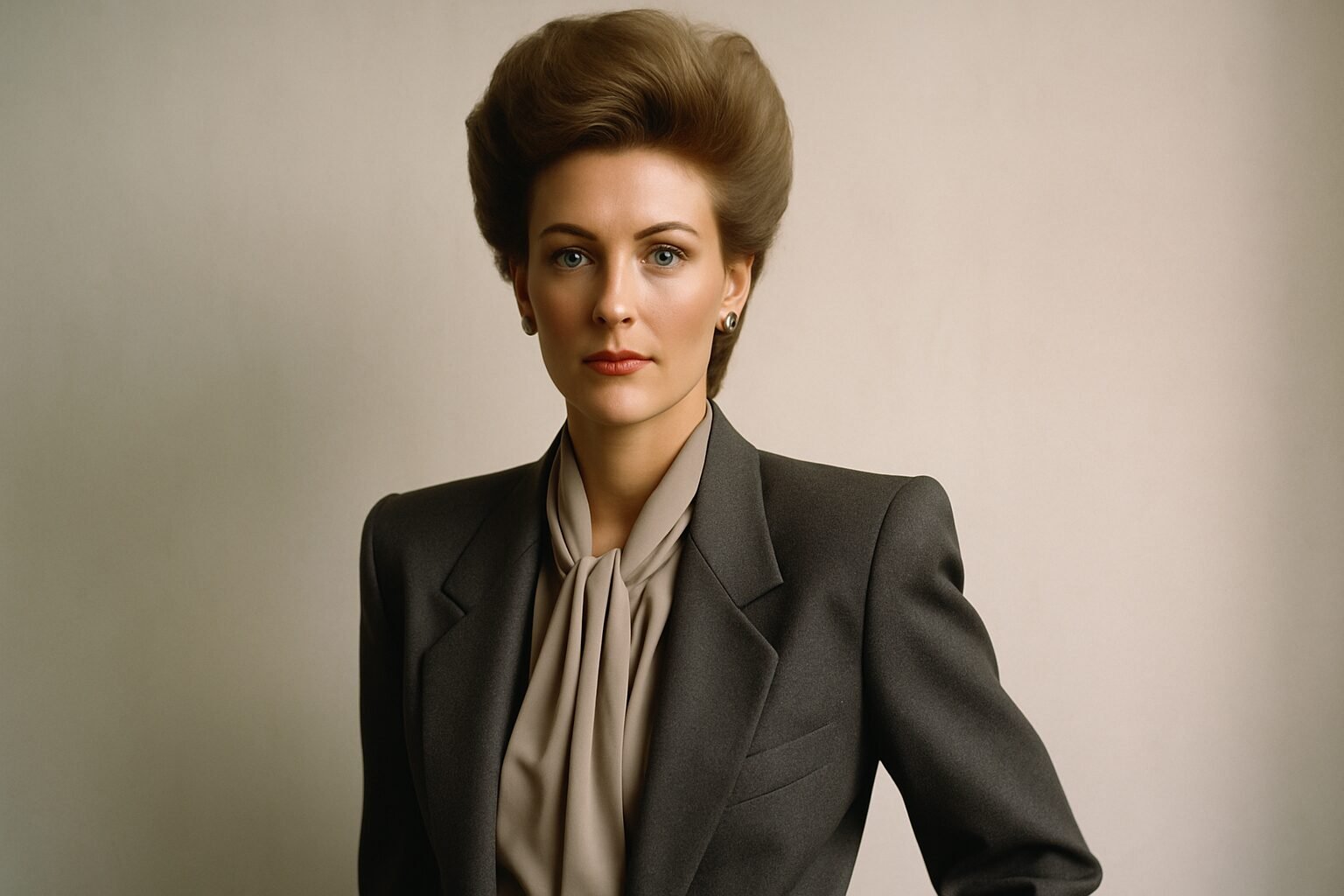
Power dressing is the practice of wearing structured, assertive clothing to project authority, and no decade owned it harder than the 1980s. For women, this meant jackets with heavily padded shoulders, strong lapels, and colors like royal blue or fuchsia that refused to blend in. A classic ensemble paired a double-breasted blazer with a pencil skirt or tapered trousers. Vogue’s fashion history lesson notes that this look was everywhere on shows like Dynasty, where Joan Collins’ character Alexis Colby embodied aggressive glamour. Shoulders broadened by up to two inches on each side, creating an exaggerated inverted triangle silhouette that commanded every room it entered.
“As more women entered traditionally male-oriented work environments, they found it advantageous to dress as though they were in command, and sure of their sexuality. This meant jackets with heavily padded shoulders, vibrant colours, big hair-dos, bold accessories, and shoes with pointed toes and spiked heels.” – Kathryn Hennessy, editor of Fashion: The Ultimate Book of Fashion and Style, as cited by the Fashion Institute of Technology timeline
Key Designers Who Defined Power Dressing
Thierry Mugler, Giorgio Armani, and Christian Lacroix were instrumental in shaping this kind of trends for women. Mugler’s wide-shouldered suits with peplum details, Armani’s relaxed yet authoritative tailoring, and Lacroix’s opulent evening wear each contributed a distinct chapter. After Karl Lagerfeld took over Chanel in 1983, he revitalized the house by reinterpreting its classics with modern power, and within a year the house had regained its front-runner position. Donna Karan introduced her “Seven Easy Pieces” concept around the same period, building a capsule wardrobe that moved from office to evening without missing a beat.
How to Recreate the Power Look in 2026
Modernizing power dressing starts with one strong-shouldered blazer in a neutral tone paired with high-waisted, wide-leg trousers. Replace the bulky shoulder pads of the original era with lighter, built-in shaping for a cleaner line. Accessorize with a thin gold chain or pointed-toe pumps. According to Wikipedia’s 1980s fashion entry, pointed-toe shoes were revived at the end of the 1970s and remained a decade staple, making them one of the most authentic nods to the era you can wear right now.
Men’s 80s Fashion Trends: From Preppy to Punk
The Preppy Revolution
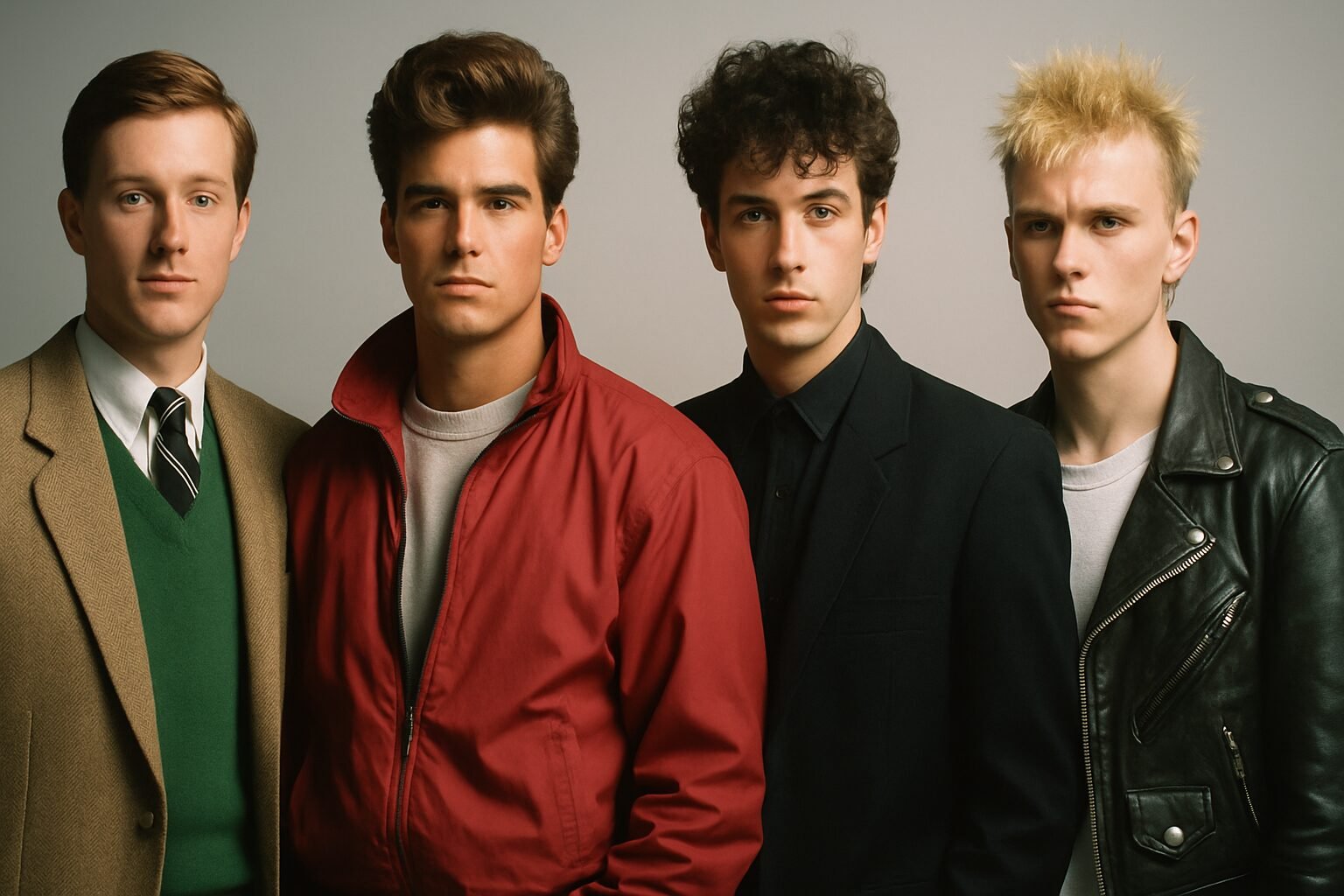
Preppy style, rooted in Ivy League and Seven Sisters college attire, became a defining male expression within 80s fashion. Ralph Lauren led the charge with his Polo line, selling the fantasy of East Coast privilege to a global audience. The look centered on button-down oxford shirts, cable-knit sweaters draped over shoulders, chino shorts, and loafers in pastel hues: pink, mint green, lemon yellow. This trend crossed gender lines too. Brands like Perry Ellis offered casually elegant womenswear that echoed the same collegiate energy, proving that fashion trends rarely stayed in one lane.
Athleisure and Casual Wear
The aerobics boom spilled directly into men’s casual wear. Tracksuits, especially in velour, became acceptable streetwear. Graphic tees allowed men to broadcast band allegiances or brand loyalty, becoming an essential part of this type of trends for personal expression. Sneakers transformed from sports gear to cultural statements, with Adidas and Nike cementing status that still holds today. According to a 2026 guide by Printful, items like sweatpants and slouchy tops directly paved the way for today’s athleisure market, now a multi-billion-dollar industry.
Punk and Rock Influences
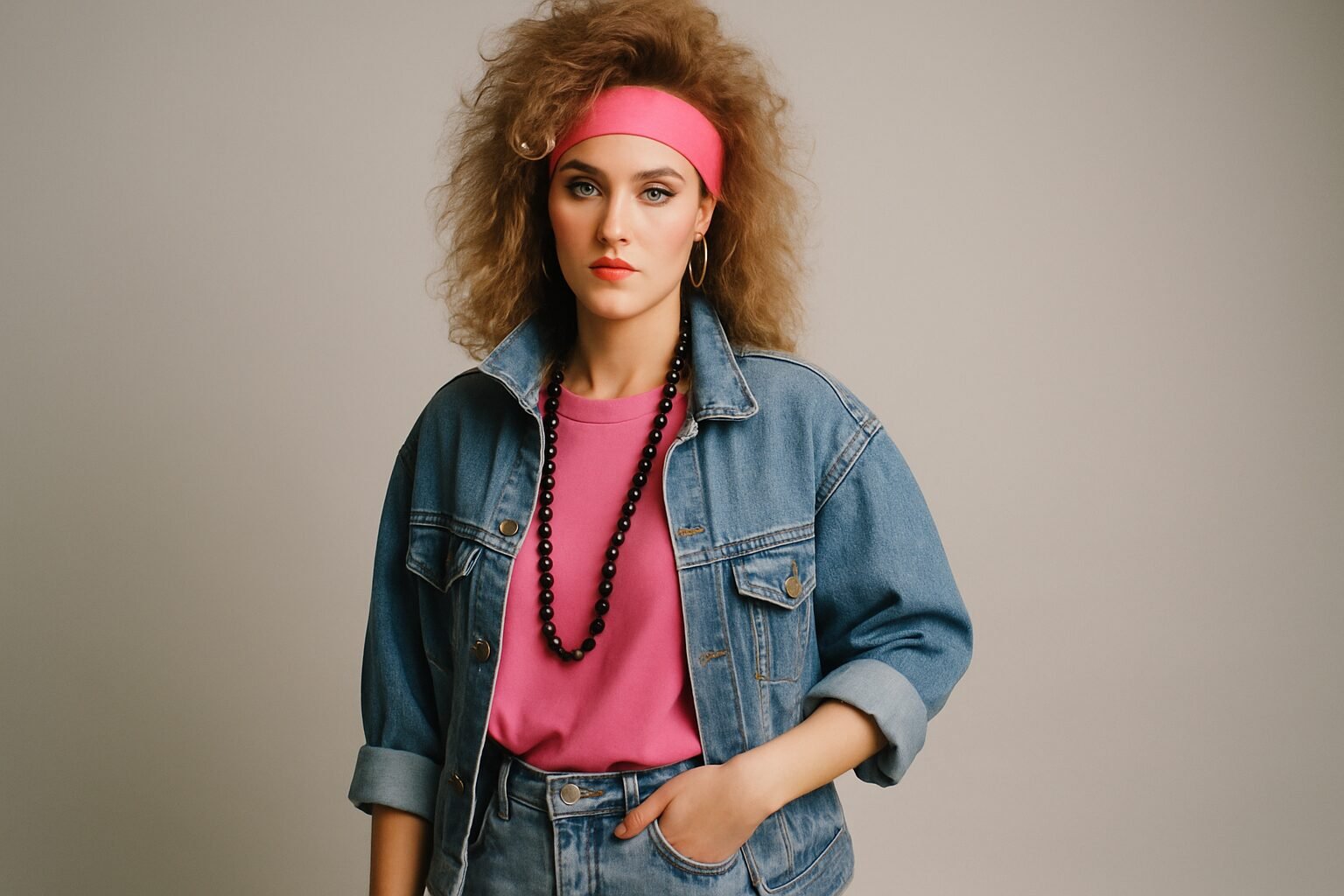
On the edgier end of this kind of trends, punk infiltrated the mainstream. Leather jackets, ripped jeans, band tees, and heavy boots became symbols of deliberate rebellion. Bands like The Clash and later glam metal acts inspired wilder, androgynous looks. Men experimenting with makeup and teased hair broke traditional gender norms in ways that still feel radical. This movement also birthed the “Canadian tuxedo”: denim jackets paired with matching jeans, a look Printful’s blog credits as surprisingly enduring across four decades.
The Role of Music and MTV in 80s Fashion Trends
MTV’s 24-Hour Fashion Runway
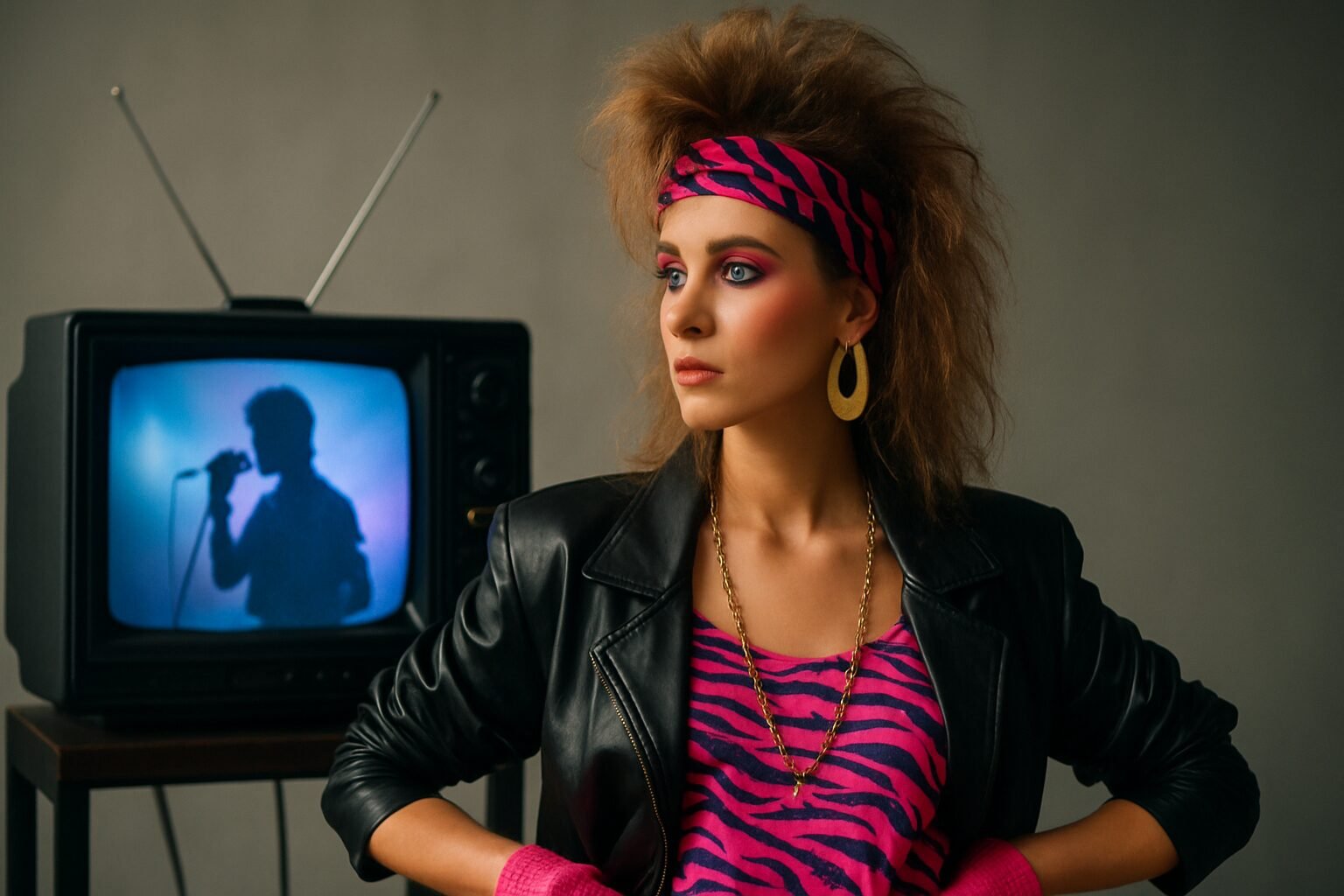
When MTV launched in 1981, it permanently married music and fashion. For the first time, artists’ visual aesthetics were broadcast nonstop, turning everyday viewers into instant trend adopters. Madonna’s “Like a Virgin” era introduced lace gloves, crucifixes, and tulle skirts to Main Street. Michael Jackson’s “Thriller” jacket sparked global demand for red leather. Flashdance (1983) not only sold millions of leg warmers but also popularized off-the-shoulder sweatshirts, a style that became a signature of early 80s fashion in casual wear. Films like Fame reinforced the transition of leg warmers from dancewear to mainstream street style.
Iconic Music Fashion Moments That Still Resonate
Cyndi Lauper’s kaleidoscopic layers and Boy George’s gender-bending ensembles challenged every conformity the decade tried to enforce. Hip-hop’s rise brought gold chains, Adidas tracksuits, parachute pants, and Kangol hats into the cultural conversation. These fashion trends were heavily documented in home videos and photos now being digitized by services like Capture (source). The New Romantic movement, rooted in London clubs, saw Vivienne Westwood’s Pirate collection from 1981 merge historical references with punk: puffy shirts, sashes, and buccaneer boots became club kid essentials that still inspire nightlife dressing today.
“The 1980s were a decade of reinvention. Every subculture had its own visual language, and fashion was the loudest way to speak it.” – Fashion historians at the Fashion Institute of Technology, summarizing the decade’s cultural plurality in their 1980-1989 timeline
Subculture Fashion in the 1980s
New Romantics and Post-Punk
The New Romantic movement was a subculture defined by flamboyant, historically-inspired dress. Originating in London nightclubs, it drew from 18th-century dandyism: frilly shirts, velvet frock coats, heavy makeup, filtered through a gritty post-punk lens. This fusion influenced designers like John Galliano early in his career. It also ran parallel to a broader interest in Japanese avant-garde design. Rei Kawakubo of Comme des Garçons and Yohji Yamamoto introduced deconstructed, monochromatic pieces that challenged Western excess, as noted in Printful’s trend report on this type of trends.
Hip-Hop Streetwear
Hip-hop culture transformed this kind of trends from the streets up. Oversized silhouettes, parachute pants, bold sneakers, and bucket hats became visual signatures of an entire generation. Brands like Kangol, Adidas, and Fila gained cult status that no marketing budget could manufacture. This was fashion as identity: relaxed yet deliberate, never careless. The style’s influence is so pervasive that it now inspires entire runway collections, decades after those first Bronx block parties.
Goth and Glam Metal
The 1980s split between dark romanticism and flashy excess in ways that still define alternative fashion. Goth style, with its black lace, corsets, and Victorian mourning motifs, offered a somber counterpoint to the decade’s neon optimism. Meanwhile, glam metal bands like Mötley Crüe and Poison pushed spandex, animal prints, and sky-high teased hair into the mainstream. Both extremes contributed to the decade’s maximalist ethos and remain direct reference points for alternative and nightlife fashion brands today, including the dark glamour aesthetic at the core of Pretty N Poison’s Poison Edit.
Key Fabrics and Materials Defining 80s Fashion Trends
Spandex and Lycra: Shapely Innovation
Spandex is a synthetic fiber known for exceptional elasticity, and in the 1980s it revolutionized both activewear and body-con dressing. Azzedine Alaïa and Donna Karan used it to create clothes that molded to the body, shifting the design approach entirely: garment shapes now came from the wearer’s form rather than rigid tailoring. Leggings, bodysuits, and unitards became everyday staples. Many brands now use recycled spandex blends, giving this foundational fabric of 80s fashion a sustainable second act.
| Fabric | 80s Application | Modern Equivalent | Sustainability Notes |
|---|---|---|---|
| Spandex/Lycra | Aerobics wear, body-con dresses | Yoga pants, compression athletic wear | Many brands now use recycled spandex blends |
| Acid-wash denim | Jeans, jackets, skirts | Vintage reworks, sustainable upcycling | New production uses less toxic bleaching methods |
| Leather | Moto jackets, miniskirts, trousers | Faux leather, bio-based alternatives | Plant-based leathers reduce environmental impact |
| Velour | Tracksuits, sweatshirts | Lounge sets, streetwear | Organic cotton velour is gaining popularity |
Denim and Acid Wash
Acid wash is a denim treatment using chlorine and pumice stones to create a high-contrast, mottled effect. It emerged in the early 1980s and became one of the most iconic fashion trends, especially in the form of high-waisted “mom jeans” and oversized jackets. Brands like Levi’s dominated, offering acid-wash options worn by everyone from teens to suburban parents. The look’s rugged, DIY aesthetic made it equally beloved in punk circles, where ripped knees added extra character. As of 2026, sustainable brands are recreating the look using less toxic bleaching methods, keeping the aesthetic alive without the environmental cost.
Leather and Synthetics
Leather jackets transcended every subculture in the 1980s. Whether a classic black moto cut or a colorful, fringed version, leather was a staple in both men’s and women’s wardrobes. Synthetics like PVC and patent leather upped the shine factor, appearing in everything from mini skirts to accessories. The versatility of leather meant it paired equally well with denim, lace, or power suits, making it a unifying thread across the full spectrum of this type of trends. Today, plant-based leather alternatives carry that same edge without the environmental impact.
Pros and Cons of Wearing 80s Fashion Trends in 2026
Pros
- Instant visual impact: Bold silhouettes and neon colors make you impossible to ignore in any nightlife setting.
- Sustainability credentials: Buying authentic vintage 80s pieces extends garment life cycles and reduces demand for new production.
- Investment value: Authentic 80s garments from designers like Mugler and Alaïa are now collectible, with some pieces appreciating significantly in resale markets.
- Versatility: this kind of trends span at least 18 distinct style categories, from preppy to goth, meaning there’s an entry point for every aesthetic.
- Cultural resonance: These looks carry decades of music, film, and subculture history, giving your outfit a story worth telling.
Cons
- Easy to over-do it: Wearing multiple 80s trends at once, neon, shoulder pads, leg warmers, and big hair together, reads as costume rather than fashion.
- Sizing challenges: Authentic vintage pieces often require tailoring, as 80s sizing standards differ significantly from modern fits.
- Quality variation: Not all vintage 80s pieces are built to last. Synthetic fabrics from the era can degrade, requiring careful sourcing and inspection.
- Price creep: As 80s fashion gain mainstream revival status, desirable vintage pieces are rising in price on platforms like Depop and The RealReal.
How to Wear 80s Fashion Trends in 2026
Step-by-Step: Modernizing the 80s Look
Follow these steps to incorporate fashion trends without looking like a costume:
- Pick one focal piece: Start with a strong item like a blazer with structured shoulders or a pair of acid-wash jeans. Let it anchor the entire outfit.
- Balance with neutral basics: Pair that focal piece with plain tees, crisp white sneakers, or minimal accessories to avoid visual overwhelm.
- Play with proportion: If you’re wearing an oversized denim jacket, balance it with slim-fit trousers or a pencil skirt underneath.
- Incorporate modern fabrics: Choose pieces made from sustainable materials: recycled denim, organic cotton, or vegan leather that honors the 80s aesthetic without the original environmental cost.
- Honor the details: Add a scrunchie, a chunky gold chain, or a pair of retro sunglasses for a nod to this type of trends without going full retro.
Dos and Don’ts of 80s Revival Styling
- Do mix eras: a 2026 minimalist bag with an 80s blazer creates contrast that feels intentional.
- Don’t wear all the trends at once. Neon, shoulder pads, leg warmers, and big hair in a single look crosses from fashion into fancy dress.
- Do invest in quality vintage pieces. Many authentic 80s garments are now collectible and built to outlast anything fast fashion produces today.
- Don’t be afraid to tailor. Oversized 80s cuts often benefit from a single modern alteration that transforms the fit entirely.
Where to Buy Authentic 80s Clothing
Shopping for true 80s pieces requires knowing the right sources. Vintage stores in fashion hubs like London’s Camden Market, New York’s East Village, and Tokyo’s Shimokitazawa are treasure troves for authentic this kind of trends. Online, platforms like Depop, Etsy, and The RealReal offer curated selections. Printful also offers customizable graphic tees inspired by 80s band merch, enabling a personalized take on the trend without the hunt. For nightlife-ready interpretations of 80s fashion, explore the Pretty N Poison dress collection and the brand’s Poison Edit for dark, decade-inspired looks built for the night.
The Legacy of 80s Fashion Trends
Resurgence in 2025-2026 Runways
Major fashion houses continue to mine the 80s for inspiration. Balenciaga’s oversized blazers, Gucci’s bold logo tees, and Saint Laurent’s slouchy leather jackets all owe a direct debt to the decade. The 2025-2026 collections saw a particular revival of asymmetrical silhouettes and neon accents. According to fashion editors tracking runway data, fashion trends are not a nostalgic footnote. They’re a living design language that contemporary designers return to season after season because the visual vocabulary is simply that strong.
Sustainability and Vintage Curation
As sustainability becomes central to fashion, vintage 80s clothing offers a low-impact alternative to fast fashion. Platforms like ThredUp report growing search interest in “vintage 80s” clothing year over year. By re-wearing and upcycling, consumers extend a garment’s life cycle and reduce waste, a concept that aligns perfectly with the thrifty, mix-and-match mindset that originally underscored many 80s street styles. Buying authentic vintage this type of trends is, in 2026, both a style statement and an ethical one.
Why 80s Fashion Trends Endure
Decades later, this kind of trends continue to captivate because they represent a rare moment when fashion felt universally daring. The decade’s embrace of individuality, whether through power dressing, underground subcultures, or athletic influence, created a visual vocabulary that still speaks to our desire for self-expression. As the 2026 runway shows confirm, the 80s aren’t just back. They never really left. Whether you adopt a single acid-wash piece or go full New Romantic, wear it with the confidence that defined the era. That’s the only rule that actually matters.
Frequently Asked Questions
What were the most popular 80s fashion trends?
The most popular 80s fashion trends included power suits with shoulder pads, neon colors, acid-wash denim, leg warmers, graphic tees, and leather jackets. These looks spanned both high fashion and streetwear, driven by music, film, and the rise of workplace culture for women. Printful’s 2026 guide identifies at least 18 distinct 80s trends that still turn heads today.
How can I dress in 80s style without looking outdated?
Choose one vintage piece as the focus, like high-waisted denim or a structured blazer, and pair it with modern basics. Avoid head-to-toe 80s replication. Balance proportions and incorporate contemporary accessories for a fresh take on 80s fashion trends.
Why were shoulder pads so big in the 80s?
Shoulder pads symbolized power and authority, especially for women entering corporate environments in record numbers. The exaggerated shape physically broadened the silhouette, commanding attention and reflecting the bold ambition that defined 80s fashion trends at their peak.
Is acid-wash denim still in style in 2026?
Yes, acid-wash denim has seen a strong resurgence as one of the most recognizable 80s fashion trends. Vintage 80s jeans are prized for their authentic wash, and many modern brands recreate the look using eco-friendly bleaching techniques that reduce environmental impact.
What designers were iconic in the 1980s?
Notable designers who defined 80s fashion trends include Thierry Mugler, Giorgio Armani, Donna Karan, Azzedine Alaïa, Christian Lacroix, and Karl Lagerfeld for Chanel. Their work established the exaggerated silhouettes and luxurious fabrics that made the decade visually unforgettable.
Are 80s fashion trends sustainable?
Buying authentic vintage 80s clothing is highly sustainable. It extends the life of existing garments and reduces demand for new production. Upcycling and rental platforms further support a circular fashion economy built on the same mix-and-match spirit that originally defined 80s street style.